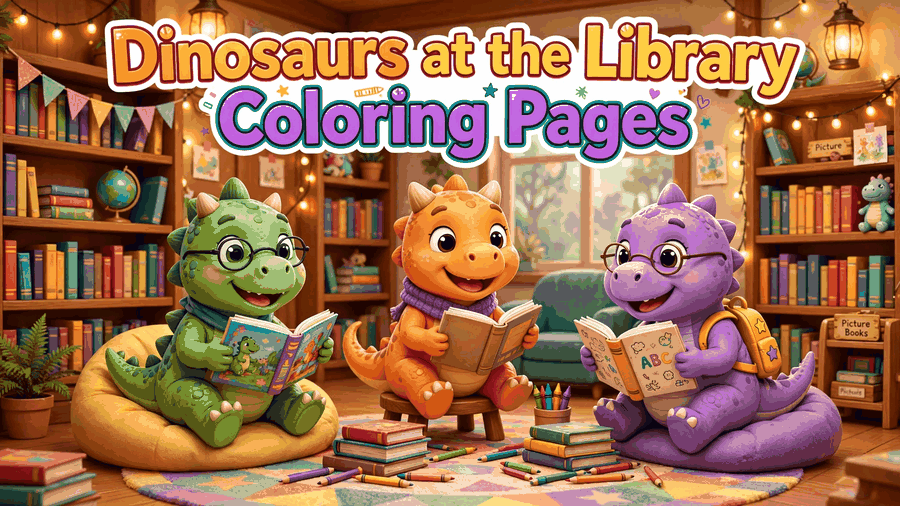
Dinosaurs at the Library Coloring Pages combine prehistoric creatures with the quiet world of books, creating a playful theme for children who enjoy dinosaurs, reading, and imaginative adventures. This unusual setting brings together two interesting subjects and gives young artists plenty of opportunities to create their own colorful library scenes.
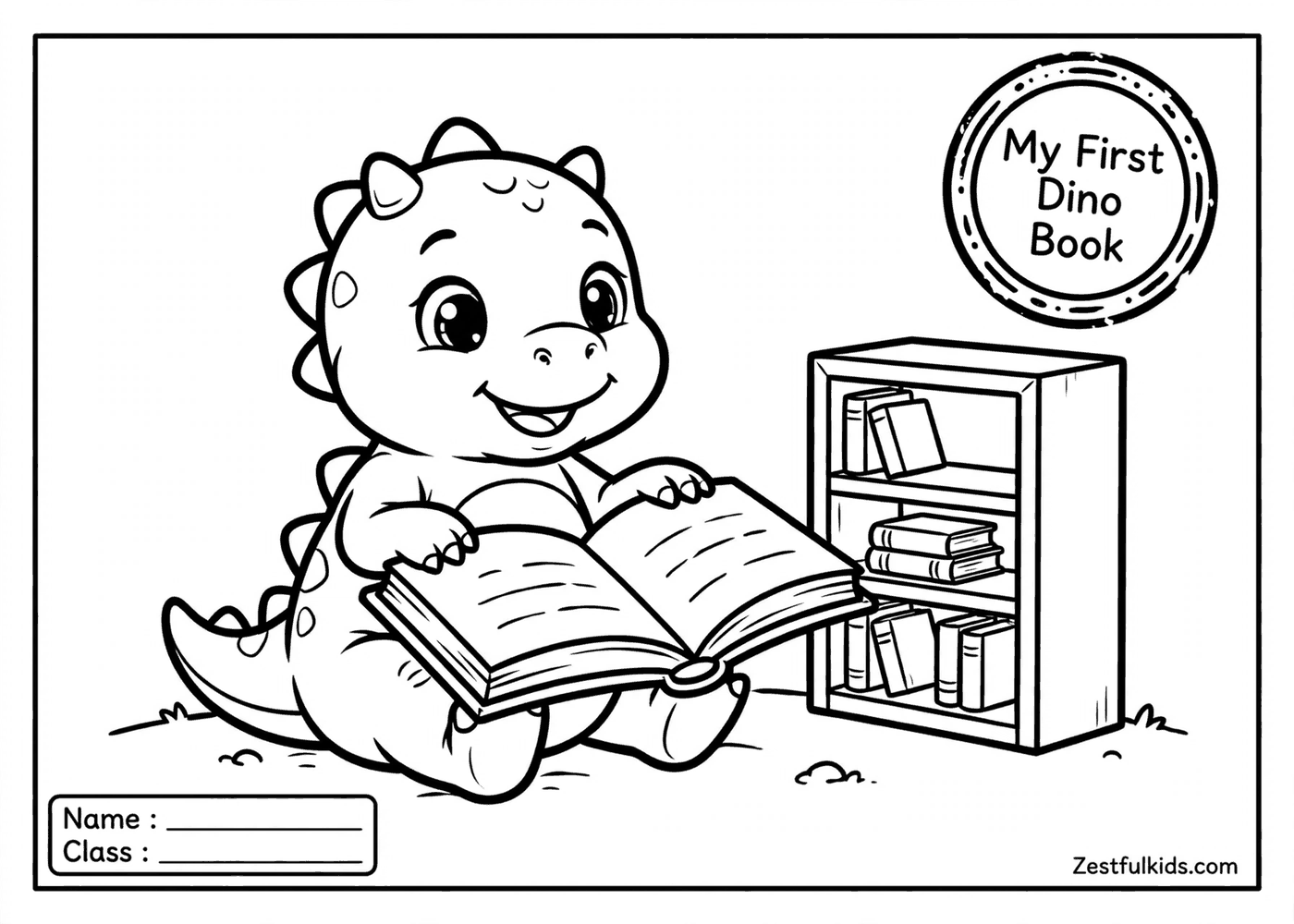
When Prehistoric Giants Visit the Library
Imagine a friendly dinosaur walking through a library filled with bookshelves, reading tables, and rows of colorful book covers. Instead of exploring a prehistoric forest, these ancient creatures are discovering stories and spending time with books. The contrast between enormous dinosaurs and a place traditionally associated with quiet reading makes this theme especially entertaining for children.
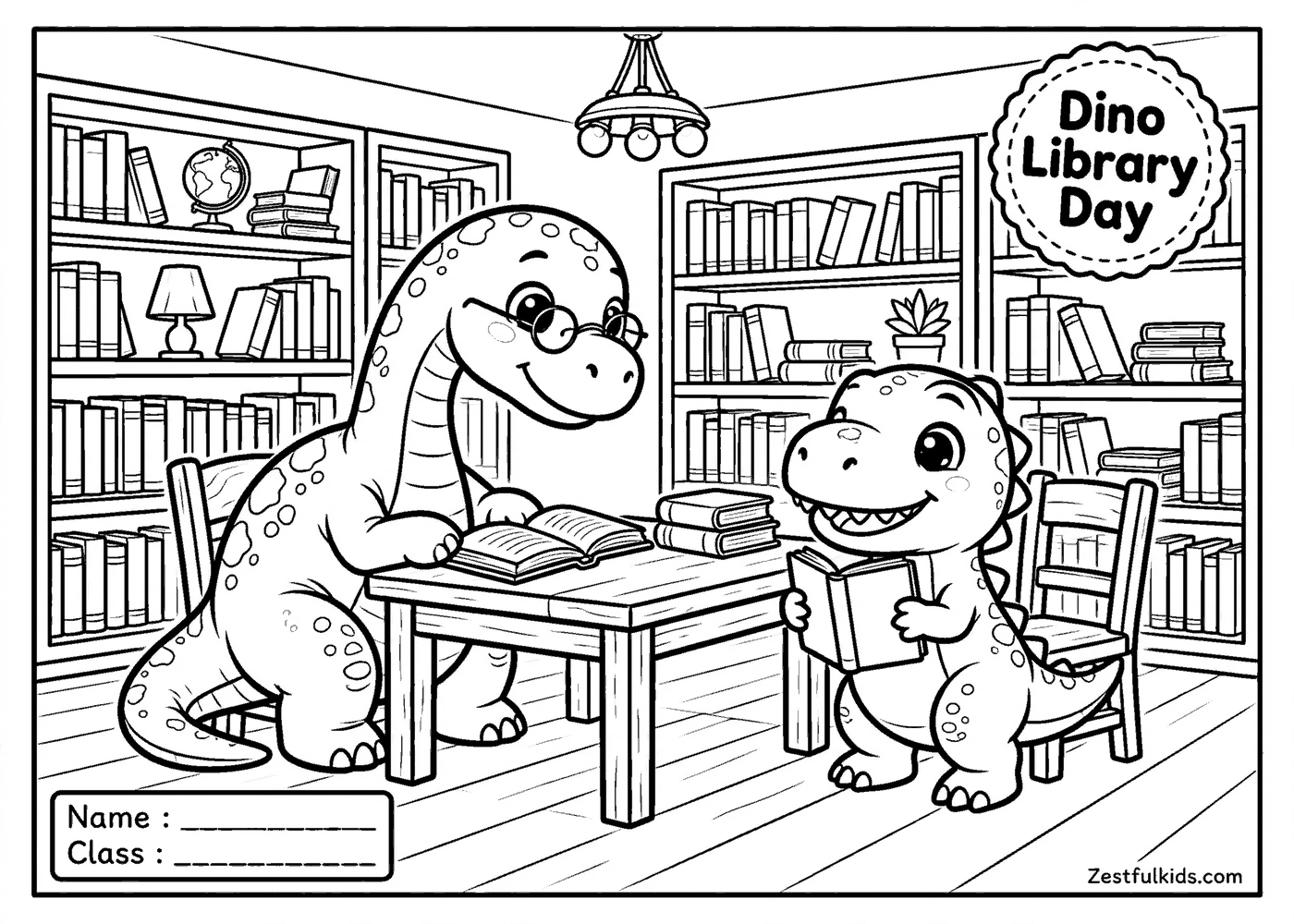
Dinosaurs come in many different shapes and sizes, which makes them interesting subjects for coloring. A long-necked dinosaur might appear surprisingly tall beside a bookshelf, while a small dinosaur could sit comfortably near a reading table. Children can imagine a gentle dinosaur carefully turning the pages of a book or a curious creature searching for its favorite story. These situations create opportunities for playful storytelling while keeping the activity connected to libraries and reading.
The library setting also introduces familiar objects that children can recognize. Bookshelves, chairs, reading desks, book stacks, and library signs can all become part of an imaginary scene if the illustration provides space for additional details. Children can decide what kind of books the dinosaurs might enjoy, from adventure stories to books about animals and outer space.
Give Every Dinosaur a Distinctive Appearance
One of the most enjoyable parts of dinosaur-themed coloring is experimenting with different colors and patterns. Dinosaurs are commonly represented in children’s illustrations using green, brown, orange, blue, or purple. However, there is no need to follow a single color scheme. Children can give each dinosaur a unique appearance that reflects their imagination.
Different dinosaur body shapes also offer interesting coloring opportunities. A dinosaur with a long neck has a large area that can be filled with several shades, while a creature with small arms or prominent plates may have more distinctive sections to decorate. If the illustration includes scales, spikes, horns, or a long tail, children can use contrasting colors to make those details stand out.
Here are some ideas for creating an attractive dinosaur and library scene:
- Friendly dinosaurs: Try green, turquoise, orange, or light purple for a cheerful appearance.
- Dinosaur scales: Combine two shades of the same color to create simple patterns.
- Books and book covers: Use different bright colors to make the library shelves look lively.
- Reading furniture: Choose brown, beige, or gray for wooden tables, chairs, and shelves.
- Library atmosphere: Add soft blue, cream, or pale yellow tones to create a welcoming indoor setting.
- Small decorations: If there is room, add colorful book labels, bookmarks, or simple decorative details.
Colored pencils are useful for adding patterns to dinosaur skin and smaller details around books. Crayons are convenient for filling larger areas, while washable markers can create stronger colors on suitable paper. Children can choose whichever materials they find comfortable.
A Creative Way to Connect Dinosaurs With Reading
Dinosaurs and books may seem like an unusual combination, but they can work wonderfully together in a children’s activity. Many children already recognize dinosaurs from picture books, toys, documentaries, and educational materials. Bringing these familiar creatures into a library setting creates an opportunity to connect their interest in prehistoric animals with stories and reading.
Parents and teachers can use the illustration as a starting point for a simple conversation. They might ask children which dinosaur they would invite to a reading session or what kind of story the dinosaur would choose. A child might imagine a Tyrannosaurus rex enjoying an adventure book, while another might prefer a gentle dinosaur reading about plants and nature.
There is also an opportunity to introduce the difference between fiction and nonfiction books. Fiction stories can feature imaginary dinosaurs visiting libraries, making friends, or discovering hidden treasures. Nonfiction books, on the other hand, provide information about real dinosaur discoveries, fossils, and prehistoric environments. Adults can explain this distinction in simple language while children enjoy their coloring activity.
Turn the Library Scene Into a Storytelling Challenge
Once the dinosaurs have been colored, invite children to create a short story about their imaginary library visit. They can choose a dinosaur as the main character and describe what happens when it enters the building. Perhaps the dinosaur is looking for a book about flying reptiles, or maybe it wants to read a story with a group of smaller dinosaurs.
For a more interactive activity, children can give their dinosaur a name and invent a favorite book title. They might also draw a small book cover on a separate piece of paper and create an imaginary story to go with it. Parents can write down the child’s description if they want to preserve the story alongside the finished artwork.
Teachers can adapt the idea for classroom reading sessions. After discussing dinosaurs, students can color their illustrations and share one interesting fact about their chosen prehistoric animal. They do not need to know complicated scientific details. Even a simple observation about a dinosaur’s size, body shape, or diet can become part of the conversation.
Another idea is to create a pretend library corner using children’s finished pictures. Place the artwork on a classroom display and let students suggest names for their imaginary dinosaur library. This activity can connect art, storytelling, and a shared interest in books without requiring elaborate materials.
Discover More Animals Through Creative Coloring
Children who enjoy imaginative subjects involving animals and nature may appreciate exploring other themes as well. Changing the subject from prehistoric creatures to familiar wildlife can introduce different shapes, surroundings, and coloring possibilities.
For example, a hedgehog among flowers offers a charming nature-inspired theme. Children can experiment with brown and beige shades for the hedgehog while adding colorful flowers and green leaves. It provides a different artistic experience from the indoor library setting, with more emphasis on garden details and natural surroundings.
Another interesting choice is an owl-themed activity. Owls have distinctive round eyes, curved beaks, feather patterns, and recognizable body shapes. Children can explore different combinations of brown, gray, cream, and other colors while imagining where their owl might live.
These different themes can be included in a collection of creative activities for children who enjoy animals, nature, and imaginative scenes. Parents and caregivers can let children choose what interests them most, making each coloring session feel like a new experience.
Preparing a Fun Dinosaur Library Coloring Session
A comfortable workspace helps children focus on their artwork without unnecessary distractions. Place the printed illustration on a flat surface and prepare crayons, colored pencils, or washable markers before beginning. If printing the design, check the print preview to ensure that the entire illustration fits within the printable area. Paper choice can depend on the coloring materials, particularly when children prefer markers.
There is no need to rush through the activity or insist that every dinosaur looks realistic. Some children may want to use natural-looking colors, while others might create bright purple dinosaurs with rainbow-colored bookshelves. Both approaches allow them to express their own ideas.
Adults can also join the activity by coloring a small section or helping children invent stories about the dinosaurs. A few simple questions about the library setting can turn an ordinary coloring session into an enjoyable conversation. With prehistoric creatures, books, and imaginative possibilities coming together, Dinosaurs at the Library Coloring Pages offer a playful way to combine artistic expression with a love of reading.
