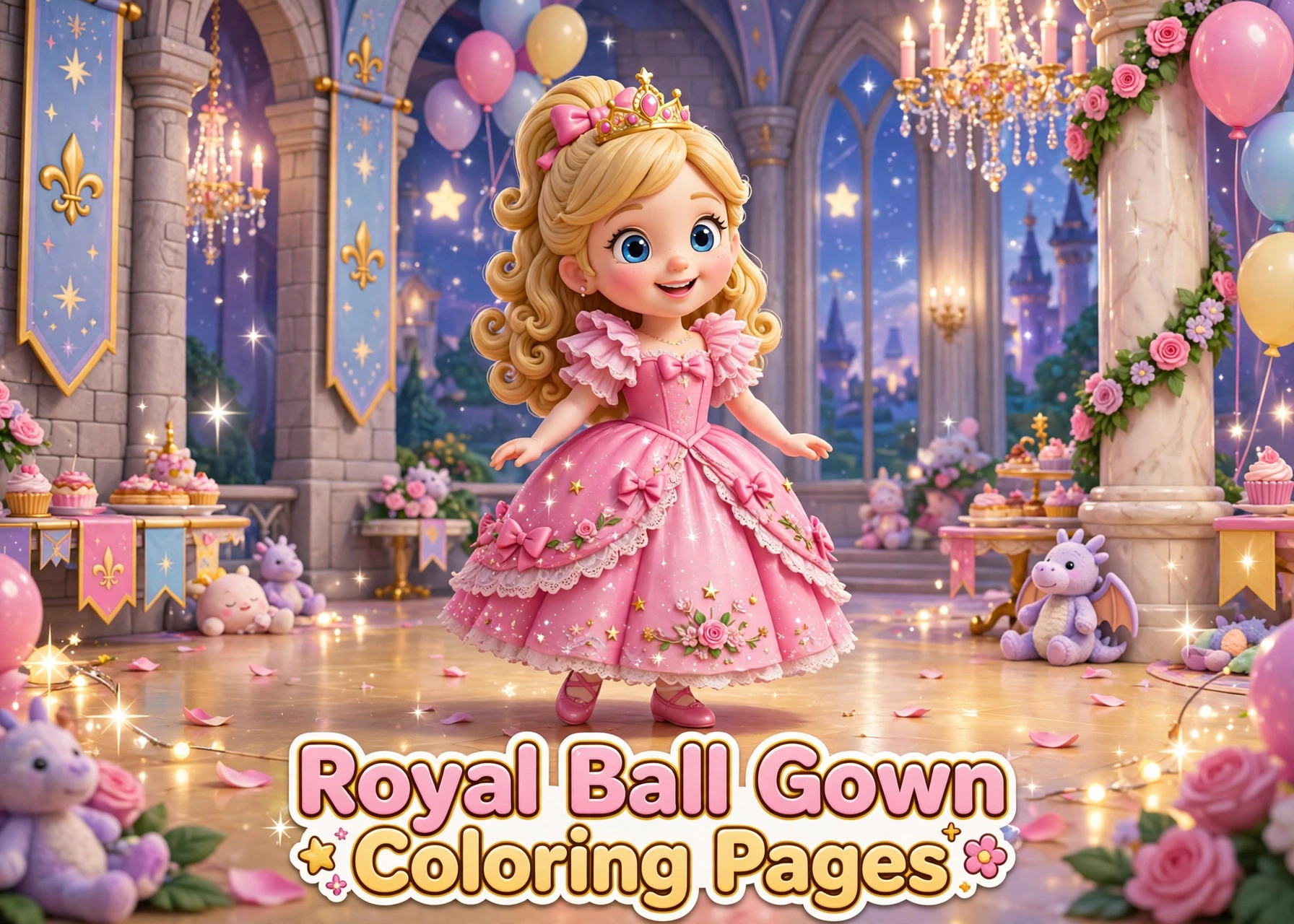
Royal Ball Gown Coloring Pages invite children to explore elegant dresses, imaginative colors, and the beauty of royal fashion through creative coloring activities.
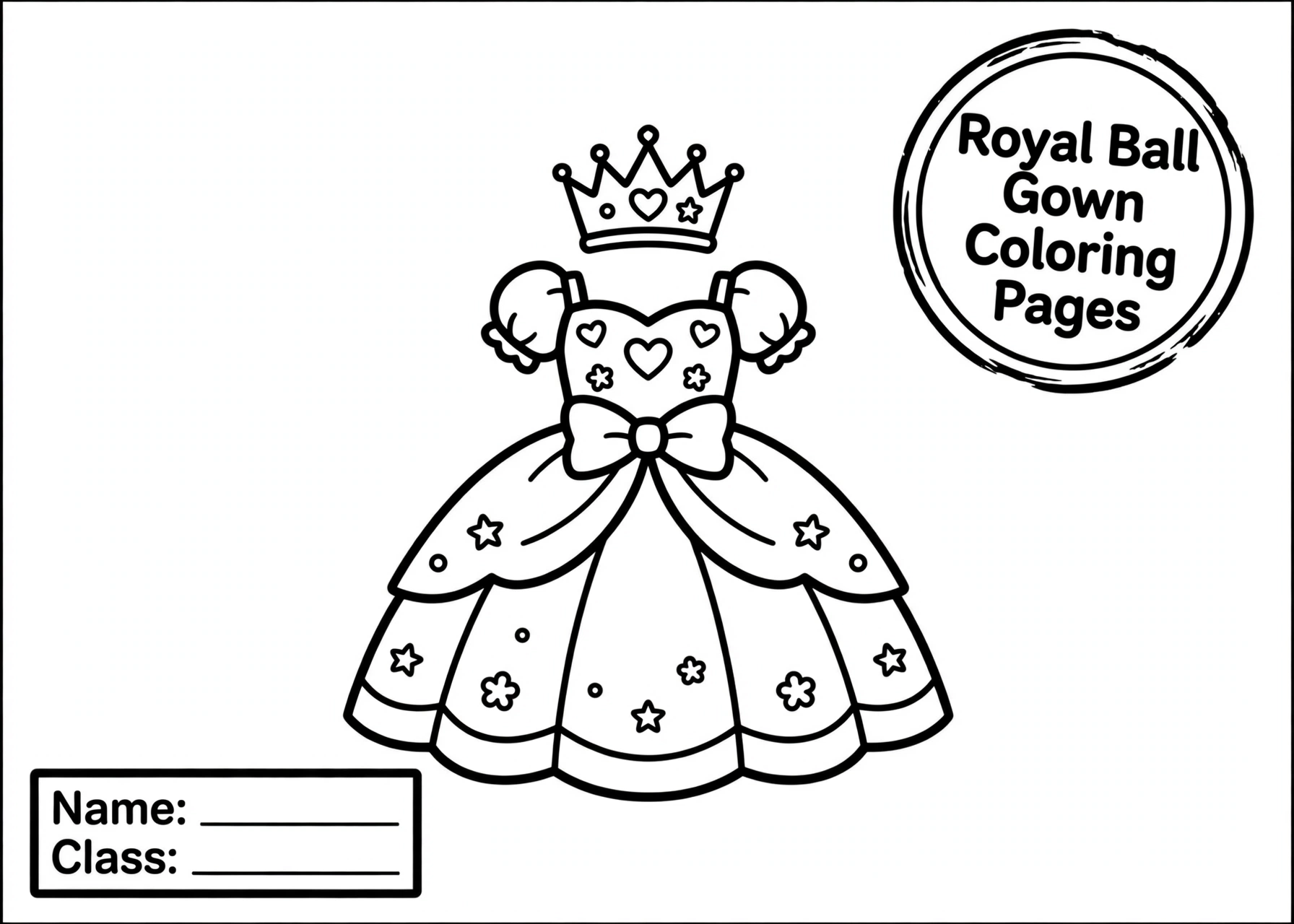
Discover the Beauty of Royal Ball Gowns
A royal ball gown is more than an ordinary dress. Its flowing skirt, graceful shape, and decorative details often bring to mind grand celebrations, palace halls, and stories filled with princes and princesses. These elegant designs make royal ball gown coloring pages an enjoyable theme for children who like fashion, fantasy, and creative storytelling.
One of the most interesting parts of coloring a ball gown is deciding how the fabric should look. Children can imagine a dress made from soft satin, sparkling silk, delicate lace, or magical fabric from a fairytale kingdom. Even when an illustration has only a simple outline, a few thoughtful color choices can give the dress its own personality.
There is no single correct way to decorate a royal gown. A child might choose a traditional combination of pink and gold, while another might prefer deep purple, emerald green, or icy blue. Each finished picture can reflect a different idea of royal style.
What Makes a Ball Gown Fun to Color?
The shape of a ball gown offers plenty of room for creative decisions. A wide skirt can be filled with one main color or divided into several sections with contrasting shades. Children can also experiment with lighter and darker tones to suggest folds in the fabric.
The bodice provides another area to explore. If the illustration includes decorative patterns, children can color them carefully using smaller pencils or crayons. Simple shapes, buttons, ribbons, and trim can be given contrasting colors to make them stand out. For designs without many decorations, children can invent their own details, such as a colored sash or a delicate border along the skirt.
Sleeves and necklines may also influence the overall appearance of a gown. Some imagined dresses might have long sleeves, while others could feature short sleeves or an elegant neckline. Children can use these details as inspiration for creating different fashion styles rather than trying to make every dress look the same.
Choosing Colors for an Elegant Dress
Color selection is an enjoyable part of this activity because royal fashion can be interpreted in many ways. Children do not need to follow realistic clothing colors. They can use familiar shades or invent combinations that belong in an imaginary kingdom.
Here are several ideas to try:
- Pink and gold: A warm combination that gives a gown a classic fairytale appearance.
- Royal blue and silver: A cool palette that can suggest a grand winter celebration.
- Purple and lavender: A lovely choice for a magical or mysterious royal character.
- Red and gold: A bold combination that makes the dress look festive and dramatic.
- Emerald green and cream: A softer alternative for a distinctive royal outfit.
It can be helpful to choose one main color before adding smaller decorative shades. For example, a child might color the entire skirt light blue, then use darker blue along selected folds. Silver or white details can be added afterward to create contrast.
If children are using markers, they may want to test the colors on a spare sheet first. Colored pencils are useful for gradual shading, while crayons work well for filling larger areas. Washable markers can also be convenient, especially during group activities, provided the paper is suitable for them.
Turn the Gown into a Fairytale Fashion Design
Coloring does not have to stop with the original outline. Children can imagine the occasion for which the gown was designed. Is it for a royal birthday, a palace dance, a winter festival, or a special celebration in a distant kingdom?
This small storytelling idea can guide the choice of colors. A dress for a garden celebration might use soft green, peach, and pink. A gown for a moonlit ball could feature navy, violet, and silver. For a royal festival, bright colors and contrasting decorative details might create a more cheerful appearance.
Children can also give their imagined dress a name. Perhaps it is the Moonlight Gown, the Golden Garden Dress, or the Starry Palace Outfit. Writing the name beside the finished artwork turns a simple coloring activity into a small fashion-design project.
For another imaginative setting, families and teachers can introduce a village-inspired theme. The charming buildings and everyday surroundings found in these village street designs can provide a different backdrop for stories about a royal visitor exploring a friendly town.
Simple Ways to Make the Activity More Creative
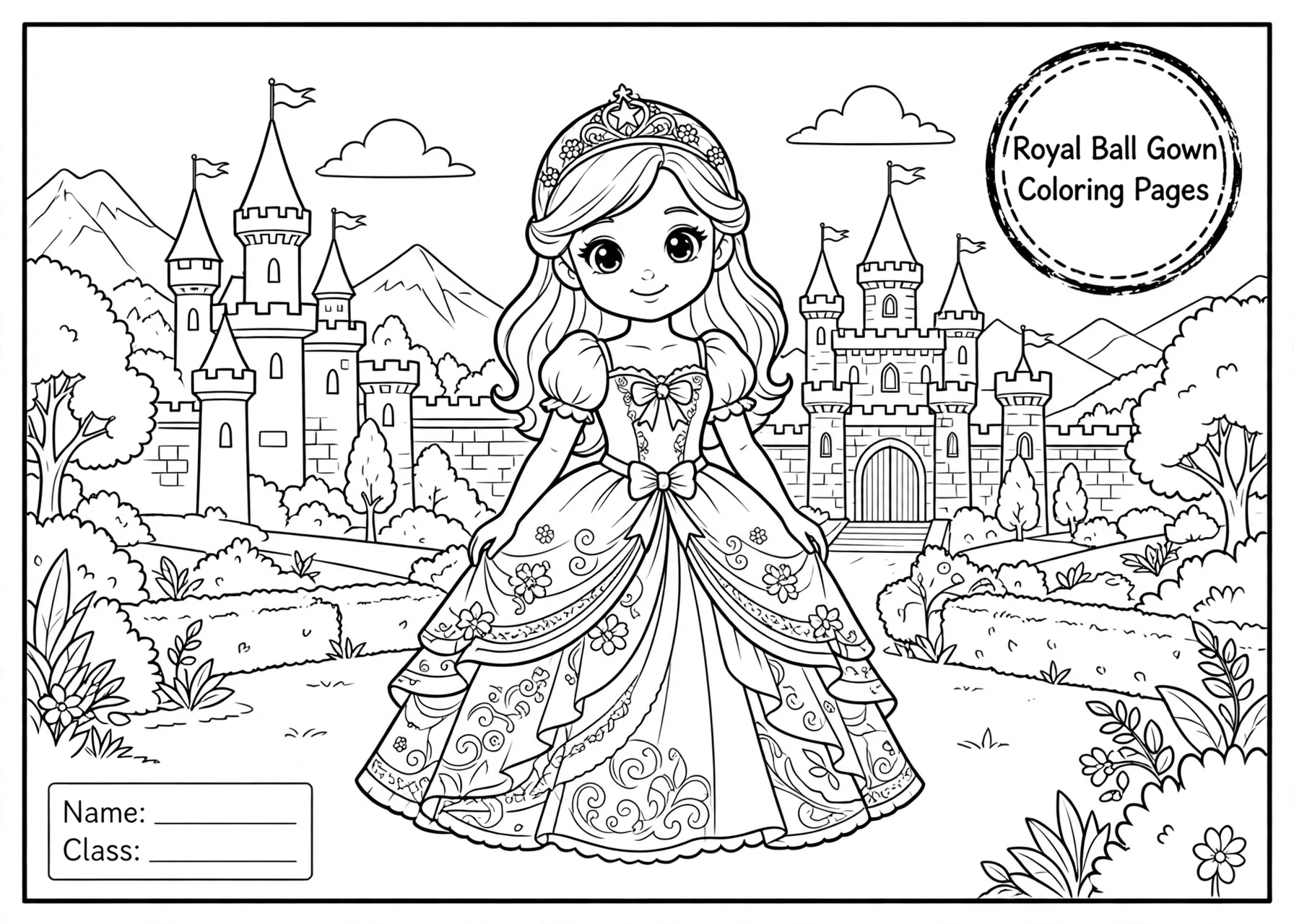
A royal gown offers an opportunity to experiment with patterns and textures. Children can add small dots, curved lines, stars, or flower shapes to selected areas if they want to personalize an illustration. These additions should leave enough space for the main colors to remain visible.
A useful approach is to work from large areas to small details. Start with the skirt and bodice, then move to sleeves, ribbons, and decorative elements. This order can make the coloring process feel more manageable, particularly when the design contains several small sections.
For younger children or anyone who prefers a relaxed activity, filling the main sections with a few favorite colors is perfectly fine. Children who enjoy more detail can try blending two shades or repeating a small pattern across the skirt. The aim is to enjoy the creative process rather than make every part look complicated.
Families can make the activity more engaging by inviting children to describe their designs. They might explain where the royal character is going, what kind of celebration is taking place, or why they selected particular colors. Teachers can also display completed pictures together to show how differently each child interpreted the same theme.
Create a Magical World Around the Royal Gown
A ball gown can become the starting point for a larger fairytale scene. After finishing the dress, children may want to imagine the setting where it will be worn. A palace ballroom, a flower-filled garden, or a castle courtyard could all provide inspiration for a separate drawing.
A dreamy castle setting is especially suitable for stories about royal celebrations. Children who enjoy fantasy architecture may find ideas in these dreamy cloud castles, where imagination can extend beyond clothing to an entire magical world.
Another activity is to design matching accessories. Children can draw a small crown, necklace, pair of shoes, or handbag that complements the gown. They can choose whether the accessories should match the dress or introduce a contrasting color. This encourages them to think about how different parts of an outfit work together.
Preparing a Comfortable Coloring Session
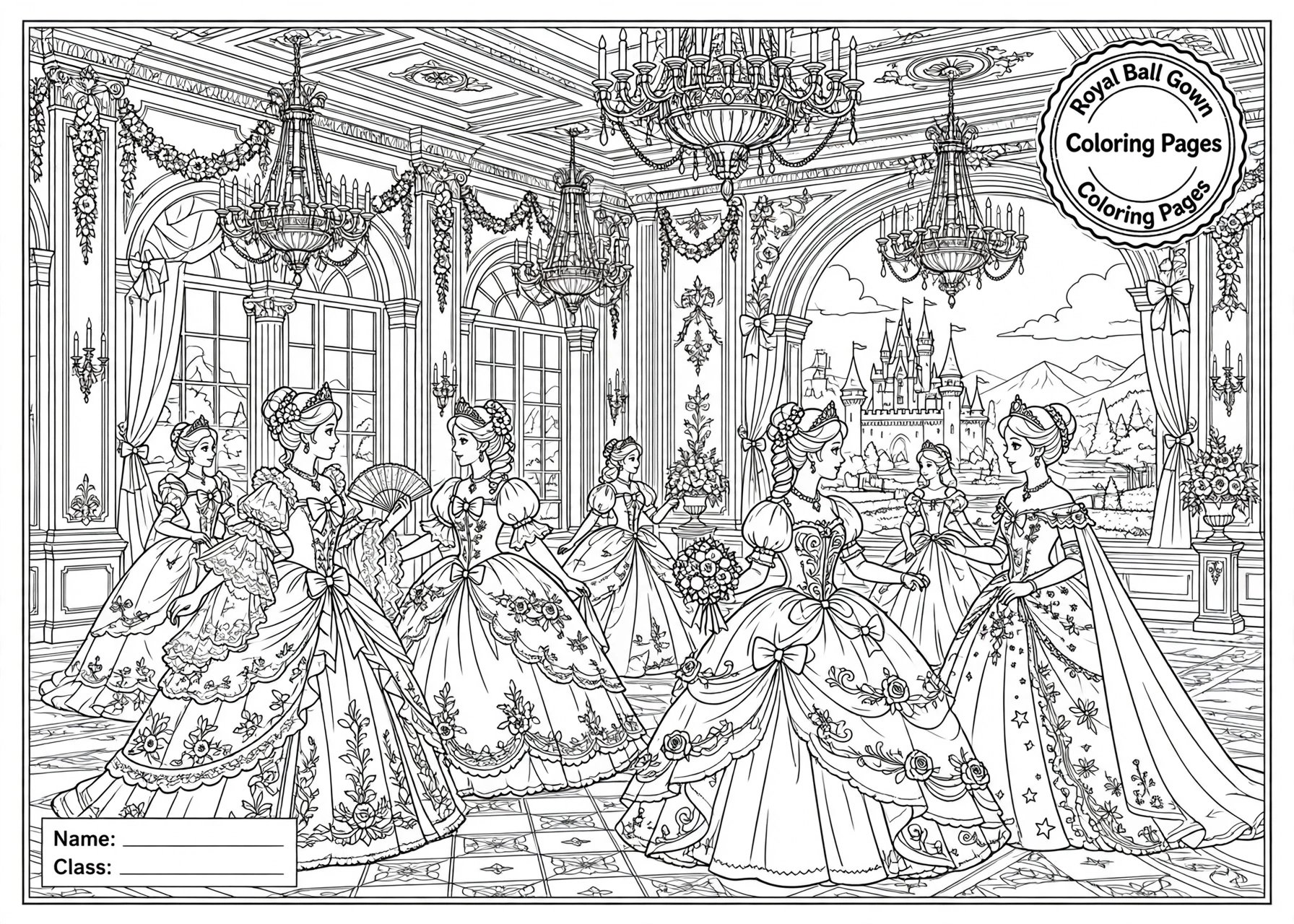
Before starting, choose a comfortable workspace with enough room for the paper and coloring materials. Keep pencils, crayons, or markers within easy reach so children can focus on their designs. If the illustration will be printed, check the print preview to make sure the main artwork is visible and the page layout is not unintentionally cropped.
A suitable sheet of paper can make coloring more enjoyable, especially when children want to use several layers of pencil or marker. Follow the printer’s paper recommendations and consider placing a spare sheet underneath when using materials that may transfer through the page.
Royal Ball Gown Coloring Pages offer a simple way to combine fashion, imagination, and storytelling. Whether children prefer soft pastel dresses, dramatic royal colors, or completely original designs, each picture gives them room to create a look of their own. The finished artwork can also become the beginning of a new fairytale, with a special gown, an imagined celebration, and a kingdom waiting to be explored.
