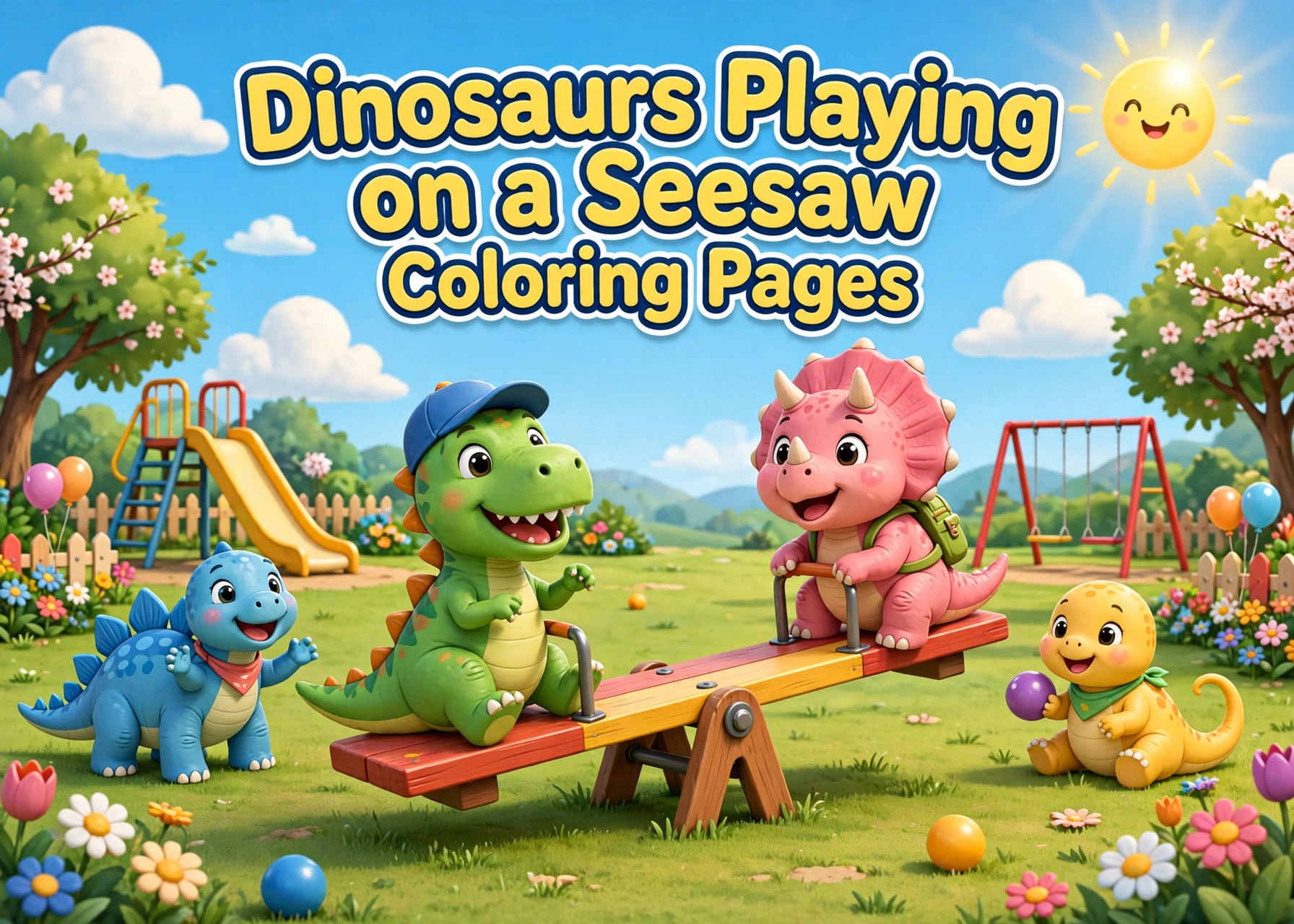
Dinosaurs Playing on a Seesaw Coloring Pages turn a familiar playground activity into a playful prehistoric adventure. With dinosaurs balancing on opposite sides of a seesaw, children can explore fun color combinations while imagining a friendly world where ancient creatures enjoy a day at the playground.
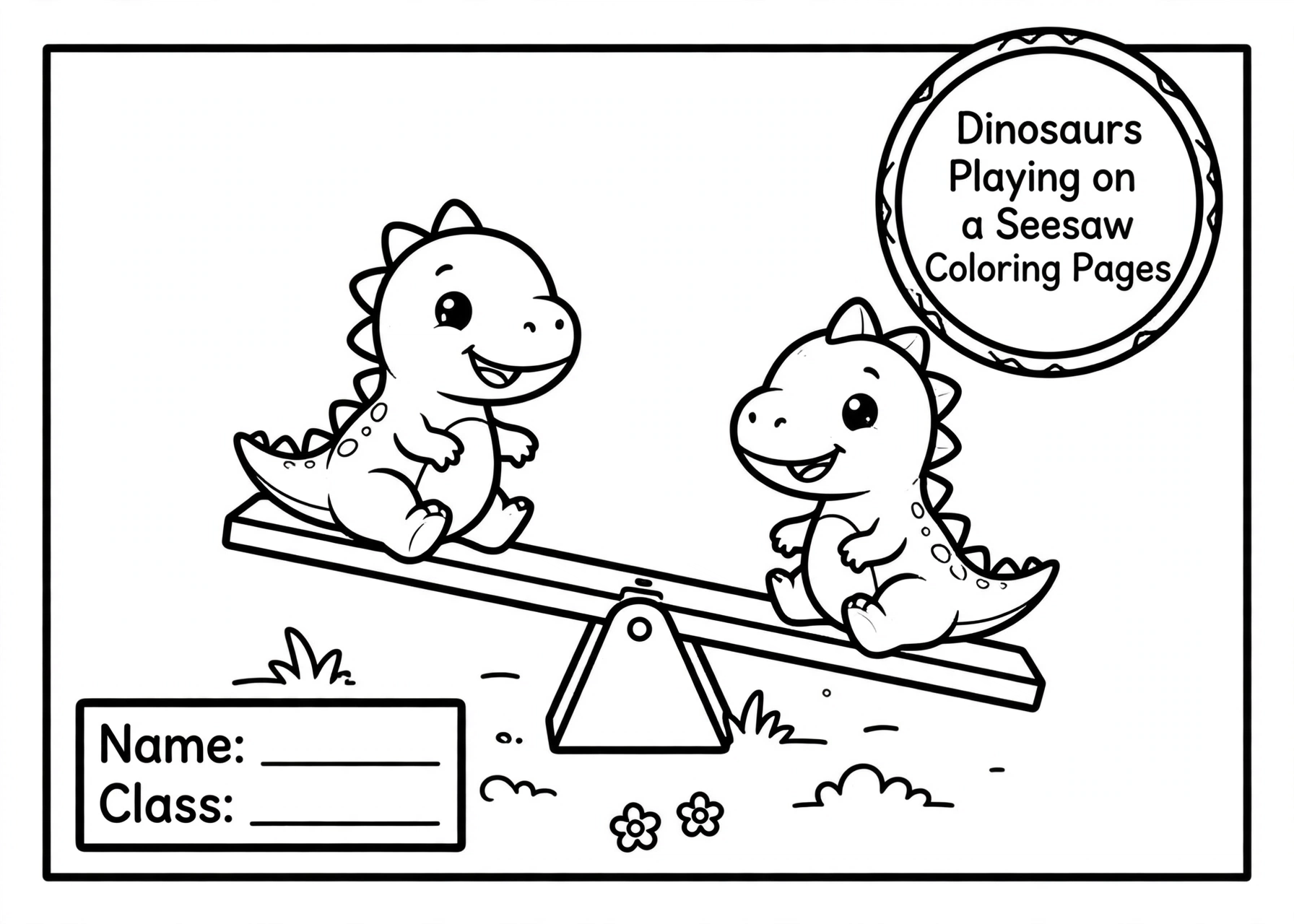
A Prehistoric Playground Full of Fun
Dinosaurs are often associated with ancient forests, enormous footprints, and fascinating prehistoric discoveries. However, imagining them enjoying ordinary playground activities creates a completely different kind of adventure. A seesaw is a particularly amusing choice because its up-and-down movement gives the dinosaurs a playful situation to explore.
The idea of two dinosaurs sharing a seesaw also introduces an interesting visual arrangement. One dinosaur may be sitting high in the air while another rests closer to the ground. Their different positions create a sense of movement, even in a still illustration. Children can use their imagination to decide which dinosaur is enjoying the highest seat and which one is preparing to rise.
There are many possibilities for coloring the dinosaurs. Children might choose green for one creature and blue for the other, or use completely different shades of purple, orange, and yellow. The playground equipment can be colored in bright primary colors to make the scene feel lively.
This theme is especially appealing because it combines two familiar ideas: prehistoric animals and playground fun. Children do not need detailed knowledge about dinosaurs to enjoy the picture. They can simply focus on the characters, their positions, and the playful situation.
Understanding the Seesaw Scene Through Colors
A seesaw is a simple playground structure with a long board balanced around a central support. When one side moves down, the opposite side moves up. This makes it an interesting object to include in a coloring activity because children can use different colors to distinguish its main parts.
The board can be colored in red, yellow, blue, or natural wood shades. The central support might have a contrasting color so that its position is easy to recognize. If the illustration includes handles or other playground details, children can give each part its own color.
The dinosaurs provide even more opportunities for creative choices. Here are a few ideas for coloring the main characters:
- Green dinosaur: Combine light green and darker green to create a natural-looking appearance.
- Blue dinosaur: Use sky blue or turquoise for a cheerful, imaginative character.
- Orange dinosaur: Add yellow or brown details to create a warm color combination.
- Purple dinosaur: Choose lavender and deeper violet shades for a fantasy-inspired look.
- Colorful dinosaur: Give different body sections contrasting colors if the illustration provides suitable spaces.
Children can also experiment with patterns. Small spots, stripes, or decorative shapes can make each dinosaur look different. These details are optional additions that can be drawn after the main illustration has been colored.
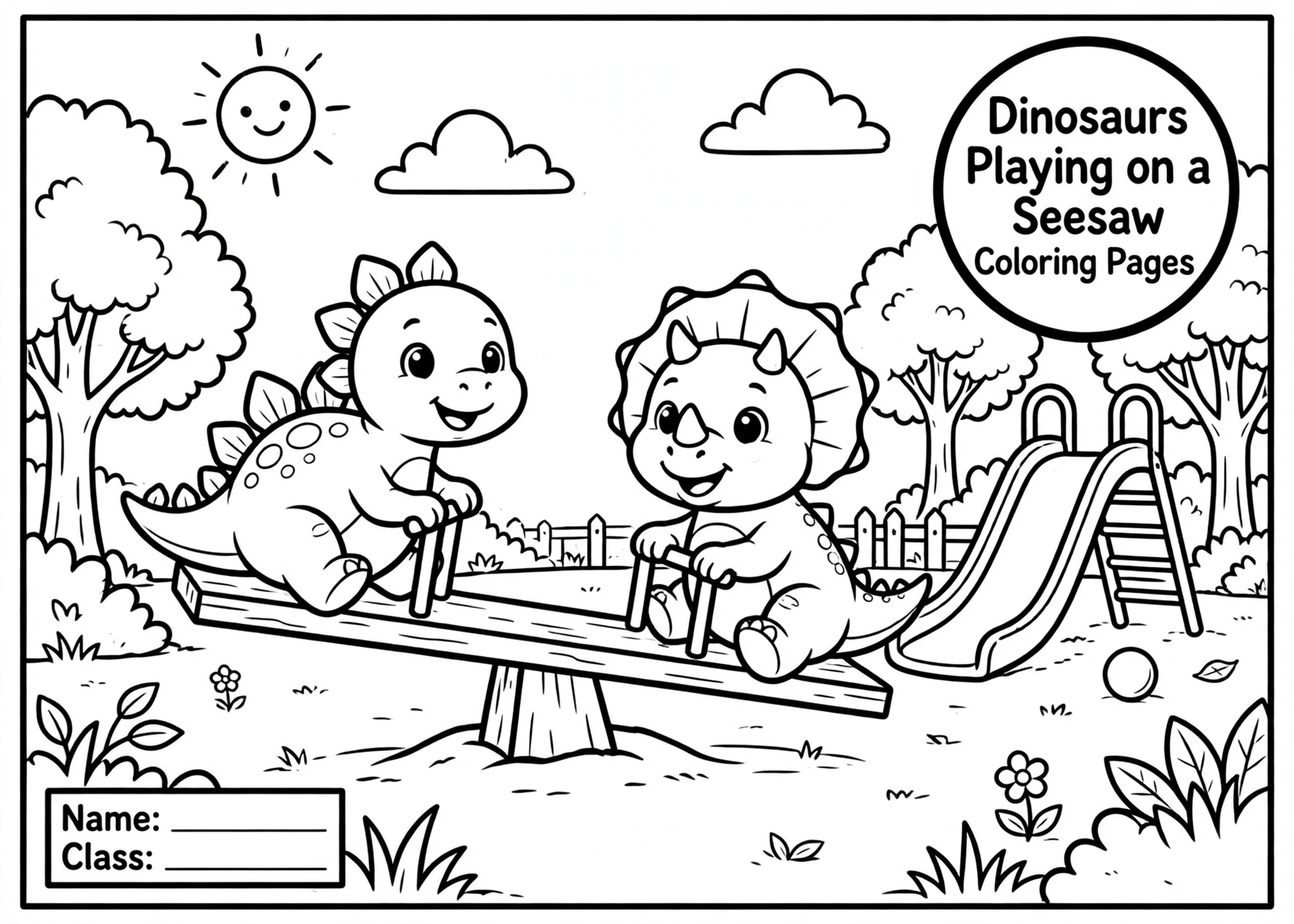
Making Each Dinosaur a Unique Character
One interesting way to approach this theme is to treat the dinosaurs as two different playground friends rather than simply coloring them as animals. Children can decide that one is adventurous and loves being lifted high, while the other prefers staying closer to the ground.
They can also invent names and personalities for the characters. Perhaps one dinosaur is playful and energetic, while its friend is more relaxed and enjoys taking turns. These small ideas can turn a simple picture into the beginning of a short story.
Different dinosaur species can also inspire coloring choices. A child might imagine a T-Rex, Triceratops, Stegosaurus, or Brachiosaurus enjoying the seesaw. Each has recognizable features that can influence the way the character is decorated.
For example, a Triceratops can be imagined with a colorful frill and three prominent facial horns. A Stegosaurus might have bright plates along its back, while a T-Rex could have a large head and tiny arms. These are optional character ideas rather than details that should be assumed to appear in every illustration.
Parents and teachers can encourage children to describe their dinosaurs after finishing the picture. They might explain which character is their favorite, what colors they selected, and what the two friends are doing at the playground.
Adding More Playground Details
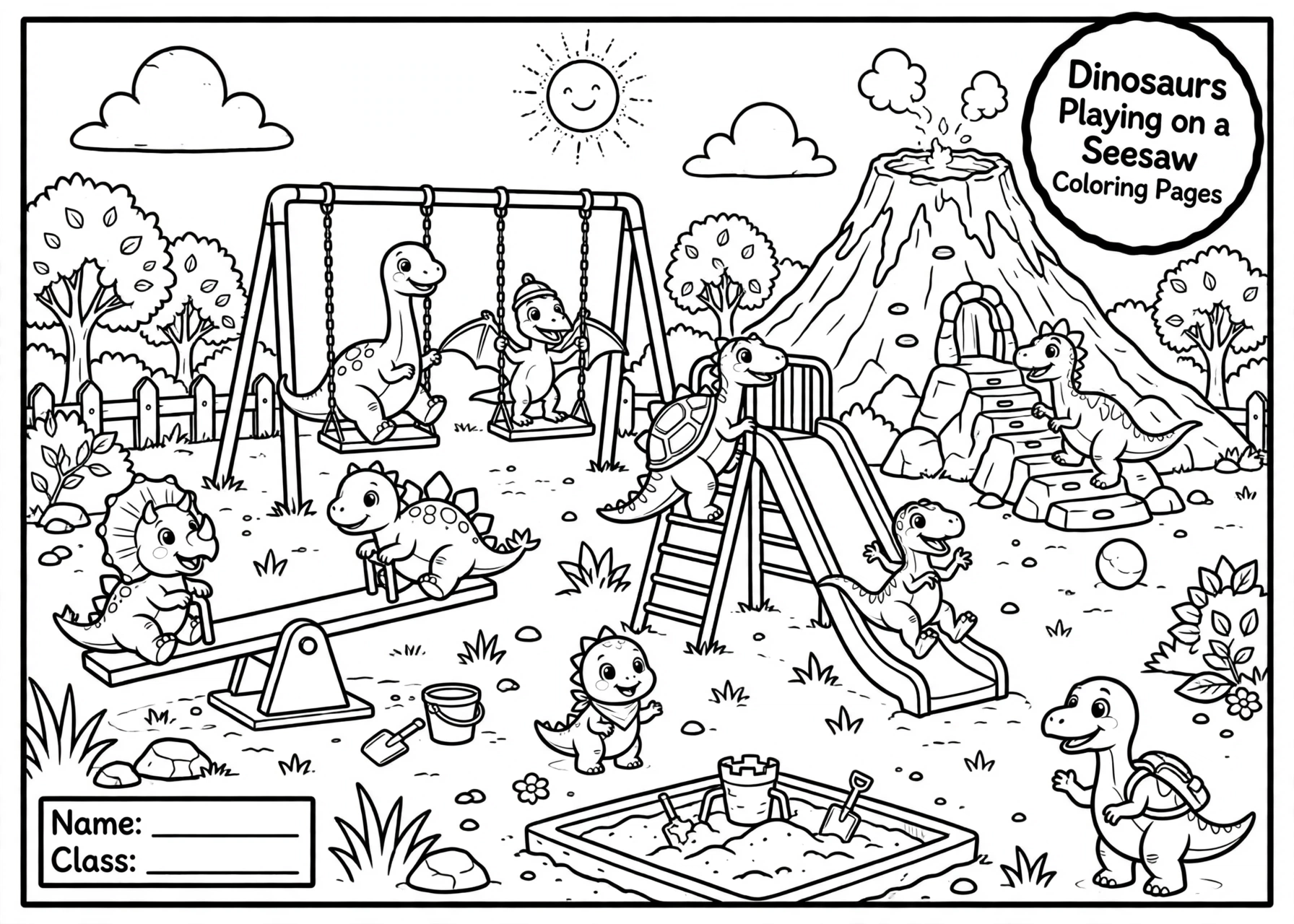
The seesaw can become the main attraction of a larger imaginary playground. If children have extra drawing space, they can add other playground equipment and decorations around the dinosaurs.
A slide, swing set, sandbox, climbing frame, or small bench could make the scene feel like a complete play area. Children can also draw trees, clouds, flowers, and patches of grass to create an outdoor setting.
Consider these background ideas:
- Sunny playground: Use a light blue sky, bright sunshine, and green grass.
- Dinosaur park: Add large leafy plants, bushes, and unusual prehistoric-looking trees.
- Colorful play area: Use different bright shades for playground equipment and surrounding decorations.
- Nature-inspired setting: Combine earthy brown, green, and yellow tones to create a peaceful outdoor atmosphere.
The background does not have to be complicated. A few simple details can provide enough context without taking attention away from the dinosaurs and their seesaw.
For children who enjoy exploring more prehistoric activities, dinosaurs playing tennis offer another imaginative way to combine dinosaur characters with familiar sports. It can be interesting to compare how the same prehistoric creatures might look while enjoying different games.
Creative Games to Try After Coloring
Once the illustration is complete, families can extend the activity with a few simple games. These ideas work well at home, during classroom art sessions, or as part of a themed activity afternoon.
Tell a seesaw story
Ask children to describe what happened before the dinosaurs started playing. Perhaps they met at the playground, decided to take turns, or challenged each other to see who could reach the highest point. Children can tell the story aloud or write a few sentences beneath their artwork.
Explore up and down
Use the seesaw illustration to introduce simple position words. Parents and teachers can point to the higher and lower sides and ask children to describe what they see. This creates a natural connection between the picture and everyday vocabulary.
Create a dinosaur playground
Invite children to draw another playground activity on a separate sheet of paper. They might add a swing, slide, or climbing structure and imagine how their dinosaur characters would use it.
Design matching dinosaur friends
Children can choose two different color palettes for the dinosaurs. They can make the characters look completely different or give them matching colors to show that they are friends.
These activities do not require complicated materials. A few pencils, crayons, paper, and some imaginative ideas are enough to keep the theme interesting.
Choosing a Design That Matches the Child’s Interests
When selecting a dinosaur seesaw illustration, consider how much detail the child enjoys coloring. Some children prefer large dinosaur shapes and clearly separated playground objects. Others may enjoy pictures with additional details that allow them to spend more time decorating the characters and their surroundings.
A design with recognizable dinosaur features can be a good starting point for children who enjoy learning about prehistoric animals. Those who prefer imaginative scenes may be more interested in the interaction between the two characters and the movement suggested by the seesaw.
It is also helpful to consider the child’s favorite coloring materials. Colored pencils are suitable for adding small patterns and details, while crayons work well for larger areas. Washable markers can provide stronger colors, although children may need to work carefully around smaller sections.
There is no need to make every finished picture look the same. Each child can choose a different combination of dinosaur colors, playground decorations, and background elements.
For another playful animal-themed activity, children can explore a cheerful scene featuring a puppy and kitten jumping in puddles. The two themes offer different opportunities to imagine animal friends enjoying an outdoor adventure.
Getting Ready to Print and Color
Before starting, check the selected illustration and its available printing options. Use the print preview to make sure the complete design fits within the paper boundaries. Adjust the orientation and scaling settings when necessary, depending on the actual layout of the file.
Prepare the coloring materials on a clean, comfortable surface. Keeping several colors within reach makes it easier for children to move between the dinosaurs, seesaw, and any background details they want to add.
For classroom activities, teachers can display the finished pictures together and invite children to explain their color choices. At home, parents can keep the artwork in a folder or display it in a creative corner.
Dinosaurs Playing on a Seesaw Coloring Pages offer a playful combination of prehistoric characters and everyday playground fun. With imaginative dinosaur colors, simple background ideas, and creative storytelling, children can turn this unusual playground adventure into an enjoyable piece of personal artwork.
