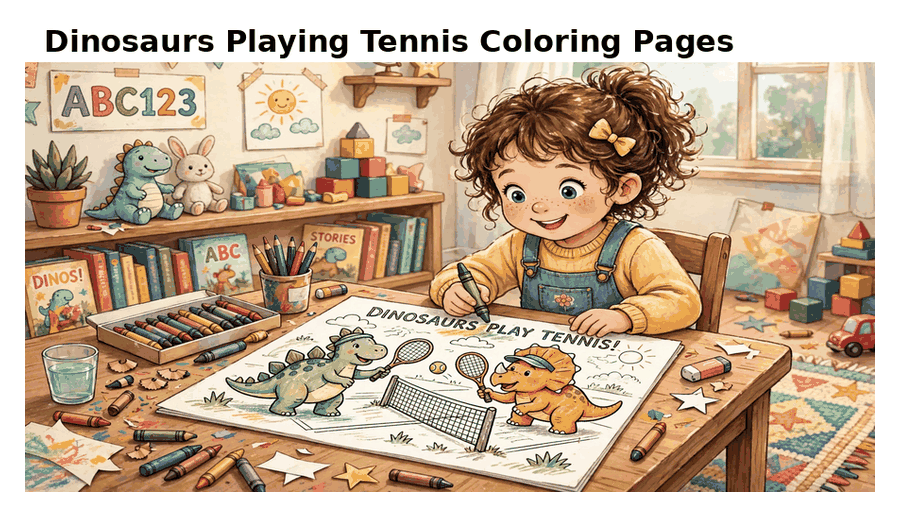
Dinosaurs Playing Tennis Coloring Pages bring prehistoric fun to a familiar sport, giving children a playful way to explore colors, court details, and imaginative scenes through art.
When Prehistoric Dinosaurs Meet the Tennis Court
Tennis is usually associated with fast-moving balls, rackets, and players racing across a court. Add dinosaurs to the scene, and an ordinary game becomes an imaginative adventure. Dinosaurs Playing Tennis Coloring Pages combine the excitement of sports with the timeless fascination children have with these prehistoric creatures. The theme offers families an opportunity to turn a simple coloring session into a creative activity filled with funny match situations and colorful ideas.
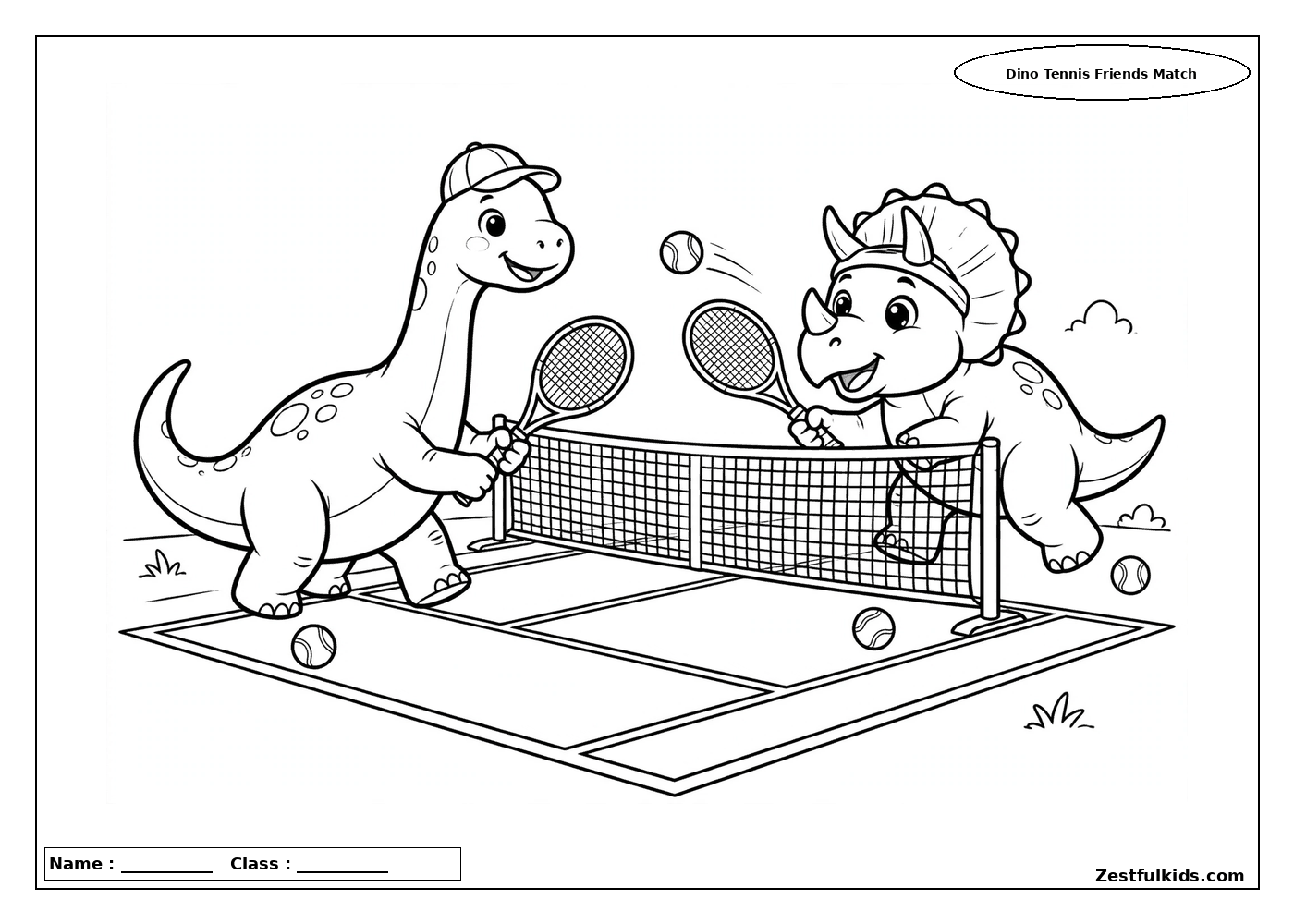
The contrast between dinosaurs and modern sports makes this theme particularly enjoyable. A long-necked dinosaur might inspire thoughts of a player reaching for a high ball, while a powerful dinosaur could look amusingly determined to win a match. These are possibilities children can imagine while coloring, rather than details that must appear in every illustration. The main attraction is the freedom to picture dinosaurs as enthusiastic tennis players, each with a personality and playing style of their own.
For parents and teachers, this theme can also introduce children to the basic elements of tennis without making the activity feel like a formal lesson. A racket, tennis ball, net, and court provide recognizable shapes to explore. Children can decide which parts should stand out and which colors will make their imagined match easy to understand.
Choosing Colors for Dinosaurs, Rackets, and Tennis Balls
One of the most enjoyable parts of coloring dinosaur sports scenes is deciding how realistic or imaginative the final picture should look. Dinosaurs do not have to follow the colors commonly associated with nature. A child might choose leafy green for a gentle dinosaur, deep blue for a confident competitor, or bright orange for a playful character. Unusual combinations can make each finished page feel personal.
Tennis equipment offers a different coloring challenge. Tennis balls are commonly bright yellow-green, while rackets can feature dark frames and colorful handles. Children can use these familiar details as starting points before experimenting with their own combinations. If a dinosaur is holding a racket, leaving a little space between the racket frame and its strings can help preserve the details when using crayons or colored pencils.
The court can provide another opportunity for thoughtful color choices. Green and blue are familiar colors for many tennis courts, but children can create an imaginary court in purple, turquoise, or another shade they enjoy. White lines can represent the court boundaries, while a contrasting color for the net helps separate the playing area into two sides.
Encourage children to choose a small group of colors before starting. Three or four main colors can create a coordinated appearance, although younger artists may prefer to experiment freely. Neither approach needs to produce a perfect result; the purpose is to enjoy the process and make the dinosaur tennis scene their own.
Turning a Coloring Session Into a Mini Tennis Match
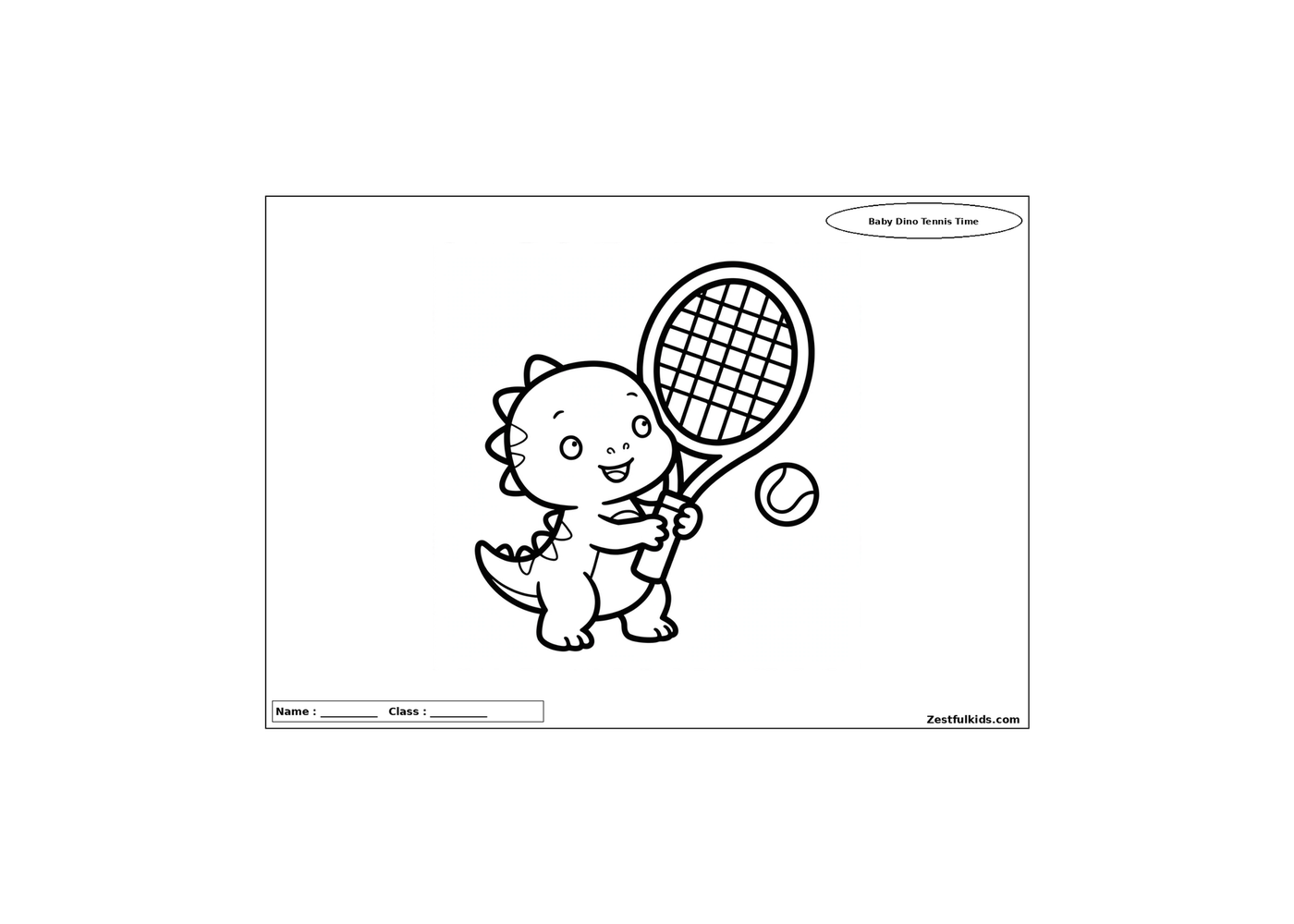
A coloring activity can become more engaging when children imagine what is happening in the scene. Before picking up their crayons, invite them to invent a short story about the dinosaur players. Perhaps one dinosaur is serving for the first time, another is preparing to return the ball, or a friendly match is taking place between two dinosaur friends.
These story ideas can be adapted to the actual illustration. If the page shows only one dinosaur, children might imagine a practice session or a player training to improve a serve. If the design includes a court, they can decide where the spectators might sit or what the weather is like during the game. Background details should remain optional, allowing children to focus on the main drawing when they prefer a simpler activity.
Parents and teachers can also introduce a few basic tennis terms during the session. Words such as racket, serve, net, and court give children useful vocabulary connected to the picture. A brief explanation of how a player sends the ball over the net can provide context without interrupting the creative activity.
For children who enjoy numbers, the session can be extended with a simple counting game. They might count the rackets, tennis balls, or visible court lines in an illustration, depending on what the page contains. Another suitable activity is the dinosaur counting worksheet, which can pair an interest in prehistoric creatures with a separate number-based exercise.
Making the Most of Different Coloring Materials
The best coloring tools depend on the child’s age, preferences, and the amount of detail in the illustration. Crayons are a practical option for broad areas such as a dinosaur’s body or the tennis court. Their thicker shape can be comfortable for children who prefer making wide, sweeping strokes rather than filling tiny spaces.
Colored pencils work well when a drawing contains smaller details, including racket strings, claws, facial features, or narrow court markings. Children can layer colors gradually to create darker areas around a dinosaur’s legs or under its body. There is no need to introduce complicated shading techniques; simply pressing a little harder in selected areas can create a visible difference.
Washable markers may be useful for children who enjoy bold, clearly defined colors. However, markers can sometimes bleed through ordinary paper, so placing a spare sheet underneath the coloring page is a sensible precaution. Check that the chosen paper is suitable for the materials being used, especially when children want to combine markers with other tools.
A simple preparation routine can make the activity easier. Place the printed page on a flat surface, provide a small selection of coloring materials, and allow enough room for children to move their hands comfortably. If the illustration contains fine details, a test mark on spare paper can help children understand how strongly their chosen tools apply color.
Adding a Creative Background Without Overcrowding the Picture
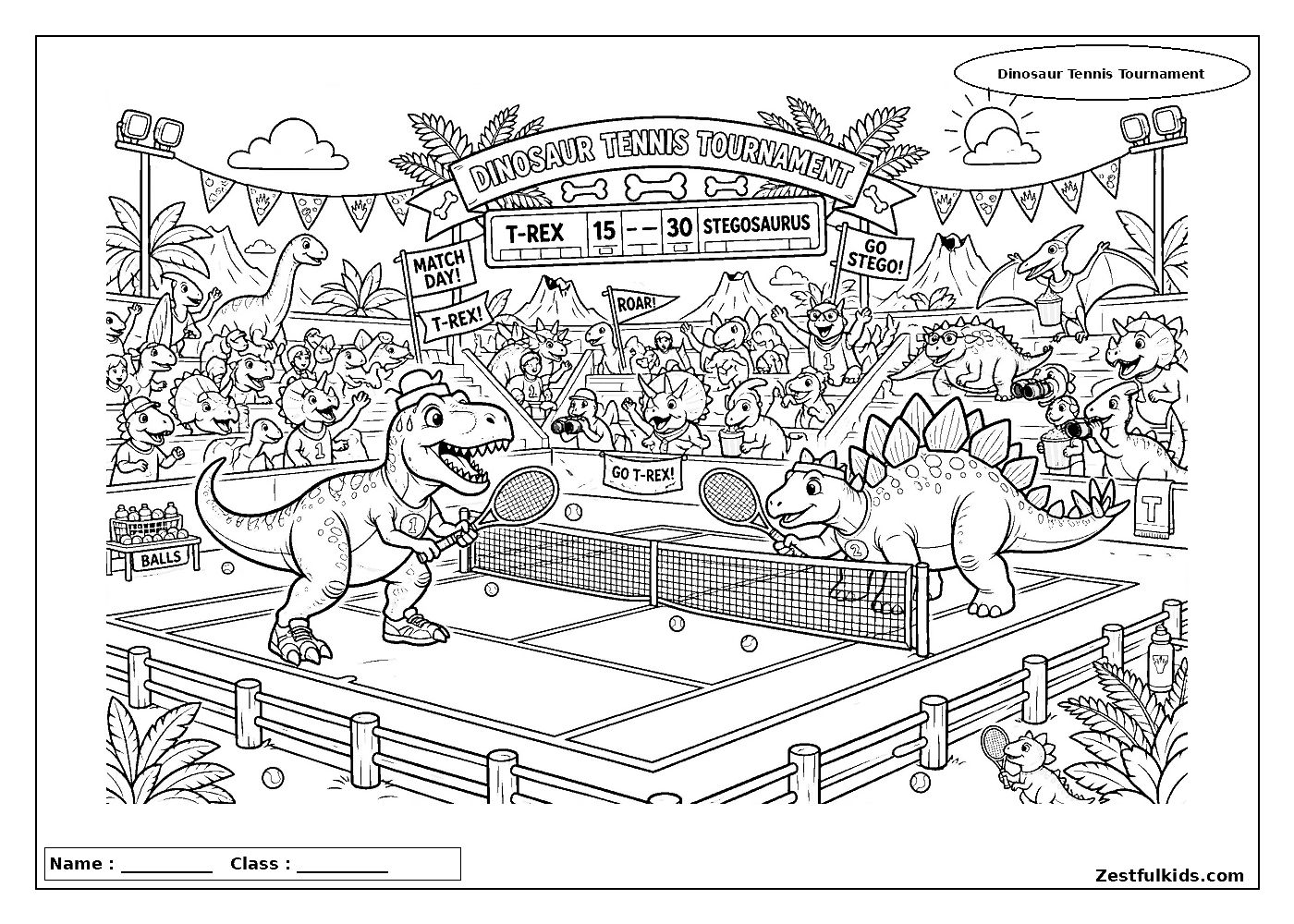
A dinosaur playing tennis can become the focal point of a larger imaginary scene. Children who finish the main illustration quickly may want to add a sky, a fence, a few trees, or a scoreboard. These additions can make the setting feel more complete, provided they do not cover important parts of the original drawing.
A sunny afternoon is one possible setting. Pale blue can represent the sky, while green patches around the court can suggest grass or nearby plants. Children might add a small cloud or draw sunlight above the playing area. For a more unusual idea, they could imagine a prehistoric tennis club surrounded by ferns and giant leaves.
Not every child will want to add a background, and that is perfectly fine. Some may prefer to concentrate on the dinosaur’s scales, spots, or clothing if those details are present in the design. Others might spend most of their time choosing the perfect colors for the racket and ball. Giving children control over these decisions helps keep the activity enjoyable rather than turning it into a set of instructions they must follow.
For another imaginative setting that combines small structures with nature, families may also enjoy exploring mushroom house designs. The woodland-inspired theme offers a different creative direction for children who like inventing places and stories around their pictures.
Using Dinosaur Tennis Coloring Pages at Home and in the Classroom
At home, these coloring pages can provide a screen-free activity for a quiet afternoon, a rainy day, or a family art session. Parents can join in by coloring a separate dinosaur or suggesting a friendly challenge, such as designing the brightest tennis ball or creating two dinosaurs with contrasting uniforms. Sharing ideas can make the experience more interactive without requiring everyone to work at the same pace.
In the classroom, the theme can fit into an art station or a broader activity about sports and animals. Teachers might invite children to describe their finished pictures, name the colors they selected, or explain what they imagine is happening during the match. These prompts encourage conversation while leaving room for different interpretations of the same theme.
Before printing, check the document’s print preview to confirm that the illustration fits within the available page area and that its outlines remain visible. Paper size and printer settings may vary, so select the options that suit the file and the printer rather than assuming every design uses the same layout. Keep the finished pages in a folder or display selected artwork on a classroom board or at home.
Dinosaurs Playing Tennis Coloring Pages offer a distinctive combination of prehistoric creatures and an everyday sport. With familiar tennis equipment, imaginative dinosaur colors, and opportunities to invent a match story, the activity can suit a variety of creative preferences. Children can follow realistic color ideas, invent an unusual court, or simply enjoy filling the illustration with their favorite shades. Each finished page becomes a small expression of their imagination, bringing the world of dinosaurs onto the tennis court in a playful and memorable way.
