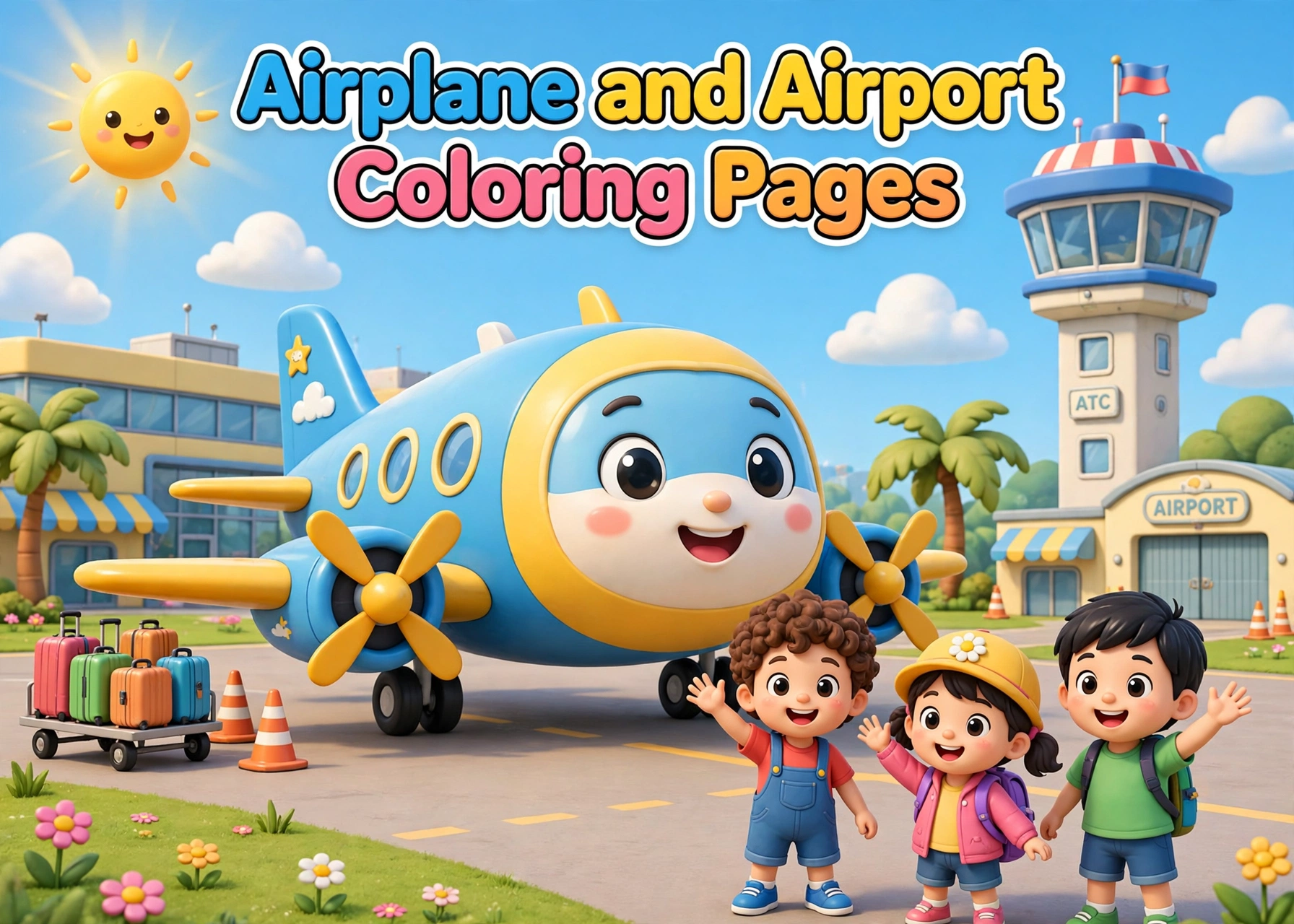
Airplane and Airport Coloring Pages bring the excitement of air travel to children’s creative time, with opportunities to explore aircraft, airport activities, and the world of flying through color.
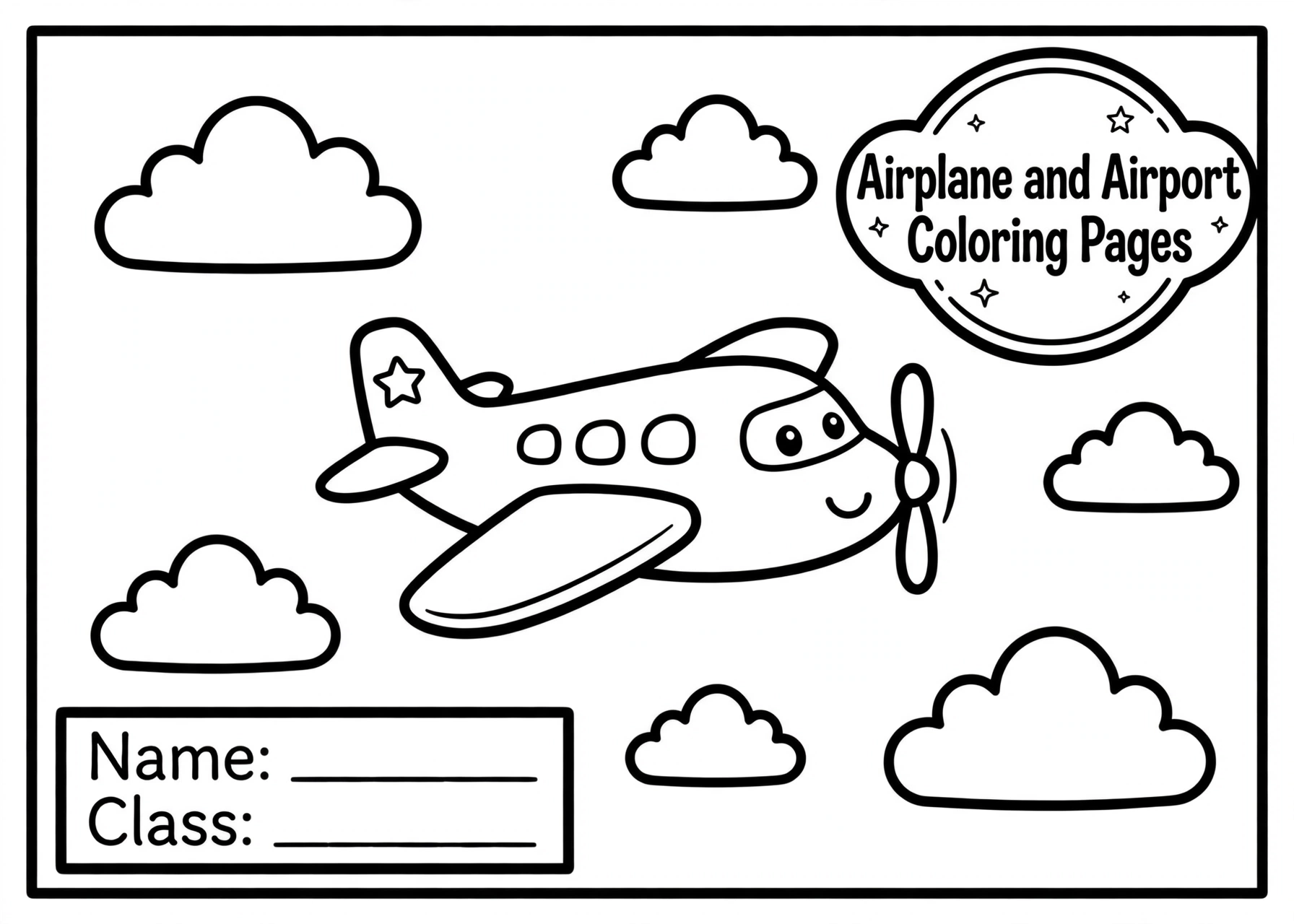
Discover the World of Airplanes Through Coloring
Airplanes are fascinating machines with recognizable shapes and features. Their long wings, rounded windows, engines, tail fins, and landing gear give children plenty of details to notice while coloring. Some aircraft have a sleek appearance, while others are larger and designed to carry many passengers. These differences can inspire children to experiment with colors and imagine where each plane might be going.
An airplane-themed activity can also introduce familiar parts of air travel in a relaxed and enjoyable way. Children may already recognize airplanes from trips, books, television, or the sight of aircraft crossing the sky. Coloring gives them time to look more closely at the shapes that make an airplane distinctive. Parents and teachers can use these moments to talk about how aircraft travel between cities and countries.
What Makes an Airport an Interesting Coloring Theme?
An airport is more than a place where airplanes take off and land. It is a busy environment where passengers, pilots, ground staff, and airport workers all have different responsibilities. This makes airport-themed artwork a useful starting point for imaginative storytelling.
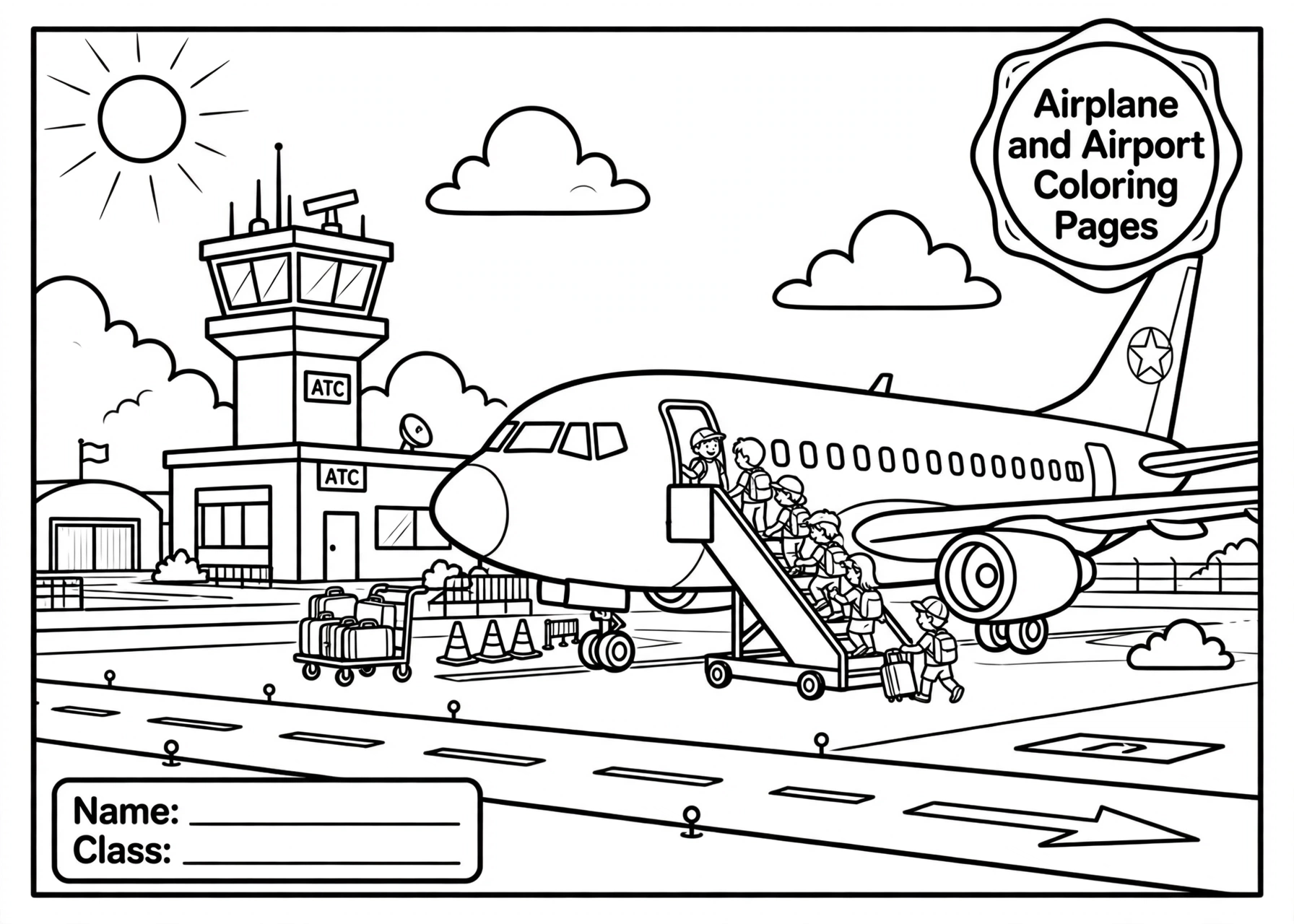
Depending on the available illustration, children might enjoy coloring an airplane on the runway, an aircraft preparing for departure, or a scene featuring airport buildings. If an image includes a control tower, its windows and equipment can be colored with careful attention to detail. A terminal building can also inspire ideas about large glass windows, entrance doors, signs, and passenger areas.
The setting offers many possibilities beyond the aircraft itself. Children can imagine the airport during a bright morning, beneath a cloudy afternoon sky, or at sunset when the runway lights begin to stand out. These ideas allow them to create different atmospheres without needing complicated coloring techniques.
Choosing Colors for Aircraft and Airport Details
Airplanes do not all have the same appearance, so children can use realistic colors or create their own designs. White, gray, and blue are common choices for a familiar passenger aircraft look. Red, yellow, green, or other bright shades can make an imaginary airline stand out.
For a more detailed coloring experience, encourage children to work on one section at a time. They can begin with the main body of the airplane, then move to the wings, tail, windows, and engines. Using a slightly different shade for the wings or tail can help distinguish separate parts of the aircraft.
Airport backgrounds provide another opportunity to experiment. A runway might be gray with white or yellow markings, while grassy areas can use several shades of green. The sky does not always need to be bright blue. Soft gray can suggest cloudy weather, while orange and pink can create a warm evening setting.
Colored pencils are helpful for smaller details such as windows, markings, and runway lines. Crayons work well for larger areas, while washable markers can create bold colors when used with suitable paper. Children should choose tools that match the paper and their comfort level.
Turn Coloring Time Into an Airport Adventure
A finished airplane picture can become the beginning of a simple pretend-travel activity. Children can choose a destination for their aircraft, give the imaginary airline a name, and decide whether the plane is carrying passengers or cargo. They might describe a short journey to a nearby town or imagine a longer flight across the ocean.
Parents can encourage conversation with straightforward prompts. Where is the airplane going? What might passengers see from their windows? What happens before an aircraft leaves the airport? These questions connect the artwork with familiar travel experiences without turning the activity into a formal lesson.
Children who enjoy vehicles may also like exploring different ways people travel. For another transportation-themed activity, police motorcycle designs offer a different subject to color, with distinctive two-wheeled vehicles and details associated with road travel.
Explore the Details of an Airport Scene
When coloring an airport illustration, it can be helpful to look at the background before choosing the main colors. A large airplane may be the central feature, but smaller objects can make the setting feel more complete. Children can notice the difference between the runway, surrounding buildings, open sky, and any vehicles shown nearby.
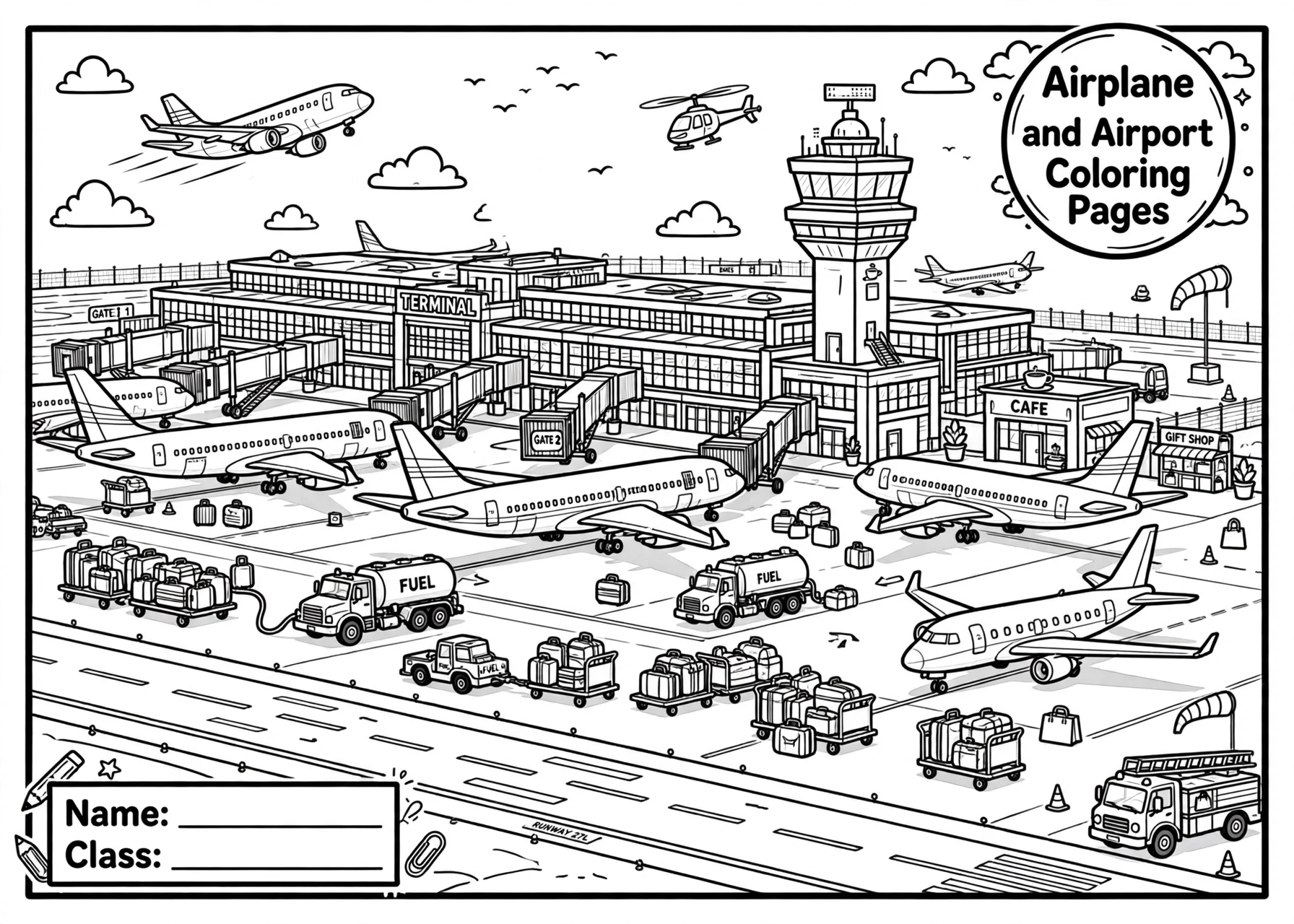
If the illustration includes airport service vehicles, children can imagine what each one does. Some vehicles help move luggage, while others support aircraft during ground operations. It is best to keep explanations simple and focus on details that are actually visible in the picture.
Children can also create a visual story through their color choices. A brightly colored aircraft against a pale sky may suggest a clear travel day. A darker sky with soft gray clouds can create a different mood. There is no single correct color scheme, especially when the goal is creative expression.
Simple Ways to Make the Activity More Engaging
Coloring does not have to end when the picture is complete. Families can extend the experience with a few activities that use the finished artwork as inspiration.
- Design an airline: Invite children to choose a name and create a simple logo for their imaginary airline.
- Choose a destination: Ask them to name a city, island, or country where their airplane might travel.
- Create a travel story: Let them describe who is on board and what the passengers might do during the journey.
- Compare vehicles: Talk about how airplanes differ from cars, buses, motorcycles, and other forms of transportation.
- Add a background: If there is open space around the main illustration, children can draw clouds, distant buildings, or other details that suit the scene.
Children who enjoy exploring vehicles on land can continue the theme with remote control vehicles. Comparing different vehicle designs can give them fresh ideas for shapes, colors, and imaginative play.
Preparing Airplane and Airport Coloring Pages for Use
Before printing a selected design, check the image preview to make sure the illustration is visible and properly positioned. Choose paper that works with the coloring tools available at home or in the classroom. Standard printer paper is suitable for many basic coloring activities, while slightly thicker paper may be more comfortable for children using markers.
It is also helpful to check the printer settings before starting. Review the page orientation, scaling, and margins so that important parts of the illustration are not accidentally cut off. If the design contains small details, make sure they remain clear when printed.
For group activities, adults can prepare the pages in advance and provide a selection of coloring materials. Children can work at their own pace, choosing whether to follow realistic aircraft colors or invent a completely original design. The result can be a simple picture, a colorful airport scene, or the first part of an imaginary journey.
Airplane and Airport Coloring Pages offer a creative way to explore the visual world of aviation. From aircraft details to the busy surroundings of an airport, the theme gives children plenty of room to observe, experiment, and build their own travel-inspired stories.
