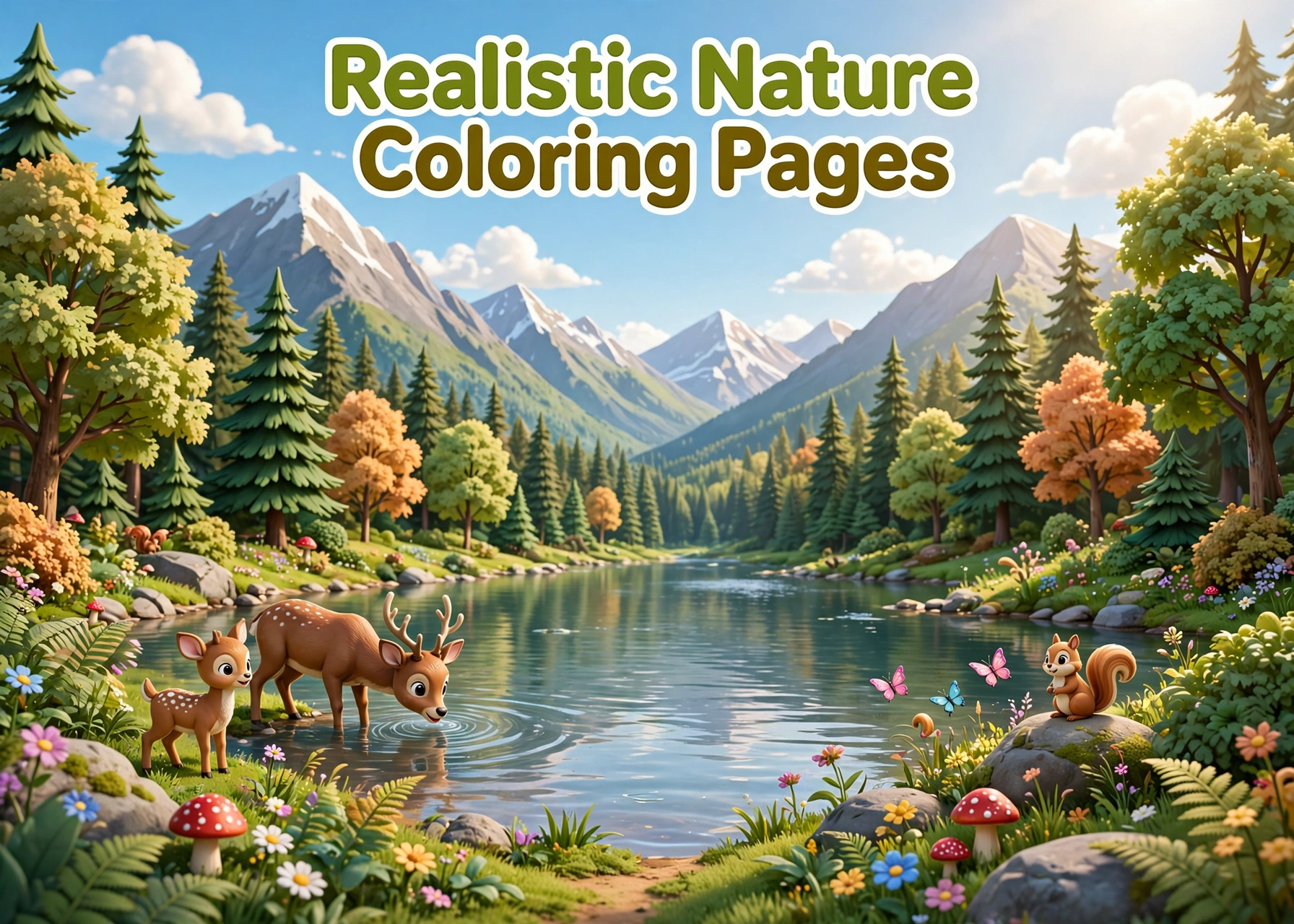
Realistic Nature Coloring Pages invite children to explore the beauty of the natural world through detailed illustrations of plants, landscapes, wildlife, and outdoor scenery. These creative activities offer an opportunity to observe natural shapes, experiment with earthy colors, and turn familiar elements of nature into personal works of art.
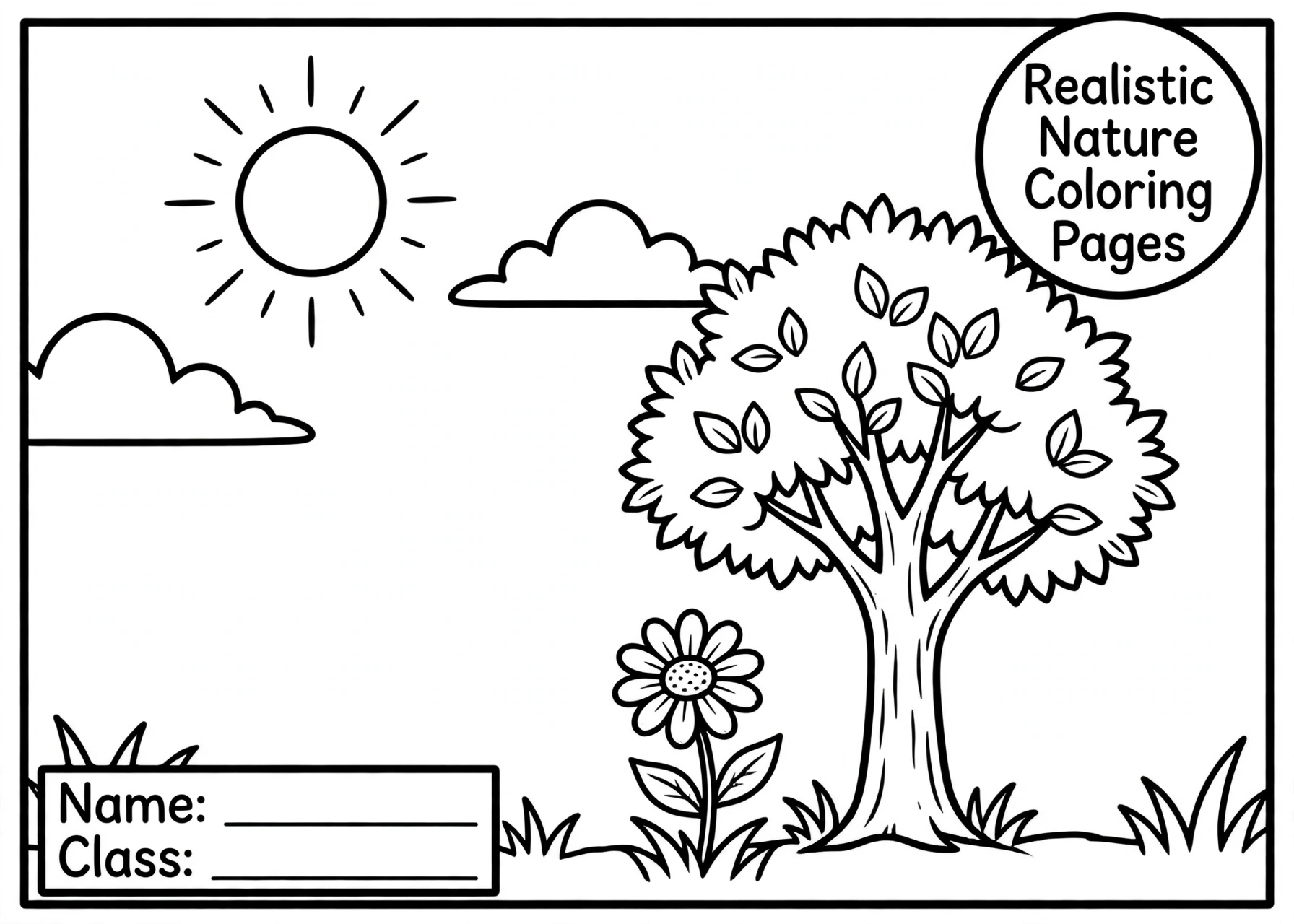
Discovering Nature Through Realistic Illustrations
Nature is full of details that are easy to overlook during everyday activities. The veins of a leaf, the texture of tree bark, the arrangement of flower petals, and the shape of distant mountains all contribute to the appearance of an outdoor environment. Realistic nature illustrations give children an opportunity to pay closer attention to these details while enjoying a hands-on coloring activity.
Unlike highly imaginative pictures, realistic nature artwork focuses on recognizable features and natural proportions. A tree may have an irregular trunk and branches that spread in different directions. Flowers can display overlapping petals, while rocks and mountains have uneven surfaces rather than perfectly smooth shapes.
These details make the subject interesting because children can observe how different parts of nature look and relate to one another. They can also decide whether to follow natural colors or introduce their own artistic interpretations.
The theme is suitable for a variety of creative settings. Parents can introduce nature-inspired coloring during a quiet afternoon at home, while teachers can use it alongside lessons about plants, animals, weather, and different outdoor environments.
Looking Closely at the Details of the Natural World
One of the most enjoyable aspects of realistic nature illustrations is the variety of textures. Different natural objects require different coloring approaches, even when they appear in the same picture.
Trees and tree bark
Tree trunks are rarely a single uniform color. Children can combine light brown, dark brown, gray, and small touches of green to suggest bark texture. Short, uneven pencil strokes can represent the natural lines and grooves found on tree surfaces.
Leaves and plants
Leaves come in different shapes, sizes, and shades of green. Some are broad and rounded, while others are long and narrow. Using several green tones can make a group of leaves look more varied and natural.
Flowers and petals
Flower illustrations offer an opportunity to explore colors beyond green and brown. Children can choose realistic shades such as yellow, pink, red, and purple. A darker shade near the center can help distinguish the petals from the flower’s middle.
Mountains and rocks
Natural landscapes often include irregular surfaces and changing light. Gray, brown, beige, and muted green can be combined to suggest rocky areas. Children can use lighter shades on exposed surfaces and darker tones in areas that appear shaded.
Water and sky
Blue is a familiar choice for rivers, lakes, and open skies, but these areas can contain several different shades. Light blue can suggest a bright daytime sky, while deeper blue can represent water or distant mountain shadows.
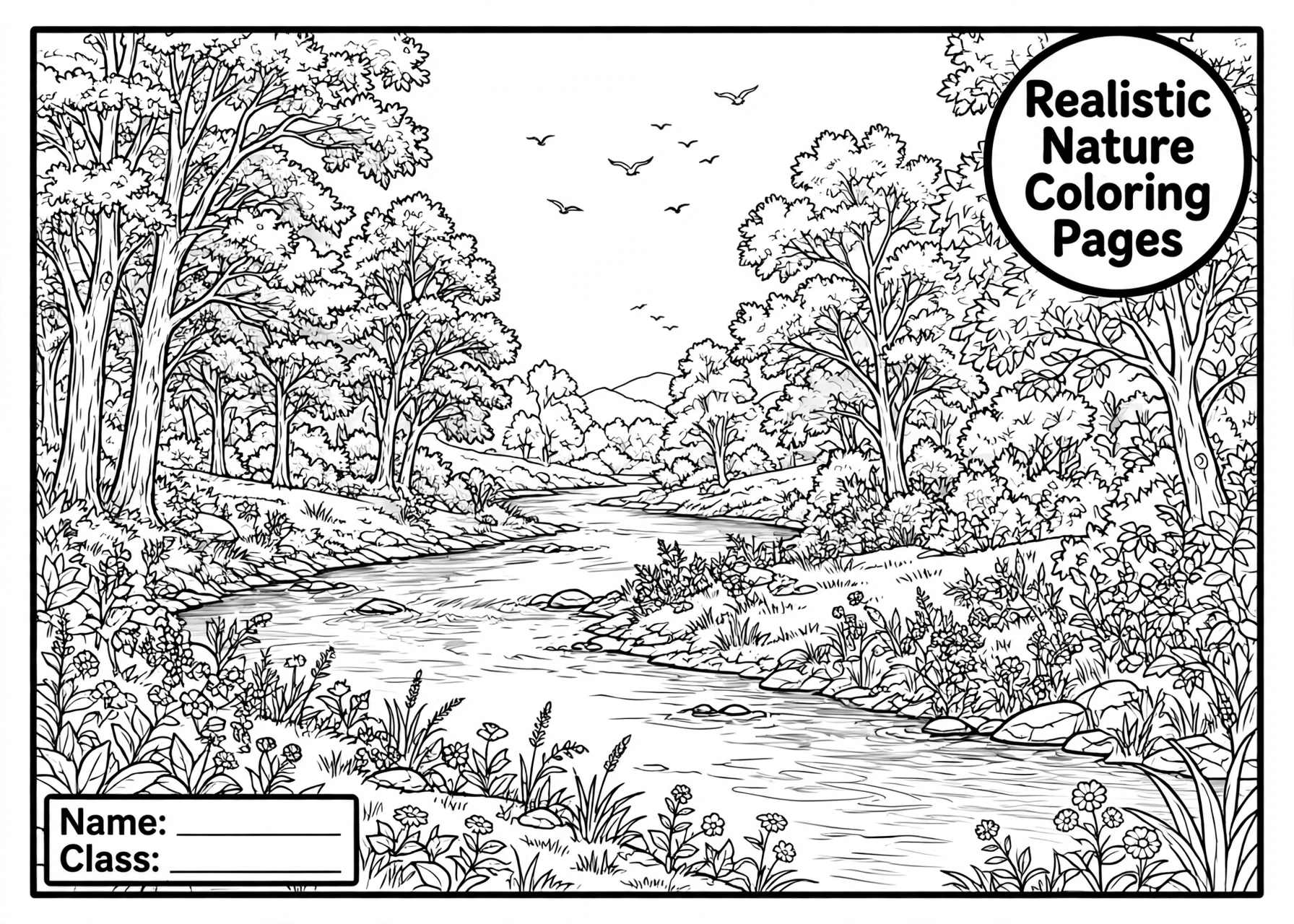
How to Create More Natural-Looking Colors
Realistic coloring does not mean every object must be filled with one exact shade. In nature, colors change depending on light, shadows, weather, and the surrounding environment.
Children can experiment with layering to create more interesting results. For example, they might begin with a light green base on a leaf and gradually add darker green near the veins or edges. This creates a sense of variation without requiring complicated techniques.
Colored pencils are particularly useful for this approach because they allow gradual changes in pressure and color intensity. Crayons can cover larger sections of a landscape, while fine-tip markers may help with small details if the illustration has clearly defined spaces.
A simple color-planning exercise can also make the activity more organized. Before starting, children can select a few main shades for the picture. A woodland scene might use green, brown, beige, and blue, while a flower garden could include several brighter colors.
It is not necessary to make every section perfectly realistic. Children can use the natural world as inspiration while still making their own creative decisions.
Bring Outdoor Observation into the Coloring Activity
Realistic nature illustrations can become more meaningful when children have an opportunity to compare them with things they see outdoors. A short walk through a garden, park, or nearby green space can provide plenty of inspiration.
Encourage children to notice the differences between leaves on various plants. They might discover that some leaves have smooth edges while others have small points or rounded sections. They can also compare the colors of flowers, the appearance of tree trunks, and the shapes of clouds.
If collecting natural objects is appropriate, a fallen leaf or small twig can be placed beside the coloring materials for observation. Children can study its shape and texture before deciding how to color a similar feature in their illustration.
For families who enjoy combining nature themes with animal subjects, nature scenes featuring animals offer another way to explore the relationship between wildlife and its surroundings. Children can compare how plants, animals, and landscapes work together in different outdoor environments.
Teachers can also use these observations as the starting point for a simple classroom discussion. Children might describe which natural details they noticed and explain why they selected particular colors for their pictures.
Different Nature Settings to Explore
The natural world includes many environments, each with its own appearance and color combinations. Exploring different settings can help children discover which landscapes they find most interesting.
Woodland and Forest Scenes
Woodland illustrations can include tall trees, fallen branches, bushes, and leafy ground cover. Different greens and earthy browns work well for these subjects. Children may also add small mushrooms, flowers, or woodland animals if there is room in the illustration.
Mountain Landscapes
Mountain scenery provides opportunities to work with large shapes and changes in distance. Darker greens and browns can represent areas closer to the viewer, while lighter blue-gray shades can suggest distant mountain ranges.
Flower Gardens
Garden illustrations are ideal for experimenting with a wide range of colors. Children can give individual flowers different shades and use several greens for leaves and stems. A simple background with sunlight or clouds can complete the scene.
Rivers, Lakes, and Coastal Nature
Water-based landscapes offer a different coloring experience. Children can use different blue tones for the water, brown or gray for rocks, and green for plants along the edges. Small details such as reeds, stones, or distant trees can make the setting more recognizable.
These environments can also inspire children to create their own nature scenes on separate sheets of paper.
Choosing the Right Illustration for a Coloring Session
When selecting a realistic nature design, consider how much detail the child enjoys. Some illustrations may focus on one recognizable subject, such as a tree or flower, while others may include several elements within a larger landscape.
Pictures with larger areas can be suitable for children who prefer broad coloring movements. More detailed illustrations may appeal to those who enjoy working carefully on leaves, petals, branches, and smaller landscape features.
It is also worth considering the child’s interests. A child who enjoys gardening may prefer flowers and plants, while someone fascinated by outdoor adventures might choose mountains, forests, or rivers.
For a different kind of peaceful coloring activity, a sleeping cat offers a charming change from outdoor scenery. It can be an enjoyable alternative when children want to move between nature-inspired illustrations and familiar animal subjects.
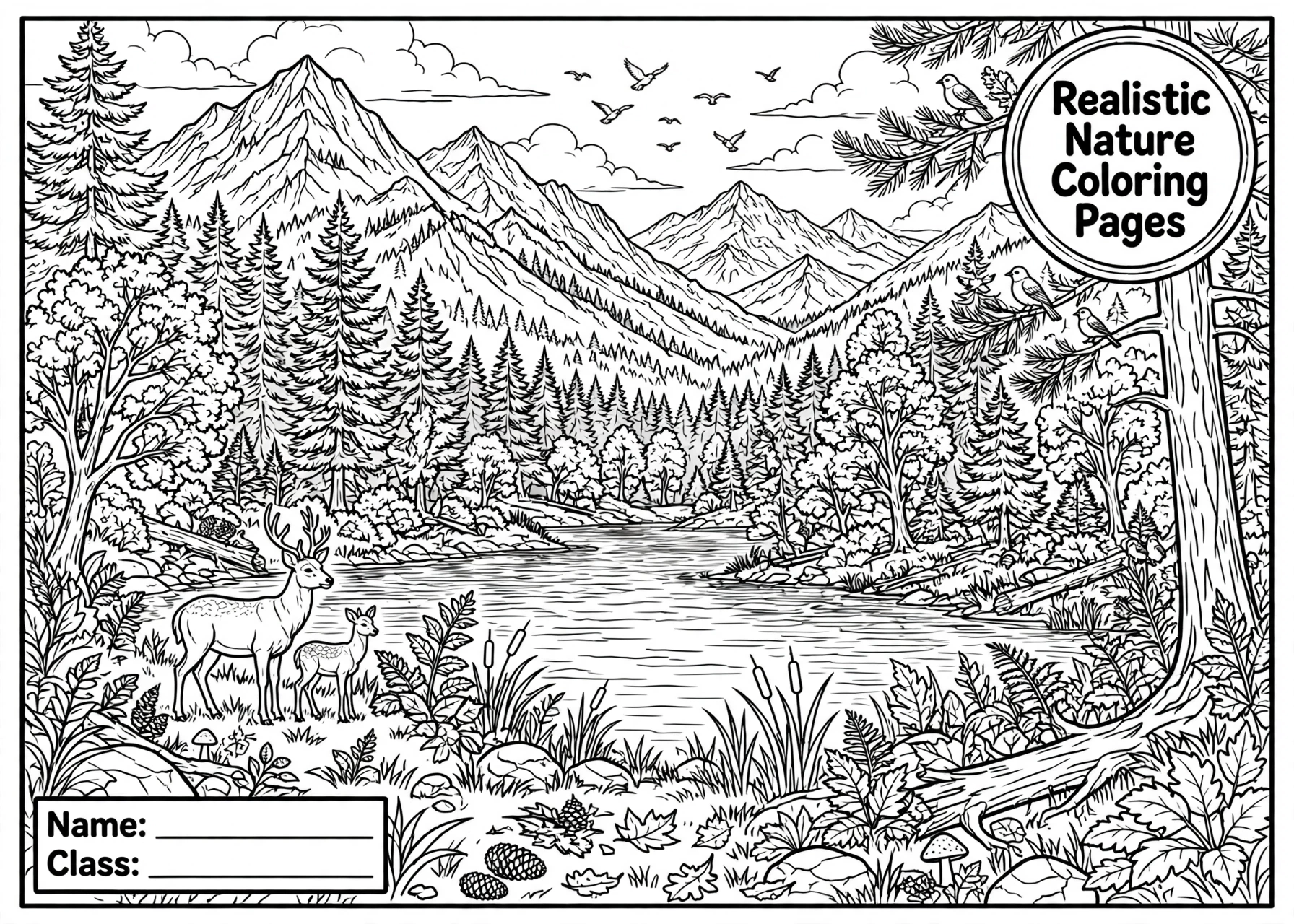
Preparing Materials and Printing the Artwork
Before printing a selected illustration, check the available file and use the print preview to confirm that the complete design fits within the paper boundaries. Adjust the scaling and orientation if needed, depending on the actual layout.
Choose coloring materials according to the level of detail. Colored pencils are useful for leaves, bark, flower centers, and other small features. Crayons are convenient for larger landscape sections, while washable markers can create bold areas of color.
A comfortable working space also helps children focus on the activity. Arrange the coloring tools within easy reach and allow enough room for the printed sheet. For classroom projects, children can work on different nature subjects and display their finished pictures together.
Realistic Nature Coloring Pages provide an enjoyable way for children to explore the details of plants, landscapes, and outdoor environments. By combining careful observation with personal color choices, they can create nature-inspired artwork that reflects both the beauty of the natural world and their own creative ideas.
