
Snowy Mountain Coloring Pages invite children to explore beautiful winter landscapes through art and imagination. From snow-covered peaks and icy slopes to mountain forests and peaceful valleys, these printable activities offer an opportunity to experiment with cool colors and discover the beauty of snowy environments.
The Beauty of Mountains Covered in Snow
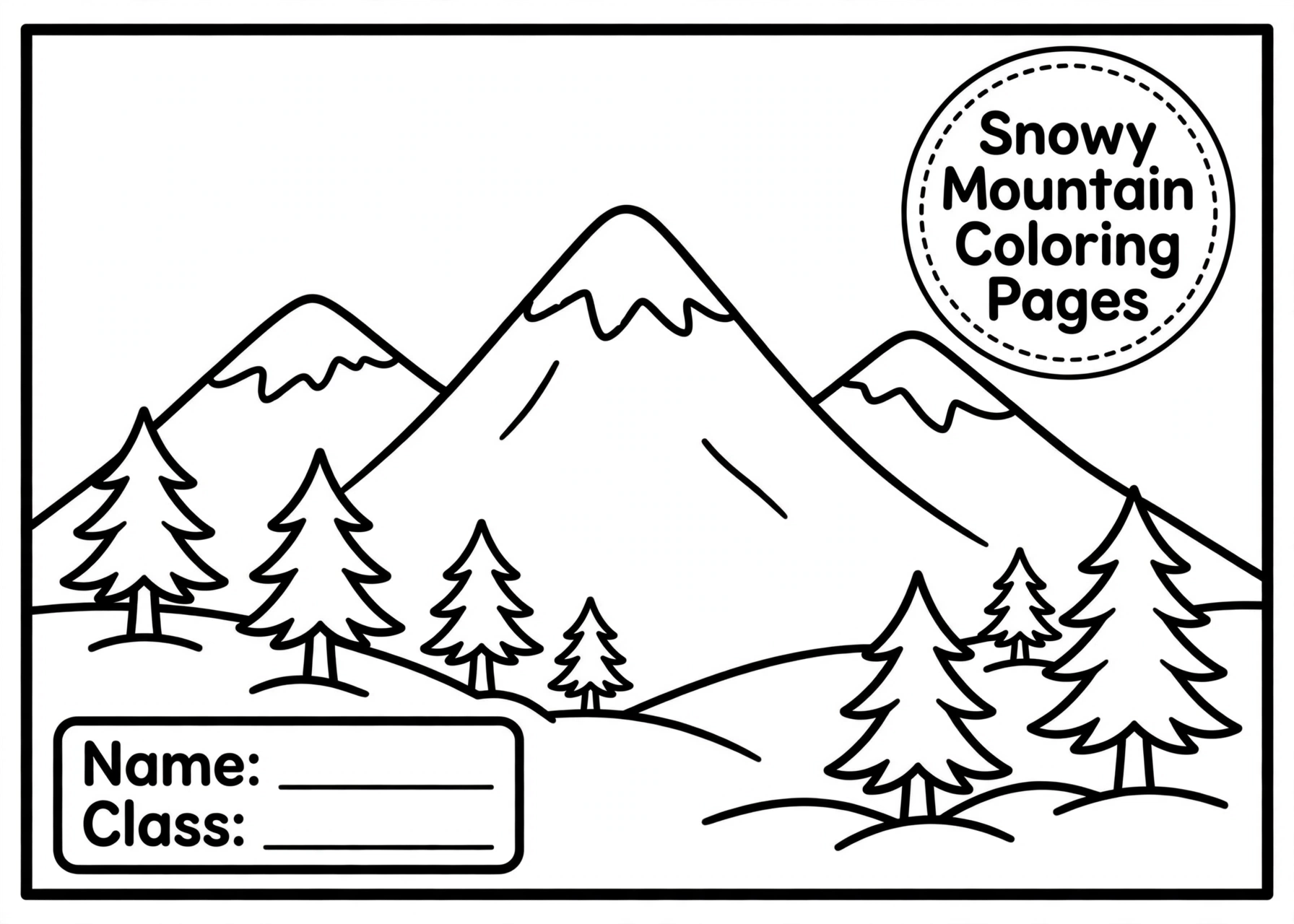
A snowy mountain has a distinctive appearance that makes it an interesting subject for children’s artwork. Its tall peaks, sloping sides, and white snow-covered surfaces create natural patterns that are different from ordinary landscapes. Some mountains have sharp, pointed summits, while others feature broad ridges and rounded slopes.
Snow changes the appearance of a mountain dramatically. During warmer months, the landscape may display rocky surfaces, green vegetation, and exposed earth. When winter arrives, snow covers much of the terrain, creating bright white areas that contrast with darker rocks and distant forests.
Mountain landscapes can also look different depending on the weather. A clear winter morning may reveal bright snowy peaks beneath a blue sky, while cloudy conditions can make the same mountains appear gray and mysterious. These variations provide interesting ideas for children who want to create their own winter scenery.
The theme is not limited to coloring snow white. Children can use different shades to show shadows, icy surfaces, distant mountain ranges, and the changing light across the landscape. This makes a snowy mountain illustration a wonderful starting point for exploring colors and natural scenery.
Understanding the Different Parts of a Snowy Landscape
Before choosing colors, children can take a closer look at the elements that make up a mountain scene. Each part offers a different coloring experience.
Mountain peaks: The highest points are often covered with thick layers of snow. White can be combined with pale blue or light gray to suggest shadows and uneven surfaces. Children can leave some areas completely white to represent sunlight reflecting from the snow.
Rocky slopes: Exposed rocks create contrast against the white snow. Gray, brown, and charcoal are useful choices for these sections. Using more than one shade can make the rocky areas look varied rather than completely flat.
Evergreen trees: Mountain forests often contain pine and fir trees that remain green throughout the winter. Dark green, olive, and lighter shades can be used to distinguish individual branches. Small white sections can suggest snow resting on the tree tops.
Winter sky: The sky can completely change the atmosphere of the illustration. Light blue creates a bright daytime setting, while darker blue and gray can suggest cloudy winter weather. Children may also choose pink, orange, or purple for a mountain landscape during sunrise or sunset.
Snow-covered ground: Large areas of snow provide room for experimenting with subtle color changes. Pale blue and light gray can be added near rocks, trees, or other objects to create the impression of shadows.
Not every illustration will contain all these features. Children can simply focus on the elements included in their chosen design.
How to Make Snow Look Realistic with Colors
White is naturally associated with snow, but coloring an entire snowy landscape using only white can make some details difficult to distinguish. A few carefully selected colors can help children create a more interesting picture.
Light blue is useful for showing shadows along mountain slopes. Children can apply it gently near the edges of snowy areas or underneath rocky sections. Gray can provide additional contrast, particularly where snow meets exposed stone.
For a sunny winter landscape, pale yellow can be used sparingly to suggest sunlight touching the highest peaks. A little lavender or light pink can create a more imaginative atmosphere, especially in distant snow-covered mountains.
Colored pencils are particularly useful for this type of artwork because they allow gradual shading. Children can apply light pressure to create soft transitions between white, blue, and gray. Crayons work well for filling larger sections, while markers can add stronger colors to trees, rocks, and other details.
One helpful approach is to color the darker elements first, such as trees and rocky slopes. The remaining white areas will then stand out more clearly. However, children can choose their own order and experiment with different techniques.
Imagine Life in a Mountain Environment
Snowy mountains are not just beautiful landscapes. They are also environments where different plants and animals survive in challenging conditions.
Depending on the mountain region, children might imagine animals such as mountain goats, snow leopards, foxes, or marmots living among the rocky slopes. Some species have special physical features that help them cope with cold temperatures and difficult terrain.
Evergreen forests can provide shelter for various animals, while open mountain slopes offer different habitats. Children can use these ideas to create additional drawings around their snowy mountain illustration if there is enough space.
Parents and teachers can introduce simple nature facts while children color. For example, they can explain that mountain climates generally become colder at higher elevations. Snow and ice may remain on some high mountain peaks throughout the year, even when the surrounding valleys are warmer.
This can lead to an interesting discussion about how landscapes change with altitude and why different plants and animals live in different mountain environments.
Creative Winter Scenes Beyond the Mountain Peaks
A snowy mountain illustration can inspire children to create an entire winter setting. Instead of concentrating only on the mountains, they can imagine what might be happening around them.
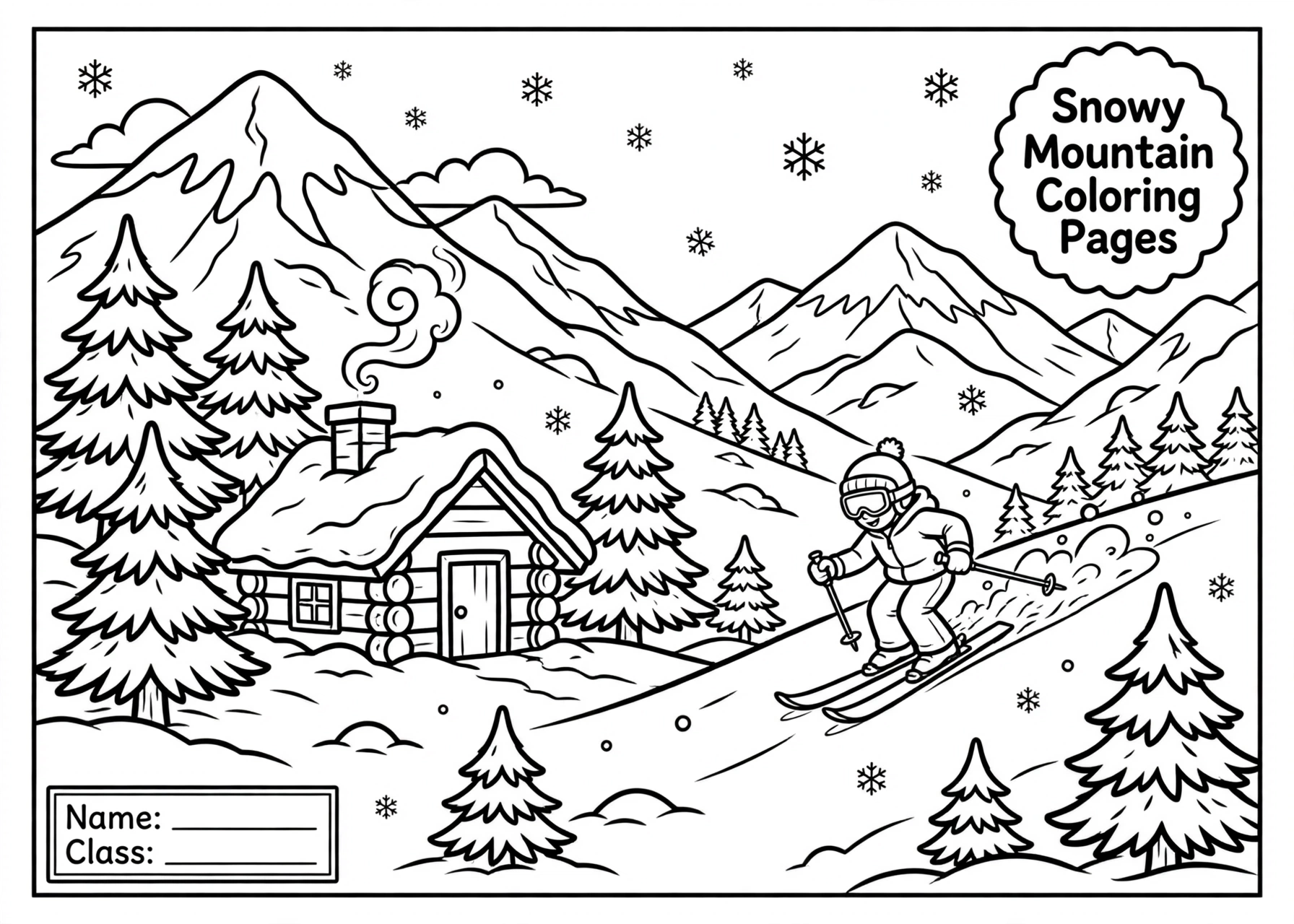
A small wooden cabin surrounded by snow-covered pine trees is one possible addition. Children can use brown for the wooden walls, dark gray for the roof, and warm yellow for the windows to suggest a cozy interior.
Another idea is to imagine a frozen mountain lake at the foot of the slopes. Light blue, turquoise, and pale gray can represent the icy surface. If children want to add more details, they can draw snowflakes, distant birds, or footprints across the snow.
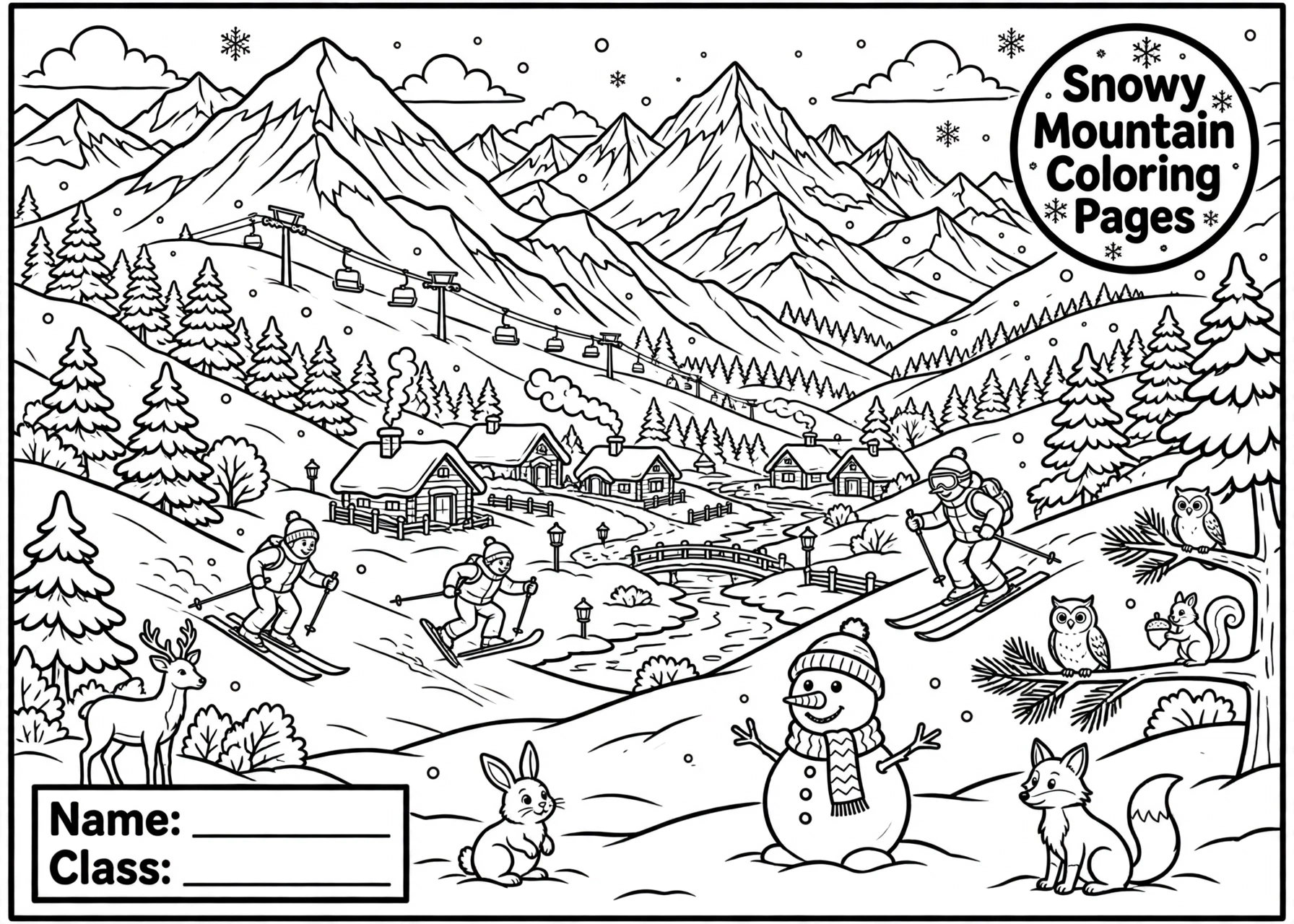
For a more adventurous setting, they might imagine a winding mountain trail. The path could lead toward a distant peak or through a forest covered in snow. Small details such as rocks, trees, and gentle slopes can help tell a story about an imaginary winter expedition.
These additions are optional. A simple mountain landscape can be just as appealing when children prefer to concentrate on the original illustration.
Turn the Finished Artwork into a Winter Adventure
After completing their coloring activity, children can use the mountain scene as inspiration for a short creative project.
One enjoyable idea is to invent a name for the mountain. It might be called Silver Peak, Snowflake Mountain, or Crystal Summit. Children can then describe what makes their imaginary mountain special and what someone might discover there.
Another activity is to create a simple winter travel story. Children can imagine a family visiting the mountains, walking along a snowy trail, or watching the sunset from a safe viewing area. They can write a few sentences or tell the story aloud.
For families who enjoy seasonal nature themes, an Easter bunny and lamb scene offers a different atmosphere. It can provide a contrast between a cold winter landscape and the softer colors often associated with spring celebrations.
Children can also explore a warmer natural environment through a tropical hibiscus garden. Comparing snowy mountains with tropical gardens offers an interesting way to notice how different environments have their own colors, plants, and visual characteristics.
Getting the Coloring Sheet Ready
A comfortable workspace makes it easier for children to enjoy a landscape coloring activity. Before printing a downloadable illustration, check the available file format and use the print preview to make sure the design fits the selected paper. Pay attention to the margins so that important parts of the mountain scenery are not accidentally cut off.
Prepare a small selection of coloring materials rather than placing too many options on the table. Blue, white, gray, green, and brown provide a useful starting palette, while additional colors can be introduced for creative details.
Children can work from the foreground toward the distant mountains or begin with the largest shapes first. There is no required method, and the activity can be completed over more than one sitting if the illustration contains many details.
Snowy mountain landscapes offer a refreshing subject for children who enjoy nature-inspired artwork. With their distinctive peaks, winter forests, rocky slopes, and open snowy spaces, these scenes provide plenty of opportunities to experiment with colors and create a personal vision of the mountains.
