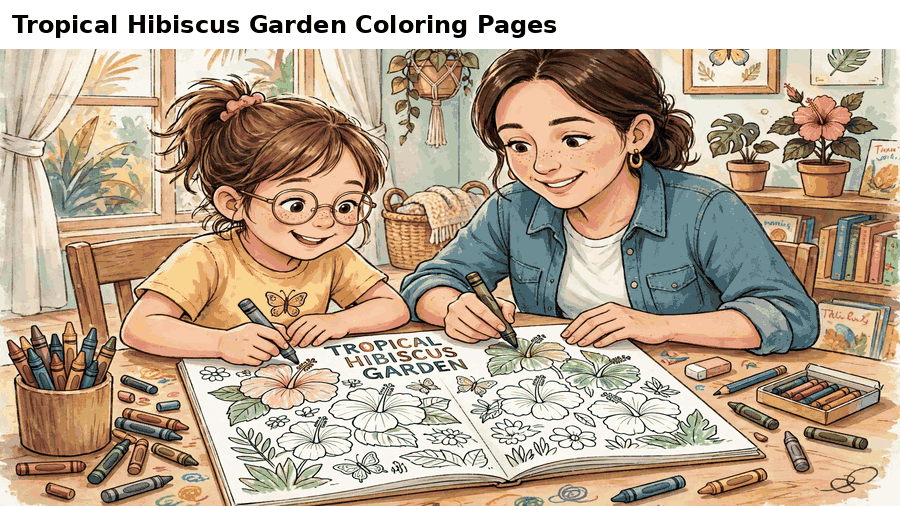
Tropical Hibiscus Garden Coloring Pages invite children to explore bright flowers, lush leaves, and garden-inspired color combinations through an enjoyable creative activity.
Discovering the Beauty of a Tropical Hibiscus Garden
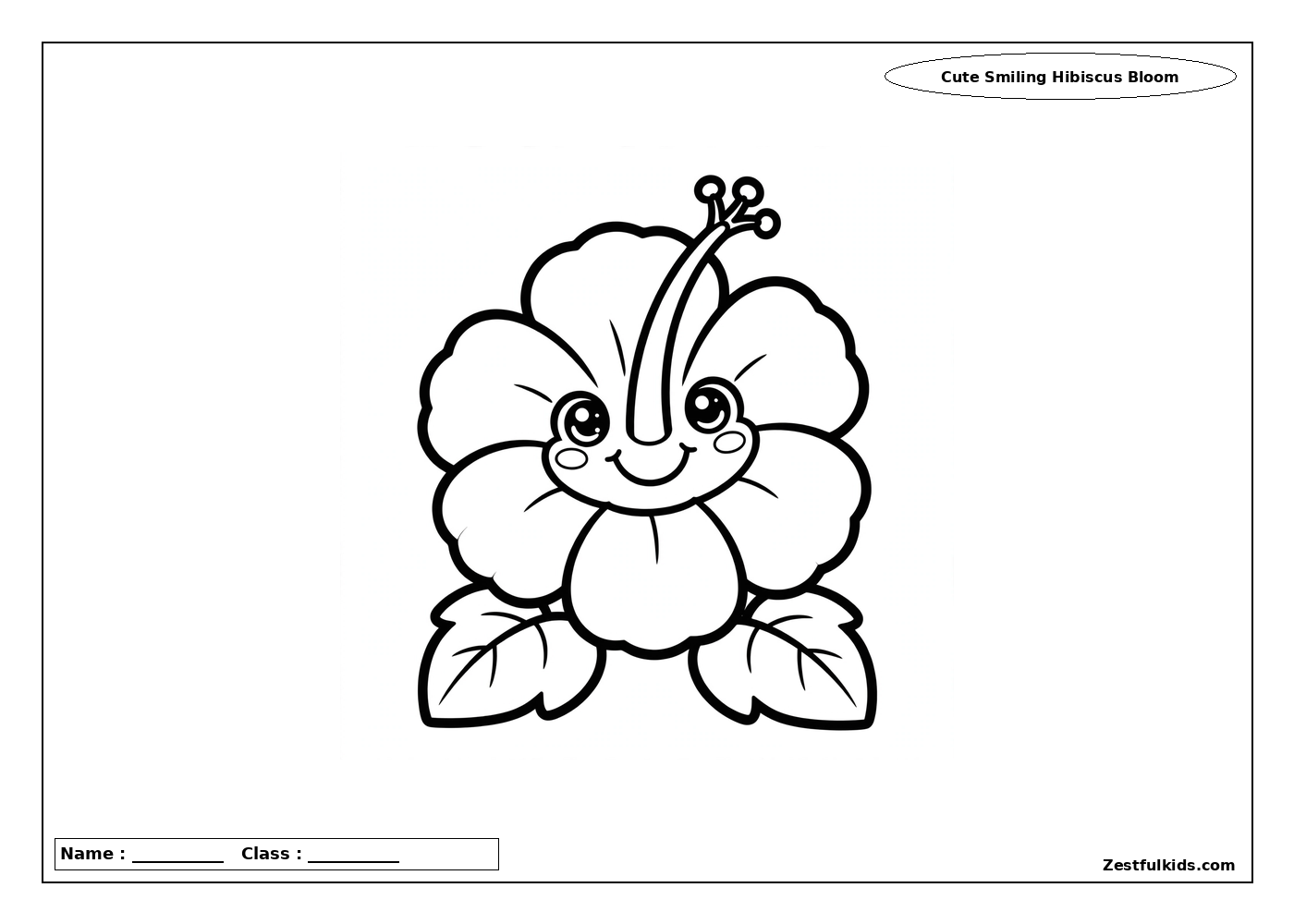
A tropical garden can be full of visual surprises, from large flowers with delicate petals to broad green leaves that overlap in interesting patterns. Hibiscus flowers are especially recognizable because of their prominent petals and distinctive central column, which carries the flower’s stamens and stigma. Tropical Hibiscus Garden Coloring Pages give children an opportunity to explore these natural shapes while deciding how they want their garden to look. Instead of following a single color scheme, young artists can create a realistic botanical scene or invent a garden filled with unusual combinations.
Hibiscus flowers come in several colors, including red, pink, yellow, orange, and white, depending on the variety. This natural diversity makes the subject suitable for children who enjoy experimenting with different shades. One flower might have deep red petals, while another could be pale pink with a darker center. Green leaves provide a familiar contrast, but children can also use lighter greens to suggest sunlight or darker tones to make the foliage stand out.
The garden setting adds another layer of creativity. Children may imagine a peaceful backyard filled with hibiscus bushes, a tropical walkway bordered by flowers, or a small garden beside a sunny home. These ideas can guide their color choices without requiring them to add details that are not present in the original illustration. The result is a personal interpretation of a tropical landscape rather than a picture that must look exactly like a photograph.
Choosing Colors for Petals, Leaves, and Flower Centers
Hibiscus petals are often the most noticeable part of a garden illustration, so choosing their colors can be a good place to begin. Red and pink create a familiar tropical appearance, while yellow and orange can make a scene feel warm and sunny. Children who prefer imaginative artwork might choose turquoise, violet, or rainbow-colored petals instead. There is no need for every flower to match; different colors can help individual blooms stand apart.
The center of a hibiscus flower offers a chance to pay attention to smaller details. The long central column may be colored in a contrasting shade to make it easier to see against the petals. If the illustration includes small marks or lines on the petals, colored pencils can help children work around those details without covering them completely. Younger children may prefer broad, simple color areas, while those who enjoy careful work can experiment with two shades on a single petal.
Leaves and stems can bring balance to the brighter flowers. Several shades of green can suggest the variety found in a tropical garden, from fresh light green on younger leaves to deep green on mature foliage. Children can also leave small sections lighter to represent sunlight falling across the leaves. A simple approach works well: choose one main green, then add a darker shade to selected areas.
Background colors should support the flowers rather than compete with them. Pale blue can represent the sky, while light brown might suggest soil or a garden path if those areas are included or added by the child. Leaving some background space white is another useful option, especially when the flowers already contain many colorful details.
Looking Closely at the Shapes of Hibiscus Flowers
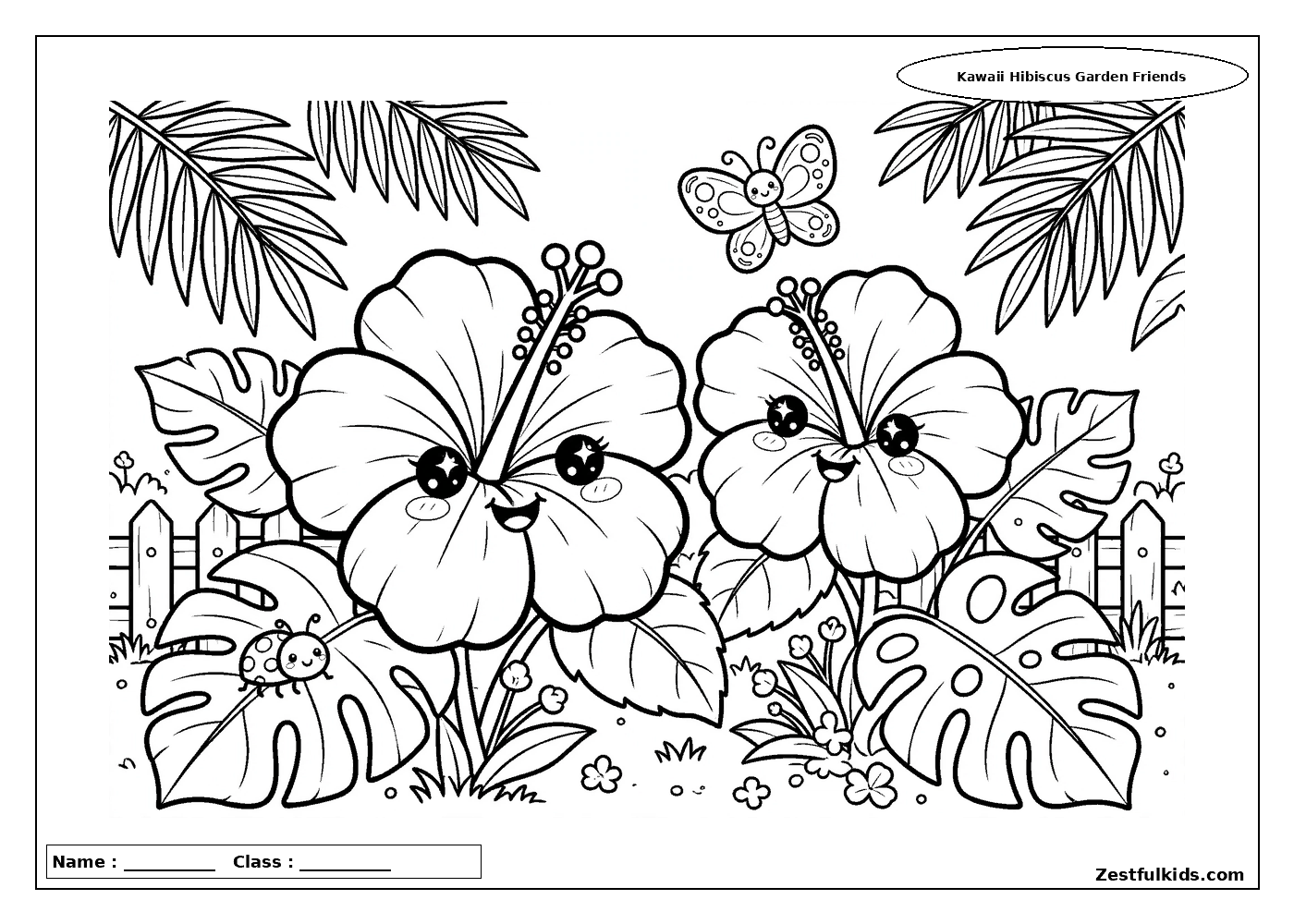
A hibiscus is more than a colorful bloom. Its petals form a broad, open shape, and the central column gives the flower a distinctive appearance. Looking carefully at these features can help children decide where each color belongs. They might notice how one petal curves outward or how several petals meet around the center.
For a simple art challenge, invite children to select one flower as the main focus of their picture. They can color its petals first, then choose contrasting shades for the center and nearby leaves. If the page contains several blooms, each can have a different color combination. This approach creates variety without requiring advanced drawing techniques or additional supplies.
Children who enjoy observing plants can compare their coloring choices with hibiscus flowers they have seen in a garden or in photographs. They may notice that real flowers can have different petal shapes and color patterns. These observations can inspire their artwork, but accuracy should remain optional. A purple hibiscus with yellow leaves may be an imaginative choice, and that freedom is part of what makes coloring enjoyable.
Creative Ways to Build a Tropical Garden Scene
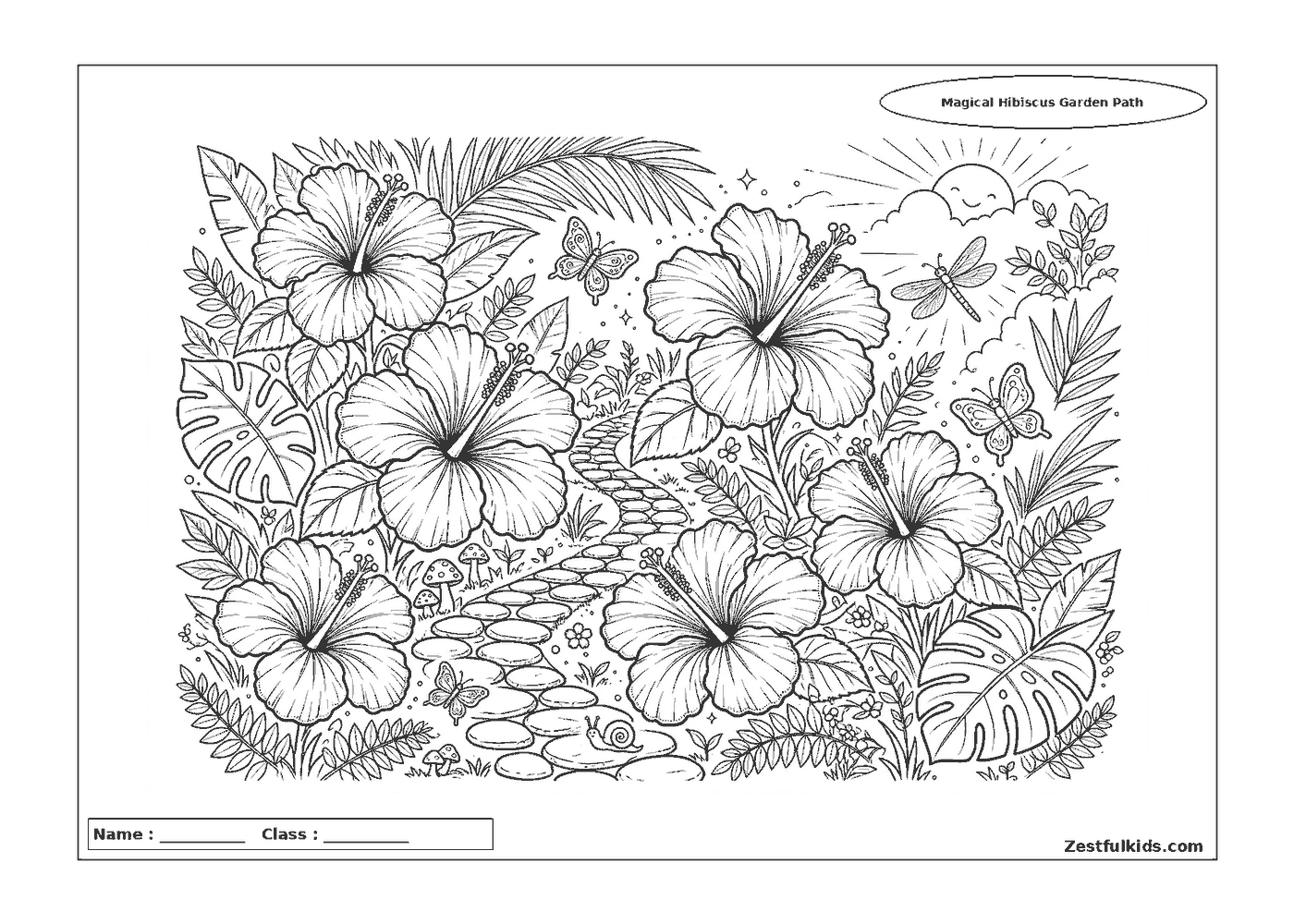
Once the flowers are colored, children may want to imagine the wider environment surrounding them. A tropical garden could include a winding path, stepping stones, a small fence, or a patch of grass. If the original illustration already contains background elements, those details can help determine the overall color palette. If the page focuses mainly on flowers, children can add their own surroundings on the available blank space when appropriate.
Another idea is to create a garden based on a particular mood. Warm colors such as red, orange, and yellow can make the scene feel bright and lively. Pink flowers combined with soft green foliage can create a gentler appearance, while purple and blue accents can give the garden a more imaginative style. Children can even name their finished garden and describe what makes it special.
Families can extend the activity by asking children to arrange their colors before starting. A small group of crayons or colored pencils makes it easier to coordinate the flowers and leaves. Alternatively, children can choose each color as they work, allowing the garden to develop naturally. Both methods are useful, and there is no need to insist on a uniform result.
For a change of subject after working on plants and flowers, children might enjoy a completely different outdoor-inspired scene. A lively fire truck illustration introduces bold vehicle shapes and opportunities to explore red, yellow, and contrasting details. The difference between a botanical scene and an emergency vehicle can keep a collection of coloring activities varied.
Selecting Coloring Tools for Different Details
The choice of coloring materials can affect how children approach a hibiscus illustration. Crayons are useful for filling large petals and broad areas of foliage. They are easy to handle and allow children to cover a section quickly, although very small flower centers may be harder to color neatly with a thick crayon.
Colored pencils offer more control when a drawing includes narrow stems, small leaves, or detailed petal edges. Children can build color gradually by applying a light layer first and adding a darker shade where they want more contrast. Blending two neighboring colors is optional; simply keeping the colors within the outlines can produce a clear, attractive picture.
Washable markers are another option for children who prefer strong, even colors. Because some markers can bleed through paper, placing a spare sheet beneath the page is a practical precaution. Before beginning, check that the paper works well with the chosen materials and that the outlines remain visible when printed.
If children are working together, each person can use a different color approach. One might create a garden with realistic flower shades, while another experiments with unusual combinations. Comparing the finished artwork can lead to conversations about which colors stand out and how different choices change the appearance of the same subject.
Making Coloring Time Part of a Garden-Themed Activity
Tropical Hibiscus Garden Coloring Pages can be used at home, in classrooms, or during a quiet family activity. Parents may introduce the subject before a gardening visit, while teachers can use it as a starting point for a simple discussion about flowers and leaves. Children can describe the parts they notice, identify the colors they selected, or invent a name for their imaginary garden.
For a broader creative session, pair the coloring activity with a short observation task. Children might look at a real plant, notice the shapes of its leaves, or compare two flowers with different colors. If a live hibiscus is available, adults can point out its petals and central column without requiring children to memorize botanical terms. The coloring page remains the main activity, while the observation adds a practical connection to the natural world.
Families who enjoy mixing nature themes with playful, everyday subjects can also explore cartoon motorcycle designs. A motorcycle introduces curves, wheels, and mechanical details, offering a different kind of coloring challenge after a session focused on flowers and foliage.
Before printing a page, check the preview to make sure the design fits within the printer’s available margins and that the outlines are clear. Choose paper and print settings appropriate for the file and the coloring materials. Once the artwork is finished, children can display it on a wall, place it in a folder, or use it as inspiration for their next imaginary garden.
With their distinctive petals, varied natural colors, and leafy surroundings, Tropical Hibiscus Garden Coloring Pages offer plenty of room for personal expression. Children can focus on careful color choices, invent an unusual tropical landscape, or simply enjoy filling each flower with shades they love. Every finished picture can reflect a different vision of a garden, making this nature-inspired activity a welcoming addition to a child’s collection of creative projects.
