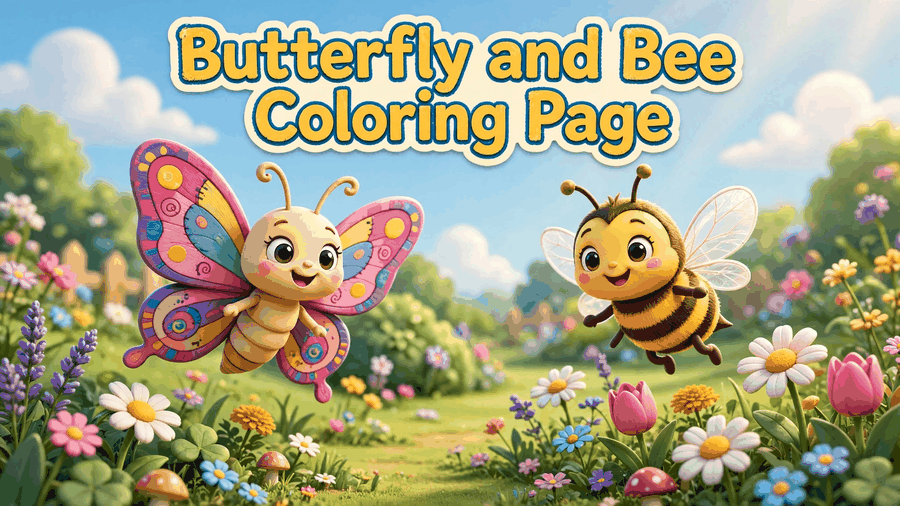
Butterfly and Bee Coloring Page brings the beauty of garden insects into a creative activity for children. With delicate wings and busy bees, children can explore nature through enjoyable coloring ideas.
Discover the Beauty of Butterflies and Bees
Butterflies and bees are two familiar insects that make gardens feel lively. Although they are both small flying creatures, their appearances and activities are quite different. Butterflies are known for their broad wings, often decorated with beautiful patterns, while bees have compact bodies, delicate wings, and distinctive stripes. These differences make them interesting subjects for children to explore through coloring.
A butterfly can inspire many creative color combinations. Children might imagine wings covered with orange, yellow, purple, blue, or pink patterns. Some butterflies have spots, while others display lines and contrasting shapes across their wings. Coloring these details gives children an opportunity to experiment with symmetry and decide how each side of a butterfly should look.
Bees offer a different coloring experience. Their familiar yellow-and-black appearance provides a recognizable starting point, but children can also experiment with softer shades of gold, brown, and cream. Their striped bodies, small wings, and tiny legs provide simple details that can make an illustration more interesting.
What Makes Butterfly and Bee Coloring Page Interesting?
One of the appealing features of this theme is the contrast between two insects that share the same natural environment. Butterflies are often associated with flowers and graceful movement, while bees are known for visiting blossoms in search of nectar and pollen. Bringing both subjects together creates an opportunity to imagine a garden filled with activity.
Children can approach the illustrations in different ways depending on the details they see. A design featuring a large butterfly may encourage attention to wing patterns, while a bee illustration can introduce interesting combinations of stripes and small body parts. If both insects appear in the same scene, children can create a coordinated color palette so that the entire picture looks harmonious.
The theme also leaves plenty of room for imagination. A butterfly does not have to follow the colors of a real species, and a garden-inspired illustration can become a place filled with unusual combinations. Children might create rainbow wings, golden flowers, or a cheerful bee with colorful stripes. These choices allow every finished picture to reflect an individual idea.
Choosing Colors for Butterfly Wings and Bee Stripes
Color selection can make this activity more enjoyable. Instead of choosing random colors immediately, children can begin by identifying the different parts of each insect. This simple approach helps them organize their coloring and pay attention to the smaller details.
For butterflies, bright and contrasting colors can make the wings stand out. Orange paired with yellow creates a warm appearance, while blue and purple offer a cooler combination. Children can also use two similar shades to create a gentle transition between sections of the wings. If the illustration includes symmetrical patterns, they can repeat the same colors on both sides or deliberately create a different design.
Bees are particularly recognizable with yellow and black stripes. However, the remaining parts can introduce additional color choices. Light blue or pale gray can work for the wings, while brown or dark gray can be used for the legs and smaller details. Children who prefer imaginative artwork can experiment with alternative colors without worrying about making the illustration look realistic.
The background deserves attention too. Green grass, colorful flowers, blue skies, and soft clouds can help create a garden atmosphere. A few shades of green can represent leaves and stems, while different flower colors add variety without making the picture look too crowded.
Turn the Coloring Activity into a Small Garden Exploration
Coloring can become more engaging when children connect the illustrations with things they might observe outdoors. Butterflies often visit flowers, and bees collect nectar and pollen from blossoms. These natural activities provide simple conversation topics for parents, teachers, and caregivers while children work on their pictures.
For example, adults can explain that butterflies use a long, tube-like mouthpart called a proboscis to drink nectar. Bees also visit flowers, collecting nectar and pollen as part of their daily activities. When bees move between flowers, they can help transfer pollen, supporting the reproduction of many flowering plants.
Children can also look at the differences between the two insects. Butterflies usually have larger, more visibly patterned wings, while bees have compact bodies with characteristic stripes. Observing these features makes it easier to recognize each insect in books, gardens, and nature illustrations.
For another creative activity, children can draw a few additional flowers around their finished insects. They might add flower petals, leaves, a small garden path, or a bright sun. These additions are optional and can turn a simple coloring session into a more personal garden scene.
Simple Ways to Make the Artwork More Interesting
The coloring tools used can influence the final appearance of the illustration. Crayons are convenient for filling larger areas, particularly butterfly wings and garden backgrounds. Colored pencils are useful for smaller patterns, thin lines, and areas that need more controlled coloring. Washable markers can create strong, bright colors, although adults should check that the paper is suitable for the selected materials.
Children can also try several coloring techniques. Lightly layering colored pencils creates softer shades, while applying stronger pressure produces deeper colors. For butterfly wings, alternating light and dark sections can make the patterns more noticeable. For bees, keeping the stripes clearly separated helps preserve their familiar appearance.
Another idea is to create a small color plan before beginning. Children can choose three or four main colors for the butterfly, two or three for the bee, and a few additional shades for the background. This does not need to be a strict rule. It simply gives them a starting point before they begin filling the illustration.
Parents and teachers can encourage children to describe their choices after finishing. They might explain why they selected certain colors, which insect they enjoyed coloring most, or what kind of garden they imagined. This creates a natural opportunity for conversation without turning the activity into a formal lesson.
Explore More Nature-Inspired Coloring Activities
Children who enjoy insects and garden illustrations may also appreciate other nature-themed creative activities. An animal mandala collection offers a different artistic experience, with animal-inspired patterns that encourage experimentation with repeated shapes and color combinations.
For children who enjoy outdoor scenery, spring farm activities provide another way to explore nature through printable artwork. Farm settings and seasonal details can complement the garden atmosphere of butterflies and bees, creating opportunities to explore different aspects of the natural world.
Making Coloring Time Enjoyable at Home or School
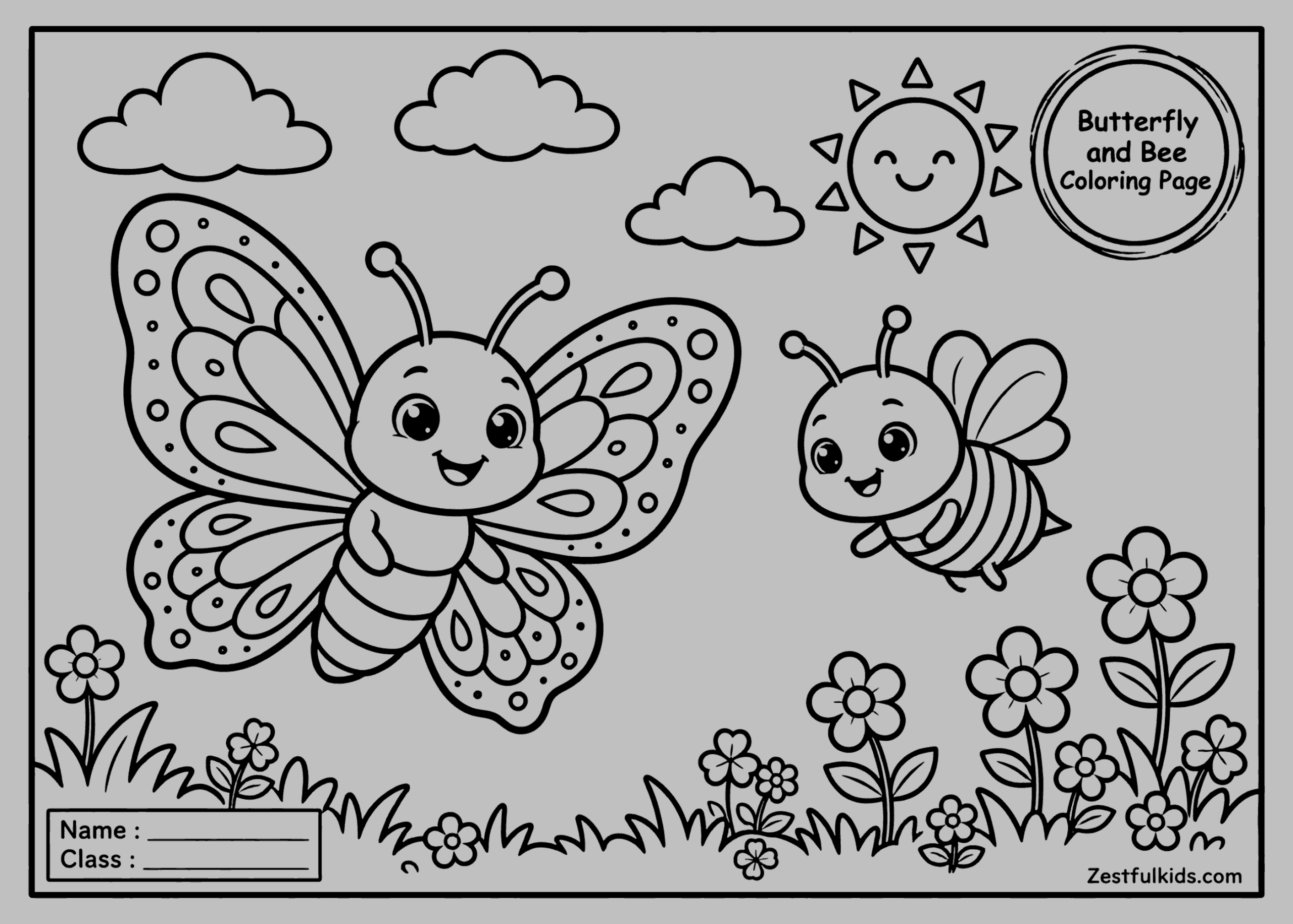
Butterfly and Bee Coloring Page can fit naturally into a quiet afternoon at home, an art activity at school, or a creative session with family members. Before starting, prepare the coloring materials and give children enough space to work comfortably. If the illustration is downloaded for printing, check the print preview to make sure the artwork is positioned properly on the paper.
There is no need to rush through the activity. Some children may prefer to complete the butterfly first, carefully decorating each wing, while others may start with the bee and its familiar stripes. Allowing them to work at their own pace makes the experience more relaxed.
Once the artwork is finished, it can be displayed on a classroom board, placed in a personal art folder, or shared with family members. Children may even enjoy creating several garden-inspired pictures and arranging them together as a small collection.
With its combination of delicate butterfly wings, recognizable bee patterns, and garden-inspired possibilities, this coloring theme offers plenty of room for creative expression. Each child can bring a different combination of colors and ideas to the page, making every finished illustration a unique piece of artwork.
