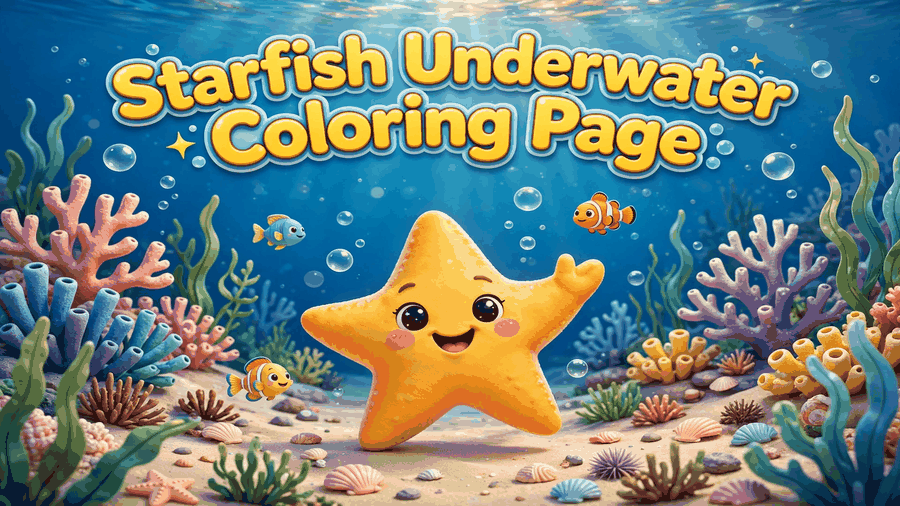
Starfish Underwater Coloring Page brings children closer to the fascinating world beneath the sea through a creative activity filled with marine life and ocean-inspired colors. These printable designs offer an enjoyable way to explore the appearance of starfish while imagining a peaceful underwater environment.
Discover the Interesting World of Starfish
Starfish, also commonly called sea stars, are among the most recognizable animals in the ocean. Their distinctive arms and unusual shapes make them interesting subjects for children’s coloring activities. Although many people imagine starfish with five arms, some species have more, creating plenty of opportunities to explore different shapes and patterns through art.
Unlike fish, starfish do not have fins or tails for swimming. They move slowly along the ocean floor using hundreds of tiny tube feet located underneath their bodies. This fascinating feature makes them different from many other marine animals and gives children something interesting to learn while working on their artwork.
An underwater coloring theme can also introduce children to the variety of environments where sea stars live. They are found in different marine habitats, including rocky shorelines, coral reefs, and sandy ocean floors. Each environment offers inspiration for creating colorful backgrounds and imagining the small details of life beneath the waves.
What Makes an Underwater Starfish Coloring Activity Special?
The starfish is a wonderful subject for coloring because its shape is easy to recognize but still offers room for creativity. Children can experiment with different shades on each arm, create repeating patterns, or give their sea star a completely imaginative appearance. There is no single color combination that children must follow when creating their own underwater artwork.
Starfish also provide a natural starting point for discussing ocean animals. Parents and teachers can introduce other marine creatures during the activity, such as small fish, sea turtles, crabs, and seahorses. These conversations can make coloring time feel more connected to the fascinating environment beneath the ocean surface.
Another enjoyable aspect is the opportunity to create an underwater scene. Children can imagine their starfish resting on a sandy seabed, exploring a rocky surface, or sitting near colorful coral. If the selected illustration includes open background areas, these spaces can become part of the creative experience.
Creative Color Ideas for Starfish and Ocean Backgrounds
Choosing colors is one of the most enjoyable parts of a starfish coloring activity. Real sea stars appear in a variety of colors, including orange, red, yellow, purple, and brown. Some species also have spotted or patterned surfaces, giving children several possibilities when decorating their pictures.
Here are some ideas to make the artwork more interesting:
- Orange and Yellow Starfish: Combine bright orange with yellow highlights to create a warm, cheerful appearance.
- Purple and Pink Starfish: Use different shades of purple and pink for a playful underwater character.
- Red and Brown Patterns: Create a more natural-looking sea star with reddish tones and small brown details.
- Blue Ocean Water: Choose light blue, turquoise, or deeper blue shades to represent different underwater depths.
- Green and Brown Seabed: Add earthy colors to suggest seaweed, rocks, and sandy areas.
Children can also experiment with color transitions. For example, they can begin with a darker shade near the center of the starfish and gradually use lighter colors toward the tips of its arms. Simple dots, curved lines, and small shapes can make each finished picture look different.
For an additional creative challenge, invite children to design an imaginary sea star using colors that do not usually appear in nature. A rainbow starfish or one with alternating pastel shades can turn an ordinary coloring activity into a personal art project.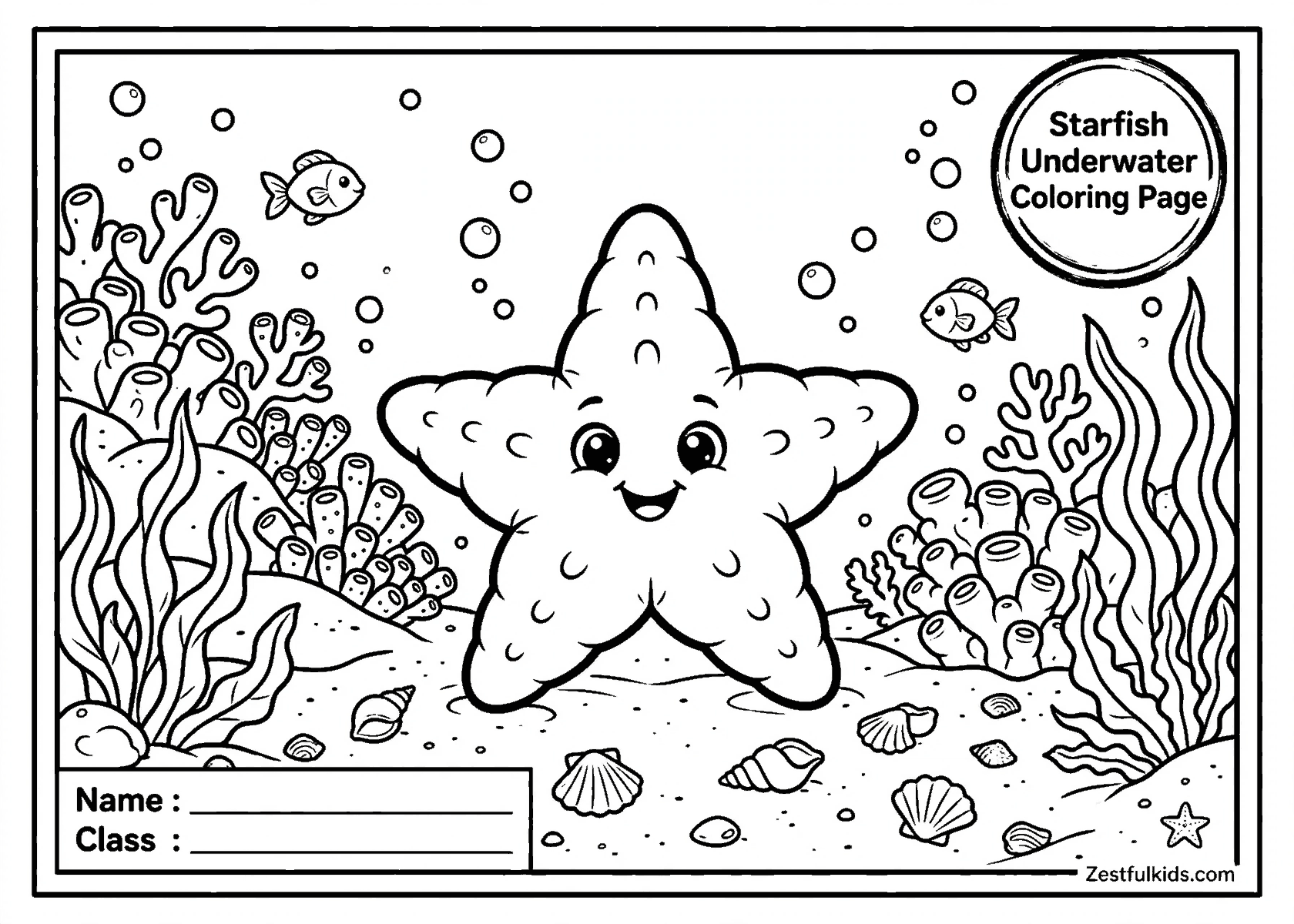
Turning Coloring Time into a Little Ocean Discovery
A starfish illustration can become the starting point for a simple ocean-themed learning activity. Before coloring begins, parents or teachers can introduce a few interesting facts about sea stars. Children can learn that these animals are not fish, that they move using tube feet, and that many species have the ability to regenerate lost arms under certain conditions.
These facts can be introduced naturally without interrupting the creative process. For example, while children are coloring the arms, adults can explain that starfish use their tube feet to move across surfaces underwater. This makes the subject more memorable because the information is connected to the animal they are drawing.
Another activity is to invite children to imagine what their starfish might encounter on the ocean floor. They can describe nearby seaweed, rocks, shells, or other marine animals. If the coloring design has enough empty space, children may also draw additional details around the main subject.
For families who enjoy exploring different animal themes, an animals having a birthday party activity offers another imaginative way to bring animal characters into a creative setting. It can be a fun change of theme after spending time exploring underwater life.
How to Make the Most of Your Starfish Printable
A good coloring experience does not depend on using complicated materials. Crayons, colored pencils, and washable markers can all be suitable choices, depending on the child’s preferences and the details of the illustration. Colored pencils are useful for adding small patterns, while crayons work well for filling larger spaces with soft layers of color.
Before printing, parents and teachers can check the available print settings and preview the page to make sure the illustration fits properly. Choosing paper that works with the selected coloring tools can also help prevent unwanted marks from showing through to the other side.
For younger children, it may be helpful to begin with the larger areas of the starfish before adding smaller details. Older children can try creating patterns, combining several shades, or designing a complete underwater setting. However, children should be encouraged to work at their own pace rather than feeling that every part of the picture needs to look perfect.
Once the artwork is finished, families can display it on a bedroom wall, classroom board, or personal art collection. Children may also give their sea star a name and invent a short story about its life beneath the ocean.
Explore More Nature-Inspired Coloring Activities
The underwater world is only one part of nature that children can explore through printable art. Moving from the ocean to a tropical forest introduces a completely different collection of animals, plants, and natural scenery.
For another nature-themed activity, jungle scenes with butterflies can inspire children to explore the beauty of tropical environments. Butterflies, leaves, and jungle surroundings offer different shapes and coloring possibilities compared with the rounded arms and ocean-inspired details of a starfish.
Parents and teachers can use these themes together to create a simple nature-inspired coloring collection. Children might begin with a sea star, continue with other marine animals, and then explore butterflies and jungle environments. Each activity provides a new subject to observe, imagine, and decorate.
The Starfish Underwater Coloring Page is a lovely opportunity to combine creativity with curiosity about marine life. Through different color choices, imaginative backgrounds, and simple ocean discoveries, children can create artwork that reflects their own ideas about the fascinating world beneath the sea.
