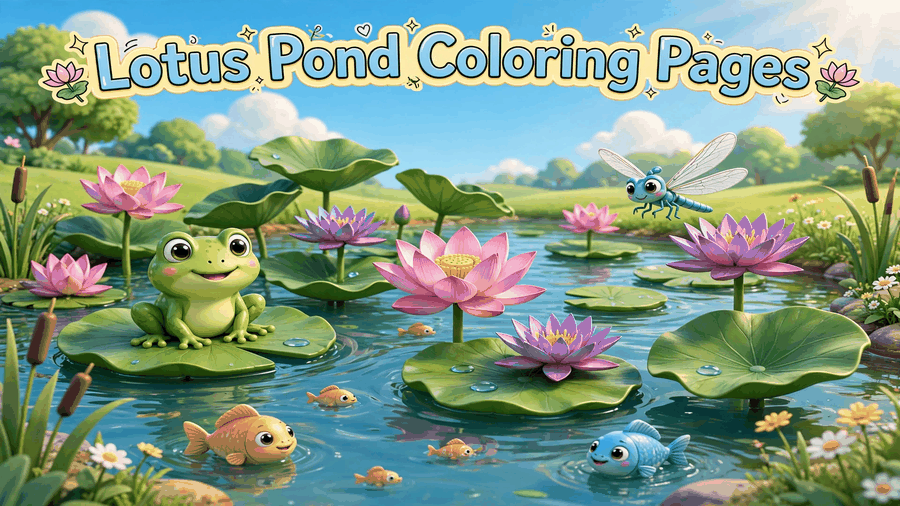
Lotus Pond Coloring Pages introduce children to the peaceful beauty of nature through graceful lotus flowers, floating leaves, and tranquil water scenes. These printable activities offer a creative way to explore a beautiful pond setting while enjoying the simple pleasure of coloring.
Discover the Beauty of a Lotus Pond Through Coloring
A lotus pond has a distinctive appearance that makes it an interesting subject for children’s artwork. Large, rounded leaves float across the water, while elegant lotus flowers rise above the surface on slender stems. Their layered petals create beautiful shapes that children can explore with different coloring techniques. Even a simple pond illustration can become an imaginative landscape when children decide how to fill each part.
Lotus flowers are especially recognizable because of their layered petals and balanced shape. Some illustrations may feature flowers that are fully open, while others can show buds waiting to bloom. These different forms provide opportunities to experiment with colors and create individual interpretations of a natural pond. Children can choose traditional pink and white shades or invent entirely new combinations.
The surrounding water also plays an important role in the overall appearance. Rather than leaving every empty space untouched, children can add soft blue tones, gentle reflections, or small ripples to suggest movement. This makes the activity more than simply filling flower shapes with color. It becomes an opportunity to create an entire outdoor scene.
What Makes Lotus Pond Illustrations Interesting for Children?
One appealing feature of lotus pond artwork is the variety of shapes found within a single natural setting. Flower petals are usually curved and arranged in layers, while lotus leaves have broad, rounded outlines. Water creates larger open spaces that contrast with the smaller details of the plants. This combination gives children several different areas to explore.
Another interesting element is the relationship between the flowers and their surroundings. A lotus flower can become the main focus of an illustration, while leaves and water provide a natural frame. Children can experiment with darker and lighter shades to make the flowers stand out without making the entire picture look too busy.
Pond scenes can also encourage imaginative storytelling. A child might picture a quiet morning when the flowers begin to open, or imagine tiny insects flying above the water. If the illustration leaves room for additional details, children can draw small fish, dragonflies, clouds, or distant plants to create their own version of a peaceful garden.
Creative Color Ideas for Lotus Flowers and Floating Leaves
Choosing colors is one of the most enjoyable parts of working with a nature-themed printable. Although real lotus flowers are commonly associated with pink and white shades, children do not have to follow realistic colors throughout their artwork. They can use familiar natural tones or experiment with imaginative combinations.
Here are some simple ideas to help children get started:
- Lotus petals: Try soft pink, rose, white, or light purple. A darker shade near the center can help individual petals appear more noticeable.
- Flower centers: Use pale yellow, golden yellow, or orange to create a warm contrast against lighter petals.
- Lotus leaves: Explore different shades of green, including light green, olive, and deep green.
- Water: Light blue, turquoise, and blue-gray can create the appearance of a calm pond.
- Stems: Choose natural green or brown shades to connect the flowers visually with the surrounding water.
- Background: Pale blue skies, soft green plants, and gentle sunlight can complete the outdoor atmosphere.
Children who enjoy experimenting can also try blending two shades of pink on larger petals. Colored pencils are useful for gradual shading, while crayons work well for covering broad areas such as water and leaves. Washable markers can provide stronger colors, especially when used on paper that can handle them without excessive bleeding.
There is no need to make every flower identical. Different shades can make the pond look more varied and give each part of the illustration its own character.
Turn a Simple Coloring Activity into a Nature Exploration
Lotus pond artwork can provide a natural starting point for conversations about plants and their environments. Parents and teachers can introduce a few interesting facts while children work on their pictures. For example, lotus plants grow in aquatic environments, and their broad leaves are often seen floating on the water or extending above it.
Children can also learn to notice how plants have different structures. A flower has petals, a center, and supporting stems, while a leaf has its own shape and surface. Looking closely at these features can make the coloring experience more engaging without turning it into a formal lesson.
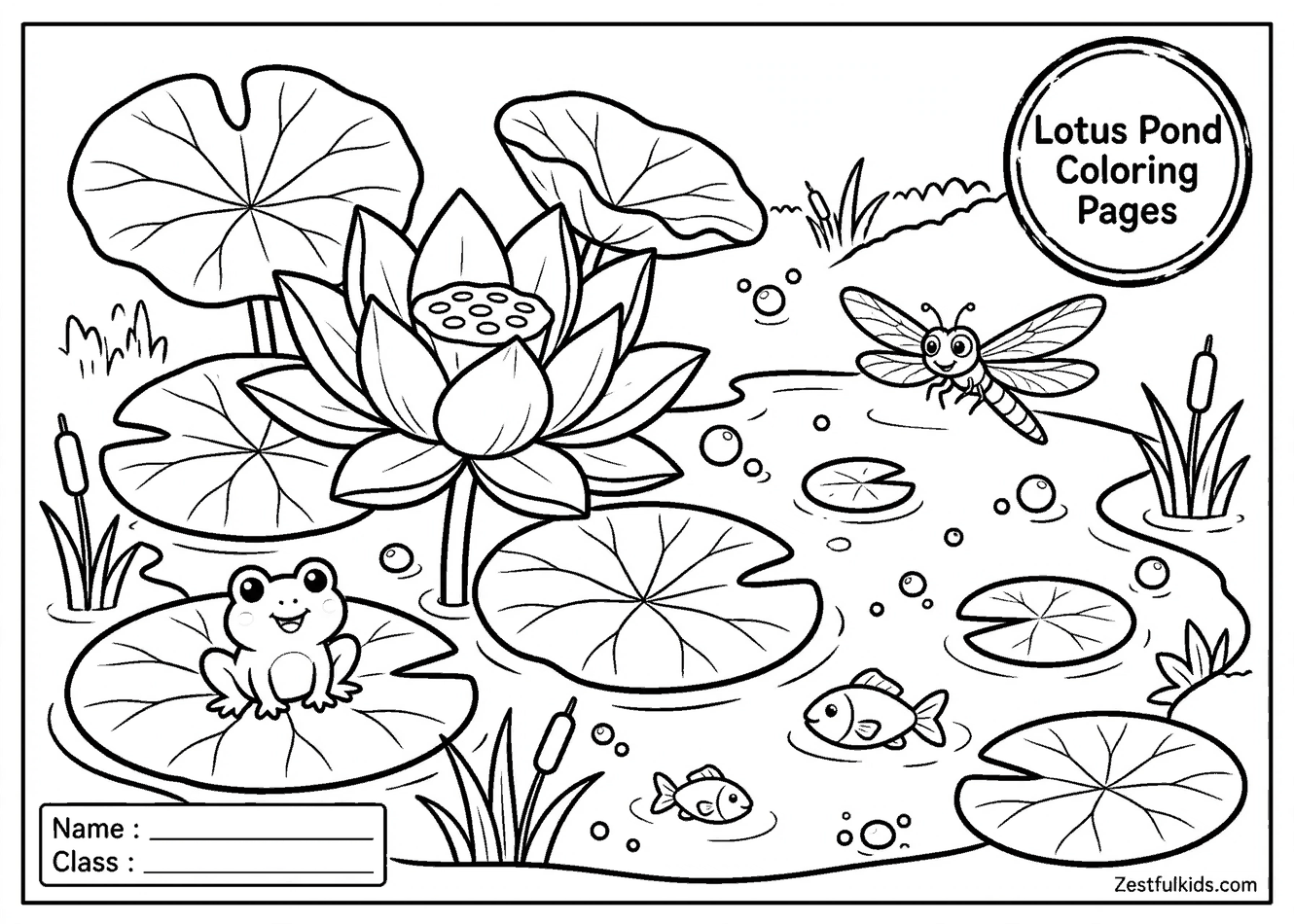
For a simple activity, invite children to identify the different parts of the lotus plant before choosing their colors. They can point to the petals, leaves, stems, and surrounding water. Younger children may enjoy naming the colors they use, while older children can try creating a scene with different shades to suggest depth.
Another idea is to encourage children to imagine what might live around a pond. They can draw a dragonfly near a flower, a small fish beneath the water, or a butterfly visiting the garden. These additions are optional creative ideas rather than details that need to appear in every printable design.
Choosing the Right Coloring Approach for Different Skill Levels
Not every child approaches a coloring activity in the same way. Some enjoy filling large shapes with bright colors, while others prefer spending time on small details. A lotus pond theme can accommodate both approaches, depending on the complexity of the illustration selected.
For children who prefer simpler artwork, designs with clearly separated flowers, leaves, and water areas can make the activity easier to follow. They can focus on recognizing the main shapes and choosing suitable colors without worrying about too many small sections.
Children who enjoy more detailed pictures may prefer illustrations containing layered petals, multiple leaves, and additional natural elements. These designs offer more opportunities to experiment with shading, color combinations, and background details. However, the most important consideration is whether the illustration feels enjoyable rather than difficult.
Parents can also let children decide how much detail they want to add. One child might finish the flowers first and leave the water in a single shade, while another may spend extra time creating reflections and small decorative patterns. Both approaches are valid ways to complete the artwork.
Make the Printable Part of a Relaxing Creative Routine
A lotus pond coloring activity can fit naturally into a quiet afternoon at home, a classroom art session, or a weekend creative routine. Before starting, prepare the coloring tools and choose a comfortable place with enough room to work. If using a digital printable, check the available print settings and preview the page before printing to ensure the illustration fits properly.
It can be helpful to place a spare sheet of paper underneath the artwork when children are using markers. This protects the working surface and reduces the chance of color transferring onto another page. For colored pencils and crayons, ordinary drawing paper is generally suitable, although thicker paper may be preferable for children who press firmly.
When the picture is finished, give children the opportunity to describe their artwork. They might explain why they chose certain flower colors, what kind of weather they imagined, or whether their pond is located in a quiet garden or a larger natural landscape. Their descriptions can turn an ordinary coloring session into a personal creative project.
Families who enjoy other outdoor-themed activities can also explore police motorcycles as a different subject for their next coloring session. This offers a change from natural scenery to vehicles and community helpers.
For children who like imagining life beyond the garden, an outdoor camping theme can provide another creative direction. The outdoor adventure camp activity offers a different setting inspired by nature, exploration, and outdoor experiences.
Displaying Finished Lotus Pond Artwork
Once the coloring is complete, children may enjoy displaying their work somewhere visible at home or in the classroom. A finished lotus pond picture can be placed on a bedroom wall, attached to a classroom art board, or included in a growing collection of seasonal and nature-inspired artwork.
For families who want to keep several finished activities, a simple folder can help organize the pictures. Children can arrange their artwork by theme, date, or personal preference. They may even enjoy comparing two versions of the same subject when they use different color combinations.
Every finished picture will look a little different because each child makes individual choices about flowers, leaves, water, and background details. That variety is part of the appeal of Lotus Pond Coloring Pages. Through a familiar natural setting, children can turn simple outlines into colorful scenes that reflect their own imagination and appreciation of the outdoors.
