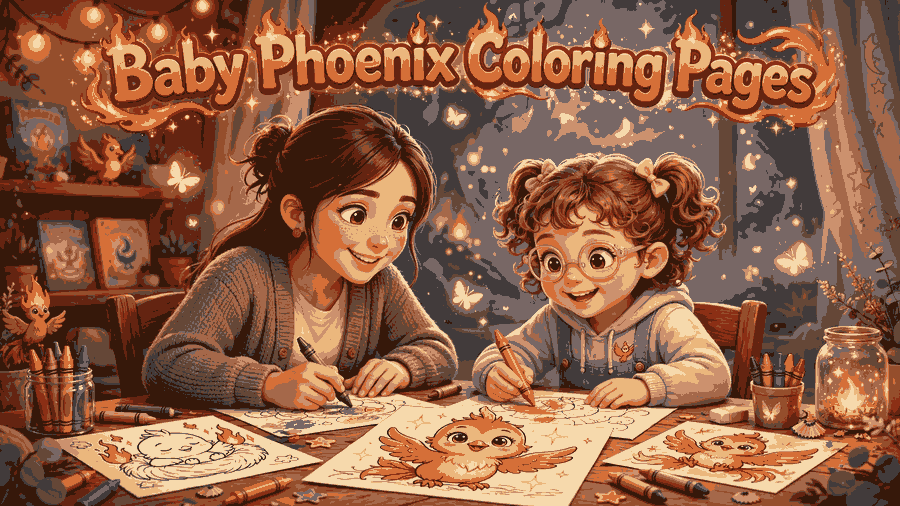
With bright feathers, a tiny beak, and a tail that seems ready to burst into colorful flames, a baby phoenix is a wonderful subject for imaginative artwork. Baby Phoenix Coloring Pages introduce children to the legendary firebird in a gentle, playful form that invites creativity without requiring realistic colors or familiar animal patterns. Unlike ordinary bird illustrations, a phoenix belongs to mythology and fantasy, giving young artists the freedom to imagine glowing wings, golden feathers, and magical surroundings. These coloring activities can be enjoyed at home, during classroom art sessions, or as part of a fantasy-themed creative project. Parents and teachers can encourage children to explore warm colors, design their own feather patterns, and invent stories about a little bird discovering its magical abilities. Whether children picture their phoenix resting in a nest, flying through a glowing sky, or surrounded by sparks of light, each interpretation can be different. This imaginative theme offers a useful starting point for artistic exploration, storytelling, and playful conversations about mythical creatures.
Meet the Baby Phoenix, a Legendary Bird Reimagined
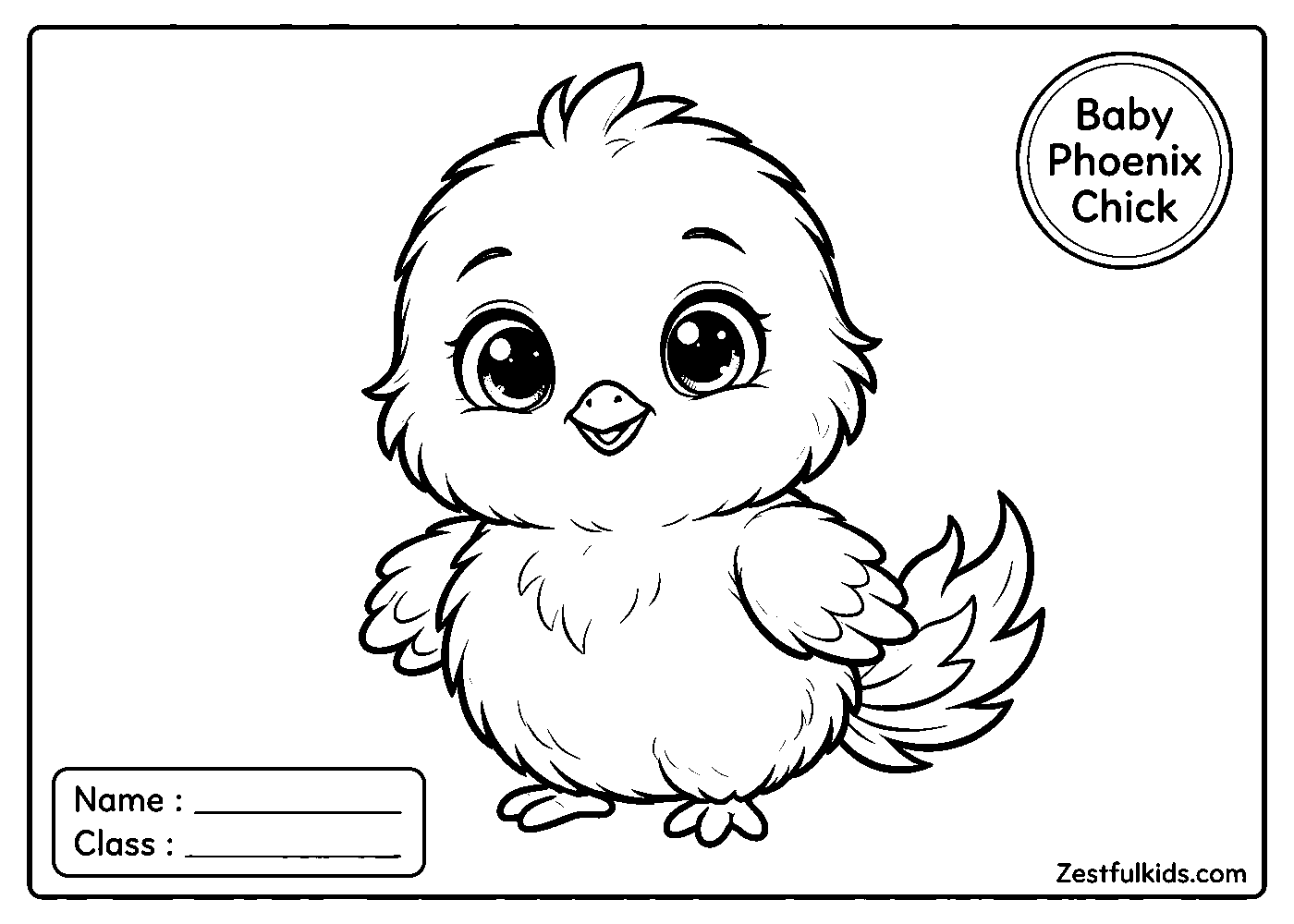
The phoenix appears in myths and legends as a remarkable bird associated with fire, renewal, and rebirth. Stories about the phoenix vary across traditions, but the creature is widely recognized in modern fantasy as a bird connected with flames and extraordinary transformation. A baby phoenix takes this legendary idea and gives it a softer personality, making it easy to imagine a curious little creature learning to spread its wings.
The visual features of a phoenix offer plenty of possibilities for coloring. Its feathers might resemble flames, with pointed shapes along the wings and tail. A rounded body, small feet, and expressive eyes can make a young phoenix look friendly rather than intimidating. Depending on the illustration, children may also find decorative feathers, sparks, or other fantasy details to color.
Because the phoenix is mythical, there is no single correct appearance that every child must follow. One child might imagine a golden bird with orange wings, while another may create a turquoise phoenix with purple tail feathers. Both interpretations suit a fantasy coloring activity. The goal is to enjoy the illustration and develop an original color scheme rather than reproduce a real animal.
Build a Color Palette Inspired by Fire and Light
Warm colors are a natural starting point for a phoenix because its legendary image is closely connected with fire. Red, orange, yellow, and gold can be combined to create feathers that appear to glow. Children might use yellow near the center of a feather and orange or red along its outer edges, creating a simple flame-inspired pattern. Colored pencils are useful for blending these shades, while crayons can fill larger areas with bold, even color.
A phoenix does not have to be entirely warm-colored, however. Cool colors can make the character look magical and distinctive. Blue feathers might suggest an icy phoenix, while violet and pink can create a dreamy fantasy bird. Green or teal accents can also provide contrast against an orange body or golden wings. Children can choose two or three main colors and add smaller accents to keep the design balanced.
The background can reinforce the mood of the picture. A sunset might use orange, pink, and purple, while a night sky could feature deep blue, small stars, and a pale moon. If the illustration includes flames or sparks, children can color these details with yellow and orange while leaving enough contrast around the bird so its outline remains easy to see. These background ideas are optional additions for designs with suitable open space.
Small Details That Make a Phoenix Stand Out
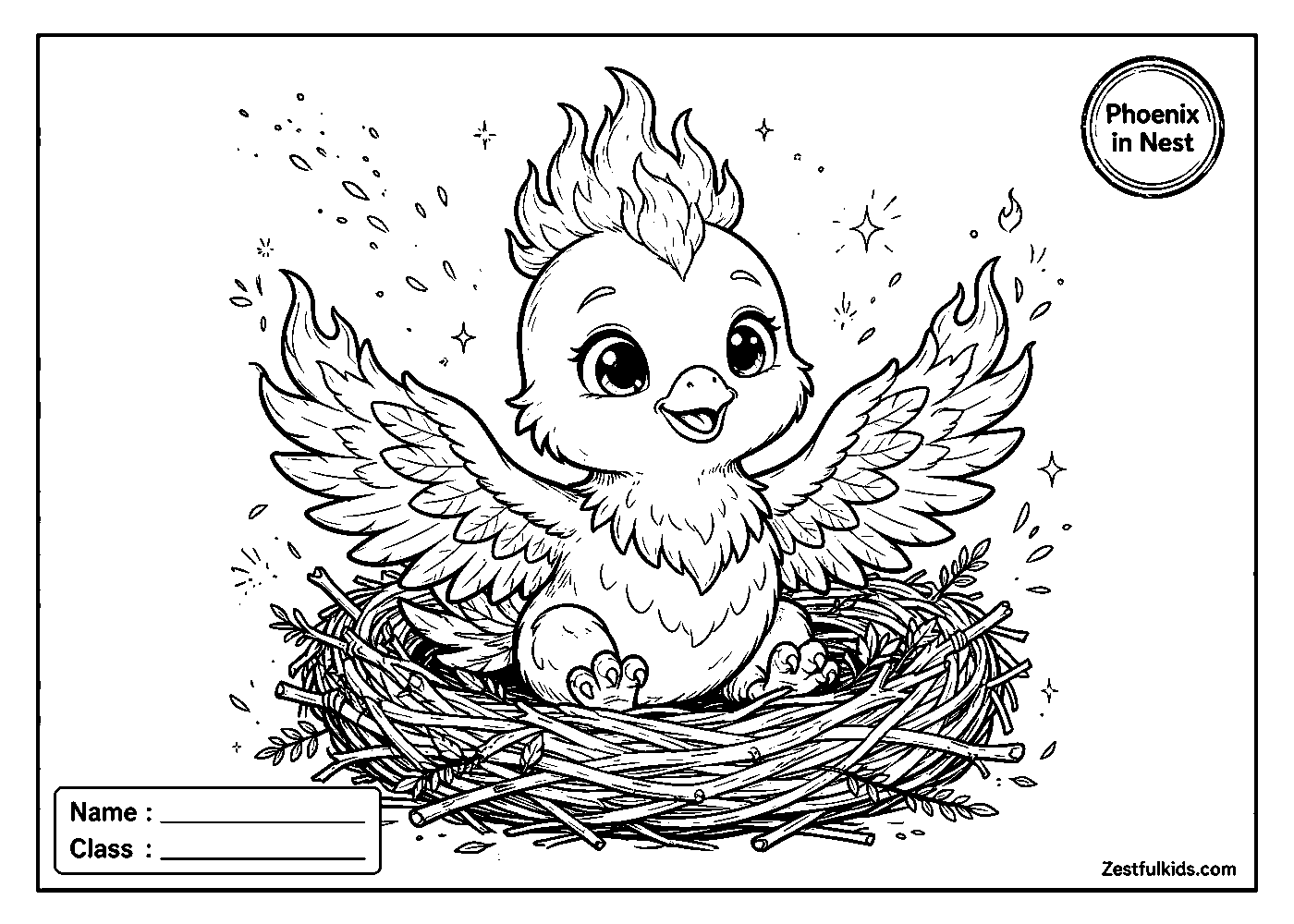
Feathers provide an interesting way to experiment with repeating colors and patterns. Children can alternate red and yellow feathers along a wing or use a different shade for every section of the tail. If the illustration has several rows of feathers, they can repeat the same sequence to create a coordinated appearance. Another option is to give each feather a slightly different shade, producing a colorful effect without adding complicated details.
The phoenix’s face deserves attention, too. A small beak can be colored yellow, orange, or gold, while the eyes may be outlined carefully to preserve their expression. If the bird has visible feet or claws, children can use a shade that contrasts with the body. Working from larger sections toward smaller details can make the process easier, especially when the illustration contains narrow feather shapes.
Children should feel free to change their plans as they color. A bird that begins with red and yellow feathers might develop purple wing tips or a blue tail along the way. Such changes are part of creative exploration, not mistakes that need to be corrected. For another perspective on artistic freedom, families can read about why a child coloring the ocean red is not a mistake. The same idea applies to mythical creatures: imagination can be more important than matching familiar colors.
Invent a Story for the Little Firebird
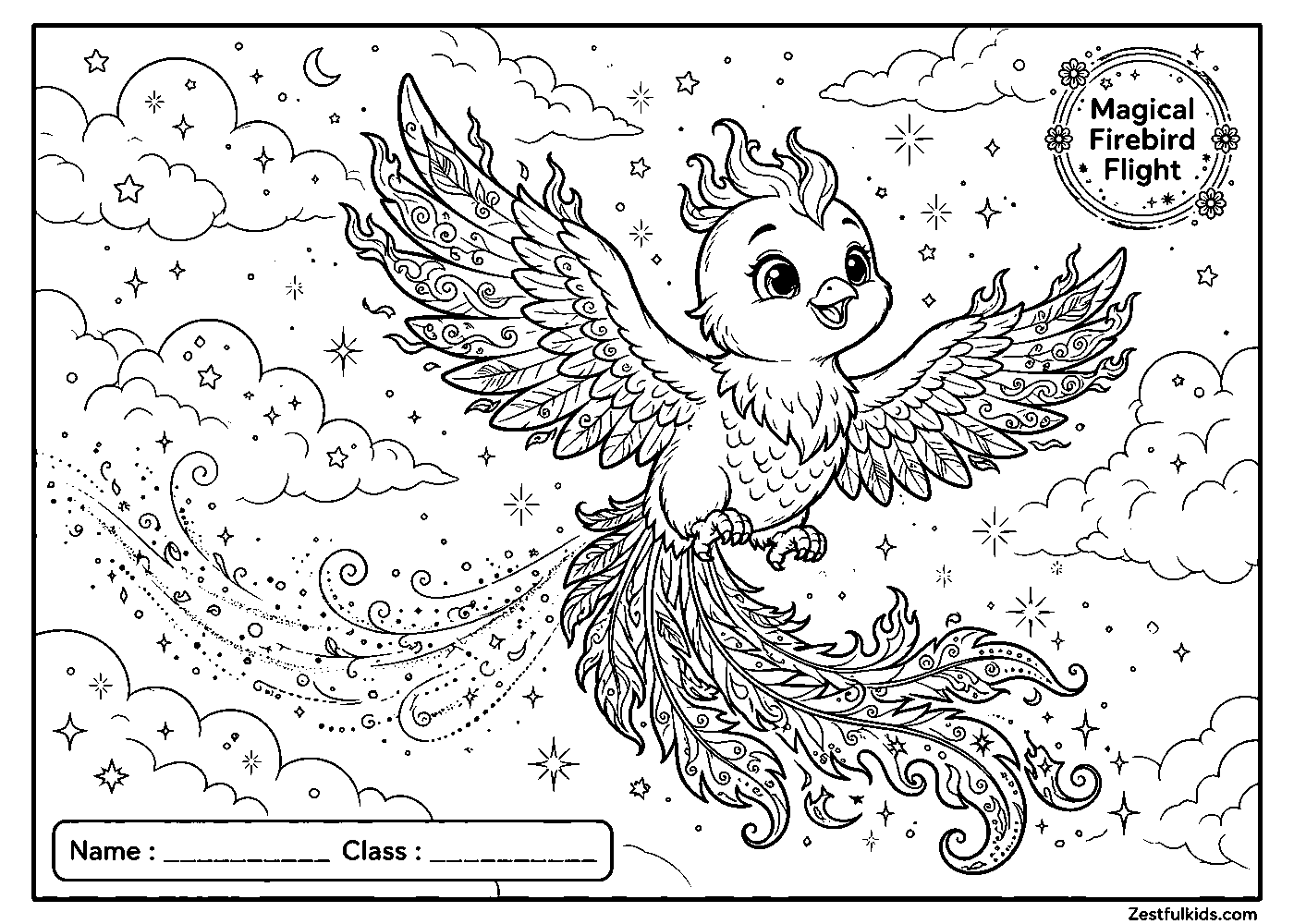
A baby phoenix can inspire a story that grows alongside the artwork. Perhaps the little bird is taking its first flight, searching for a magical home, or learning how to make tiny sparks appear at the tips of its wings. Children can decide where the phoenix lives and what makes it special. The setting might be a mountain cave, a peaceful forest, a floating island, or an imaginary kingdom above the clouds.
Parents and teachers can encourage storytelling without turning it into a writing assignment. Invite children to give their phoenix a name and describe its favorite place to rest. They might explain what the bird eats in their fantasy world, which creatures are its friends, or what happens when it flaps its wings. Younger children can tell their stories aloud, while older children may enjoy writing a few sentences beside the finished picture.
The story can also lead to a separate drawing. Children might add a nest, a magical tree, a mountain, or a trail of sparkling feathers on another sheet of paper. If the original illustration already includes a detailed background, they can simply focus on the character and imagine the rest of the story verbally. There is no need to add every possible detail to the coloring page itself.
Create a Fantasy Art Session Around Mythical Creatures
Baby phoenix artwork can be part of a wider collection of fantasy-themed activities. Children might invent a dragon, design a magical forest, or draw an imaginary egg from which another mythical creature could hatch. These projects give them a chance to compare different shapes, textures, and color palettes while creating a connected fantasy world.
An egg-themed activity can be particularly useful for extending the story. Children can imagine whether the phoenix hatched from a golden egg, a glowing red egg, or one covered in unusual patterns. For inspiration, they can explore these dinosaur egg illustrations, which offer a different take on the idea of creatures emerging from eggs. They can then design their own fantasy egg on a separate sheet, choosing patterns and colors that match the phoenix they have colored.
When preparing the activity, provide a selection of crayons, colored pencils, or markers and let children choose the tools they prefer. Before printing, check the document’s preview to make sure the illustration fits within the selected page layout. Follow any paper-size and orientation details supplied with the file, and adjust the scaling if the image appears cropped. A comfortable workspace and enough room for additional drawing can help children move naturally between coloring and storytelling.
Let Every Baby Phoenix Have Its Own Personality
One child may create a cheerful firebird with bright yellow wings, while another may prefer a mysterious purple phoenix with silver feathers. Some children will concentrate on coloring neatly within the outlines, while others may spend more time inventing backgrounds and decorative patterns. Both approaches can make the activity enjoyable, and there is no need for every finished picture to look alike.
Baby Phoenix Coloring Pages combine the charm of a young bird with the imaginative possibilities of mythology. Their flame-inspired feathers, magical settings, and open-ended stories give children plenty of ways to personalize their artwork. With a few coloring tools and the freedom to experiment, each child can create a unique little firebird and imagine the world it calls home.

