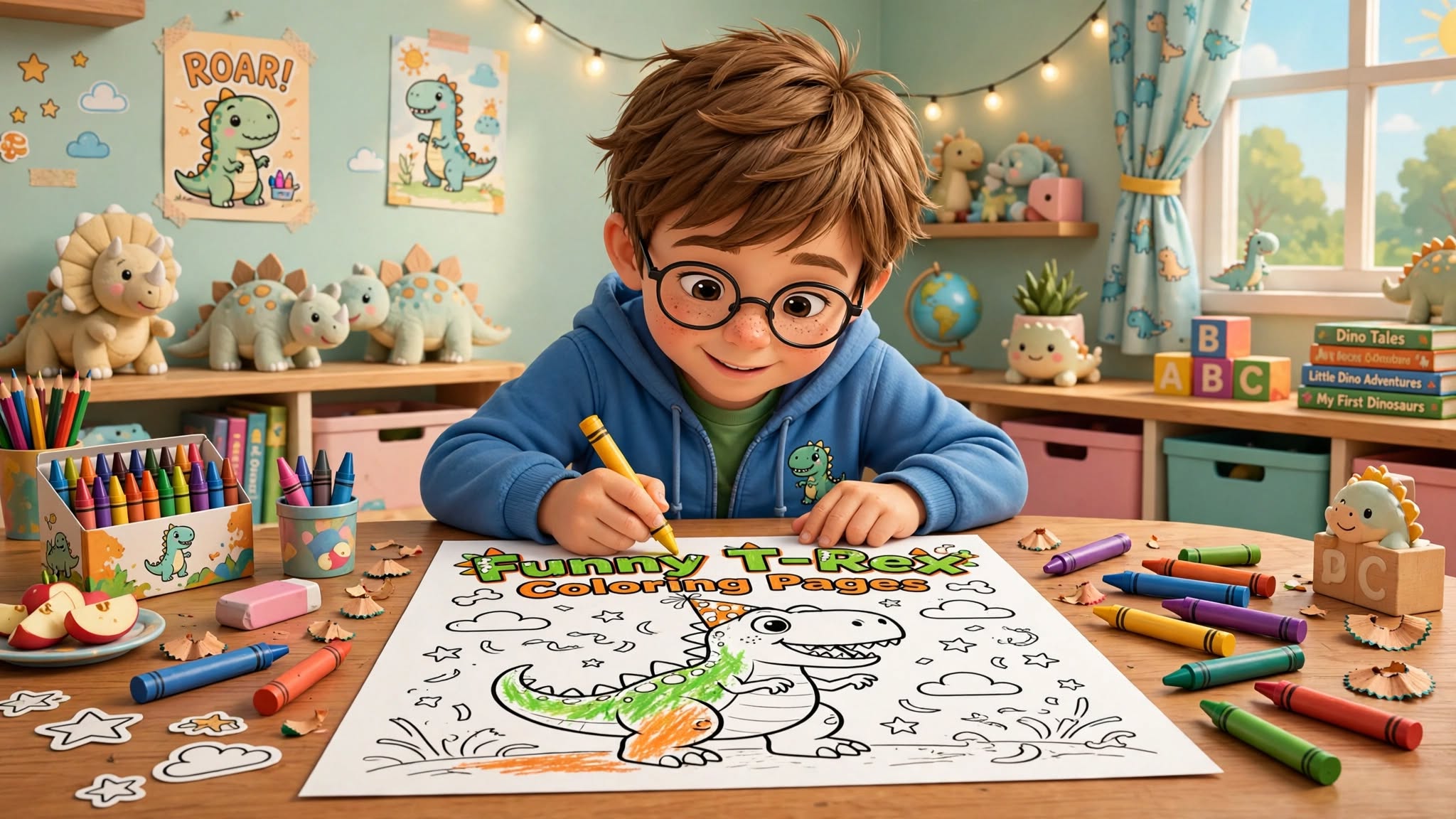
Funny T-Rex Coloring Pages bring prehistoric fun to children’s art time, featuring the idea of a mighty dinosaur with a playful personality and plenty of room for colorful imagination.
Meet the Silly Side of a Mighty Tyrannosaurus Rex
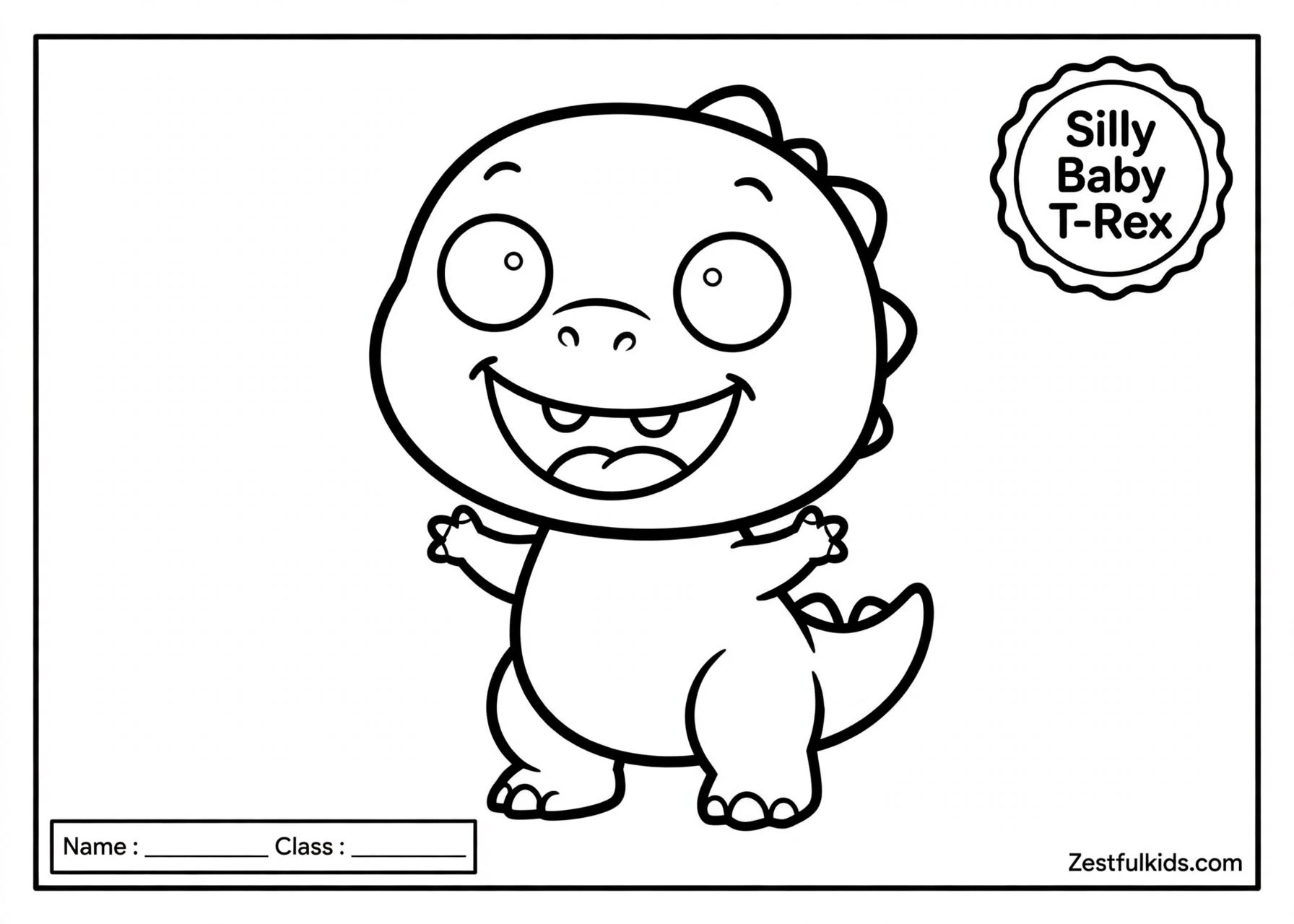
The Tyrannosaurus rex is famous for its powerful jaws, sharp teeth, tiny arms, and enormous body. In a funny dinosaur illustration, these recognizable features can become part of a wonderfully silly character. A T-Rex might look surprised by its own tiny hands, show an oversized grin, or appear to be stomping around with exaggerated enthusiasm. Funny T-Rex Coloring Pages give children a chance to explore this famous dinosaur through a lighthearted artistic activity rather than a strictly realistic picture.
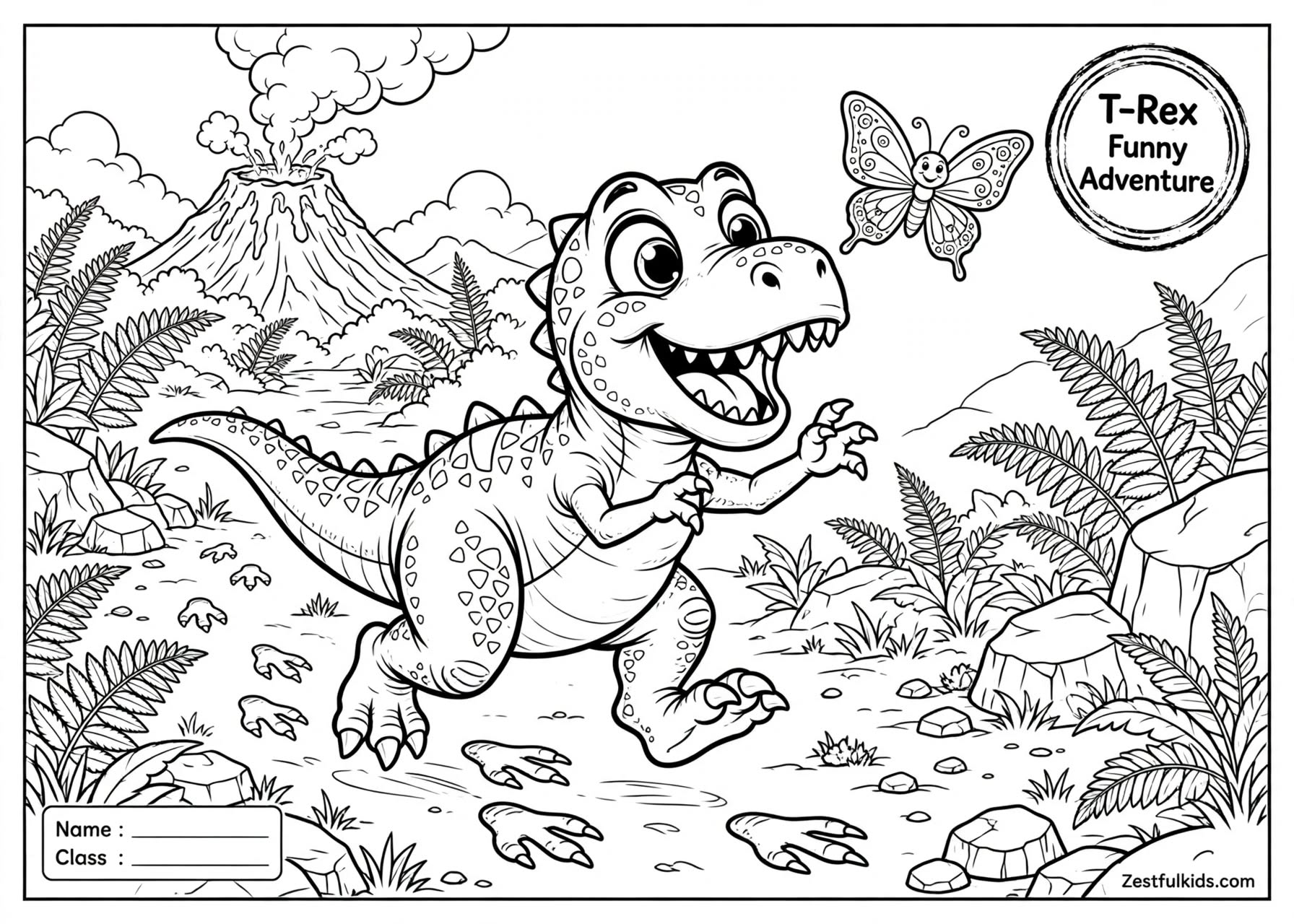
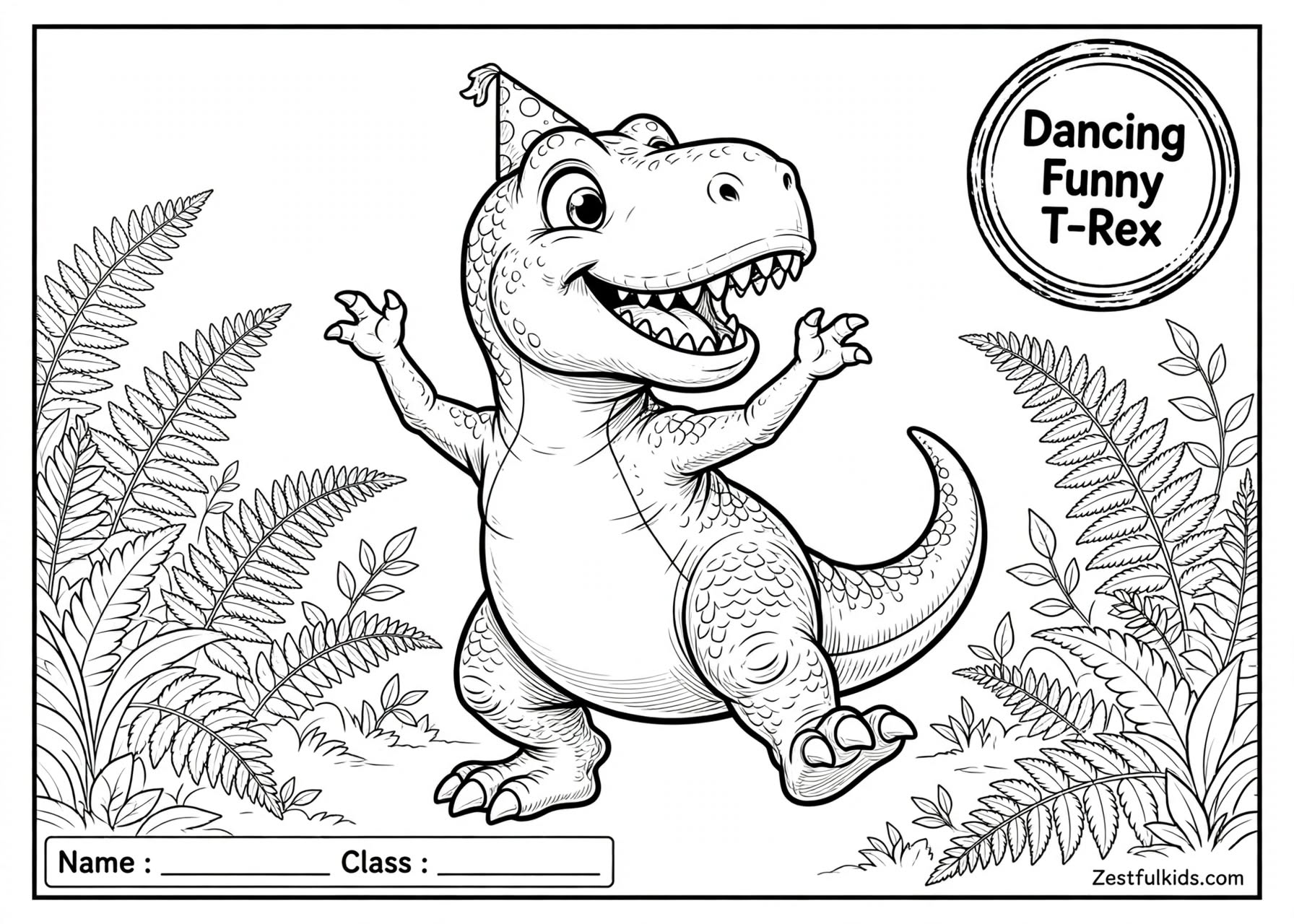
Part of the appeal comes from the contrast between the dinosaur’s fearsome reputation and its imagined personality. Children may picture a T-Rex trying to dance, chasing a butterfly, or struggling to reach something with its short arms. These ideas can inspire the colors they choose and the details they add around the dinosaur. A familiar prehistoric animal suddenly becomes a character with a story of its own.
The activity can suit a relaxed afternoon at home, a classroom art session, or a dinosaur-themed activity with family members. Children can focus on coloring the main figure or use the illustration as a starting point for a larger prehistoric scene. The goal is to enjoy the creative process and make the dinosaur look the way each child imagines it.
What Colors Should a Funny T-Rex Have?
There is no single color that every child needs to use for a T-Rex. Fossil evidence helps scientists study dinosaur anatomy and ancient environments, but it does not provide a complete, universally accepted color scheme for this famous species. Children can therefore choose earthy shades inspired by modern reptiles or invent a colorful dinosaur with a personality that matches its expression.
Green is a familiar choice for a dinosaur, especially when paired with a lighter belly and darker patches along the back. Brown, olive, gray, and sandy beige can create a more natural-looking appearance. Children who prefer playful designs might choose purple skin with orange spots, a blue T-Rex with yellow stripes, or a rainbow pattern that makes the dinosaur stand out from the background.
Coloring the dinosaur’s different features can make the picture more interesting. The body might use two shades of green, while the underside is pale yellow or cream. Small arms, strong legs, and the long tail can share the same base color, with darker shades added to suggest shadows. If the illustration includes visible teeth, white or pale gray can make them stand out against the mouth.
Children can also experiment with the dinosaur’s expression. A wide-open mouth might have a pink tongue, while raised eyebrows or large eyes could make the T-Rex appear surprised or amused. These details are optional coloring ideas rather than features that must appear in every design.
Give the Dinosaur a Funny Story
A humorous coloring activity becomes even more engaging when children imagine what their dinosaur is doing. Instead of treating the T-Rex as a creature that only roars and hunts, they can invent an everyday adventure in a prehistoric setting. Perhaps the dinosaur is trying to pick up a fallen leaf with its tiny arms, taking enormous steps through a muddy field, or looking confused after hearing a strange sound.
Invite children to choose a name for their dinosaur before they start coloring. A name such as Stompy, Chomp, or Tiny Hands can help establish a playful personality. They can then decide which colors suit that character and whether the dinosaur should look friendly, mischievous, shy, or excited. This simple approach connects visual choices with storytelling without requiring a complicated project.
The background can support the story, too. A few ferns, large leaves, rocks, or distant volcanoes can suggest a prehistoric landscape if there is enough space around the illustration. Children might use several shades of green for the plants and muted brown for the ground. A pale orange or pink sky could create the appearance of a dramatic sunset, while blue and white can suggest a bright day.
For an extra challenge, ask children to draw one object their T-Rex might discover. It could be a giant egg, a strange prehistoric plant, or a footprint left by another dinosaur. They can draw the object on a separate sheet if the original page has limited space, then explain how it fits into their dinosaur’s adventure.
Explore Other Characters and Creatures Through Art
Children who enjoy Funny T-Rex Coloring Pages may also like exploring animals and fantasy characters with distinctive shapes and personalities. A flower-themed activity offers a very different kind of design challenge, with petals, leaves, and decorative details instead of scales, claws, and teeth. For a playful nature-inspired project, these daisy flower crown designs can provide ideas for combining floral patterns and imaginative color choices.
Another interesting option is to compare the T-Rex with a creature that belongs to a different category of animal. Bats are real flying mammals, while the T-Rex was a dinosaur that lived millions of years ago. Exploring these vampire bat designs gives children an opportunity to switch from a large land-dwelling prehistoric animal to a smaller creature associated with nighttime and Halloween-inspired imagery.
Adults can use these different themes to encourage children to notice shapes and details. A T-Rex has a large head, powerful hind legs, and a long balancing tail, while a bat has wings, ears, and a much smaller body. Children can choose different coloring techniques for each subject and describe which features make the creatures easy to recognize.
Coloring Techniques for Dinosaur Details
The large body of a T-Rex provides plenty of room for broad strokes, while its teeth, claws, eyes, and facial details may need more careful coloring. Crayons work well for filling larger areas, and colored pencils can help children add spots, stripes, or subtle shading. Washable markers are another option for bold colors, although placing a spare sheet underneath the printable can help protect the table from marks that bleed through the paper.
A simple technique is to color the main body first and then return to smaller details. Children can use a darker shade along the back or tail to create contrast, provided the illustration has enough room for these additions. Short strokes can suggest scales without requiring every section of skin to be covered in a detailed pattern. Younger children may prefer solid colors, while those who enjoy careful work can experiment with more elaborate designs.
Before printing a downloadable illustration, check the available instructions and use print preview to make sure the drawing fits comfortably on the page. Confirm that important outlines remain visible and are not cut off near the edges. Standard printer paper is generally practical for crayons and colored pencils, while heavier paper may be preferable for some marker activities if the printer supports it.
Allow children to decide when their dinosaur feels finished. Some may want to add a detailed prehistoric landscape, while others will be happiest with a brightly colored T-Rex and a few simple background elements. Once the picture is complete, they can give the dinosaur a name, describe its funniest habit, or tell a short story about its latest adventure. Each finished illustration becomes a personal interpretation of one of the most recognizable dinosaurs in history.

