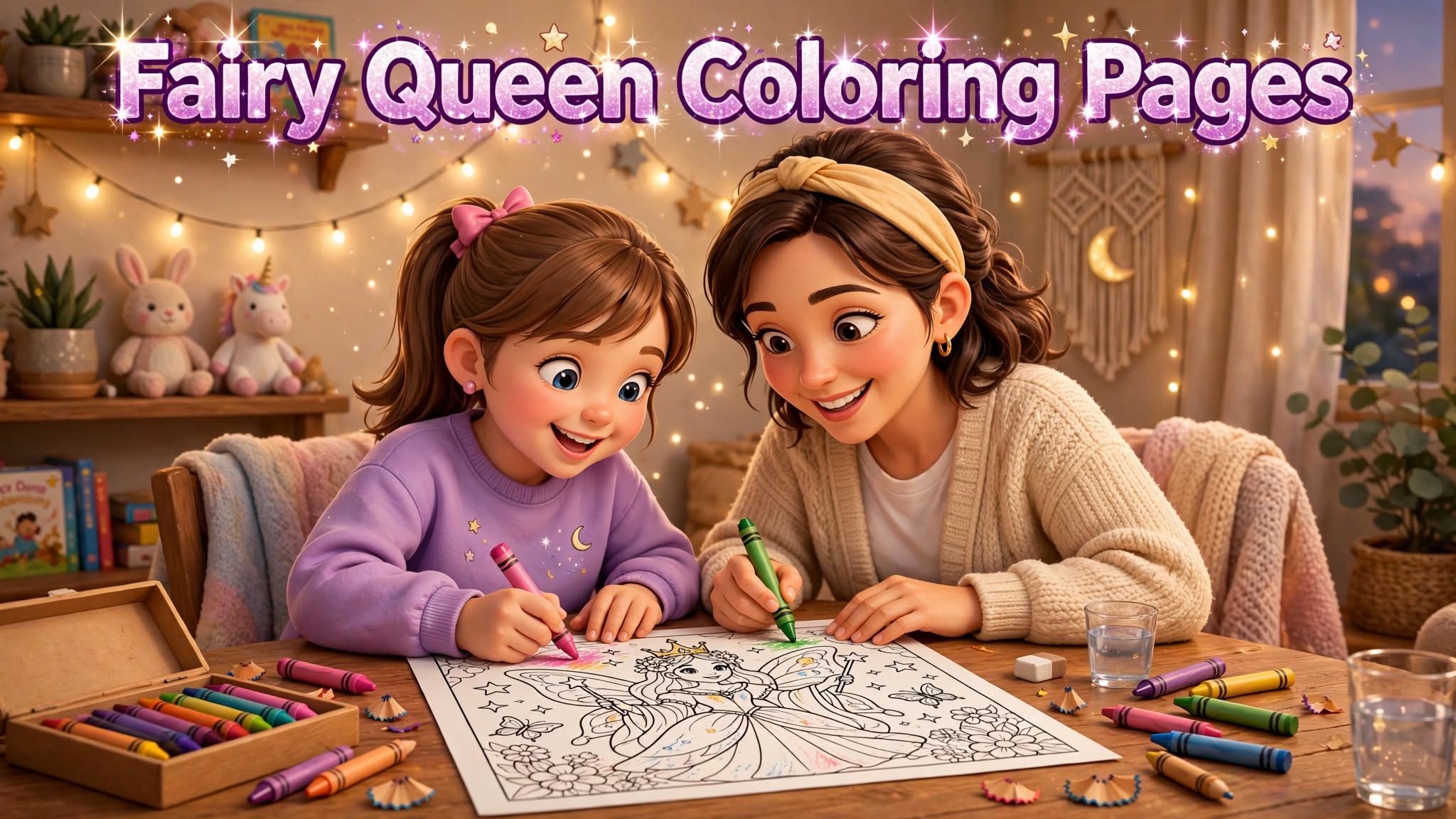
Fairy Queen Coloring Pages invite children into a magical world of enchanted forests, sparkling crowns, flowing gowns, and imaginative fairy-tale adventures through creative coloring.
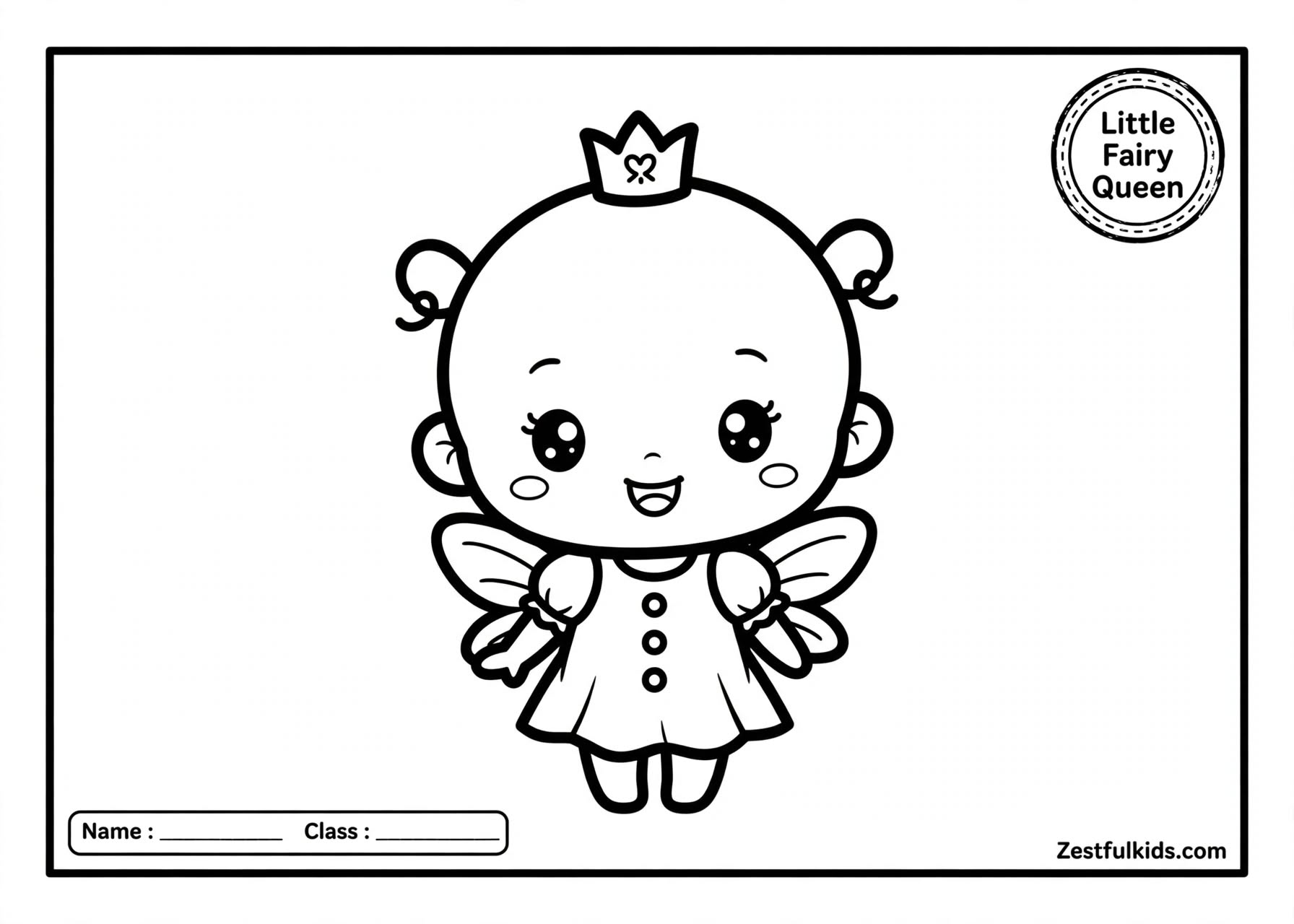
Step into a World Ruled by a Fairy Queen
A fairy queen belongs to a world where flowers can become royal decorations, forest paths lead to hidden kingdoms, and tiny wings carry characters through enchanted gardens. Unlike an ordinary fairy, a fairy queen is often imagined as a graceful leader with a special crown, an elegant gown, and a magical presence. Fairy Queen Coloring Pages give children an opportunity to bring this fantasy character to life through their own color choices and artistic ideas.
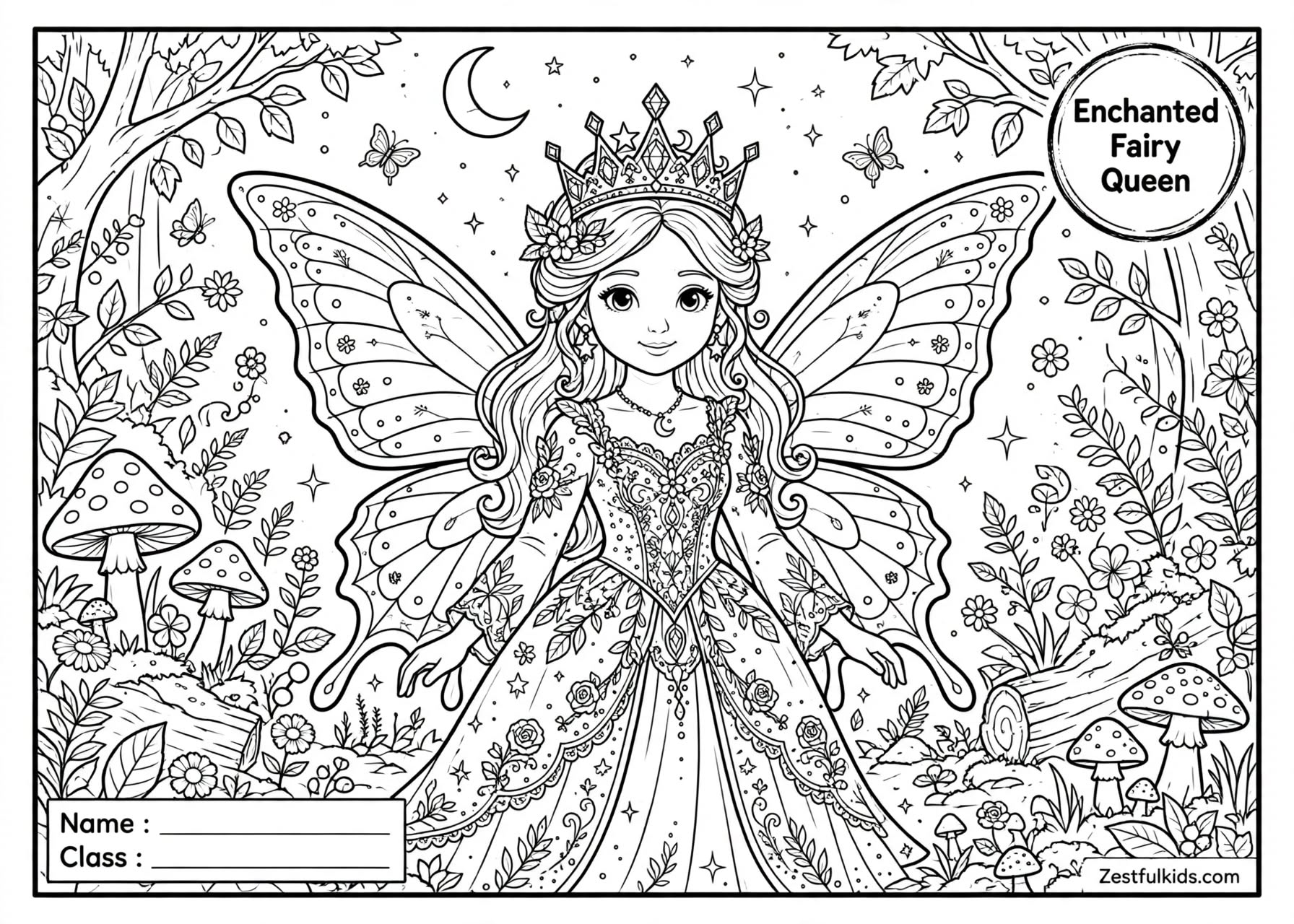
The appeal of a fairy queen lies in the details that make her look different from other fairy-tale characters. A crown might feature tiny stars or jewel-like shapes, while a long dress could have layered skirts, decorative patterns, or flowing sleeves. If the illustration includes wings, children can experiment with pale pink, lavender, turquoise, or shimmering shades created with their available coloring tools. Each detail offers a chance to develop a distinctive design without needing to follow a fixed color scheme.
These fantasy-themed activities can be enjoyed at home, in a classroom, or during a creative afternoon with family members. Children who love fairy tales may imagine the queen protecting a secret garden, welcoming visitors to her kingdom, or preparing for a royal celebration. Others may prefer to focus entirely on the artwork, carefully coloring the gown, crown, and wings. Both approaches make the activity personal and enjoyable.
Design a Royal Look with Colors and Patterns
A fairy queen’s clothing offers plenty of opportunities to experiment with color combinations. Purple and gold can create a regal appearance, while pink and silver give the character a softer, dreamlike style. Deep blue paired with pale lavender can suggest a mysterious nighttime kingdom, and green with yellow can make the queen feel connected to a forest full of plants and flowers.
Children can begin by choosing one main color for the gown and then selecting two supporting shades. For example, a turquoise dress might have a blue border and a pale yellow waist decoration. If the illustration has several sections of fabric, alternating colors can help distinguish the layers. Small dots, stripes, or simple repeating patterns can also be added wherever the drawing leaves enough open space.
The crown deserves its own color plan. Yellow and gold are familiar choices, but silver, rose pink, and light blue can also work beautifully. Children may color the crown’s individual decorations in contrasting shades to make them stand out. If the crown is simple, they can imagine extra jewels or tiny stars around it, provided there is room to add these details.
Wings offer another opportunity for creativity. Some children may prefer a natural butterfly-inspired palette, while others might create rainbow wings with different colors on each section. A gentle gradient can be suggested by coloring the base of each wing more deeply and using lighter pressure toward the edges. Colored pencils are particularly useful for this technique, although simple blocks of color can look just as attractive.
Imagine the Kingdom Behind the Fairy Queen
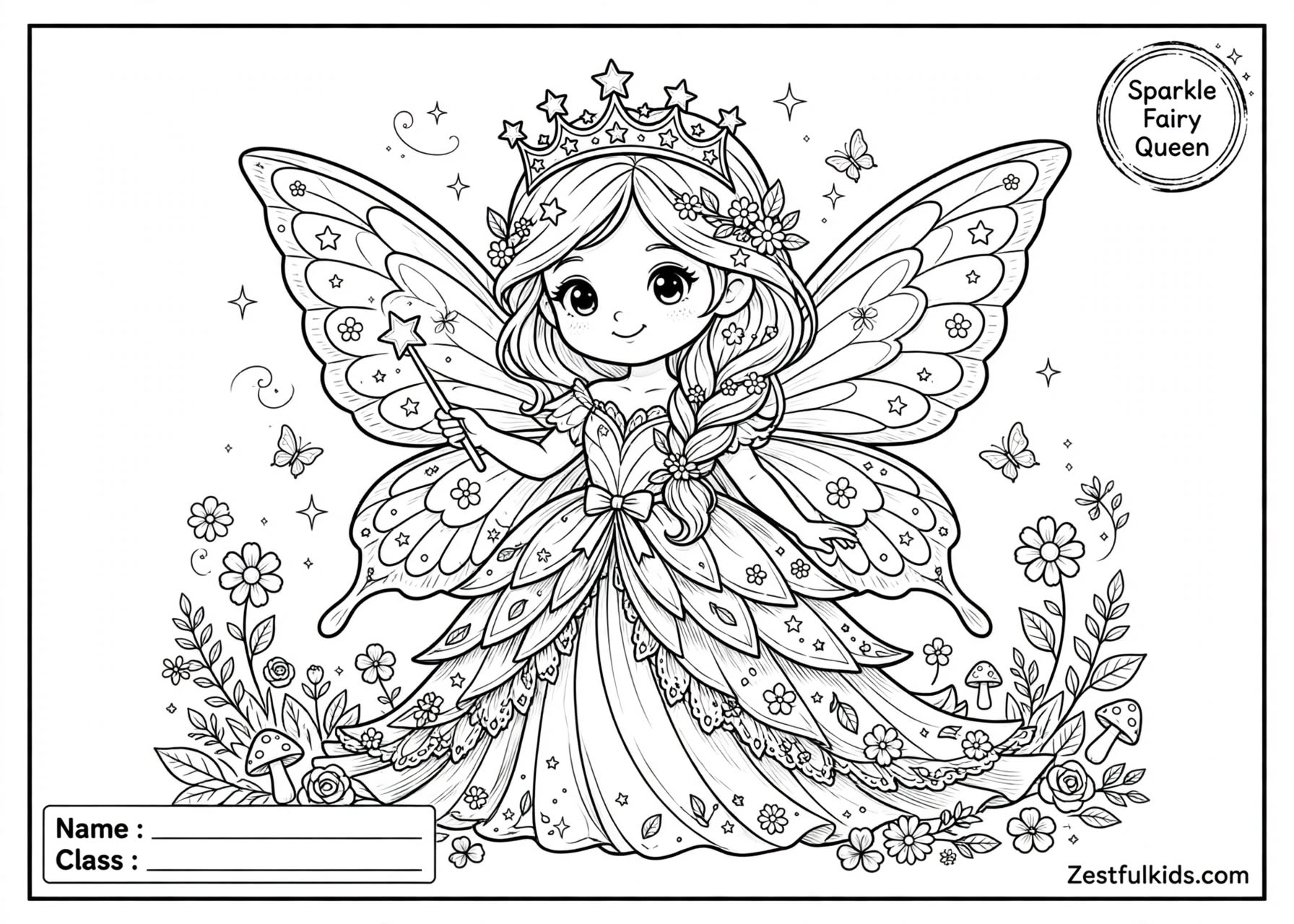
The setting can help children decide what kind of ruler their fairy queen might be. A queen who lives in a flower garden could be surrounded by roses, daisies, mushrooms, and curling vines. One who rules a moonlit forest might belong among tall trees, tiny stars, and a pale crescent moon. These are optional background ideas for children who have extra space to draw beyond the main illustration.
A garden setting works well with fresh greens, soft pinks, sunny yellows, and sky blue. A nighttime scene can use navy, violet, and silver, while a magical palace might feature pastel walls and golden decorations. Children can choose a background that complements the queen’s clothing or deliberately use contrasting colors to make her stand out.
You can turn the scene into a short storytelling activity by asking children to imagine one responsibility their fairy queen has. Perhaps she looks after the flowers, helps lost woodland creatures, or organizes a celebration for the changing seasons. They can add a small object that represents this role, such as a flower wand, a tiny lantern, or a decorative key. If the original illustration has limited space, the extra object can be drawn on a separate sheet.
This approach gives the finished picture a personal meaning without requiring children to write a long story. They can simply name their queen and explain what makes her kingdom special. Parents and teachers can participate by sharing their own imaginative ideas while allowing children to make the final artistic decisions.
Make Fantasy Coloring Part of a Creative Day
Fairy-tale themes can work well alongside other imaginative activities, especially when children enjoy costumes, magical creatures, and make-believe adventures. For a Halloween-inspired change of pace, these children wearing Halloween costumes offer a different way to explore characters through clothing, accessories, and creative color combinations. Children can compare the festive costumes with a fairy queen’s royal gown and decide which details help each character express a personality.
Fantasy art can also be paired with subjects from the prehistoric world. Although fairies and dinosaurs belong to different kinds of imaginary and real-world storytelling, both can inspire children to create colorful characters and unusual settings. These cute dinosaur designs provide another option for children who enjoy switching between magical kingdoms and playful prehistoric adventures.
For a combined drawing challenge, children can imagine a fairy queen visiting a dinosaur-filled valley. They might draw a tiny crown on a friendly dinosaur or create a forest where magical plants grow beside enormous footprints. This is an optional extension rather than a feature of the original printable, and it works best when children enjoy inventing their own scenes.
Choosing Tools for Delicate Fairy-Tale Details
The crown, wings, jewelry, and dress patterns may contain smaller spaces than the surrounding areas. Colored pencils can help children work around these details, while crayons are useful for larger sections of the gown or background. Washable markers provide vivid colors, but a spare sheet beneath the printable can help protect the table if ink passes through the paper.
Encourage children to color the main character before filling in the background. This makes it easier to decide which surrounding shades will complement the gown and wings. They can leave some areas white to suggest sparkle or use a pale color around the wings to create a soft contrast. There is no need to fill every empty space if the child prefers a cleaner, simpler picture.
If the illustration is available as a downloadable file, check its instructions and review the print preview before printing. Make sure the crown, wings, and other important outlines fit comfortably within the page. Standard printer paper is generally suitable for crayons and colored pencils, while heavier paper may be preferable for some marker activities if the printer supports it.
Allow enough time for children to work at their own pace. Some will enjoy adding detailed patterns to every section of the gown, while others may finish quickly and spend more time inventing the kingdom around the queen. Once the picture is complete, they can give their character a name, describe her magical powers, or explain what makes her kingdom unique. The finished artwork becomes a personal interpretation of a fairy-tale world shaped by each child’s imagination.

