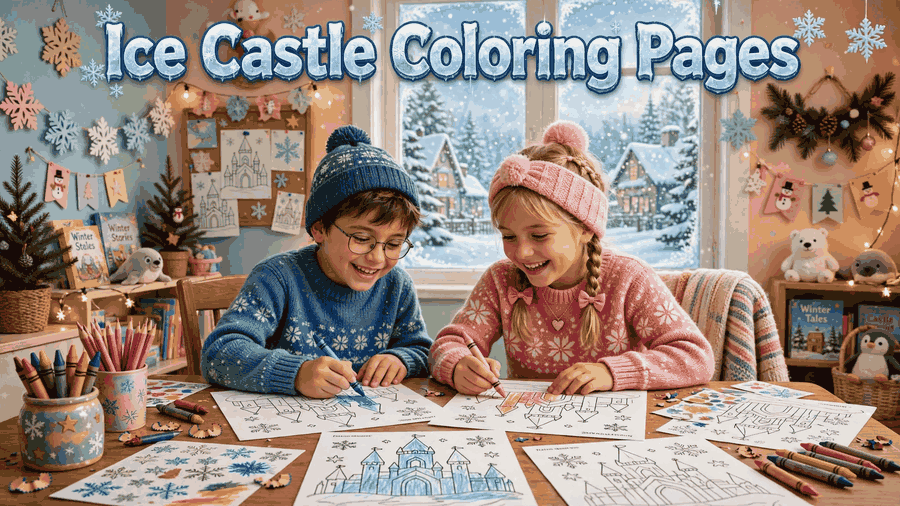
Ice Castle Coloring Pages invite children to explore a magical world of frozen towers, sparkling walls, and imaginative winter landscapes. Discover creative coloring ideas, simple art activities, and ways to turn an icy castle into a unique fantasy kingdom.
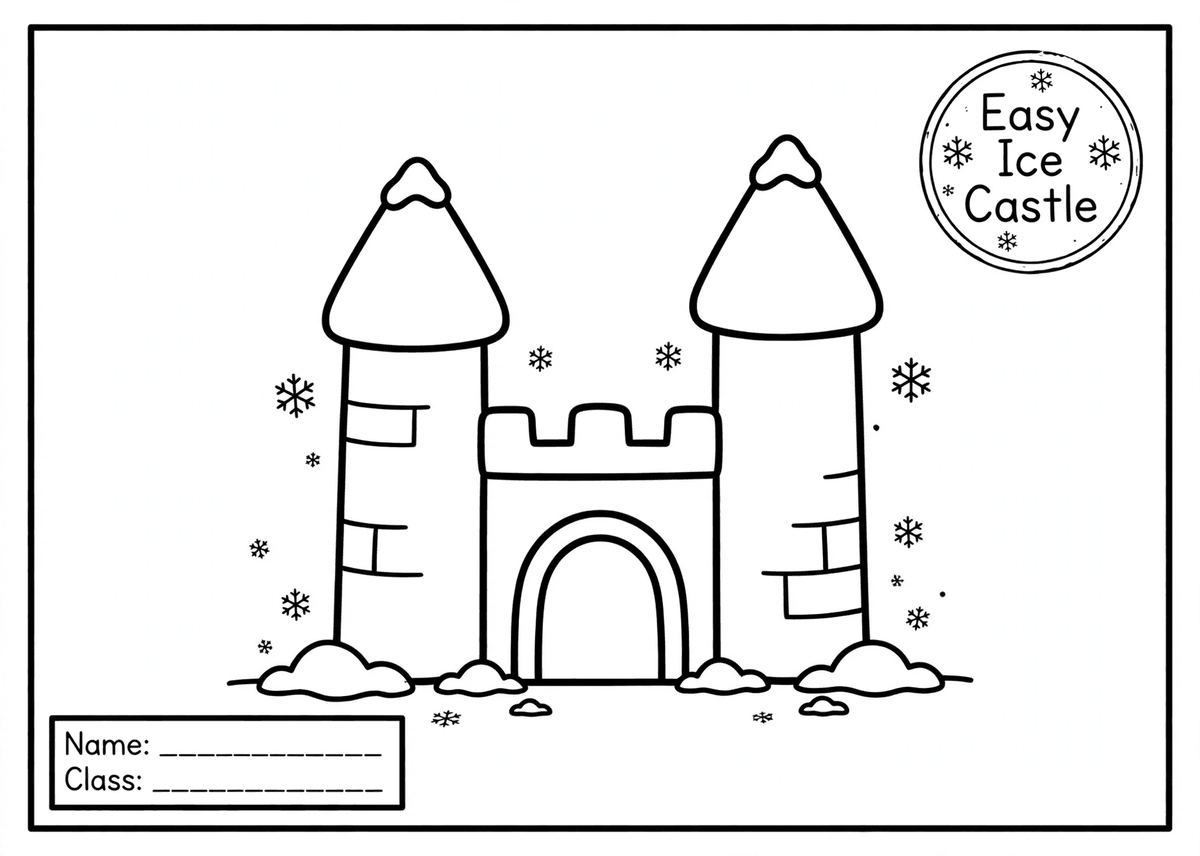
Step Into a World of Frozen Architecture
An ice castle looks different from an ordinary stone fortress. Its walls may appear transparent, its towers can resemble giant icicles, and its pointed roofs seem to rise from a landscape covered in snow. These unusual features make Ice Castle Coloring Pages an exciting subject for children who enjoy fairy tales, winter scenery, and imaginary places.
Unlike realistic buildings, a fantasy ice castle does not have to follow familiar architectural rules. A child might imagine a palace built entirely from blue ice, a fortress hidden between snowy mountains, or a royal home illuminated by the northern lights. The illustration becomes a starting point for creating a setting with its own atmosphere and story.
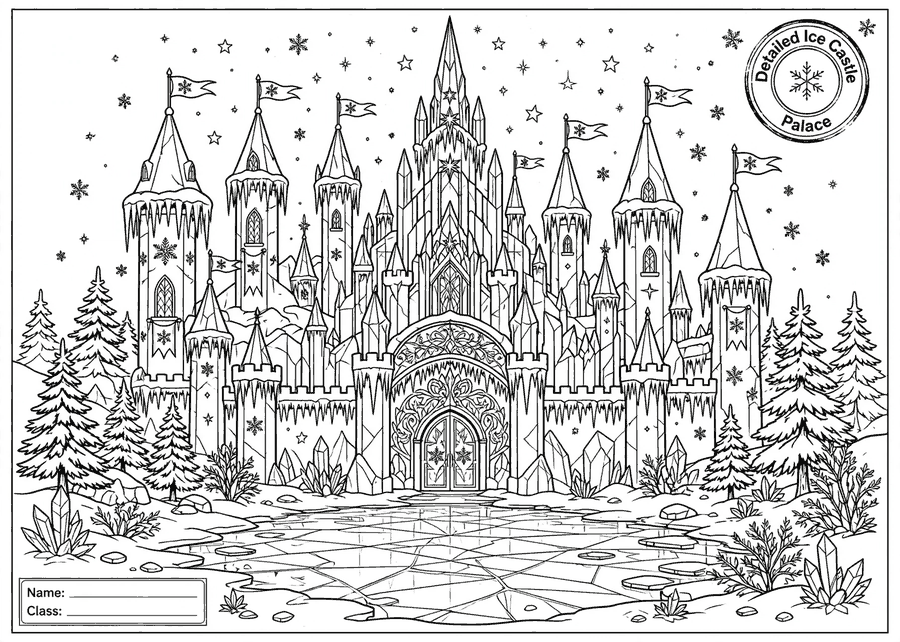
The shapes within an ice castle can also make coloring particularly interesting. Tall towers, narrow windows, arched entrances, staircases, and decorative patterns offer different spaces for experimenting with color. Depending on the illustration, children may find large castle walls that are easy to fill or smaller architectural details that invite a slower, more careful approach.
Parents and teachers can use this theme during winter art sessions, fantasy storytelling activities, or quiet creative afternoons at home. Rather than expecting every castle to look realistic, encourage children to decide what kind of place they want to create. One child might design an elegant palace for a snow queen, while another imagines a secret fortress protecting a magical library.
Choosing Colors That Make Ice Look Magical
Ice is often associated with pale blue and white, but a convincing winter castle can include several shades. Light blue suggests cool, translucent surfaces, while darker blue can help distinguish shaded walls and deep spaces between towers. Pale gray, lavender, and turquoise offer additional options for children who want a softer or more imaginative color palette.
White can be especially useful when left uncolored in selected areas. If the paper is white, children can preserve small sections of the castle to represent reflected light or freshly fallen snow. They can then add light blue around those spaces to make the icy surfaces stand out without covering every part of the illustration.
Silver-gray is another useful choice for suggesting a frozen, reflective appearance. Children can use ordinary gray pencils to create subtle differences between the castle walls, pathways, and surrounding snow. If metallic art supplies are available, they may add a few silver accents to selected details, although these are optional rather than necessary.
A colorful fantasy castle can follow a completely different approach. Purple towers, pink ice bridges, mint-green windows, and golden doors can transform the illustration into a fictional kingdom. These choices are particularly suitable for children who enjoy inventing unusual places rather than copying real-world colors.
Use Light and Dark Shades to Define the Towers
Tall towers often provide the most recognizable feature of a castle illustration. Coloring one side slightly darker than the other can suggest that light is coming from a particular direction. Children do not need to master complicated shading techniques; even a simple difference between two shades of blue can help separate neighboring structures.
Windows and doorways can also create contrast. Dark blue or violet may work for spaces that appear deep inside the castle, while pale yellow or turquoise can suggest glowing windows in an imaginary nighttime scene. If the illustration contains decorative ice crystals, children can keep those areas light or add delicate blue outlines.
Design the Landscape Around the Castle
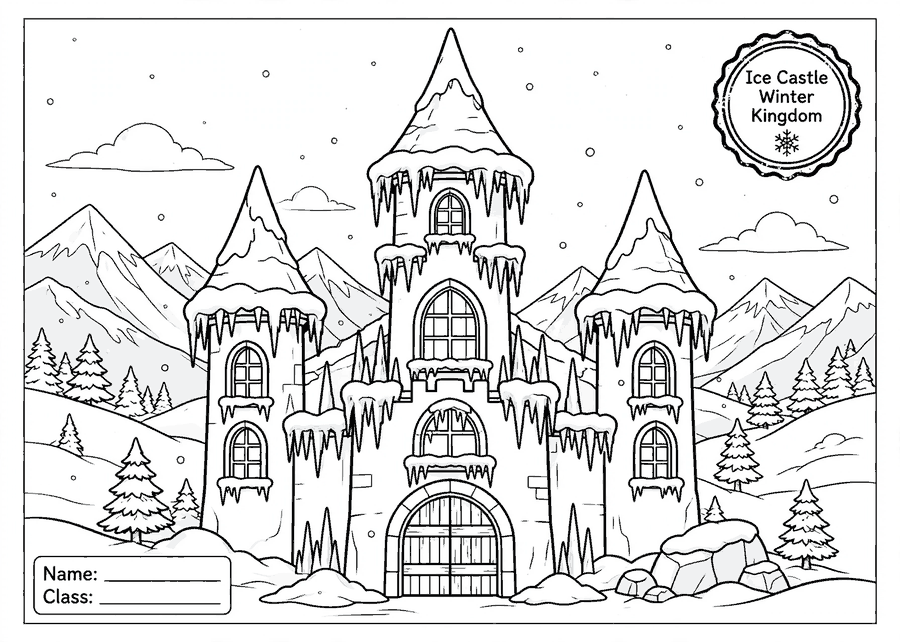
An ice castle becomes part of a larger story when children consider its surroundings. The background might represent a snowy mountain valley, a frozen lake, a quiet forest, or an open plain covered in fresh snow. If the original illustration includes these features, children can use their colors to establish the setting; if it does not, they can draw additional scenery in the available space or on a separate sheet.
For a mountain kingdom, gray-blue slopes and white snow can frame the castle without competing with its towers. A few dark evergreen trees may create contrast along the lower edge of the landscape. Children can vary the height and shape of the trees to make the scene look less uniform.
A frozen lake offers another possibility. Light blue can represent the icy surface, while slightly darker lines suggest cracks or changes in the texture. Keep these details simple, particularly if the child is working on a small illustration. The aim is to complement the castle rather than cover the main subject with too many extra marks.
For a nighttime scene, a dark blue or purple sky can provide a dramatic background. Children might add stars, a crescent moon, or imagined ribbons of green and violet light inspired by the aurora borealis. These additions are optional creative ideas, not features that need to appear in every ice castle design.
Turn the Castle Into a Storytelling Challenge
A finished ice castle can become the setting for a short story. Invite children to give the kingdom a name and decide who lives there. Perhaps the castle belongs to a family of winter explorers, a friendly snow giant, or a royal character who protects a magical garden beneath the ice.
The story can grow from the colors they have chosen. A castle with bright windows might be a welcoming place where travelers find shelter during a snowstorm. A dark blue fortress surrounded by mountains could hold a secret passage or a collection of ancient maps. Children can explain their ideas aloud or write a few sentences beside their finished artwork.
For a classroom activity, ask each child to describe one special feature of the imaginary kingdom. One might invent a staircase that changes direction, while another creates a bridge connecting two frozen towers. Children can then compare their ideas and notice how the same general subject can lead to very different creative interpretations.
Another option is to draw a simple map of the kingdom. Children can place the castle in the center and add nearby mountains, a frozen river, a forest, or a small village. This extension works well when there is time for a longer art session, but the original coloring activity remains complete on its own.
Make Coloring Time Comfortable and Practical
Before printing an illustration, review the preview to check that the castle’s outlines and smaller details are clear. The appropriate page size and orientation depend on the available file, so adjust the printer settings to match its layout. A clean print helps children distinguish individual towers, windows, and decorative features.
Colored pencils are useful for narrow windows, pointed roofs, and delicate ice patterns. Crayons work well for broad castle walls and large areas of sky, while washable markers can create bold colors on paper suited to their use. If markers tend to bleed through the page, place a spare sheet underneath the illustration.
For younger children or anyone who prefers a less detailed activity, choose an illustration with larger spaces and fewer tiny patterns. Children who enjoy careful work may prefer more elaborate towers and decorative elements. The best choice is the one that allows the child to enjoy the process without feeling pressured to finish quickly.
It can also help to arrange colors before starting. A small selection of blue, white, gray, purple, and one or two contrasting colors gives children plenty of options without making the table crowded. Let them add other colors whenever their ideas change; an imaginative castle does not need to follow a fixed palette.
Explore More Creative Themes
Children who enjoy adding delicate details to their ice castle may also appreciate Flowers in a Basket. This subject offers a different kind of design, with petals, leaves, and a basket that can be colored using realistic shades or imaginative combinations. Moving between architectural illustrations and flower designs gives children a chance to explore different shapes and visual patterns.
For another seasonal fantasy, Santa’s Sleigh introduces a festive scene connected with winter celebrations. Children can imagine how a sleigh travels through a snowy landscape and choose colors for its decorations and surroundings. Together, these themes can provide inspiration for a broader winter art collection without requiring every picture to tell the same story.
Ice Castle Coloring Pages combine the visual appeal of frozen architecture with the freedom of fantasy art. Children can experiment with cool colors, create a distinctive winter landscape, and invent stories about the people or creatures who might live inside their castle. With a few familiar coloring tools and room for personal choices, each finished illustration can become a small window into an imaginary frozen kingdom.
