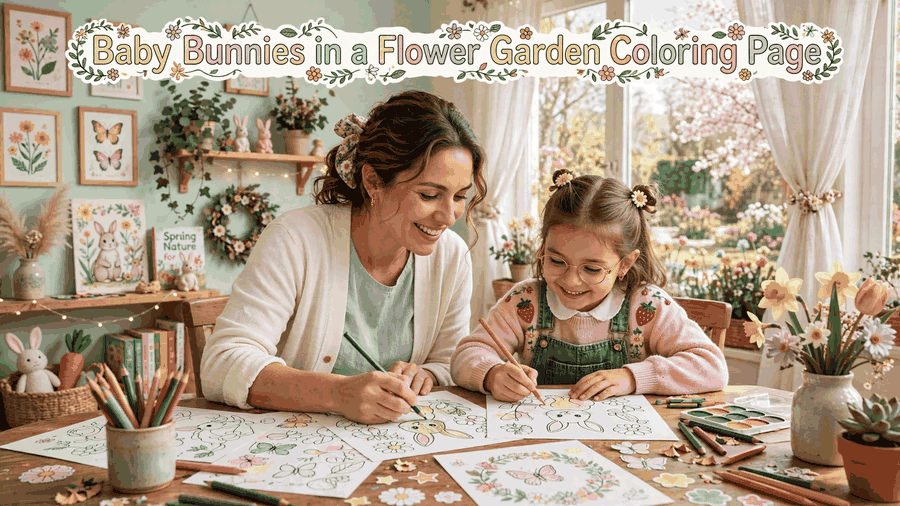
Baby Bunnies in a Flower Garden Coloring Page brings together fluffy little rabbits, blooming flowers, and the charm of a peaceful garden. Explore delightful coloring ideas, simple nature activities, and creative ways for children to personalize their own garden scene.
A Little Garden Full of Life
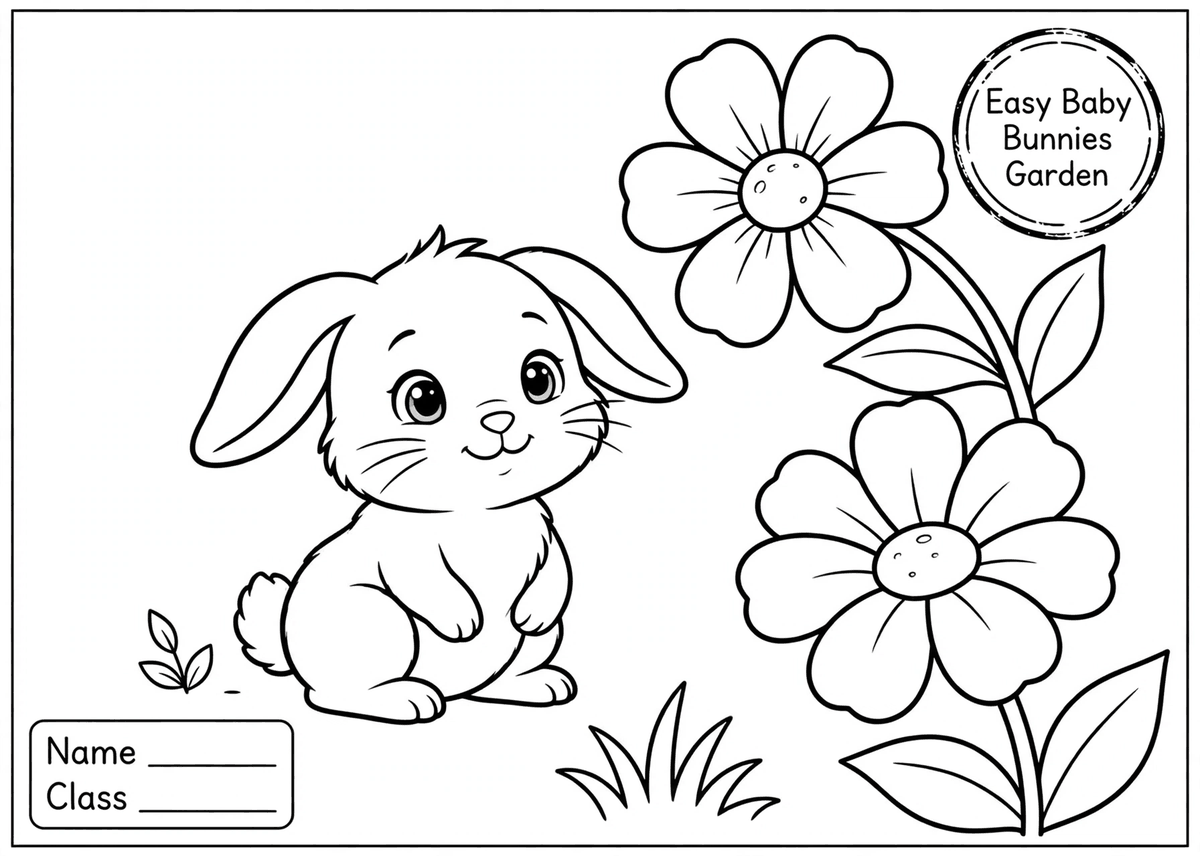
A flower garden becomes especially charming when tiny rabbits appear among the blossoms. Baby Bunnies in a Flower Garden Coloring Page captures the appeal of these small animals in a setting filled with opportunities for creative color choices. Children can imagine the bunnies exploring the garden, resting beside flowers, or discovering a patch of fresh green grass.
Baby rabbits are recognizable by their soft-looking fur, rounded bodies, long ears, and small noses. When paired with flowers, leaves, and garden scenery, these features create an inviting subject for young artists. Depending on the illustration, children may have different shapes and details to color, making the activity suitable for a quiet afternoon at home or a nature-themed classroom session.
The garden setting also leaves room for imagination. A child might picture the rabbits visiting a backyard flower bed on a sunny morning or exploring a secret garden hidden behind a wooden fence. Even if the illustration contains only rabbits and flowers, children can invent additional scenery on a separate sheet or in any open spaces available in the picture.
Rather than aiming for a perfectly realistic result, encourage children to make the scene their own. A rabbit can have cream-colored fur, warm brown patches, or even lavender fur in a fantasy garden. The flowers might follow familiar garden colors or form a bright collection of imaginative blooms.
Give Each Baby Bunny a Distinct Look
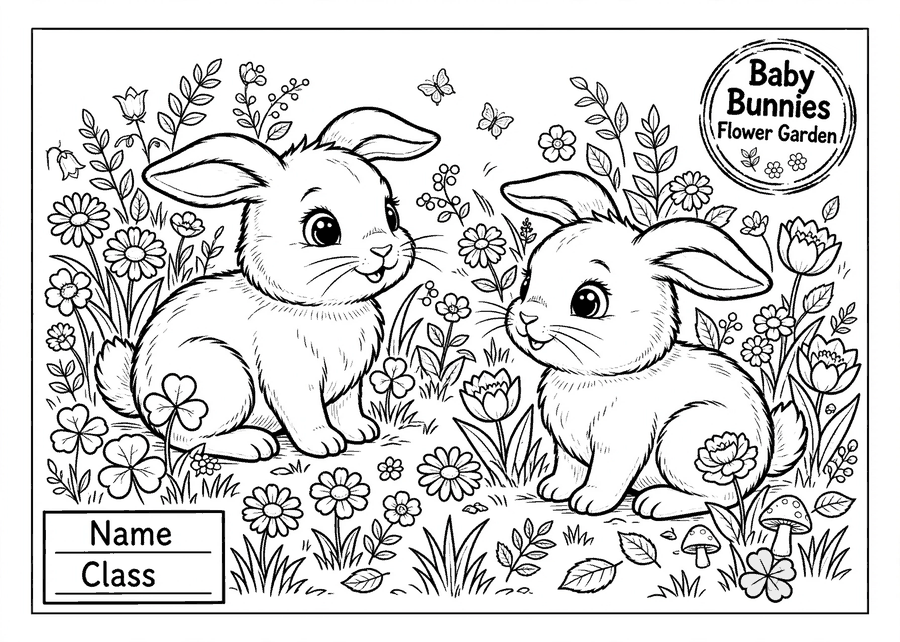
When several rabbits appear in a garden illustration, coloring them in slightly different shades can help each one stand out. Children might choose soft gray for one bunny, light brown for another, and white with darker patches for a third, if the picture includes multiple rabbits. These differences make it easier to recognize each character and give the finished scene a more personal touch.
Fur does not need to be filled with a single flat color. Colored pencils can create gentle variations by adding slightly darker strokes around the ears, paws, or outer edges of the body. For a simpler approach, children can use one main color and add a few small details to the cheeks or feet.
The inside of a rabbit’s ears can be colored pale pink, peach, or another soft shade. A small dark nose and carefully colored eyes can help make the face noticeable, provided those features are present in the illustration. Children should follow the outlines rather than feeling that every rabbit must look exactly like a real animal.
Parents can turn this part of the activity into a short character-making exercise. Ask each child to choose a name for a bunny and describe its favorite flower or garden hiding place. One rabbit might enjoy sitting beneath tall sunflowers, while another prefers resting beside a patch of daisies. These ideas can become the beginning of a simple story after the coloring is complete.
Build a Flower Palette That Feels Like Spring
Flowers offer an enjoyable contrast to the soft shades often used for rabbit fur. Depending on the blooms shown in the illustration, children can experiment with yellow, pink, purple, red, orange, and white. Green leaves and stems connect the different colors and help the garden feel like one scene rather than a collection of separate flowers.
A useful approach is to choose a small group of colors before beginning. For example, pink and yellow flowers with medium-green leaves create a cheerful garden, while purple and white blossoms can give the picture a cooler appearance. Children who prefer variety can assign a different color to each flower instead of repeating the same pattern.
If the illustration contains flowers with broad petals, crayons can fill those areas quickly. Colored pencils are helpful for smaller petals, narrow stems, and detailed leaves. Washable markers can produce stronger colors when used on suitable paper, but placing a spare sheet underneath can protect the surface below.
Children can also experiment with light and dark shades. A darker color near the center of a flower may help distinguish it from the petals, while lighter green can separate young leaves from mature foliage. These details are optional, and a simple coloring style can be just as appealing.
What Makes a Garden Scene Interesting?
A garden contains more than flowers. It is a place where plants grow, insects visit blossoms, and small animals may search for shelter or food. A rabbit-and-flower illustration can therefore provide a natural starting point for noticing how living things share an environment.
While children color, adults can invite them to identify the visible parts of a plant. They might point out petals, leaves, and stems, or describe how flowers differ in shape. If the picture includes grass, soil, or other garden features, those details can lead to a conversation about where plants grow.
Rabbits are herbivores, meaning they eat plant material. In real gardens, however, rabbits may nibble on grasses and other suitable vegetation rather than behaving like characters in a storybook. Adults can explain this distinction simply while allowing children to enjoy the imaginary scene.
A small observation challenge can make the session more engaging. Ask children to find the tallest flower, identify the smallest visible leaf, or count the rabbits if more than one appears. They can also describe where each bunny is positioned in relation to the flowers. These prompts connect the picture to observation without requiring a formal lesson.
Turn the Finished Picture Into a Garden Story
Once the main coloring is finished, invite children to imagine what happens next in the garden. Perhaps the baby bunnies are exploring after a light morning rain, looking for a comfortable place to rest, or watching butterflies move between the flowers. The story does not need to be long; a few sentences are enough to give the illustration a setting and purpose.
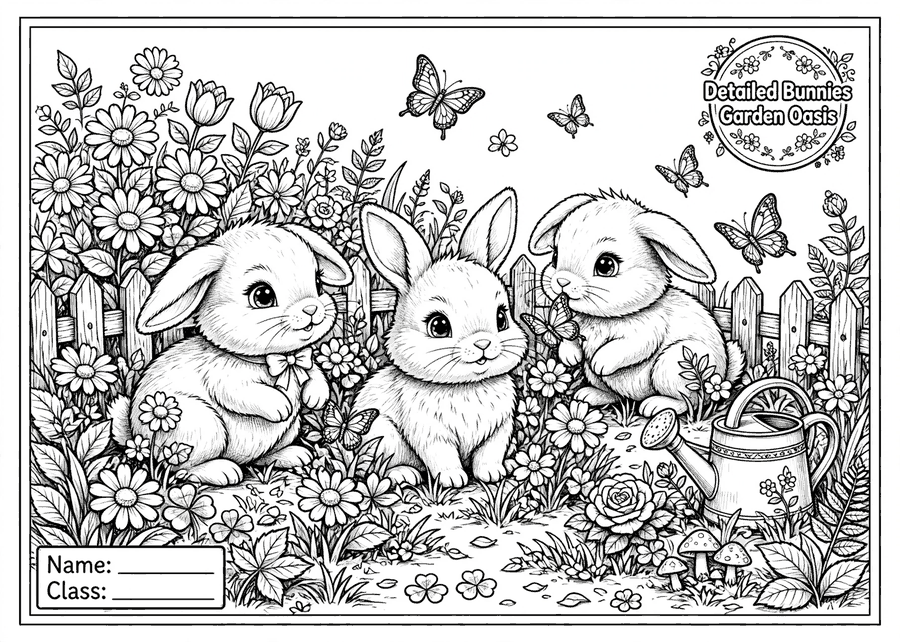
If there is room around the main picture, children may add optional details such as a butterfly, a small watering can, a garden path, or a wooden fence. These additions should complement the rabbits and flowers rather than crowding the original design. If the printable is already detailed, a separate sheet can be used for extra drawings.
Teachers can adapt the idea for a group activity by asking each child to create a different kind of garden. One might choose a wildflower meadow, another a neat backyard flower bed, and another an imaginary garden with unusual plants. Children can then describe what makes their setting different.
For families, the finished picture can become part of a collection of seasonal artwork. Adding the date and a short title helps preserve the child’s creation, especially when several pictures are completed over time. The focus remains on the child’s choices, not on making every finished page look alike.
Make Printing and Coloring Easy
Before printing, check the illustration preview to ensure the outlines are clear and the main shapes are easy to distinguish. Choose a page size and orientation that match the file’s layout, and confirm that important details are not cut off at the edges. If the design contains small flowers or facial features, a clear print will make those areas easier to color.
Set out a few familiar supplies, such as crayons, colored pencils, and an eraser. There is no need to prepare a large collection of materials; a modest selection gives children enough options to begin. Younger artists or children who prefer simpler pictures may appreciate larger spaces, while those who enjoy detail can spend more time on the flowers and fur.
Allow children to work at their own pace. Some may want to finish the rabbits first, while others will head straight for the brightest flowers. Both approaches are fine, and there is no need to enforce a particular coloring order.
Explore More Imaginative Coloring Themes
Children who enjoy stories about animals and hidden places may also like Mermaid Treasure. This underwater theme offers a different setting for imaginative color choices, with the possibility of creating a magical world filled with aquatic details and mysterious discoveries.
For another gentle subject inspired by nature, Baby Flowers offers a chance to explore blossoms through a different artistic lens. Children can compare the colors they chose for the garden flowers with the combinations they use in a flower-focused illustration. Switching between these subjects keeps creative sessions varied while allowing children to return to familiar colors and techniques.
Baby Bunnies in a Flower Garden Coloring Page combines the appeal of small animals with the variety of a blooming outdoor setting. From choosing distinct fur colors to building a story around the flowers, children can make the illustration reflect their own ideas. With a few simple coloring tools and encouragement to experiment, a quiet garden scene can become a memorable piece of personal artwork.
