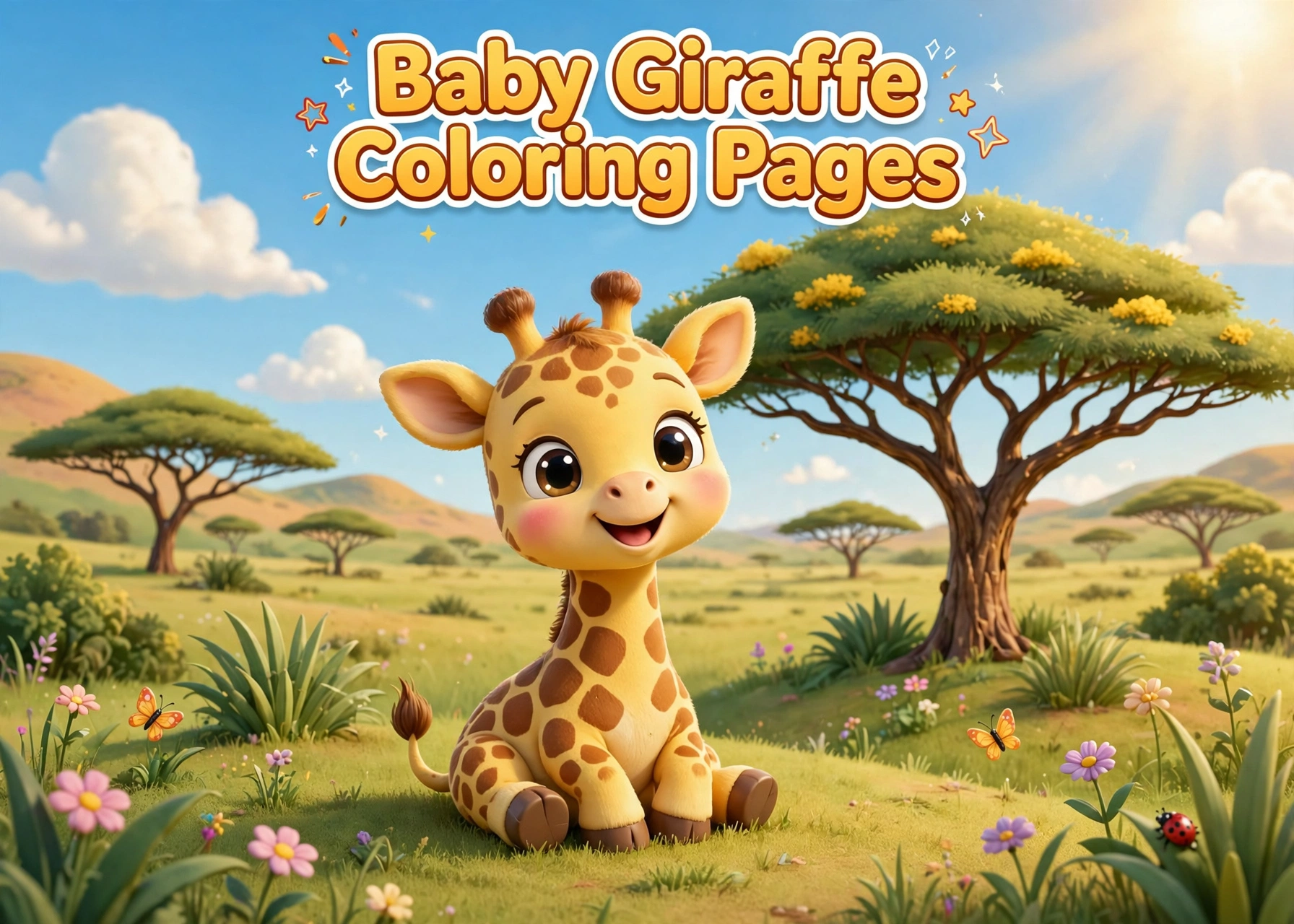
Baby Giraffe Coloring Pages introduce children to the adorable appearance of young giraffes through a fun and creative activity. With their long necks, little ossicones, spotted coats, and gentle expressions, baby giraffes make an interesting subject for coloring and animal discovery.
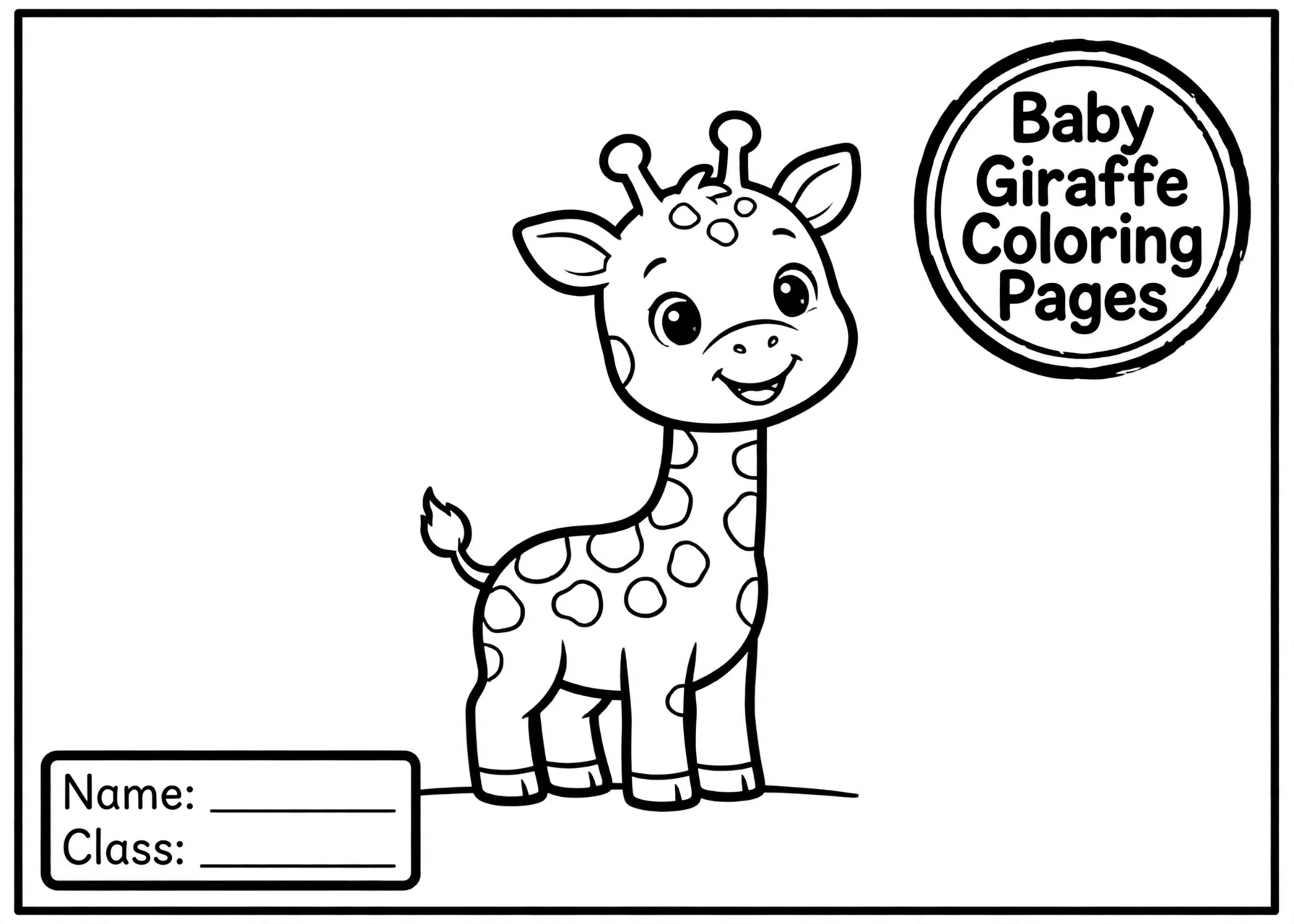
What Makes a Baby Giraffe So Special?
A baby giraffe, also called a calf, has several recognizable features that make it different from many other young animals. Even shortly after birth, a giraffe calf already has a relatively long neck and long legs. Its body is covered with a patterned coat that helps it blend into the natural surroundings of the African savanna.
One of the most noticeable features is the small pair of horn-like structures on top of its head. These are called ossicones, and they are covered with skin and hair when a giraffe is young. A baby giraffe also has large eyes, a narrow muzzle, and a distinctive coat pattern that makes each animal visually interesting.
These details provide plenty of inspiration for a coloring activity. Children can pay attention to the giraffe’s body shape, facial features, and spots before deciding which colors to use. They can create a realistic-looking animal or give their young giraffe a completely imaginative appearance.
Baby Giraffe Coloring Pages make these characteristics easier to explore through pictures. Instead of simply filling an outline with color, children can observe the different parts of the animal and decide how to bring each detail to life.
Explore the Patterns on a Baby Giraffe’s Coat
A giraffe’s coat pattern is one of its most distinctive characteristics. The irregular patches create an interesting visual contrast against the lighter spaces between them. These patterns make giraffes especially enjoyable to color because children can experiment with different shades and combinations.
For a natural appearance, golden yellow, light orange, and warm brown are suitable choices for the coat. The spots can be colored in darker shades of brown, while the muzzle may be represented with soft beige or gray. Children can also use slightly different shades across the body to make their artwork more varied.
The pattern itself offers an opportunity to slow down and pay attention to individual shapes. Some spots may be larger, while others appear smaller depending on the illustration. Rather than coloring every patch identically, children can alternate between two or three brown shades.
Here are some simple color ideas:
- Body: Golden yellow, warm orange, or light tan.
- Spots: Medium brown, dark brown, or reddish brown.
- Face: Cream, beige, and soft brown.
- Ossicones: Light brown or a slightly darker shade than the head.
- Hooves: Dark brown, charcoal gray, or black.
- Background: Light blue, pale green, or sandy yellow.
These are suggestions rather than strict rules. Children can choose their favorite colors and create a baby giraffe with a personality of its own.
A Little Adventure in the African Savanna
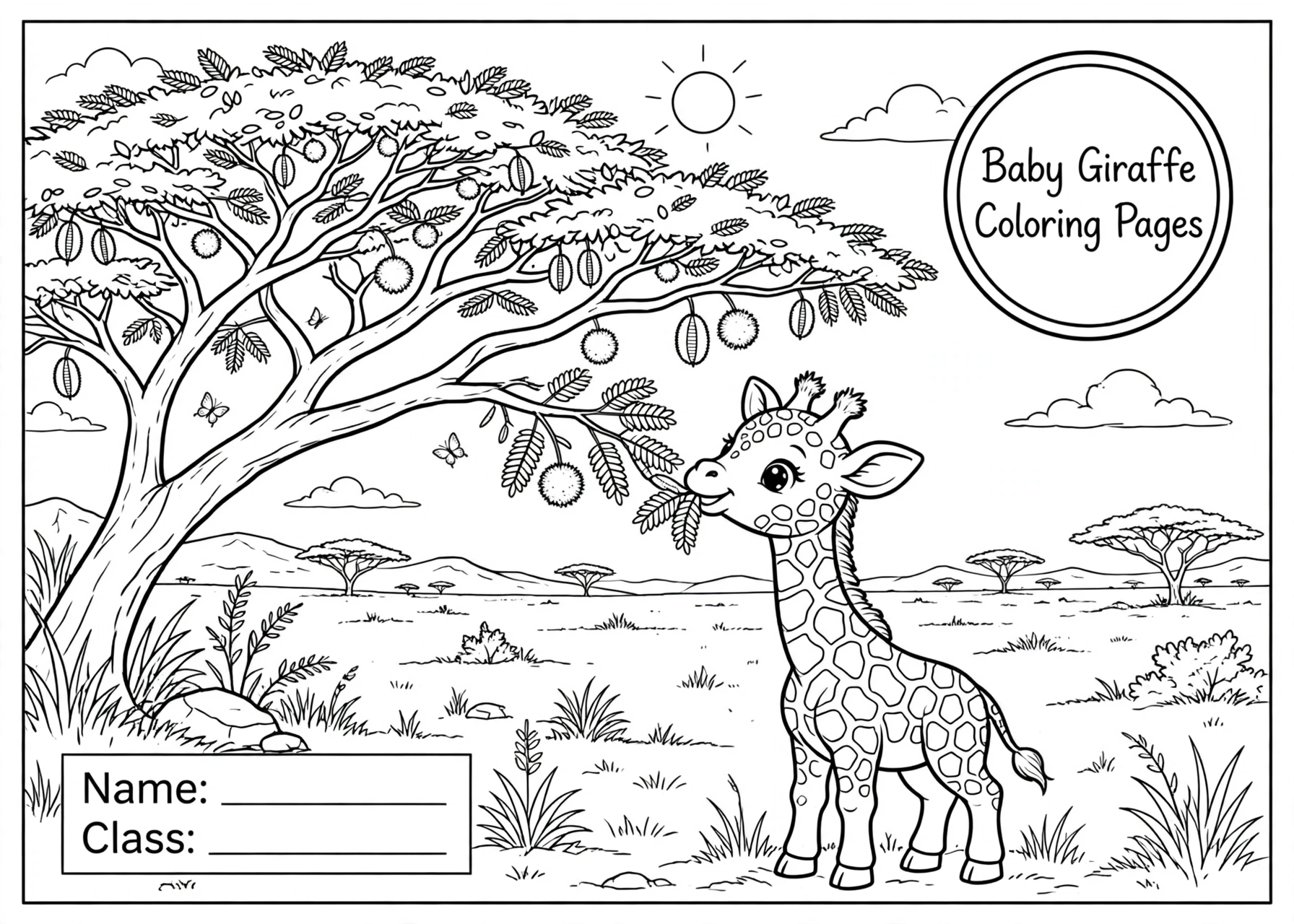
Baby giraffes are closely associated with the African savanna, where open grasslands, scattered trees, and shrubs form part of their natural habitat. This setting can inspire additional coloring ideas when children want to expand their artwork.
Imagine a young giraffe standing beside a tall acacia tree. Its long neck allows it to reach leaves high above the ground, while the surrounding grass provides a natural setting. Children can use different shades of green for the vegetation and light brown for the dry ground.
If the illustration has enough open space, children may want to add a few background elements of their own. A distant tree, small bushes, fluffy clouds, or a bright sun can make the scene feel more complete. These additions are optional and allow children to decide how much detail they want in their finished picture.
Parents and teachers can also introduce simple facts about giraffes during the activity. Giraffes are the tallest living land animals, and their long tongues help them reach and grasp leaves. They commonly feed on vegetation, particularly leaves from trees such as acacias.
These details can turn a simple coloring session into a relaxed conversation about wildlife without making the activity feel like a formal lesson.
Creative Ways to Color a Young Giraffe
Not every child approaches coloring in the same way. Some enjoy following realistic animal colors, while others prefer making unusual combinations. Both approaches can produce interesting results.
For children who like natural-looking illustrations, colored pencils are a useful choice. They allow gradual shading around the giraffe’s neck, legs, and body. Children can also layer lighter and darker shades to create a gentle transition between the coat and its spots.
Crayons work well for larger areas, especially the body and background. Washable markers can produce stronger colors, although children should use them carefully around the smaller patterns to avoid covering the outlines.
Another enjoyable technique is to give different areas of the illustration their own color treatment. The body might use warm yellow shades, while the spots alternate between brown and orange. The background could feature a simple combination of green grass and a blue sky.
For an extra creative challenge, children can design a special pattern for their imaginary giraffe. They might add tiny decorative shapes, colorful spots, or a playful background that would not normally appear in nature. This gives them room to experiment while keeping the giraffe as the main subject.
Simple Activities to Try After Coloring
The finished picture can become the starting point for a few additional activities. Rather than immediately moving on to another worksheet, invite children to look at their artwork and describe what they have created.
One idea is to give the baby giraffe a name and invent a short story about its day. Perhaps it is exploring the grassland, looking for fresh leaves, or spending time near a group of other giraffes. Children can tell the story aloud or write a few sentences if they enjoy writing.
Another activity is a spot-counting challenge. Children can count the visible patches on the giraffe’s body or compare larger and smaller shapes. The number will depend on the actual illustration, so there is no need to set a fixed target.
For a drawing extension, children can sketch a simple adult giraffe beside their baby giraffe. They can compare the animals’ sizes, necks, and body proportions. This provides an opportunity to discuss how young animals grow without requiring complicated explanations.
Families who enjoy seasonal creative activities can also explore these cute Halloween designs, which offer a different atmosphere from a wildlife-themed coloring session.
Choosing and Printing the Right Coloring Activity
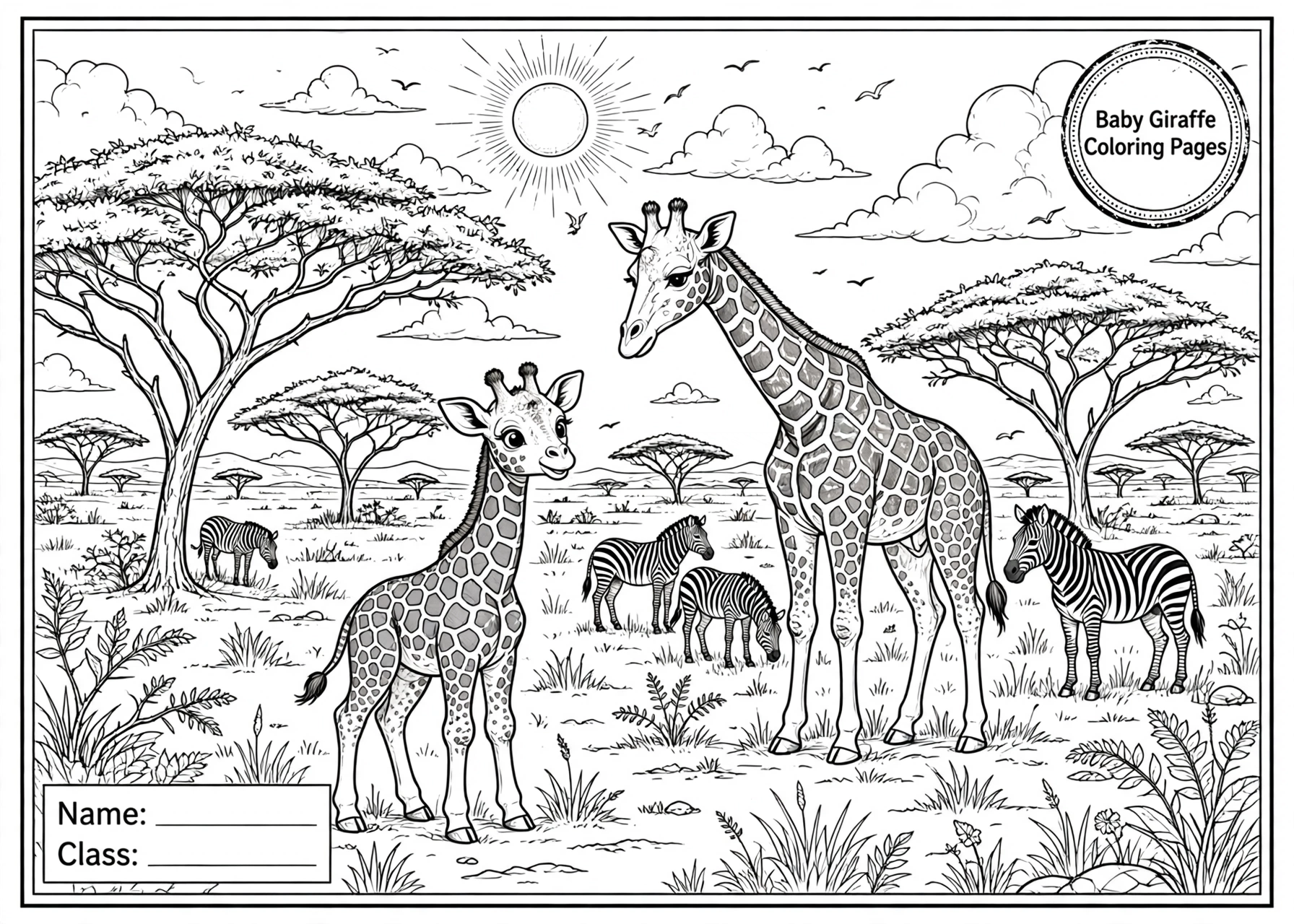
When selecting Baby Giraffe Coloring Pages, consider the amount of detail in the illustration. Designs with larger spaces may be easier for children who prefer simple coloring, while pictures featuring detailed spots, facial features, and surrounding scenery can provide a more involved activity.
It is also helpful to check whether the baby giraffe is clearly recognizable. Its long neck, small ossicones, spotted coat, and distinctive face are important visual features that make the subject interesting.
Before printing, preview the selected image and check that the illustration fits within the printer’s available margins. Choose paper settings that suit the printer and the coloring materials children plan to use. Regular printing paper is generally suitable for crayons and colored pencils, while thicker paper may be preferable for markers if the printer supports it.
Once the page is ready, provide a comfortable space with enough room for coloring materials. Children can work at their own pace, take breaks when needed, and decide when their giraffe is finished.
For another nature-inspired activity, children who enjoy exploring small animals and garden scenery may also like these hedgehog and flower designs. The combination of an adorable animal and flowers offers a different subject to explore through creative coloring.
Baby Giraffe Coloring Pages bring together wildlife, distinctive animal patterns, and imaginative scenery in one enjoyable activity. Whether children choose realistic golden tones or invent their own colorful giraffe, each finished picture offers a personal way to celebrate the charm of these gentle young animals.
