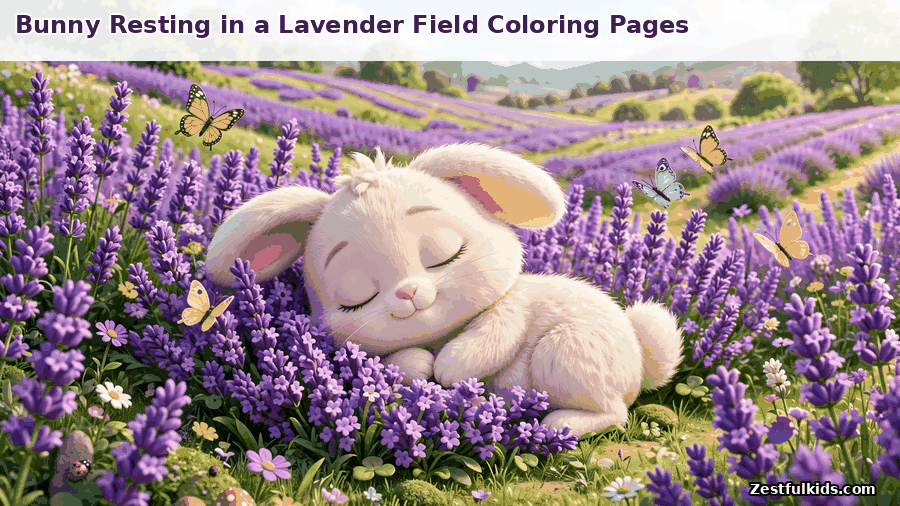
Bunny Resting in a Lavender Field Coloring Pages bring together the gentle charm of a resting rabbit and the calming beauty of blooming lavender. This nature-inspired coloring theme invites children to explore soft colors, imagine peaceful outdoor moments, and create their own little countryside scene.
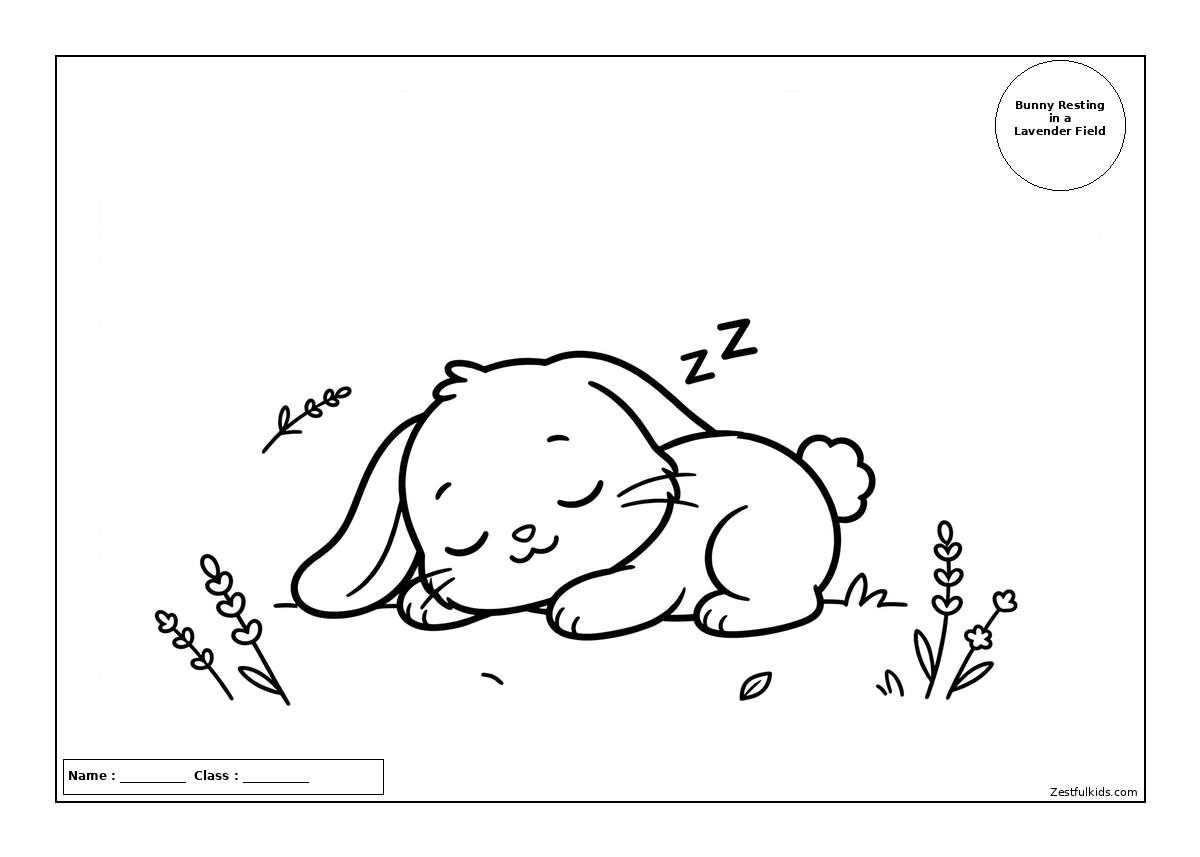
A Quiet Moment in a Field of Lavender
A bunny resting among lavender flowers creates a lovely subject for children who enjoy animals and nature. Unlike illustrations featuring animals running, jumping, or playing, this theme focuses on a quieter moment. The rabbit can become the center of a peaceful scene where children take their time choosing colors and imagining what the little animal might be experiencing.
Lavender is especially interesting because of its recognizable flower spikes and delicate shades. Its flowers are commonly associated with purple and violet, while the stems and leaves offer opportunities to use different greens. These natural details give children several colors to explore without making the picture feel too complicated.
The resting bunny adds another dimension to the scene. Children may imagine it enjoying the fresh air, taking a break after exploring the field, or simply relaxing in a comfortable spot surrounded by flowers. This simple setting gives the illustration a story-like quality that can make coloring more engaging.
Exploring the Colors of a Lavender Field
One of the most appealing features of Bunny Resting in a Lavender Field Coloring Pages is the opportunity to experiment with shades of purple. Lavender flowers do not always appear in exactly the same color, so children can use light purple, lilac, violet, or deeper purple to create variety.
A child who prefers a softer look might color the flowers with pale lavender and use gentle green shades for the leaves. Another child may choose stronger purple tones to make the flowers stand out more clearly. Both approaches can create an attractive result.
The bunny offers a different color choice. A realistic rabbit might have cream, white, gray, or brown fur, depending on the imagined animal. Children can also give their bunny an imaginative appearance with pastel pink, light blue, or another favorite color.
Parents and teachers can encourage children to think about how the colors work together. A purple field paired with a cream-colored bunny creates a different effect from a scene featuring a gray rabbit and darker violet flowers. The child can decide which combination best matches the mood of the picture.
What Makes a Resting Bunny Fun to Color?
A resting rabbit has a distinctive charm because its pose can suggest comfort and quiet curiosity. Children may enjoy imagining the bunny’s thoughts while they color. Perhaps it is watching a butterfly, listening to the breeze, or enjoying the scent of the flowers around it.
The animal’s ears can also become an interesting detail. Depending on the illustration, children may choose to color the inner ears a slightly different shade from the rest of the fur. Small differences in color can help the bunny stand out without requiring additional decorations.
The lavender flowers provide a natural setting for creative decisions. Children can choose whether to color every flower in a similar shade or make each group slightly different. They may also imagine tiny insects visiting the flowers or add a few butterflies if the illustration leaves room for extra details.
Rather than encouraging children to finish quickly, adults can let them explore the parts of the picture that interest them most. Some may spend more time on the bunny, while others may enjoy coloring the surrounding flowers.
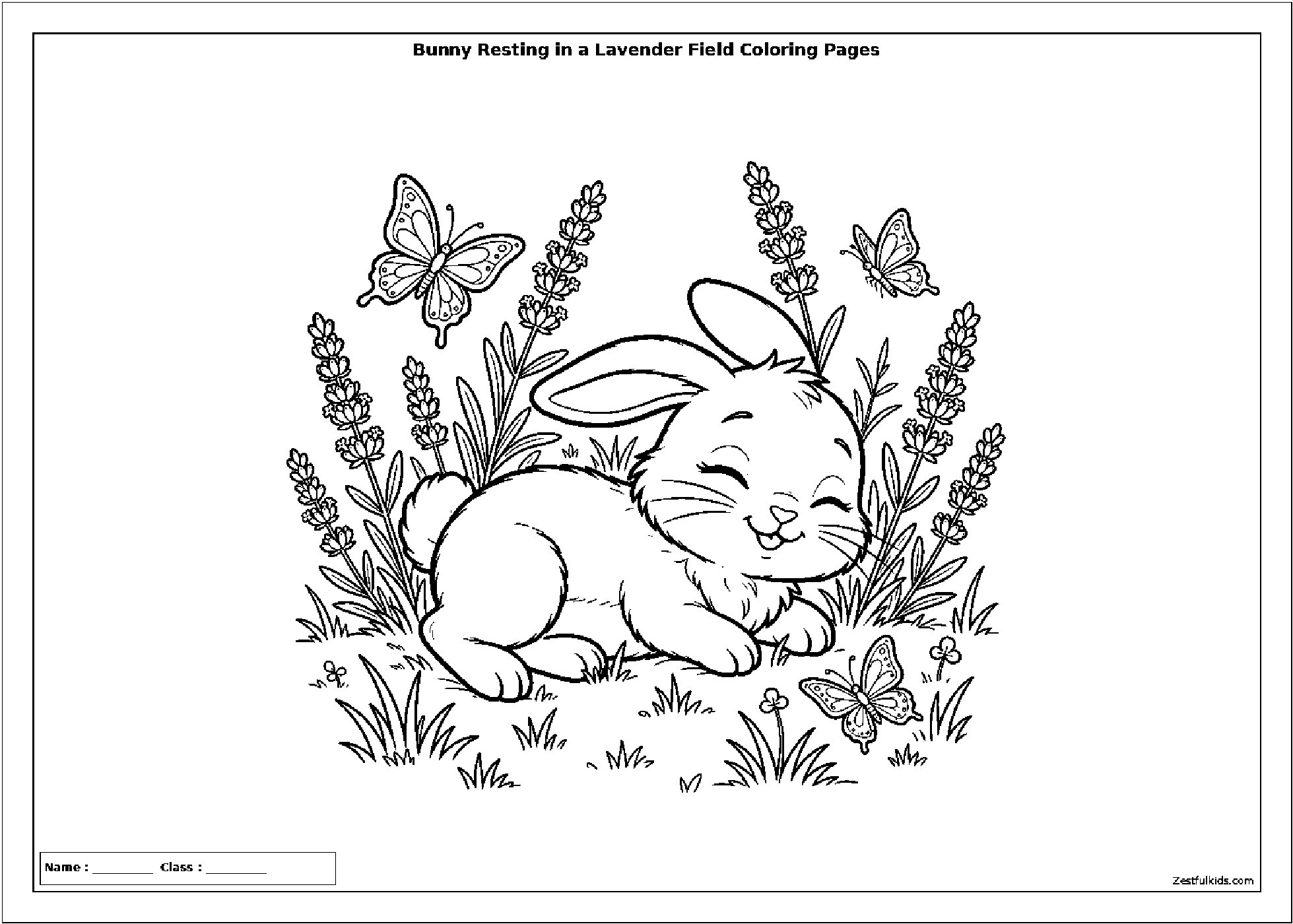
Creative Coloring Techniques for Flowers and Fur
Colored pencils can be a good choice for children who want to use several shades of purple. They allow the child to color individual flower sections with different levels of pressure, creating lighter and darker areas.
Crayons are useful for broader spaces, especially when coloring the bunny’s body or larger parts of the field. Washable markers can create bold colors, although children should use them carefully if the paper is thin.
For the lavender, children can experiment with coloring the flower spikes using small strokes. They might begin with a light purple base and add darker shades to selected areas. This is an optional technique for illustrations that include enough space to work with the individual flowers.
The bunny’s fur can be colored more simply. A child might use one main color and add a slightly darker shade to selected areas if the drawing includes suitable details. There is no need to shade every part of the rabbit for the picture to look complete.
The background can remain simple, too. A light blue sky, a green meadow, or a warm yellow afternoon can complement the lavender without competing with the main subject. If the illustration already contains a detailed background, children can focus on the existing elements instead of adding more.
Turning the Picture into a Little Nature Story
Coloring can become more interesting when children create a story around the bunny. The resting rabbit might have spent the morning exploring the field and decided to take a break among the flowers.
Parents and caregivers can invite children to give the bunny a name. They might imagine where it lives, what it likes to eat, or which part of the field it enjoys visiting. These ideas can be shared while coloring or added as a short caption beside the finished picture.
Teachers may use the theme during a nature-related art activity. Children can talk about flowers, leaves, rabbits, and the different colors found outdoors. If the class is exploring plants, lavender can also provide a starting point for discussing how flowers grow and why plants need sunlight and water.
The activity does not need a formal lesson plan. A simple conversation about the picture can be enough to make the coloring session feel connected to the natural world.
Choosing a Coloring Activity for Different Settings
Bunny Resting in a Lavender Field Coloring Pages can be used in several everyday situations. Families might choose the theme for a quiet afternoon at home, while teachers can include it in a classroom art corner or a nature-themed activity.
For children who enjoy peaceful animal scenes, the resting bunny offers a different experience from illustrations focused on action or adventure. It may appeal to those who like flowers, gardens, countryside settings, or stories about small animals.
Adults can let children decide how much detail they want to add. Some may prefer to color the existing illustration, while others may want to draw extra flowers, clouds, or small details around the bunny.
Before printing, check the file’s preview and make sure the illustration fits the selected paper settings. Choose coloring tools that suit the child’s age and the amount of detail in the picture. Larger crayons may be easier for young children, while colored pencils can offer more control for smaller areas.
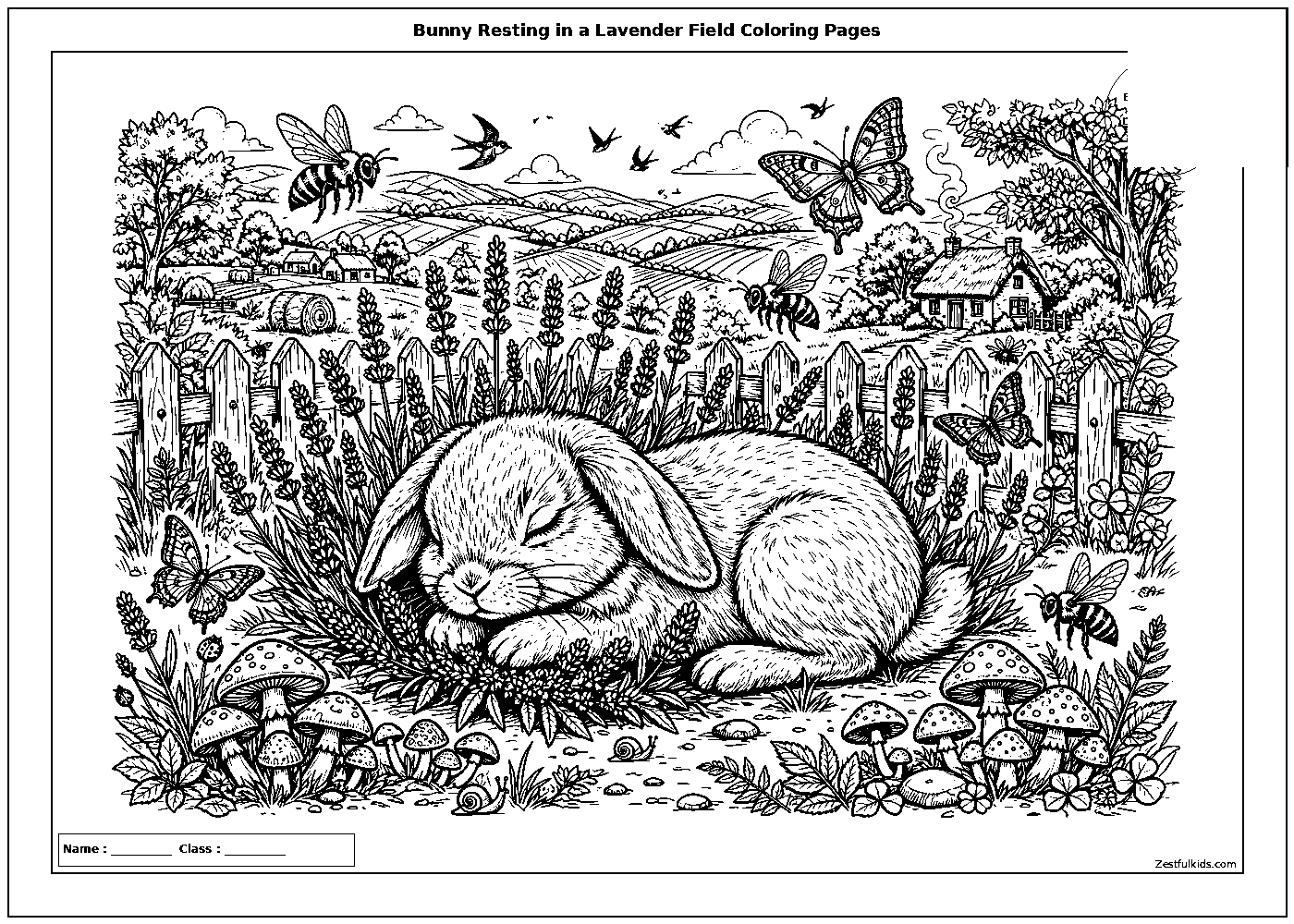
More Coloring Themes for Imaginative Adventures
Children who enjoy moving between different coloring subjects may appreciate exploring themes beyond animals and flowers. A dragon cave, for example, introduces a fantasy setting where children can imagine hidden treasures, mysterious creatures, and colorful underground landscapes.
The Dragon Cave theme offers a contrasting experience for children who want to move from a peaceful lavender field into a world of fantasy and adventure.
For children interested in machines and aviation, Fighter Jet illustrations offer another subject to explore. The sharp shapes and aircraft details provide a different coloring challenge from the soft flowers and gentle bunny in a countryside scene.
Each theme gives children a chance to choose their own colors and create a picture that reflects their imagination. With a resting bunny, blooming lavender, and a little space for personal ideas, this nature-inspired coloring activity can become a memorable part of a child’s creative time.
