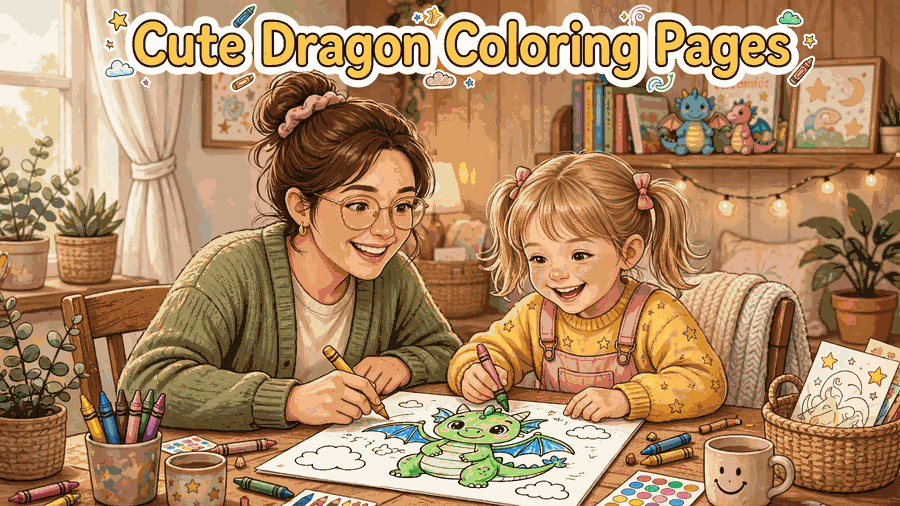
Cute Dragon Coloring Pages bring friendly fantasy creatures to life through imaginative colors, playful details, and creative storytelling. These printable activities offer children a fun way to explore magical worlds while making each dragon uniquely their own.
Discover the Charm of Cute Dragon Coloring Pages
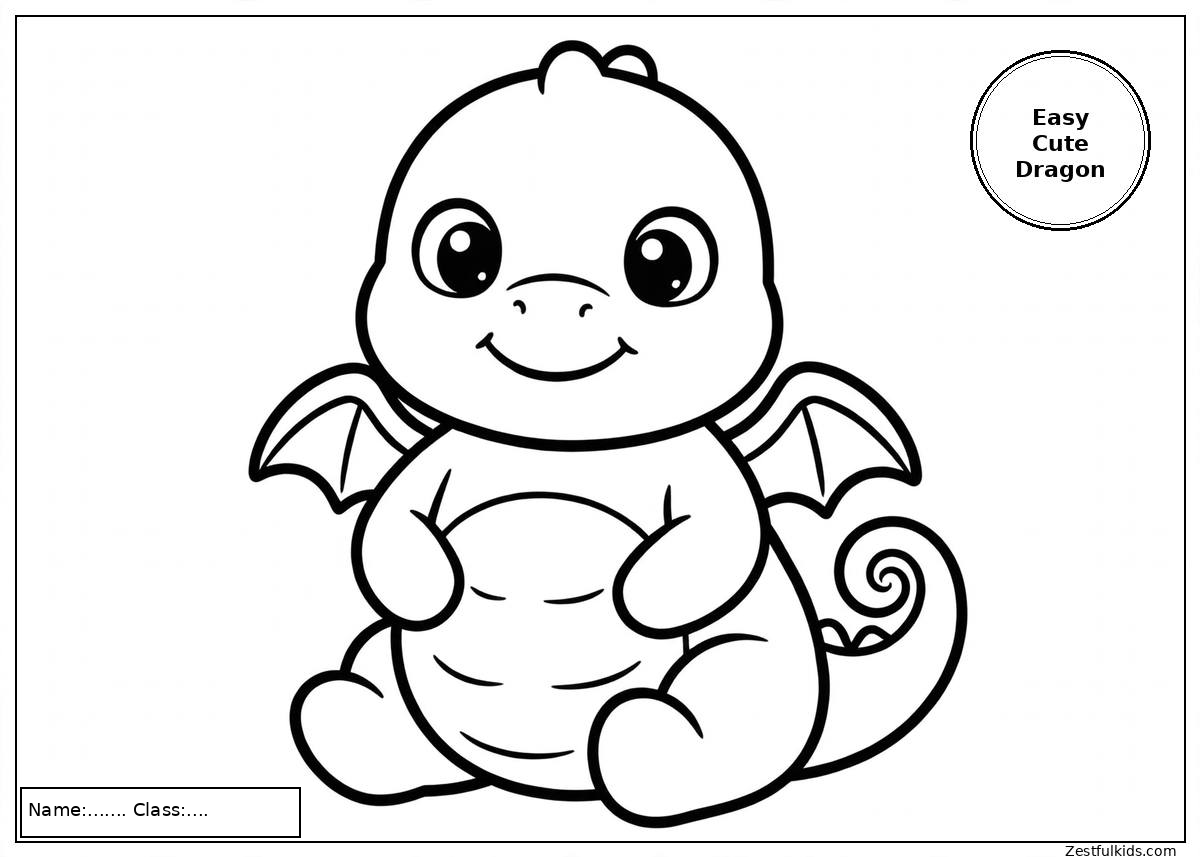
Dragons have appeared in stories and legends for centuries, but they do not always need to look fierce or frightening. Cute dragons can be imagined with rounded faces, little wings, curling tails, tiny horns, and expressive eyes that make them seem more like friendly companions than powerful monsters. Their fantasy appearance gives children plenty of room to experiment with colors that do not have to match anything in the real world. A dragon might have lavender scales, a mint-green belly, golden horns, or rainbow-colored wings, depending on the artist’s imagination.
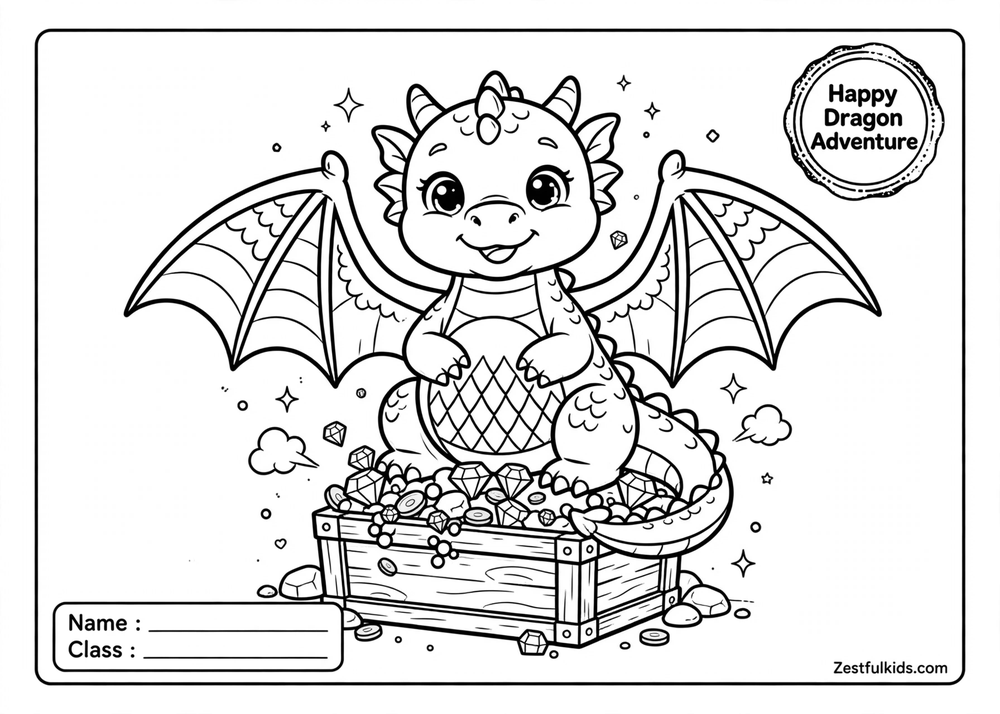
Cute Dragon Coloring Pages are especially appealing to children who enjoy fairy tales, magical creatures, and make-believe adventures. Some children may imagine their dragon living in a mountain cave, while others might picture it sleeping on a cloud or guarding a treasure chest filled with sparkling gems. Even when a particular background is not included in the illustration, children can create one around the main figure using their own drawing skills. This combination of coloring and storytelling makes the activity flexible enough for quiet afternoons at home, classroom art sessions, or creative family time.
Choosing Colors for Scales, Wings, and Tiny Horns
A dragon’s body offers several opportunities to explore color combinations. Instead of filling every section with the same shade, children can choose a main body color and add contrasting colors to the belly, wing membranes, claws, or horns wherever those details appear in the design. For example, a turquoise dragon could have a pale yellow belly and dark blue wing tips, while a pink dragon might look lovely with purple horns and a peach-colored tail. These combinations help each finished picture feel personal rather than following a fixed color scheme.
Parents and teachers can encourage children to think about the personality of their imaginary dragon before choosing colors. A sleepy dragon might use soft blue, pale green, and gentle lavender, whereas an adventurous dragon could feature bright orange, red, and gold. Children who prefer realistic-looking textures can use two shades of the same color to suggest shadows along the scales or underneath the wings. Younger artists may find it easier to begin with broad areas of color and then work toward smaller details as they become comfortable with the illustration.
The background can also change the mood of the picture. A few green hills and leafy trees might suggest a peaceful dragon habitat, while stars, a crescent moon, and wispy clouds could create a nighttime fantasy scene. If the page already contains background details, children can use complementary colors to keep the dragon easy to distinguish from its surroundings. Leaving some areas white is also a valid artistic choice, particularly when the child wants the main character to stand out.
Making Dragon Coloring a Storytelling Activity
Coloring becomes more engaging when children have the opportunity to invent a story around the creature they are decorating. After choosing the dragon’s colors, invite them to give it a name, decide where it lives, and imagine what it enjoys doing each day. Perhaps the dragon collects unusual stones, helps woodland animals find their way home, or practices flying between tall mountains. These ideas do not need to be written down immediately; a short conversation can be enough to turn an ordinary coloring session into a small imaginative adventure.
For families who enjoy learning through creative activities, this approach connects naturally with the idea that children can become more involved when learning feels playful. The article Why Kids Learn Better When Learning Feels Like Play explores this broader connection between play and learning. Adults can apply a similar spirit to dragon coloring by offering open-ended prompts rather than prescribing exactly how every part of the picture should look. Instead of asking children to copy a finished example, ask what makes their dragon special or what adventure it might experience next.
Teachers can also use the finished illustrations as a starting point for short creative-writing exercises. Children might write two or three sentences about their dragon’s home, describe a problem it solves, or share one surprising fact about its imaginary personality. Those who are not yet comfortable writing independently can dictate their ideas to an adult or explain the story aloud to a classmate. The purpose is not to produce a perfect story but to give each child a chance to express an idea inspired by the artwork.
Exploring a Wider World of Magical Characters
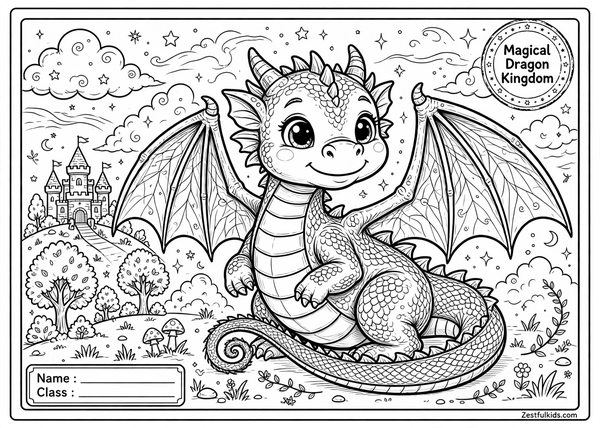
Dragons fit naturally into a larger world of fantasy creatures, enchanted gardens, and royal adventures. Children who enjoy inventing magical settings may want to imagine where their dragon lives in relation to castles, forests, floating islands, or fairy kingdoms. They can draw a simple map of this imaginary world on a separate sheet of paper and add paths, rivers, caves, and secret places for their characters to explore.
For another fantasy-inspired activity, families can explore Fairy Queen Coloring Pages. A fairy queen and a friendly dragon could become characters in the same invented kingdom, even if they appear on separate pages. Children might decide that the queen protects an enchanted forest while the dragon watches over a hidden mountain passage. Combining different coloring themes in this way gives children an opportunity to develop a connected story without requiring elaborate craft materials or complicated instructions.
A classroom could extend the idea into a collaborative fantasy display. Each child colors a dragon or another magical character, then contributes a sentence describing its role in the imaginary kingdom. The illustrations can be arranged together on a noticeboard, with the children helping decide where each character belongs. This activity allows different artistic choices to coexist, so a fiery red dragon can share the same world as a gentle pastel-colored creature.
Simple Tips for a More Enjoyable Coloring Session
Before starting, choose coloring tools that suit the child’s age, preferences, and comfort level. Wax crayons are useful for filling larger areas, colored pencils offer more control around small scales and facial features, and washable markers can produce strong, vivid colors when used with suitable paper. If children want to combine several tools, test them on a spare sheet first to see how the colors appear and whether the paper handles them well.
When printing a coloring design, check the preview to make sure the illustration is positioned properly and that important outlines are not cut off by the page edges. Use the paper size supported by the file and printer settings rather than assuming every design has the same dimensions. Ordinary printer paper may be sufficient for crayons and colored pencils, while thicker paper can be useful for some marker activities if the printer supports it. Adult assistance may be helpful when downloading files, adjusting print settings, or handling printing equipment.
A comfortable workspace can make the activity easier to enjoy. Place the page on a flat surface, keep a few selected colors nearby, and allow enough room for children to move their hands freely. There is no need to provide an entire box of coloring supplies at once; starting with a small selection can help children focus on the details they find most interesting. Encourage them to take their time, change their minds about a color, or leave a section unfinished and return to it later.
Cute Dragon Coloring Pages can be enjoyed in many different ways, from a simple coloring break to the beginning of an elaborate fantasy story. Each child can decide whether the dragon should look gentle, mysterious, adventurous, or completely unusual. With a few colors and an open imagination, a friendly dragon can become the central character in a world created entirely by the child.
