Why Kids Learn Better When Learning Feels Like Play – Have you ever asked a child to finish a worksheet, only to see them lose interest after a few minutes? Then you turn the same activity into a game, and suddenly they want to keep going. They start asking questions, trying different ideas, and even laughing when they make mistakes. The activity has not really changed, but the child’s attitude has. This is one reason kids can learn so well when learning feels like play.
For children, learning does not always need to look like sitting quietly with a book or worksheet. Learning can happen while coloring, counting, solving puzzles, drawing, playing, or telling stories. When children enjoy what they are doing, they are often more willing to explore and try again. They may not even realize that they are practicing important skills. To them, they are simply having fun.
Children Are Naturally Curious
Children are curious from a very young age. They ask questions, touch things, build things, take things apart, and try again when something does not work. They want to know what happens next, even when nobody tells them to ask. This natural curiosity is one of the best starting points for learning. Play gives children plenty of chances to follow that curiosity.
A simple game can make a child want to discover something for themselves. A puzzle can make them wonder where a piece belongs. A coloring page can make them think about which colors to choose. A counting activity can make numbers feel like part of a story instead of a lesson. When children are interested, learning can happen naturally.
Play Makes Children Want to Try Again
Children do not always get things right the first time. A puzzle piece may not fit, a counting answer may be wrong, or a block tower may fall down. When an activity feels like a test, a mistake can make a child want to stop. When the same activity feels like a game, the mistake can simply become another reason to try. That little difference can make learning more enjoyable.
Think about a child saying, “Let me try again.” That is a wonderful learning moment. The child is practicing patience, problem-solving, and persistence without thinking about those skills as a lesson. They are simply trying to solve the challenge. Play gives children many opportunities to experience this feeling.
A Wrong Answer Can Lead to a Good Question
Sometimes children surprise us with their answers and choices. A child may color a tree purple, the sky orange, or the ocean red. An adult may immediately want to correct the picture, but there may be a better opportunity hiding behind the unusual choice. Instead of saying, “That’s the wrong color,” try asking, “Tell me about your picture.” You may discover that the child has created an imaginary world.
We explored this idea in Your Child Colored the Ocean Red? That’s Not a Mistake. Children can learn that oceans are usually blue while still having the freedom to color an imaginary ocean red. Learning about the real world does not mean children have to stop using their imagination. Sometimes creativity can be the beginning of a conversation and a new learning experience.
Coloring Can Be More Than Coloring
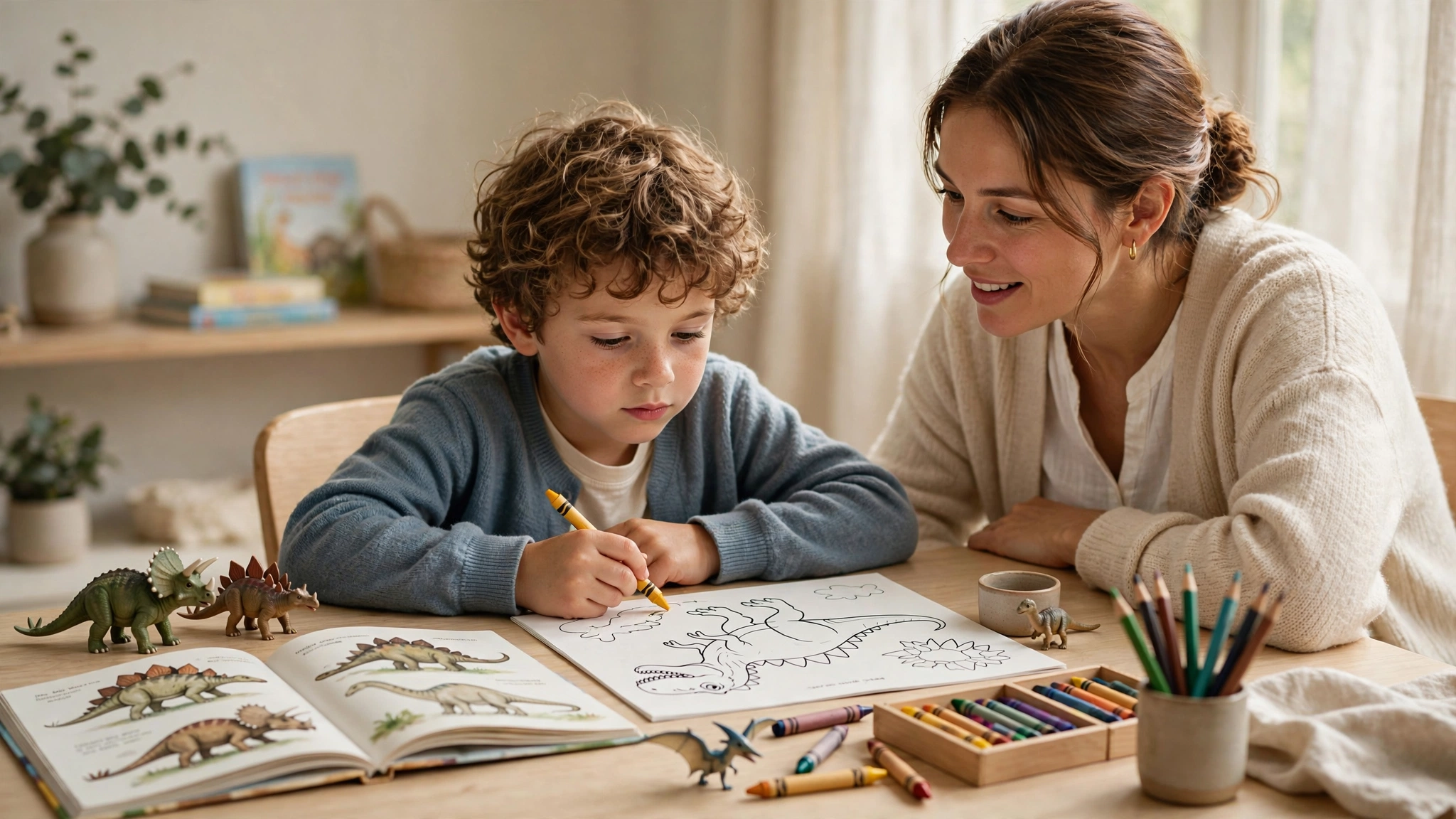
A coloring page may look like a simple activity, but children can practice many skills while using it. They choose colors, hold crayons, stay focused, and make decisions about their pictures. They may also create stories about what they are coloring. A dinosaur page, for example, can lead to questions about dinosaurs, fossils, food, or prehistoric life. One simple picture can open the door to many different conversations.
The Dinosaur Has 500 Teeth Coloring Page is a good example. A child can start by coloring the dinosaur and then become curious about its unusual number of teeth. A parent or teacher can use that curiosity to introduce a simple science fact. The child may remember the information more easily because it started with something they already enjoyed. This is what makes playful learning so useful.
Games Help Children Notice Details
Games can also help children develop observation and attention. Instead of simply telling children to “pay attention,” give them something interesting to find. Ask them to look for a missing object, compare two pictures, or find something that has changed. Suddenly, paying attention becomes part of a challenge. Children have a reason to look carefully.
A Find 10 Differences – Cute Puppy activity is a simple way to practice this skill. Children compare two pictures and search for small changes. They need to look closely and remember what they have already seen. They are learning to observe without feeling like they are doing a formal exercise. The fun of finding the answer keeps them interested.
Numbers Can Be Fun Too
Young children can sometimes find numbers difficult when they are presented only as exercises. But numbers can become much more interesting when they are connected to something children enjoy. They can count toys, animals, blocks, snacks, or objects in a picture. Counting can become a small game instead of another task to complete. The child is still learning numbers, but the experience feels different.
The Dinosaur Counting to 10 Worksheet – Free Printable combines counting with a subject many children enjoy. Instead of seeing numbers alone, children can count dinosaurs and connect the numbers with pictures. This gives them something interesting to look at while practicing early math skills. A familiar theme can make a learning activity feel much more approachable.
Give Children Small Choices
Children like to feel that they have some control over what they are doing. This does not mean they should decide everything, but small choices can make a big difference. Instead of saying, “Color this picture correctly,” ask, “What color would you like to use?” Instead of telling them which activity to start with, you can offer two choices.
These small decisions help children become active participants. They can choose a color, pick a puzzle, decide which animal to color first, or choose between two activities. The choices are simple, but they encourage children to think and make decisions. Learning becomes something they participate in rather than something that simply happens to them.
Let Children Ask Questions
Play naturally creates questions. A child may wonder why a dinosaur had so many teeth, why one picture looks different from another, or why a certain color looks different when mixed with another color. These questions are valuable because they come from the child’s own curiosity. You do not always need to give a long explanation immediately. Sometimes asking “What do you think?” is a better place to start.
This gives children time to think before hearing the answer. It also teaches them that their ideas are worth exploring. A simple question can become a conversation, and a conversation can become a learning opportunity. In this way, play can lead naturally into deeper learning.
Parents Can Make Everyday Activities Educational
Parents do not need expensive toys or complicated lesson plans to make learning playful. Everyday activities can become simple learning opportunities. You can ask your child to count pieces of fruit, find three red objects, sort toys by color, or look for different shapes during a walk. Reading a story can also become a game by asking what might happen next.
Coloring together can be another easy activity. Instead of focusing only on whether the picture looks realistic, ask your child to explain what they created. You may learn something about their imagination that you would not have discovered otherwise. These small moments do not take much preparation. They simply turn everyday activities into opportunities to talk, explore, and learn.
Teachers Can Make Learning More Playful
Teachers can also bring play into the classroom without turning every lesson into a game. A math lesson can include a counting challenge, while a reading lesson can ask children to guess what happens next. A science lesson can begin with a simple question or mystery. Art activities can give children room to make their own choices.
The goal is not to entertain children all day. Children still need structure, practice, and clear explanations. Playful learning simply gives them another way to become involved in the lesson. When children can participate, explore, and make choices, the classroom can feel more active. Learning becomes something they do rather than something they only listen to.
Mistakes Are Part of Learning
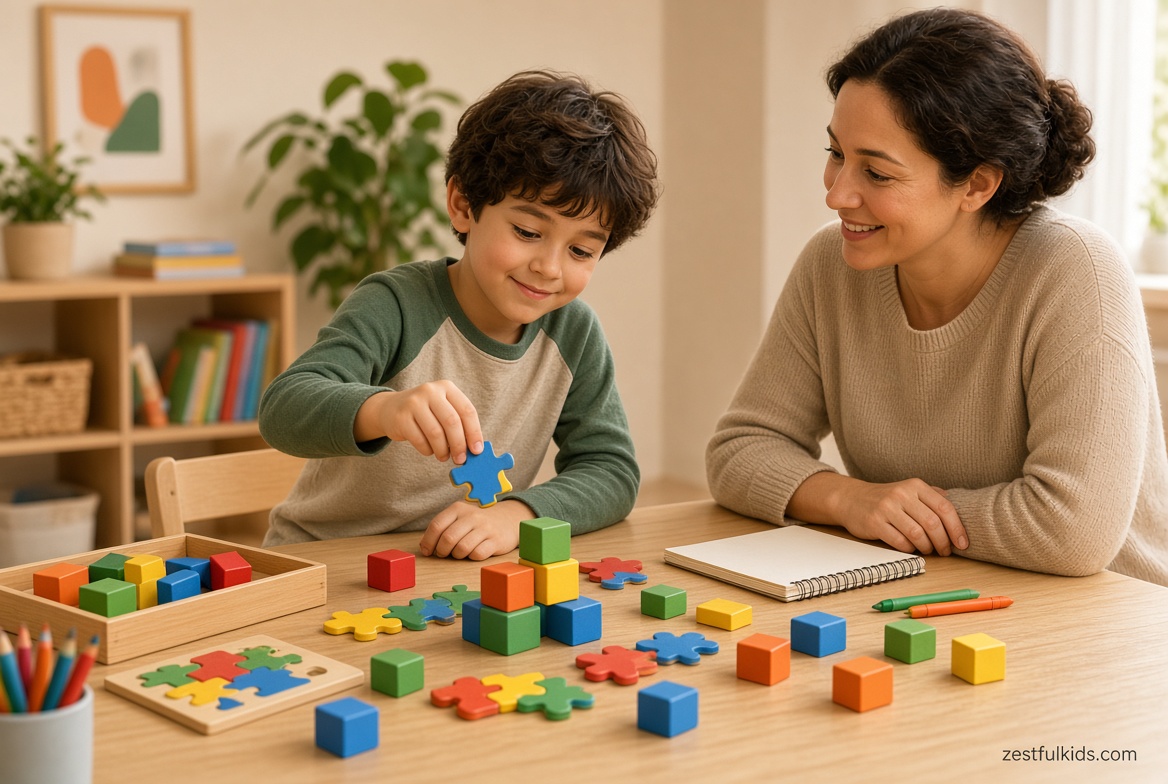
Children will make mistakes while they learn. A drawing may not look the way they expected, a puzzle may take several attempts, and a counting answer may be incorrect. These moments are not necessarily problems that need to be fixed immediately. They can become opportunities to think, try again, and discover a better approach.
Instead of always saying, “That’s wrong,” try asking, “What could we try next?” This small change can help children see mistakes differently. They begin to understand that getting something wrong does not mean they cannot learn it. Sometimes, the mistake is simply part of finding the answer.
The Goal Is to Keep Children Curious
The real value of playful learning is not that it makes everything easy. Children still need challenges, practice, and guidance. What play can do is make children more willing to face those challenges. They may be more likely to try again because they are interested in the activity.
A child who says, “I want to try again,” is already learning something important. They are practicing patience and persistence while looking for a solution. They are learning that a difficult task does not always mean they should stop. These habits can become useful far beyond childhood games and activities.
Let Children Play Their Way Into Learning
The next time your child turns a learning activity into a game, take a moment before stopping them. They may be asking questions, testing an idea, making a mistake, or simply trying something in a different way. Those moments can be valuable learning opportunities. Sometimes children learn more when they are actively involved than when they are simply following instructions.
Learning does not always need to feel like school. It can happen through coloring, puzzles, games, counting, drawing, stories, and everyday conversations. The important thing is to give children opportunities to explore, make choices, make mistakes, and try again. When children enjoy learning, they may become more willing to keep learning.
And perhaps that is the most important question for parents and teachers to ask. Instead of only asking, “Did my child get the right answer?”, ask, “Did my child enjoy discovering the answer?” If the answer is yes, you may already be creating a positive learning experience. Sometimes, the best way to help children learn is to give them a little room to play their way into discovery.
Ready to Turn Learning Into Play?
Want to give your child a simple activity to try today? Choose a printable activity that matches their interests and let them learn while they play. They can color a dinosaur, practice counting, or search for differences in a fun picture. Print a page, grab some crayons or pencils, and let your child take the lead.
Choose an activity and start playing:
- 🦕 Dinosaur Has 500 Teeth Coloring Page – Color a funny dinosaur and discover an interesting dinosaur fact.
- 🔢 Dinosaur Counting to 10 Worksheet – Practice counting from 1 to 10 with a fun dinosaur activity.
- 🐶 Find 10 Differences – Cute Puppy – Challenge your child’s eyes with a fun picture-search activity.
Print one, play together, and see where your child’s curiosity takes you.

