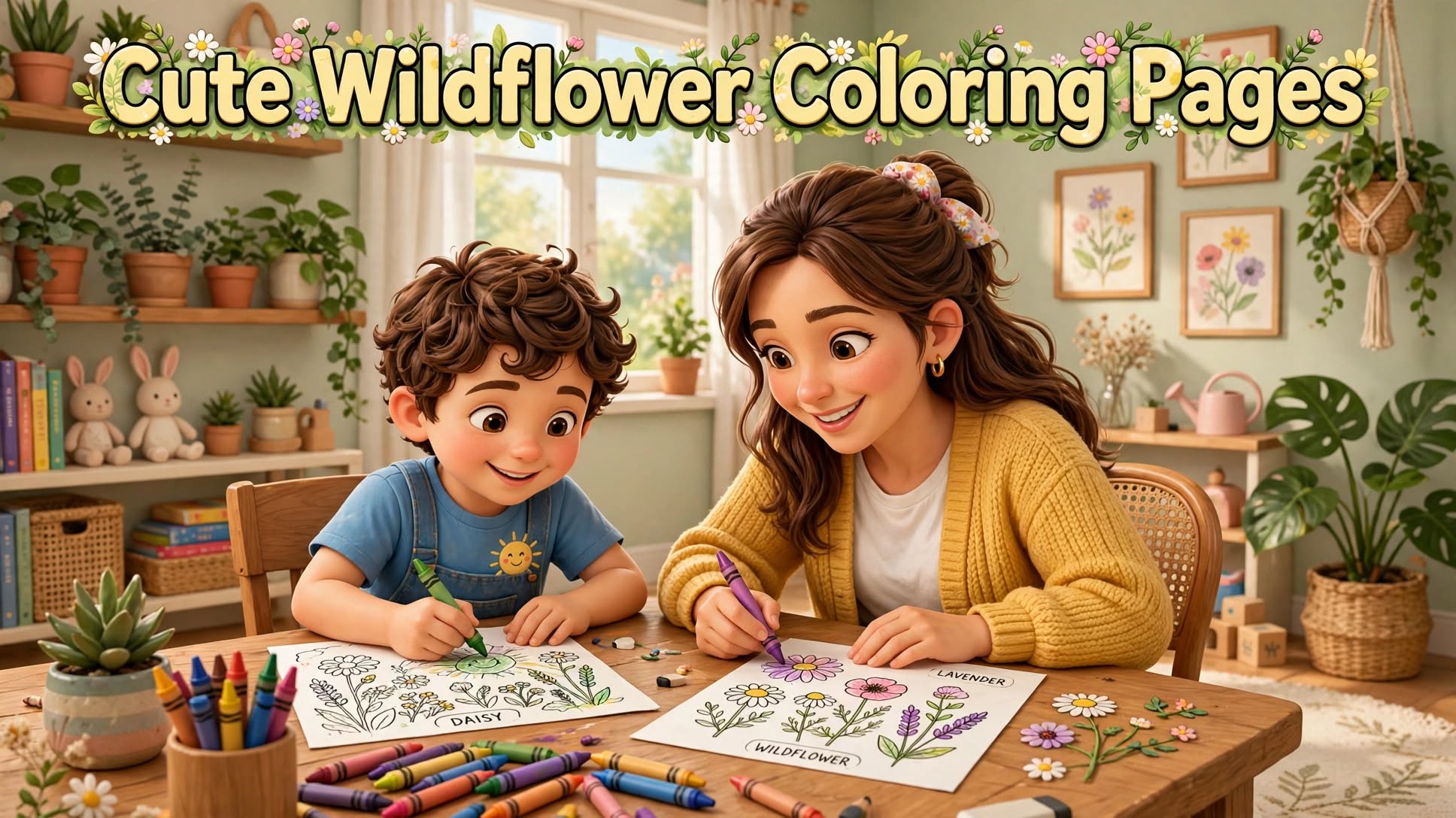
Cute Wildflower Coloring Pages invite children to explore the beauty of tiny blooms, delicate petals, and leafy stems through creative coloring. These nature-inspired activities offer a charming way to enjoy flowers, experiment with colors, and imagine peaceful outdoor scenes.
Discovering the Beauty of Wildflowers
Wildflowers have a special kind of charm. They grow in meadows, along walking paths, beside gardens, and in places where nature is free to flourish. Unlike flowers arranged in carefully planned bouquets, wildflowers often appear in unexpected combinations, creating colorful patches of natural beauty.
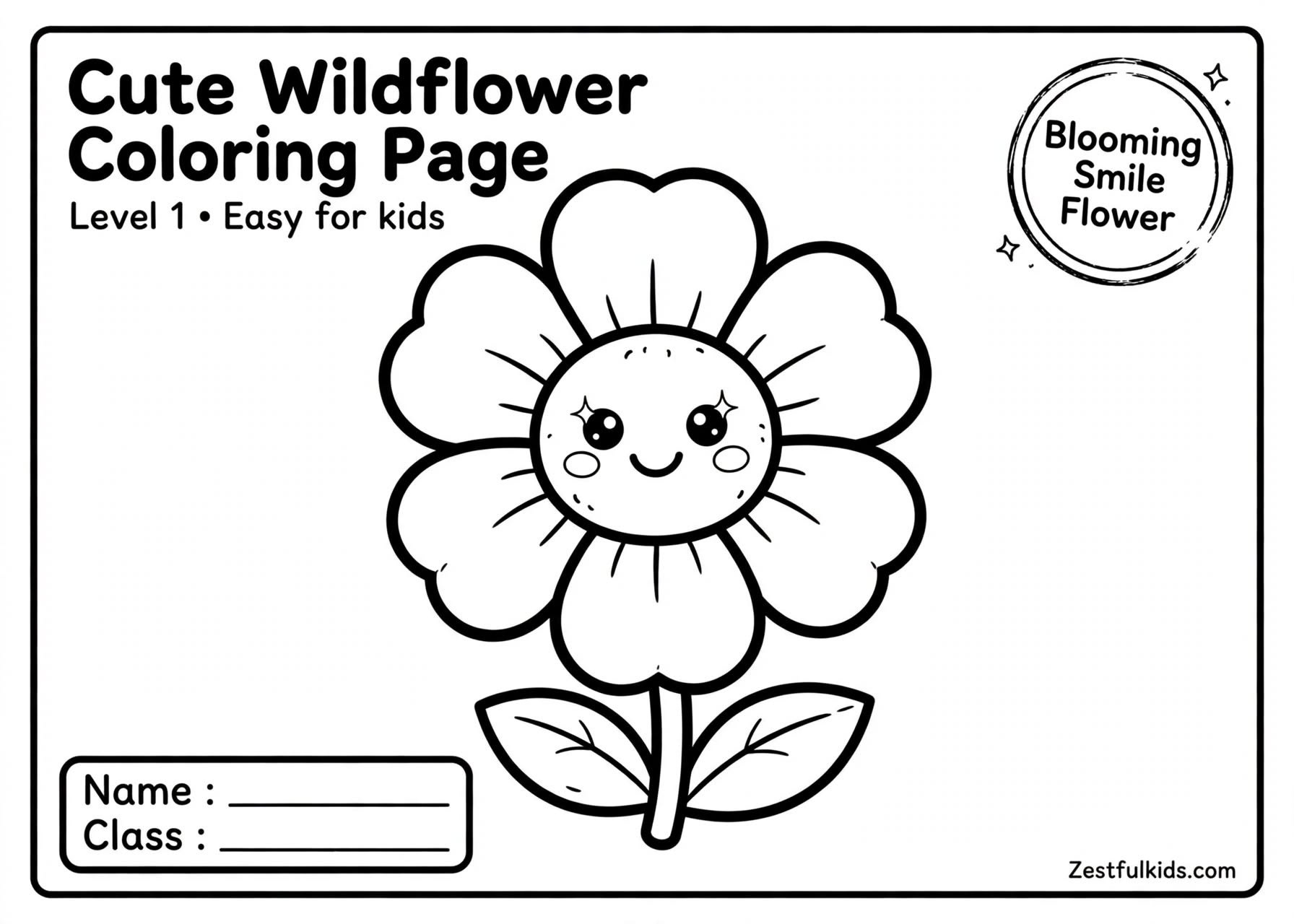
Cute Wildflower Coloring Pages bring this simple beauty into children’s creative time. Flower illustrations can introduce young artists to different petal shapes, curved stems, and tiny leaves. Some flowers have broad, rounded petals, while others feature narrow petals that spread outward like little stars.
The appeal of wildflowers lies in their variety. A child can imagine a flower with bright yellow petals, a soft purple bloom, or a tiny blue blossom growing beside a taller plant. Each coloring choice creates a different interpretation of the natural world.
These pictures also offer a gentle invitation to observe nature more closely. Children may begin noticing flowers around their homes, in parks, or during family walks, connecting the pictures they color with the plants they encounter outside.
A Color Palette Inspired by Nature
Wildflowers are an excellent subject for exploring color combinations. Their natural appearance can inspire children to use familiar shades, but there is plenty of room for imaginative choices.
Yellow, pink, purple, blue, and white are common colors to consider when creating a wildflower-inspired palette. Green shades can be used for stems and leaves, while lighter tones help distinguish delicate petals from darker outlines.
Children can try several approaches:
- Natural meadow colors: Combine yellow, pink, purple, and blue flowers with different shades of green.
- Soft pastel blooms: Use pale pink, lavender, light blue, and cream for a gentle appearance.
- Bright garden colors: Choose bold orange, red, yellow, and magenta to make each flower stand out.
- Fantasy wildflowers: Give every flower an unusual color, such as turquoise petals or a purple stem.
- Monochromatic flowers: Use different shades of one color to create a coordinated floral picture.
The best part is that children do not need to follow a botanical color guide. A wildflower can look just as delightful with imaginative colors as it does with realistic ones.
Looking Closely at Petals, Leaves, and Stems
Flowers may appear simple at first, but their shapes provide plenty of small details to explore while coloring.
A rounded flower can be colored with smooth strokes that follow the shape of its petals. Narrow petals may be easier to color with short, careful movements. Children can also use two shades of the same color to create a subtle difference between the center and the outer petals.
Leaves offer another opportunity to experiment. Some children may choose light green for the entire leaf, while others can add a darker shade along one side. If the illustration includes several leaves, alternating green tones can help distinguish them.
Stems are usually long and narrow, so colored pencils can be useful for keeping the color within the outline. Children who enjoy bold artwork may prefer crayons or markers, especially when the flower shapes are larger.
Rather than rushing to fill every space, children can take their time with each flower and decide how they want its individual features to look.
Turning a Flower Illustration Into a Meadow
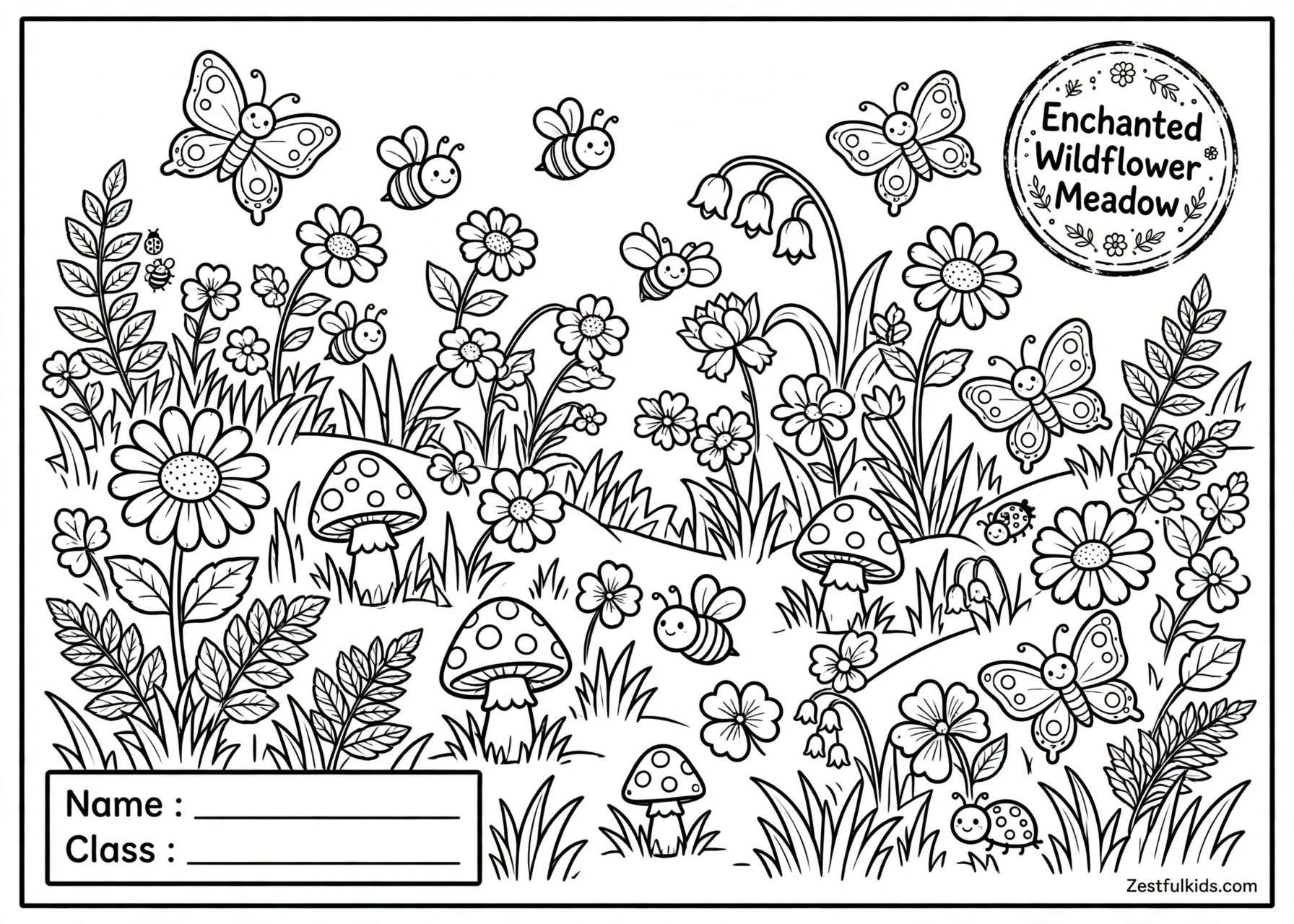
Wildflowers often grow alongside other plants, making them a natural starting point for creating an imaginary meadow.
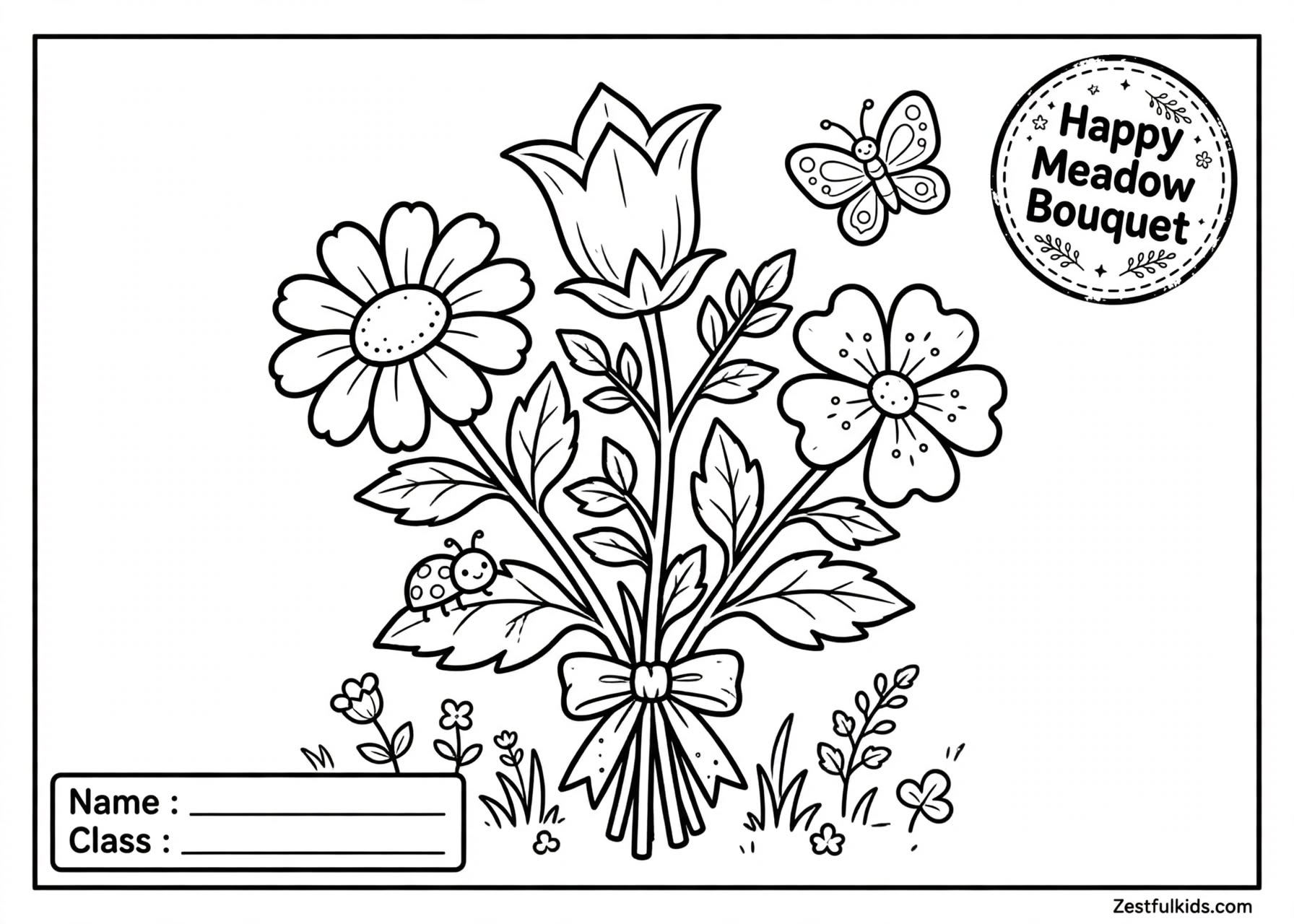
If the coloring illustration includes open space, children can add their own details around the flowers. A few blades of grass, small stones, butterflies, or tiny insects can help create a lively outdoor setting.
A blue sky with soft clouds can make the scene feel like a sunny afternoon. Alternatively, children can imagine a meadow at sunset, using orange, pink, and purple shades in the background.
For a simple creative challenge, invite children to choose a setting before they begin coloring. They might imagine a flower patch beside a country path, a meadow near a small pond, or a secret garden filled with unusual blooms.
The setting does not need to be complicated. Even a few extra details can turn a flower illustration into a picture that tells a story.
Creative Activities Beyond Coloring
Wildflower coloring can be combined with other simple activities at home or in the classroom.
One idea is to create a flower color collection. Children can choose several colors and use them to create a coordinated group of blooms. After finishing, they can arrange their pictures together to make a colorful display.
Another activity is to invent a flower. Children can imagine a new wildflower with unusual petals, a special name, and a color combination they have never seen before. They can draw the flower on a separate sheet of paper and describe where it grows.
Parents and teachers can also encourage children to compare their colored flowers with real plants during an outdoor walk. They may notice differences in petal shapes, leaf patterns, and the way flowers grow along a stem.
This activity works best as an invitation to observe rather than a test. Children can simply share what catches their attention and use those discoveries as inspiration for their next picture.
Choosing Coloring Tools for Delicate Floral Designs
The coloring tools children use can influence how their finished flowers look.
Colored pencils are useful for small petals, narrow stems, and details that require more control. Crayons work well for broader flower shapes and larger areas of grass. Markers can produce bright colors that make individual blooms stand out against the page.
For illustrations with many small details, children may prefer to begin with the petals before moving to the stems and leaves. This approach allows them to focus on the smaller areas while they are still fresh and interested.
When printing a coloring activity, check the print preview to make sure the illustration fits comfortably on the page. A clear outline and sufficient space around the flowers make it easier to color without feeling rushed.
Exploring More Creative Themes
Children who enjoy nature-inspired artwork may also appreciate activities with different subjects and styles. For a change of pace, <a href=”https://zestfulkids.com/kids-playing-with-lego-coloring-pages-5-free-printables/“>kids playing with LEGO</a> introduces a playful theme built around colorful blocks and imaginative construction.
Another option is to explore <a href=”https://zestfulkids.com/cute-halloween-coloring-pages/“>cute Halloween coloring pages</a>, where seasonal characters and decorations provide a different kind of creative inspiration.
These themes can complement a collection of floral pictures, giving children the freedom to choose between nature, imaginative play, and seasonal artwork.
Cute Wildflower Coloring Pages make a lovely addition to creative activities for children who enjoy flowers and outdoor discoveries. With different petal shapes, imaginative color choices, and opportunities to add their own details, each finished picture can become a unique celebration of nature’s little blooms.
