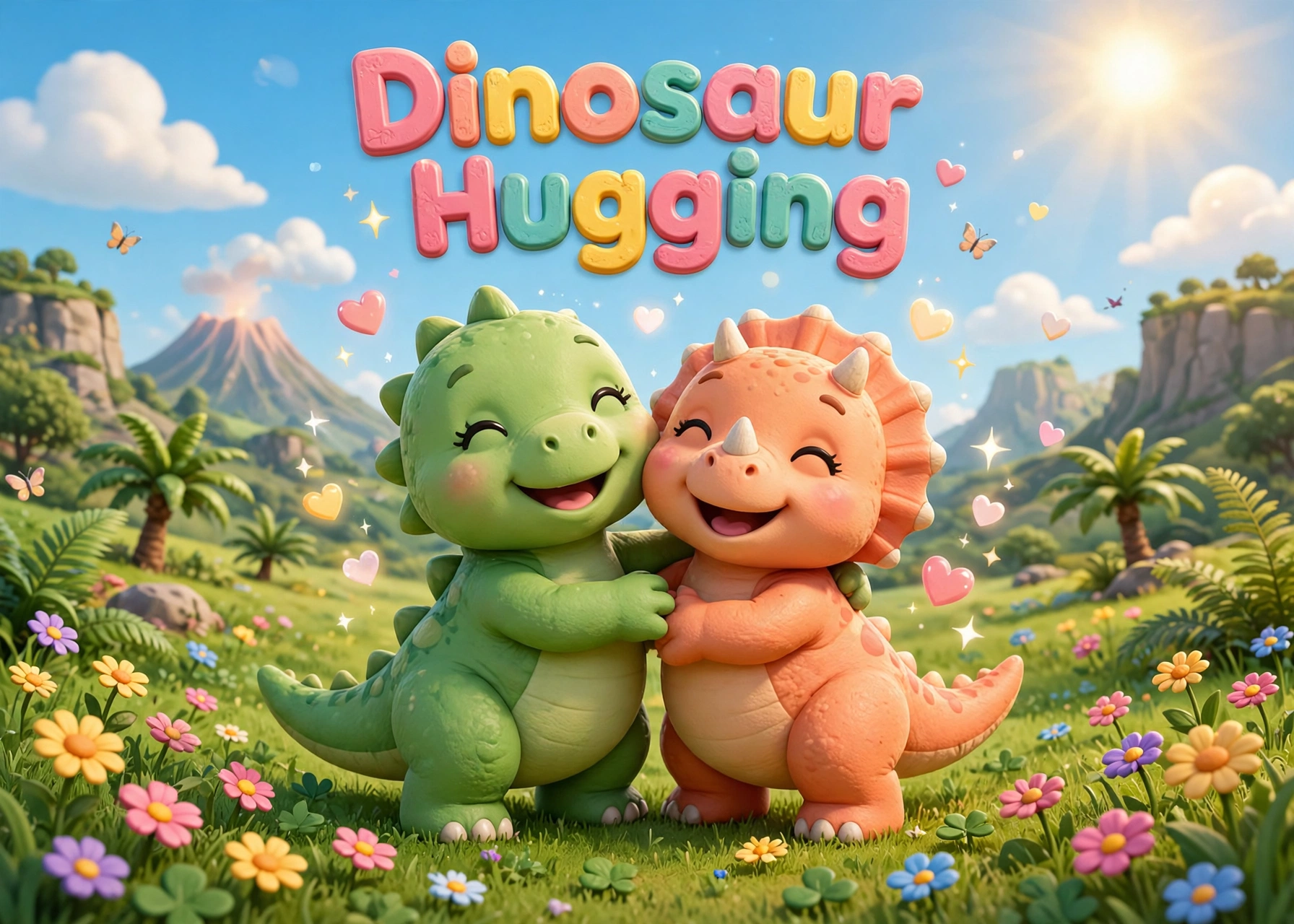
Dinosaur Hugging Coloring Pages bring a heartwarming twist to prehistoric creatures through playful illustrations of dinosaurs sharing gentle hugs. Children can enjoy coloring friendly dinosaur characters while exploring emotions, creative storytelling, and imaginative color combinations.
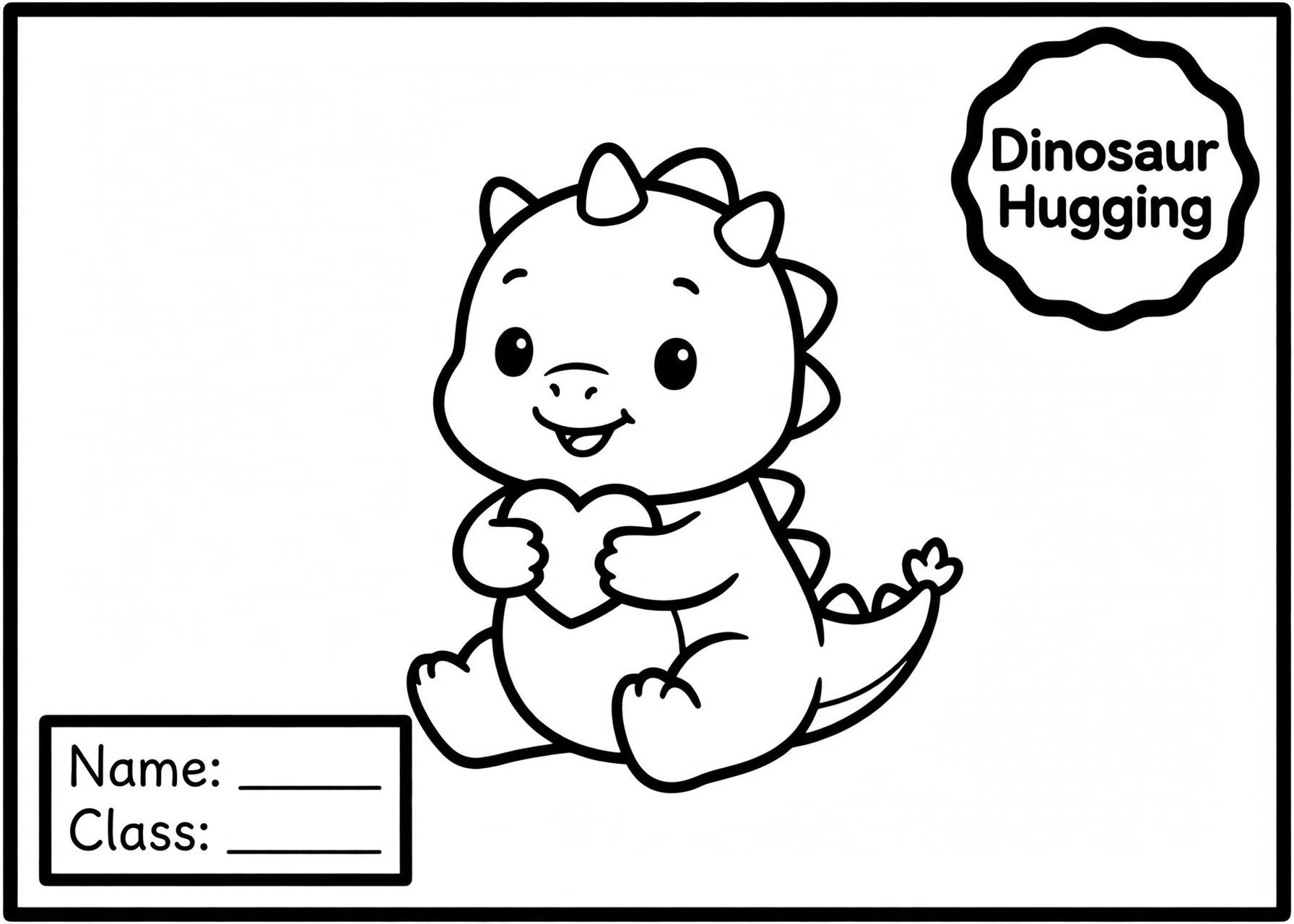
When Dinosaurs Show Their Gentle Side
Dinosaurs are often associated with enormous bodies, sharp teeth, powerful tails, and exciting adventures from prehistoric times. However, they can also become charming characters in children’s artwork. A dinosaur sharing a hug introduces a softer side of these ancient creatures, turning a familiar prehistoric theme into something warm and approachable.
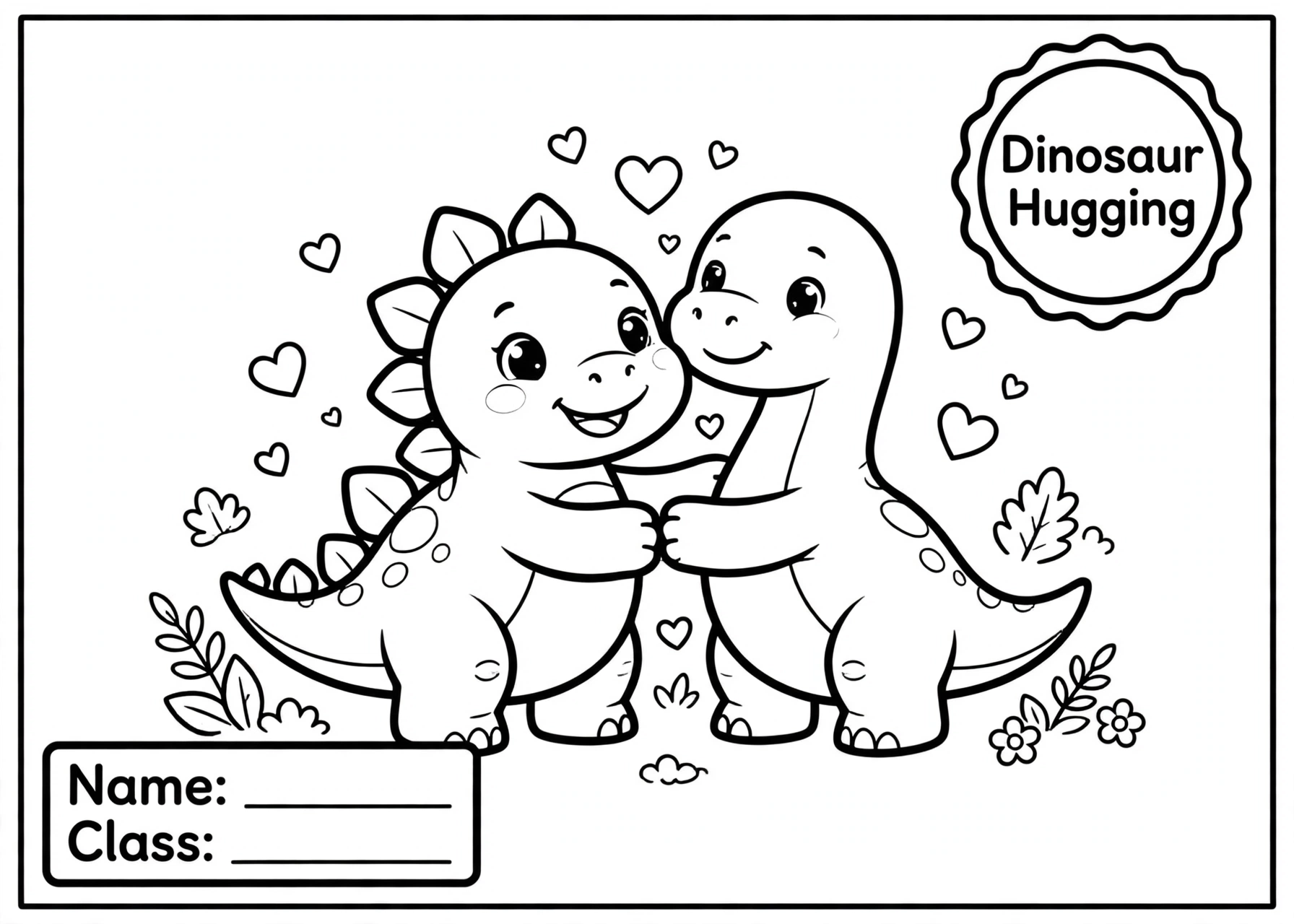
The idea of two dinosaurs embracing creates an interesting subject for coloring. Their bodies may overlap, their little arms may reach around one another, and their faces can express affection or happiness. These details offer children something different to explore compared with traditional dinosaur illustrations featuring roaring creatures or dramatic action scenes.
Hugging is also a familiar gesture that children can understand through everyday experiences with family members, friends, and people they care about. Seeing dinosaurs share this moment can inspire conversations about kindness, friendship, and expressing affection. The prehistoric setting adds imagination, while the central interaction gives the artwork an emotional element.
Children can interpret the scene in their own way. They might imagine two dinosaur friends meeting after a long journey, a parent dinosaur comforting its little one, or two baby dinosaurs celebrating a special moment together. Each interpretation can become the beginning of a small story.
Choosing Colors for Friendly Prehistoric Characters
One enjoyable part of coloring dinosaurs is deciding how their skin should look. Since dinosaurs existed in many different forms, children have plenty of freedom to invent their own colors. Green, brown, gray, and olive are familiar choices, but bright purple, orange, blue, and pink can make the characters look especially playful.
If the illustration features two dinosaurs hugging, using contrasting colors can help distinguish their bodies. One dinosaur might have a light green body with darker green details, while the other could have a soft orange or blue appearance. This approach makes each character recognizable without requiring complicated coloring techniques.
Children can also experiment with the details of dinosaur skin. Some dinosaurs had scales, while others may have had feathers or other body coverings. Depending on the illustrated character, small patterns, spots, or simple markings can be added as optional creative details.
The facial expressions deserve particular attention. A gentle smile, rounded eyes, or raised eyebrows can give a dinosaur a friendly personality. Children can use darker shades around certain features to make them more noticeable, provided the original outlines remain visible.
For a coordinated picture, the background can use softer colors so the dinosaurs remain the main focus. Pale blue, light yellow, or gentle green can suggest a peaceful outdoor setting. Children may also imagine a prehistoric landscape with plants, rocks, or distant mountains if there is room to add their own details.
The Meaning Behind a Dinosaur Hug
The special appeal of this theme comes from the interaction between the characters. Rather than focusing entirely on what a dinosaur looks like, the illustration encourages children to think about what the characters might be feeling.
A hug can represent comfort, happiness, friendship, or affection. Parents and caregivers can use the picture as a natural starting point for conversations about these familiar emotions. They might ask children when they enjoy giving or receiving hugs, or how they show kindness to someone they care about.
It is important to let children express their own ideas. Some may imagine the dinosaurs as siblings, while others might see them as best friends. There is no single story that needs to accompany the illustration.
For classroom activities, teachers can invite children to describe what happened before the hug. Perhaps one dinosaur helped the other find its way home, or maybe the two friends have not seen each other for a long time. Children can share their ideas verbally or write a short story inspired by their finished artwork.
This activity combines visual creativity with an opportunity to discuss positive relationships in a familiar and enjoyable way.
Creative Activities to Try Beyond Coloring
A dinosaur hugging illustration can become more than a simple coloring session. Once the main characters are finished, children can invent names and personalities for the dinosaurs. One might be adventurous and energetic, while the other could be gentle and thoughtful.
Another idea is to create a short prehistoric friendship story. Children can decide where the dinosaurs live, what they enjoy doing together, and why they are hugging. They might imagine a journey through a forest of ancient plants or a playful afternoon near a river.
Parents can also introduce a simple drawing challenge. After completing the original picture, children can draw another dinosaur friend beside the characters. They could give the new dinosaur a different body shape, tail, or set of decorative markings.
For younger children, keeping the activity straightforward may be more enjoyable. They can focus on filling the larger body areas and choosing colors for the characters. Older children may prefer adding patterns, creating a background, or developing a longer story.
Another creative possibility is to make a small collection of dinosaur friendship artwork. Each finished picture can represent a different moment, such as meeting a new friend, sharing a meal, playing together, or giving a comforting hug.
Selecting the Right Coloring Materials
The choice of coloring tools can influence how children approach the illustration. Crayons are useful for filling larger dinosaur bodies and background areas. Their broad coloring surface makes them convenient when children want to cover larger sections without spending too much time on small details.
Colored pencils are suitable for more careful work around facial features, arms, tails, and body patterns. Children can layer different shades to create subtle variations in the dinosaurs’ skin colors. For example, a light green dinosaur can have darker green spots or shading along its back.
Washable markers are another option for children who enjoy strong, bright colors. They can make dinosaur bodies stand out, although adults should consider the paper thickness because some markers may show through thinner sheets.
There is no need to use every coloring tool at once. A few favorite colors and suitable materials are enough to create an enjoyable result. Allowing children to choose their own combinations also makes the finished artwork feel more personal.
Bringing Dinosaur Friendship into Other Creative Themes
Children who enjoy imaginative characters may also like exploring different fantasy-themed activities. For example, fairy queen illustrations introduce a magical world filled with opportunities to experiment with royal costumes, imaginative settings, and decorative details.
For families who prefer activities inspired by real-life experiences, a winter adventure can offer a completely different creative direction. A family ski trip provides an opportunity to explore snowy scenery and imagine enjoyable moments spent together outdoors.
Moving between different themes can keep printable activities interesting. Children can enjoy prehistoric creatures one day and explore fantasy characters or family adventures another time. Each subject offers a different setting for creative choices and storytelling.
Preparing a Comfortable Coloring Session
Before printing, parents and teachers can check the available file and review the print preview. Make sure the selected paper size matches the printer settings and that the important parts of the illustration fit within the printable area. This simple check helps avoid accidentally cutting off parts of the artwork.
A comfortable table, good lighting, and neatly arranged coloring materials can make the activity easier to manage. If several children are coloring together, providing individual sets of crayons or pencils can help everyone work at their own pace.
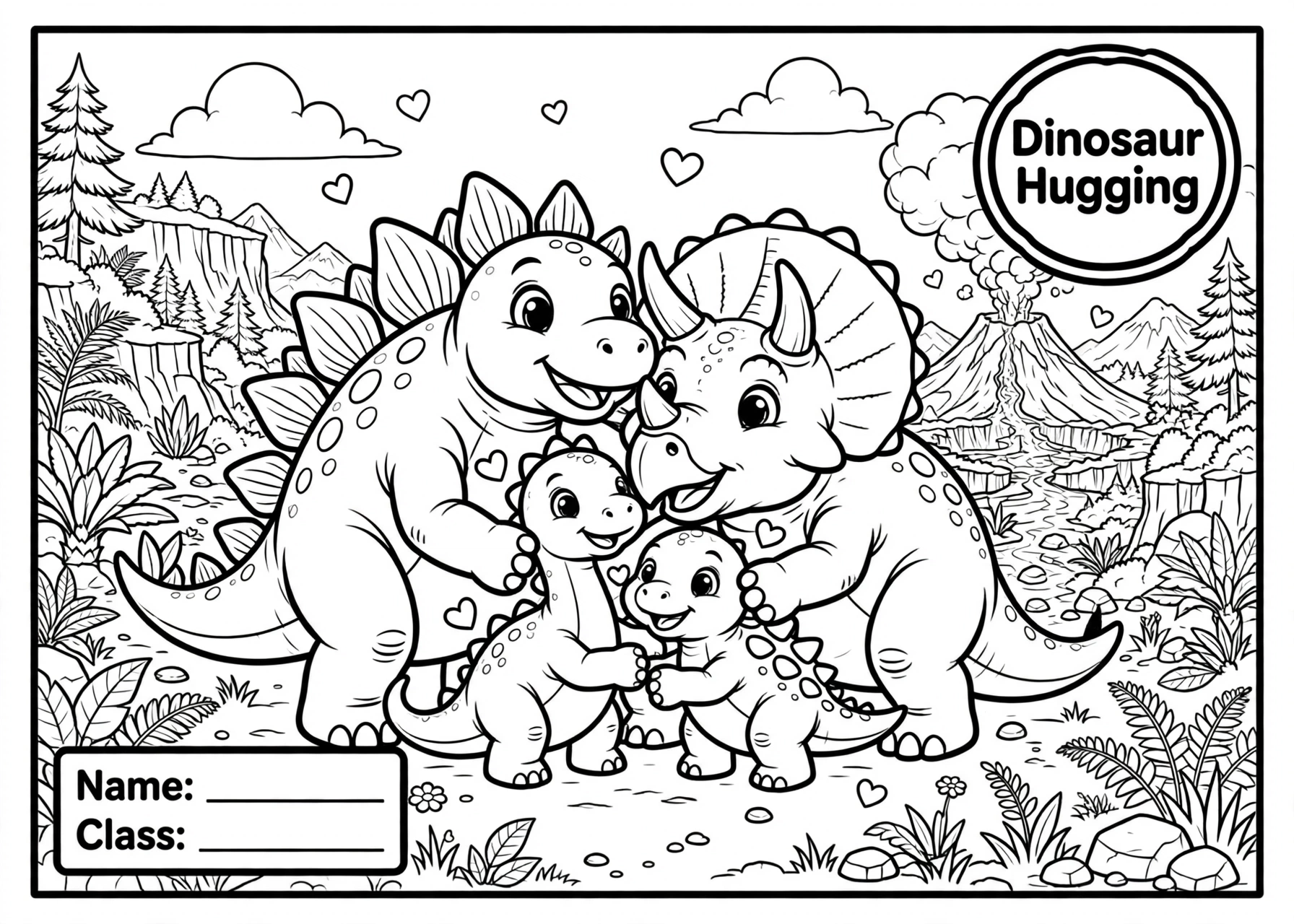
Once the dinosaurs are finished, invite children to give their artwork a title. They might choose something like A Hug Between Best Friends, The Little Dinosaur Family, or A Special Prehistoric Friendship. Their chosen title can be written separately and displayed beside the picture.
Dinosaur Hugging Coloring Pages offer a charming way to combine prehistoric imagination with a familiar expression of affection. Through playful color choices, character creation, and simple storytelling, children can turn a gentle dinosaur moment into a personal piece of artwork that celebrates friendship and togetherness.
