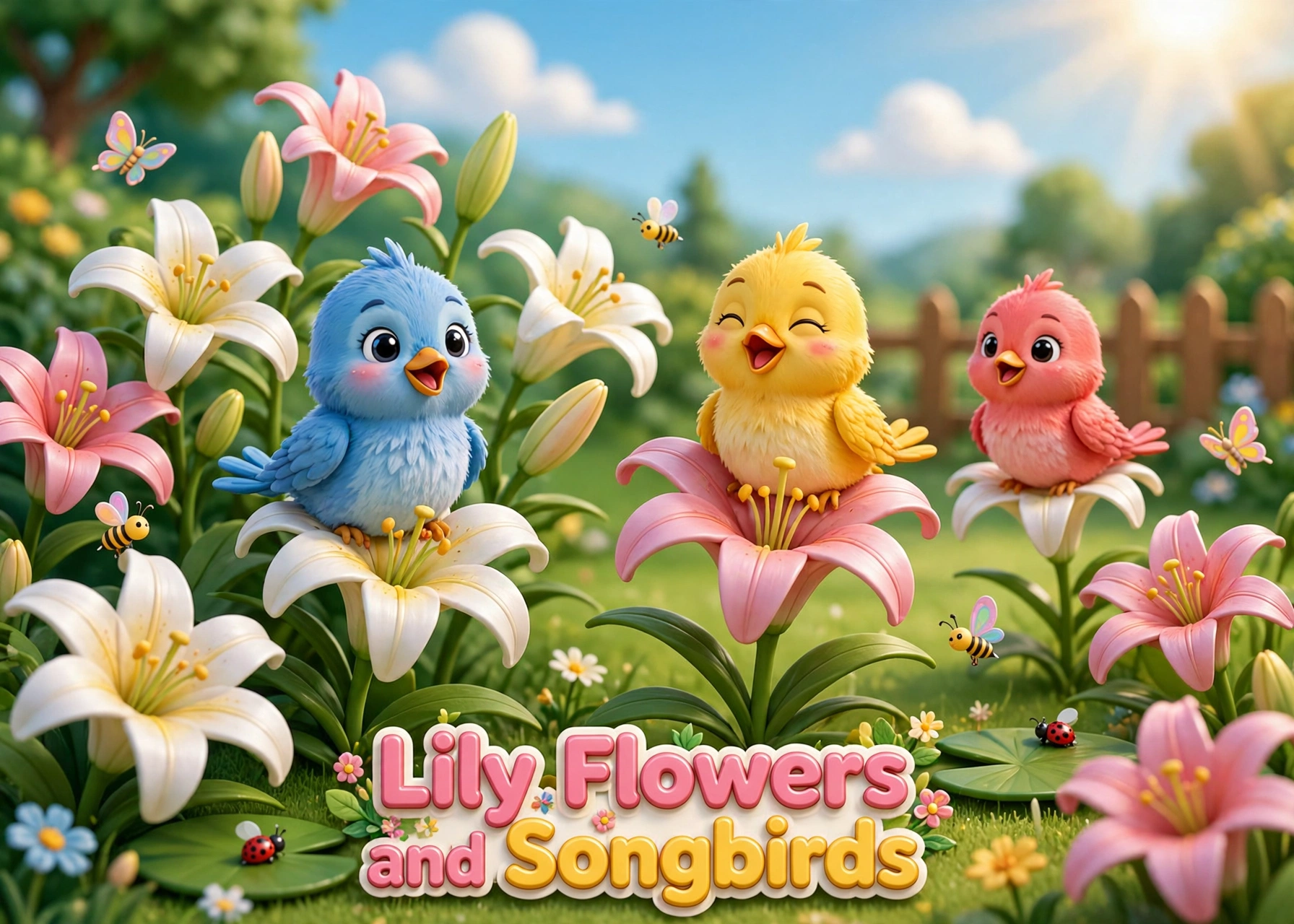
Lily Flowers and Songbirds Coloring Pages bring together elegant blossoms and cheerful garden birds in a nature-inspired activity. Children can explore flower shapes, delicate bird details, and imaginative color combinations while enjoying a relaxing creative session.
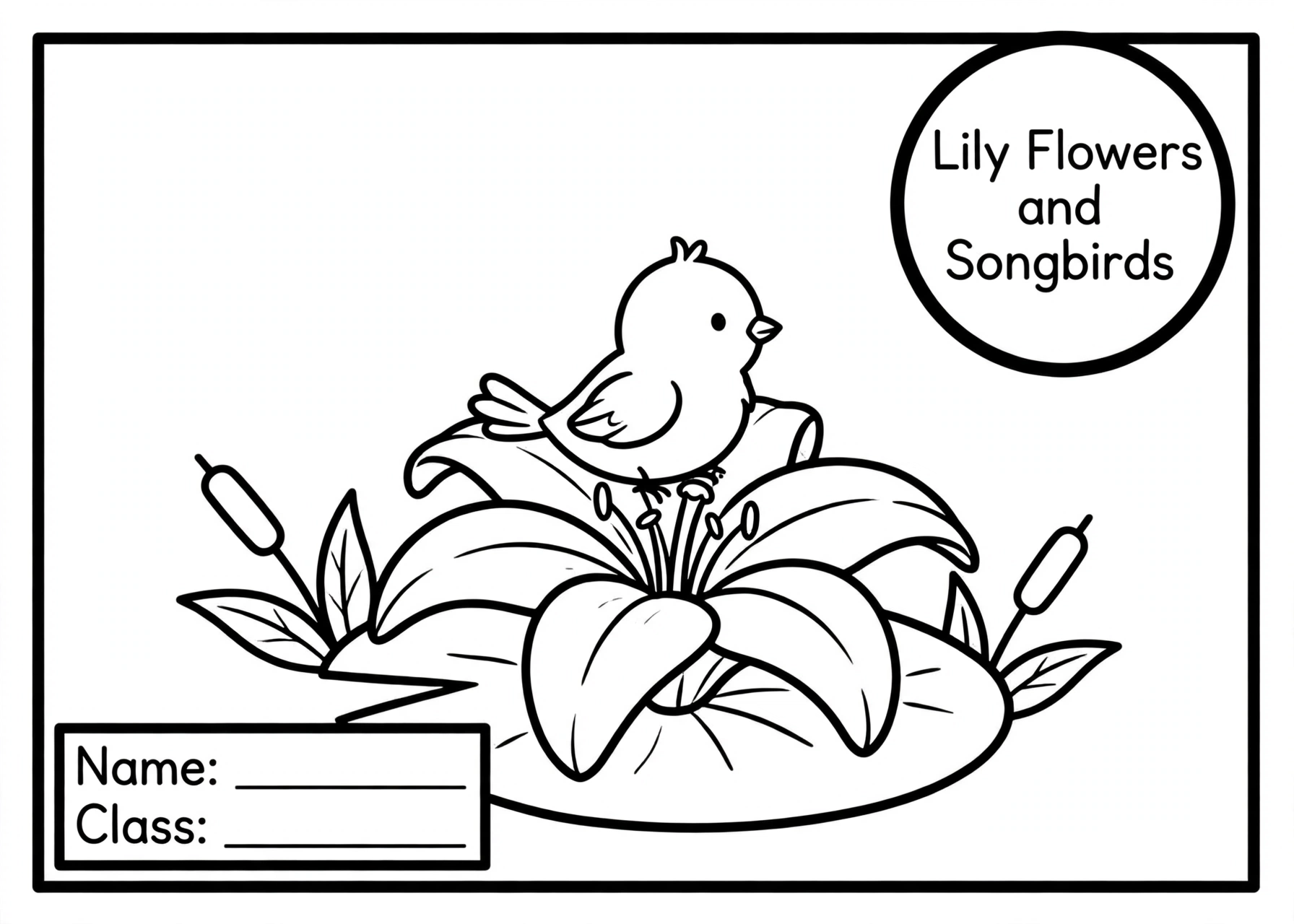
A Garden Scene Filled with Flowers and Songbirds
Lily flowers have a distinctive appearance that makes them interesting subjects for children’s artwork. Their open petals, graceful shapes, and prominent centers provide plenty of opportunities to experiment with different colors. When songbirds are included in the same nature theme, the scene becomes even more engaging, combining the beauty of flowering plants with the lively presence of wildlife.
Songbirds are known for their varied calls and melodies. They can be found in many environments, including gardens, forests, parks, and countryside areas. Their different body shapes, beaks, wings, and tails make them fascinating subjects to observe and color.
The combination of lilies and songbirds also creates an opportunity to imagine a peaceful outdoor setting. Children might picture a small bird resting near a blooming lily, another bird singing from a nearby branch, or a garden filled with flowers during a bright morning. These ideas can help them develop their own interpretation of the illustration without needing to follow a fixed color scheme.
Unlike coloring themes that focus on a single animal or object, this combination offers two different subjects to explore. Children can spend time decorating the flower petals before moving on to the birds, or they can alternate between the two to create a balanced composition.
Exploring Lily Flowers Through Color and Shape
Lily flowers come in several varieties, with colors that include white, pink, orange, yellow, and red. Their petals often have a gently curved appearance, while the flower’s center contains noticeable reproductive structures. These natural details can inspire children to use different shades rather than coloring every part of the blossom identically.
White lilies can be represented with light gray, pale yellow, or very soft blue shading to give the petals more definition. Pink lilies may look attractive with a combination of light and darker pink. Children who prefer brighter artwork can experiment with orange or yellow shades.
The leaves offer another interesting coloring opportunity. Many lily varieties have green leaves, although their shapes and arrangements can differ. Using two or three shades of green can help distinguish individual leaves and create a more varied appearance.
For children who enjoy imaginative art, there is no need to reproduce real flowers exactly. They can create unusual combinations, such as purple petals with orange centers or bright blue flowers with green leaves. These choices make each finished picture personal and unique.
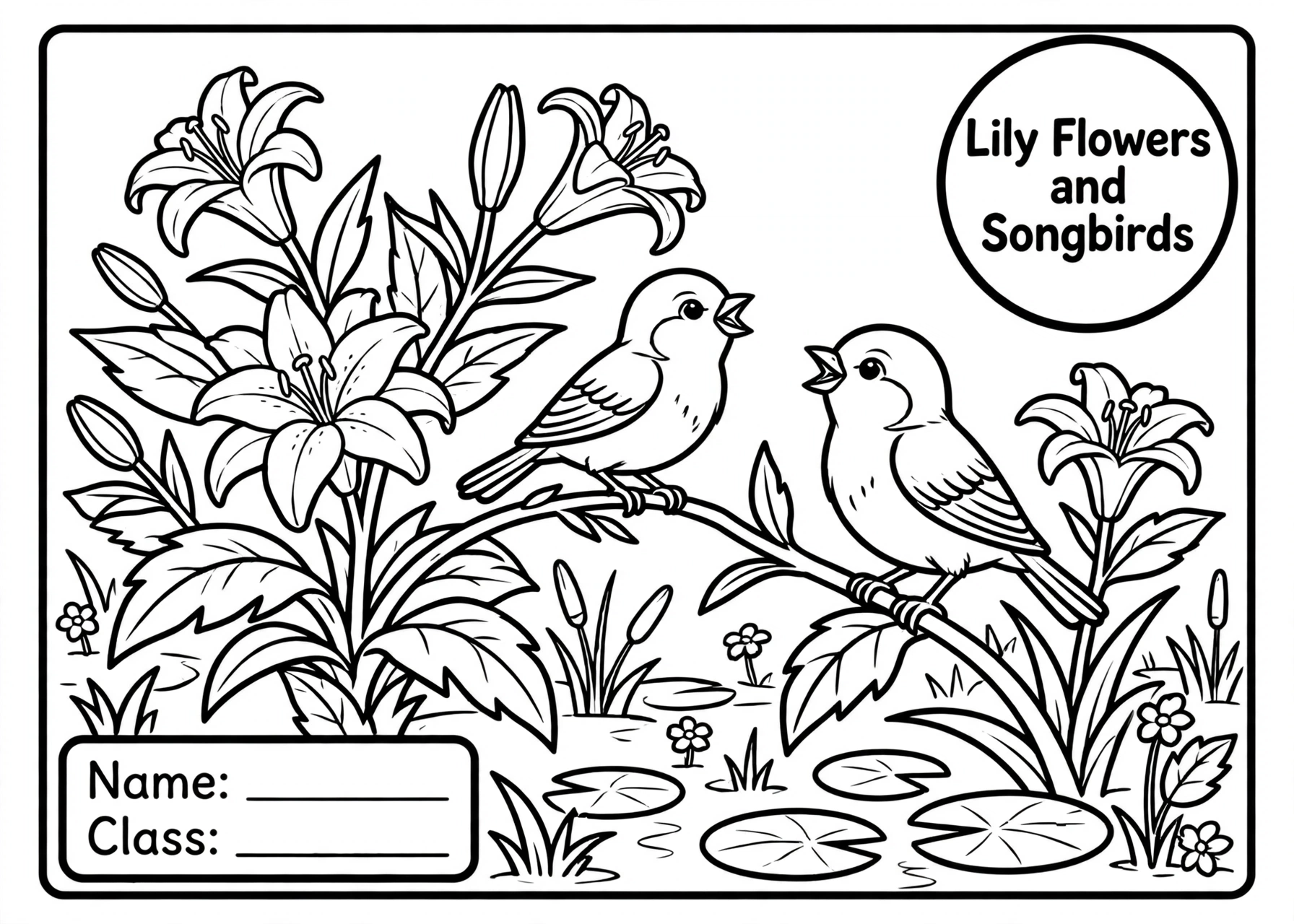
Songbirds Bring Movement and Personality to the Picture
Birds add a different kind of detail to a flower-themed illustration. Their feathers, beaks, wings, and tails provide smaller areas that children can color with care. Depending on the bird they imagine, they might choose brown, yellow, blue, red, or combinations of several colors.
Songbirds are not all alike. A robin, for example, is recognizable by its warm-colored breast, while a bluebird has distinctive blue plumage. Finches and other small songbirds also display a variety of feather patterns. These familiar examples can inspire children when choosing colors, even if the illustrated birds are not identified as particular species.
Parents can introduce a simple observation activity before coloring begins. Show children pictures of different songbirds and invite them to notice their beaks, feather colors, and tail shapes. They can then decide whether they want to use realistic colors or invent a completely imaginary bird.
Children may also enjoy thinking about what the birds are doing. A bird might be singing, resting, looking for food, or watching the flowers move in the breeze. These small storytelling ideas can make the coloring session feel more personal.
Creative Ways to Color a Lily and Bird Composition
When working with a picture that includes both flowers and birds, choosing a color arrangement can make a noticeable difference. One practical approach is to select the main flower colors first, then choose bird colors that complement them.
For example, pink lilies can be paired with blue or brown birds to create contrast. Yellow flowers may look attractive beside green or grayish-brown feathers. If the illustration contains several blossoms, children can give each flower a different color while keeping the leaves in related shades of green.
The background can be kept simple so the main subjects remain easy to see. Light blue can suggest an open sky, while pale green can represent distant garden plants. Children may also add small details such as sunshine, soft clouds, or additional flowers if there is enough empty space in the composition.
A useful coloring challenge is to choose a limited palette of four or five colors. Children can see how many different combinations they can create using only those shades. Another option is to make the flowers realistic while giving the birds imaginative colors.
Colored pencils work well for feather details and gentle shading around flower petals. Crayons are convenient for larger areas, while washable markers can provide stronger colors. Children can choose whichever materials they enjoy using, depending on the amount of detail in the illustration.
Learning About the Relationship Between Birds and Flowers
Although birds and lilies are different subjects, placing them together creates a natural starting point for discussing garden wildlife. Children can learn that birds visit gardens for several reasons, including searching for food, finding shelter, and looking for suitable places to rest.
Some birds also visit flowers to feed on nectar, while others may eat seeds or insects found around plants. Their feeding habits vary depending on the species. This makes a flower garden an interesting environment to explore because different creatures can use the same space in different ways.
Parents and teachers can connect the coloring activity with a simple nature observation. During a walk in a garden or park, children can look for birds, flowering plants, and other signs of wildlife. They might notice how birds move between branches or how flowers attract insects.
For another animal-themed activity, children can explore ducks swimming in a pond. This provides a different opportunity to discover how birds behave in outdoor environments, especially around water.
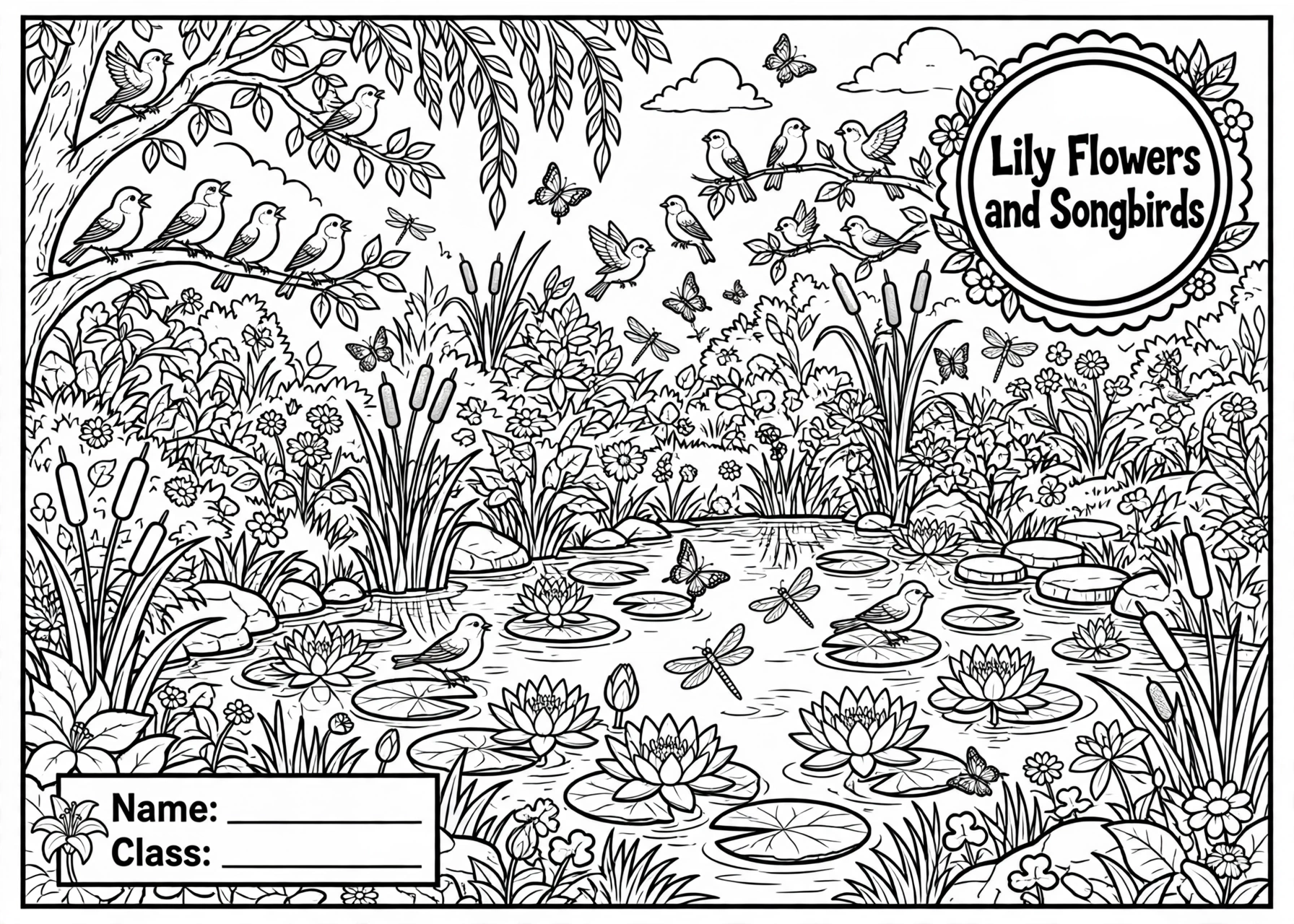
Making the Coloring Activity More Engaging at Home or School
Lily Flowers and Songbirds Coloring Pages can be used during quiet creative time at home or as part of a classroom activity about plants and wildlife. Before starting, adults can invite children to identify the main subjects in the illustration and decide which colors they want to use.
For younger children, it may be helpful to begin with the larger flower petals and bird bodies. Smaller details, such as feathers, beaks, and flower centers, can be completed afterward. Older children may enjoy adding shading or experimenting with different color combinations.
A simple extension activity is to let children create a name for their imaginary garden. They can describe which flowers grow there, what kinds of birds visit, and what the garden might sound like in the morning. If they enjoy drawing, they can add a small butterfly, a garden path, or another plant on a separate sheet of paper.
Teachers can also use the finished artwork for a nature-themed classroom display. Each child can share one interesting detail about their chosen flower or bird. This creates an opportunity for conversation while allowing everyone to appreciate the different artistic approaches.
Families who enjoy outdoor-inspired creative activities can also discover children playing in the countryside. It offers another way to explore natural surroundings through children’s printable artwork.
Preparing and Printing the Artwork
Before printing, parents and teachers should check the available file and review the print preview. Make sure the selected paper size matches the printer settings and that the illustration is positioned properly within the printable area. Checking the margins beforehand can help prevent important parts of the design from being cut off.
A clean sheet of paper and a comfortable working surface are usually enough to get started. If children plan to use markers, thicker paper may be helpful to reduce ink showing through the other side. Keeping a few colored pencils or crayons nearby also gives them more flexibility when working on smaller details.
Once the artwork is complete, children can display it alongside other nature-inspired creations. A collection of colorful lilies and imaginative songbirds can bring a little garden atmosphere to a bedroom, reading corner, or classroom.
With their combination of graceful flowers and lively birds, these coloring pages offer a lovely opportunity to explore nature through art. Children can experiment with realistic shades, invent colorful garden scenes, and enjoy the small details that make flowers and songbirds interesting subjects for creative activities.
