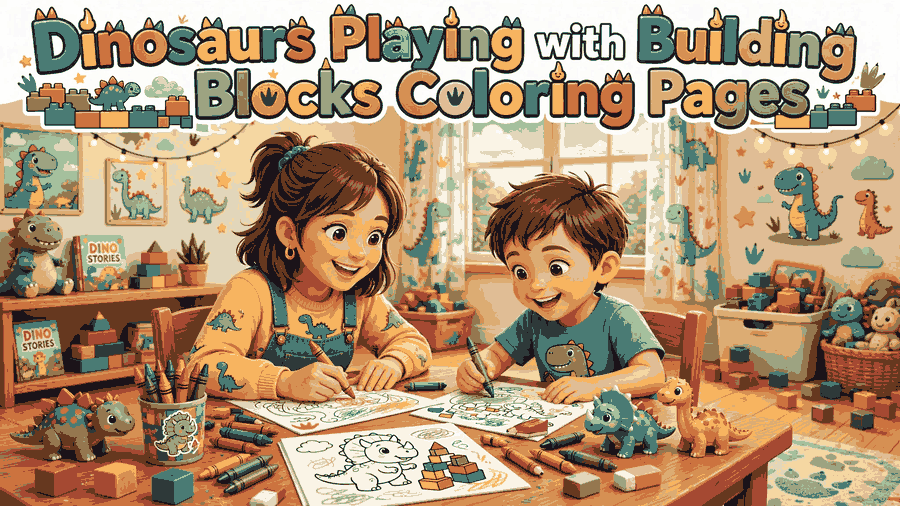
Dinosaurs stacking colorful blocks, building little towers, and creating imaginative structures bring a playful twist to traditional dinosaur artwork. Dinosaurs Playing with Building Blocks Coloring Pages combine the excitement of prehistoric creatures with the familiar fun of construction toys, giving children a picture they can personalize in countless ways. From chunky building bricks to tiny dinosaur arms reaching for the next piece, this theme offers interesting shapes, patterns, and details to explore with crayons or colored pencils. Parents, teachers, and caregivers can use these coloring activities during quiet time, classroom art sessions, or dinosaur-themed play days. Children can choose realistic dinosaur colors or invent bright characters with unusual patterns and colorful spikes. They can also imagine what their dinosaurs are building, whether it is a tall tower, a pretend castle, or a cozy little dinosaur home. This combination of dinosaurs and building blocks makes coloring more than a simple art activity; it provides a starting point for storytelling, playful design ideas, and creative exploration.
When Dinosaurs Meet Building Blocks
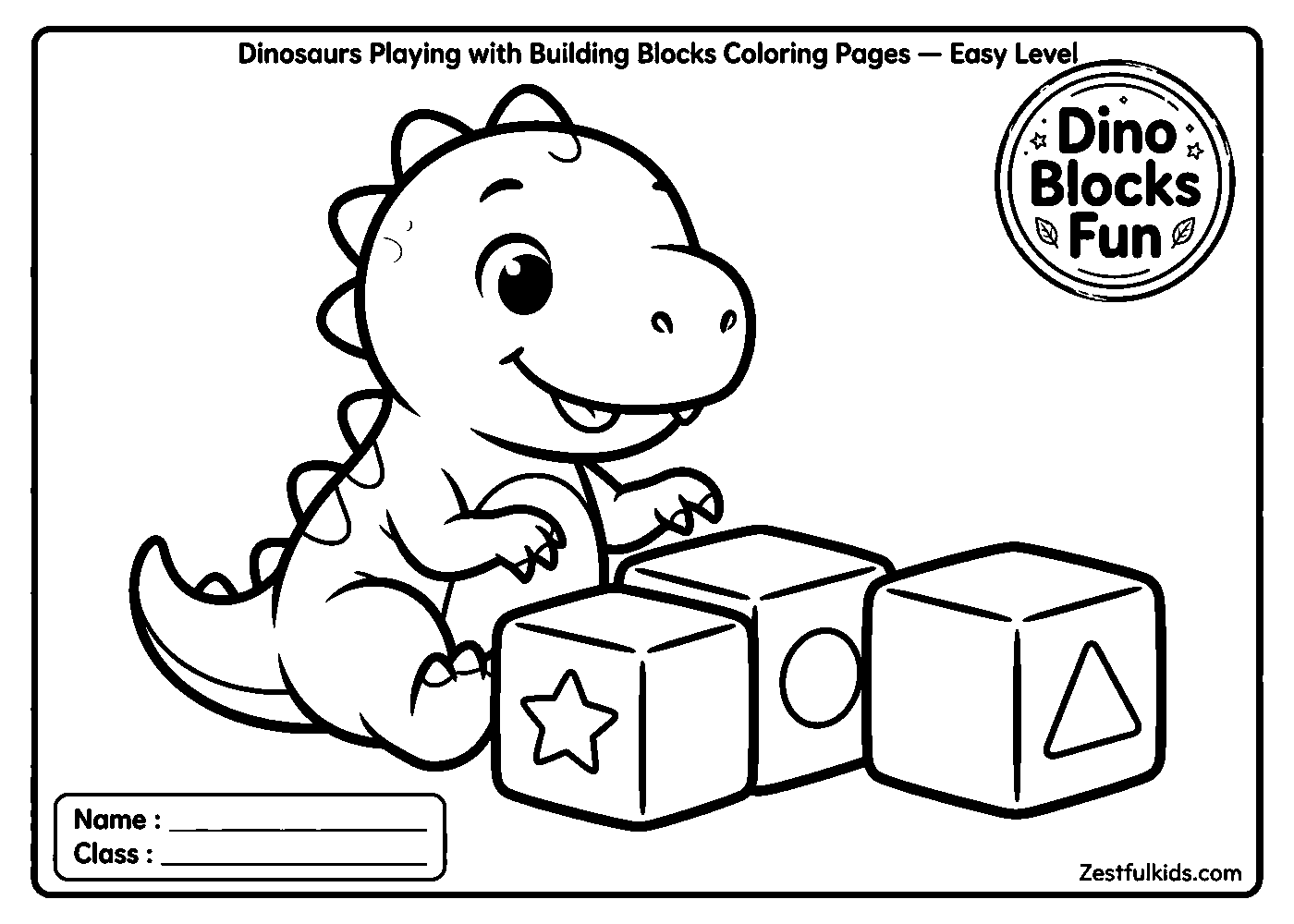
Dinosaurs and building blocks make an engaging combination because both subjects invite children to imagine different possibilities. Dinosaurs have recognizable features such as long tails, strong legs, rounded bodies, horns, or back plates, depending on the type represented in an illustration. Building blocks introduce a contrasting collection of straight edges, rectangular shapes, and repeating patterns. When these elements appear together, children can move between coloring organic shapes and filling clearly defined geometric spaces.
The contrast also creates several opportunities for interesting color choices. A dinosaur might have green skin and orange spikes, while the blocks beside it feature alternating red, blue, yellow, and purple sections. Children who prefer a more natural appearance can use earthy greens, browns, and muted shades instead. Neither approach needs to follow a strict rule, especially when the picture is designed for imaginative coloring.
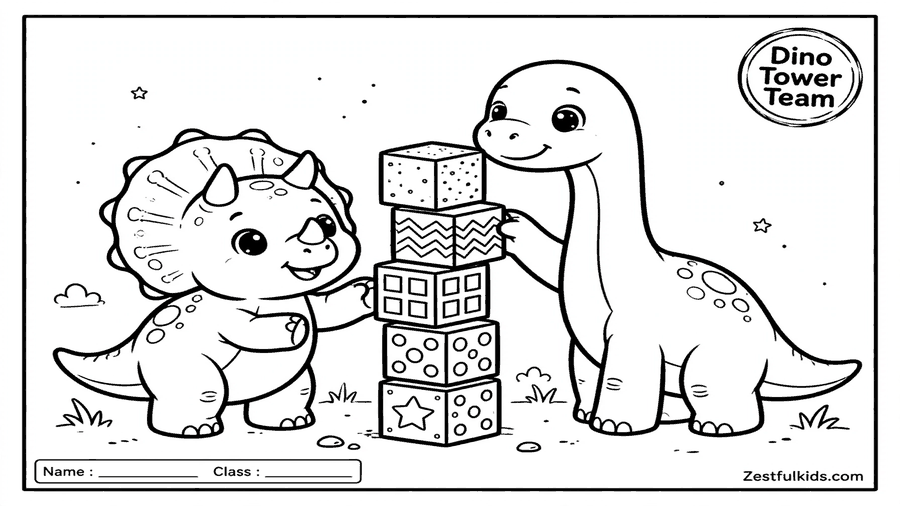
Building blocks can also become part of the scene’s story. Perhaps a small dinosaur is making a tower taller than its own head, or a friendly dinosaur is helping a companion build a bridge. These are optional ideas children can invent while coloring rather than details that must appear in every illustration. Giving the scene a simple purpose can help children decide which colors and extra details they want to add.
Color the Dinosaurs, One Detail at a Time
A dinosaur’s body often contains several distinct areas, so children can approach the picture in manageable sections. They might begin with the main body, then move to the tail, legs, face, and any visible spikes or plates. This approach is particularly useful when the dinosaur has a large outline with smaller details around its head or feet. Children who enjoy experimenting can use two or three shades to create a pattern along the back or tail.
There is no single correct color for a playful dinosaur illustration. Green is a familiar choice, but blue, purple, orange, and pink can work just as well for imaginary creatures. Children might even give each dinosaur a different color scheme if more than one appears in the picture. Spots, stripes, or small patches can be added where the illustration leaves enough open space.
The building blocks offer a different coloring challenge. Their flat surfaces are suitable for solid colors, alternating patterns, or simple repeating sequences. A child could color every second block yellow, for example, or use three colors in a repeating order. If the blocks have visible outlines separating their sections, keeping the colors within those boundaries can help the finished structure remain easy to recognize.
Turn the Blocks into a Color Pattern Challenge
Building blocks provide a natural way to introduce simple visual patterns without making the activity feel like a formal lesson. After choosing colors for the dinosaur, children can decide how to color the blocks beside it. They might repeat red, blue, and green across a row or alternate between two favorite shades. If the illustration includes a tower, they can give each layer a different color combination.
Parents and teachers can make this activity more interactive by inviting children to describe their pattern. Ask them which color comes next or whether they can create a second row using the same sequence. Children can also invent their own pattern and explain how they decided to arrange the colors. These small challenges are optional, and children who simply want to color freely should be encouraged to do so.
For an additional creative step, provide a blank sheet of paper and invite children to draw their own building-block structure beside the finished dinosaur. They could create a staircase, a tiny house, or a tower with a wide base and a narrow top. The new drawing does not need to be complicated; even a few rectangles can become part of an imaginative construction project.
Create a Story Around the Dinosaur’s Construction Project
A dinosaur working with building blocks can inspire a story that develops as the picture takes shape. One child might imagine a small dinosaur building a playground for its friends, while another may picture a giant tower that reaches the clouds. The colors and shapes in the illustration can help children decide what kind of structure they want to describe. Adults can encourage the story by asking what the dinosaur is making, who will use it, and what might happen when the building is finished.
For children who enjoy learning unusual dinosaur facts, this creative activity can also connect with real prehistoric animals. Different dinosaur species had different body shapes, sizes, and feeding habits. Some, such as Triceratops, had prominent horns and a broad frill, while others had long necks or sharp teeth. Children can explore another playful dinosaur-themed activity featuring the unusual teeth of a dinosaur through these dinosaur illustrations with 500 teeth, then compare the creature’s appearance with the dinosaur in their building-block picture.
The important distinction is that the construction scene belongs to imaginative play, while information about real dinosaurs comes from paleontology. Children can enjoy both ideas without needing to treat a fictional building adventure as a realistic picture of prehistoric life.
Choosing Materials for a Better Coloring Experience
The best coloring materials depend on the amount of detail in the illustration and the child’s preferences. Crayons are useful for filling large dinosaur bodies and broad block surfaces, while colored pencils offer more control around facial features, claws, and narrow spaces between building pieces. Washable markers can produce vivid colors and clear patterns, although testing them on spare paper first is helpful because some markers may show through thin sheets.
Before printing, check the document’s print preview to ensure that the drawing fits within the selected page layout. Follow any paper-size or orientation information provided with the particular file, and review the margins if part of the illustration appears cropped. A flat work surface and a small selection of coloring tools can make it easier for children to move between the dinosaur and the blocks without constantly searching for materials.
There is no need to finish the whole picture in one sitting. Some children may want to color the dinosaur first and return to the building blocks later, while others may alternate between the two parts. Letting children choose their own order keeps the experience flexible and gives them room to make independent artistic decisions.
Combine Dinosaur Art with Other Creative Designs
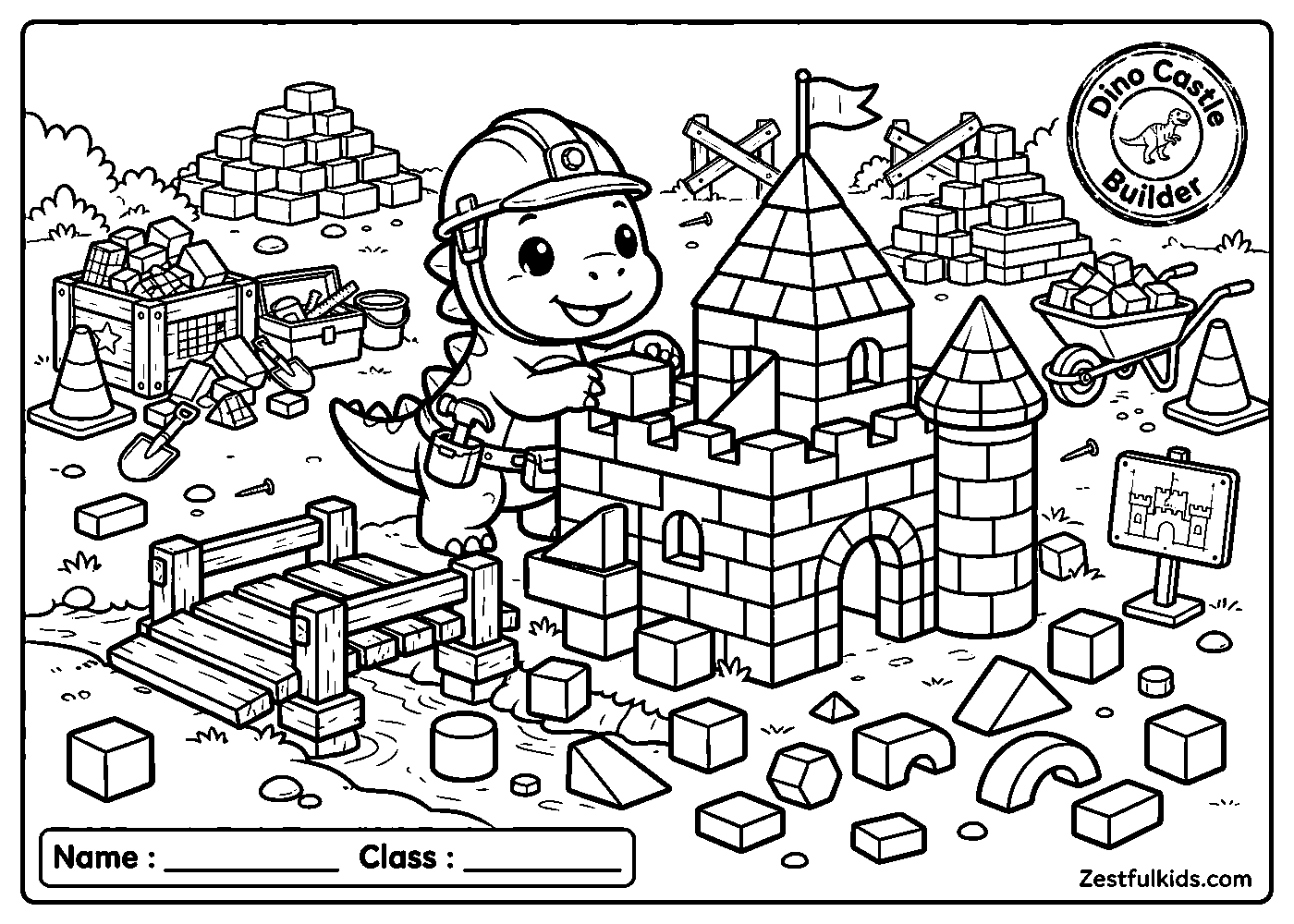
Once the picture is finished, children can extend the activity by drawing a second dinosaur or creating a background for the construction scene. They might add a pretend building site, a pathway made from blocks, or a small garden around the structure. If the original illustration does not include these details, they can draw them separately or add them in any open space that suits the composition.
Children who enjoy detailed patterns can also explore a different artistic style with these animal mandala designs. The repeating shapes and decorative arrangements offer a contrast to the straight edges of building blocks and the distinctive outlines of dinosaurs. Moving between the two styles gives children the chance to experiment with both bold, simple color areas and more intricate patterns.
Dinosaurs Playing with Building Blocks Coloring Pages offer a flexible creative activity built around two familiar sources of childhood imagination. Children can explore dinosaur features, experiment with repeating block colors, and invent stories about the structures their prehistoric characters are making. Whether they prefer realistic shades or a bright fantasy world, they can turn the illustration into a personal artwork that reflects their own ideas.

