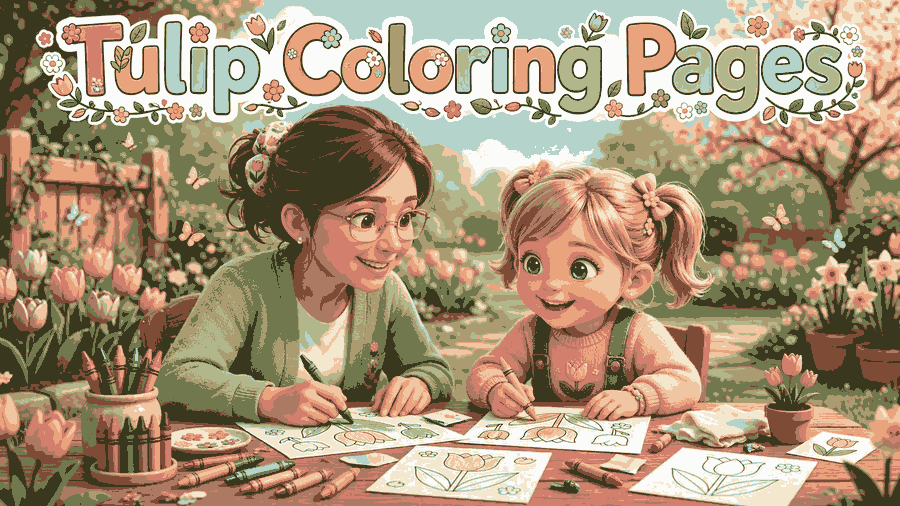
Tulip Coloring Pages invite children to explore the simple beauty of one of the most recognizable spring flowers. With their cup-shaped blooms, smooth petals, and long green stems, tulips offer interesting shapes that are easy to recognize and enjoyable to color. Their flowers naturally appear in a wide range of colors, including red, yellow, pink, purple, orange, and white, giving young artists plenty of inspiration for their own designs. These printable coloring activities can be enjoyed at home, used during classroom art sessions, or included in a spring-themed creative project. Parents and teachers can introduce children to the different parts of a tulip while allowing them to experiment with color combinations and background details. Tulip Coloring Pages are also a lovely starting point for conversations about gardens, seasonal flowers, and the ways plants grow. Whether children prefer realistic flower colors or imaginative rainbow petals, each picture offers an opportunity to create a personal piece of floral artwork.
What Makes Tulips Interesting to Color?
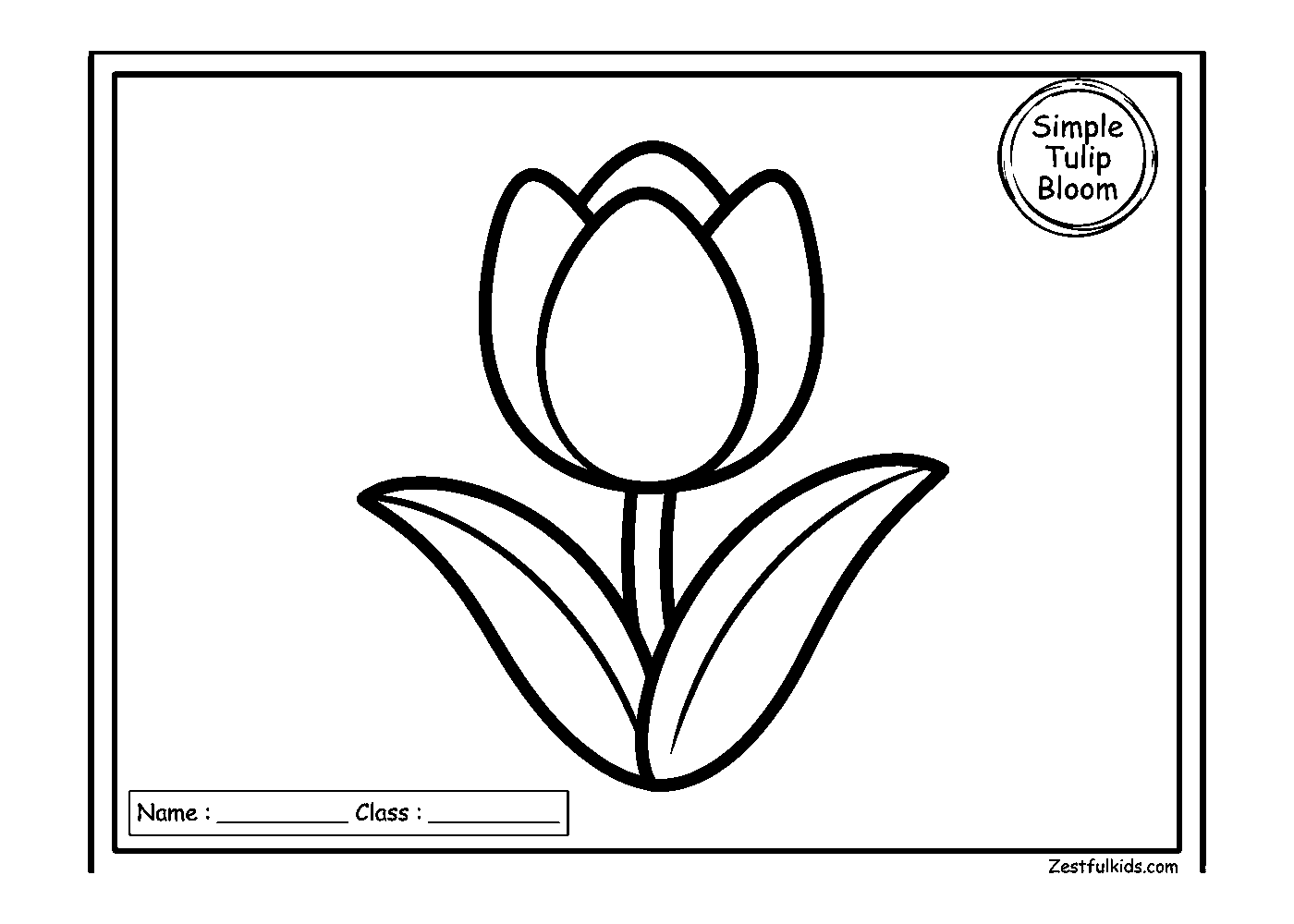
Tulips have a distinctive shape that makes them different from many other garden flowers. Their petals often form a rounded cup or a slightly pointed shape at the top, while the stem grows upright beneath the bloom. Long, curved leaves extend from the lower part of the plant, creating a contrast with the flower’s compact shape. These features give children several areas to explore without requiring complicated coloring techniques.
The shape of a tulip also encourages attention to small visual differences. One flower may have smooth, rounded petals, while another may have pointed edges or a more open bloom. When coloring an illustration, children can notice how these details change the flower’s appearance. They can keep the petals one solid color or use two related shades to suggest gentle variations across the bloom.
Leaves and stems provide another opportunity to balance the picture. Rather than coloring every part with the same green, children can try light green for younger-looking leaves and darker green for areas they want to emphasize. A few carefully chosen shades can make a flower stand out without making the overall design feel too busy.
Choosing Colors for a Bright Floral Picture
Tulips are known for their variety of colors, so children do not need to follow a single color scheme. A traditional red tulip with green leaves is a familiar choice, while yellow and orange flowers can create a cheerful garden scene. Pink and purple petals offer a softer appearance, and white tulips can be outlined with pale gray or light blue to make their shapes visible against a light background.
For a more creative approach, encourage children to select a small group of colors before they begin. They might choose warm colors such as red, orange, and yellow, or combine cool shades such as blue, purple, and green in an imaginative design. Although blue tulips are not a common natural garden variety, using blue or turquoise in a coloring picture is perfectly suitable when the goal is artistic exploration.
Children can also experiment with simple shading. A darker shade near the base of a petal and a lighter shade toward its outer edge can suggest depth. Colored pencils are particularly useful for blending two shades, while crayons work well for filling larger petals and leaves. Markers can create bold, clear colors, but testing them on spare paper first helps children see how the ink looks and whether it might bleed through the page.
Create a Garden Around the Tulips
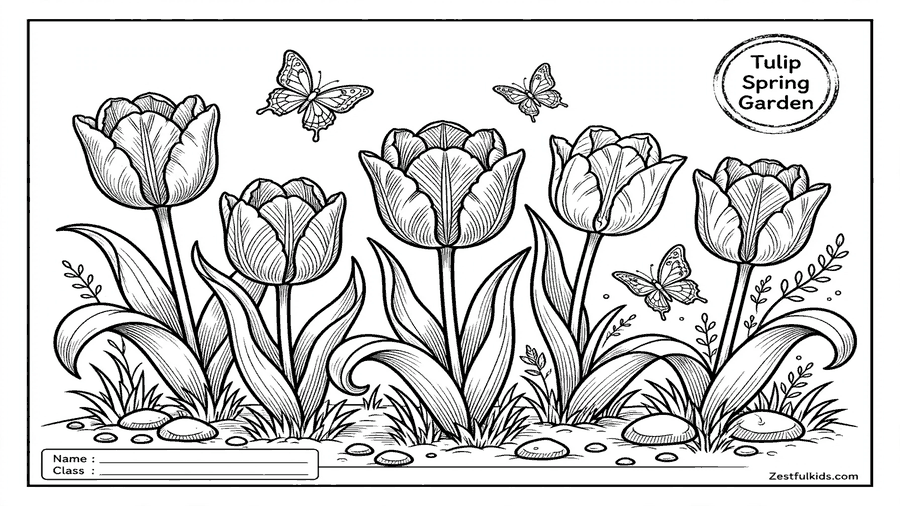
A flower does not always need to appear alone. If the illustration includes open space, children can imagine a garden around the tulips by adding grass, small stones, butterflies, or a bright sky. These extra details can help turn a simple flower drawing into a larger scene, although the original picture can also be left uncluttered for a clean, colorful result.
For a natural-looking garden, use different shades of green for the grass and leaves. Brown can represent soil, while light blue provides a simple sky background. Children who want a more decorative style might add colorful dots around the flowers or draw a patterned border along the edges of the picture. The important thing is to make sure additional details complement the tulips instead of hiding their distinctive shapes.
Families can extend this idea by creating a paper garden with several individually colored flowers. Each child can choose a different tulip color, then arrange the finished pictures together on a classroom display or at home. If the activity becomes part of a broader nature theme, a picture of a rice field can introduce another kind of landscape and provide a useful contrast between cultivated flowers and crops grown for food.
Learn About Tulips While Coloring
Tulips are flowering plants that grow from bulbs. In many regions, they bloom during spring, although the exact timing depends on the climate and growing conditions. Their familiar association with spring makes them a natural subject for seasonal art activities, especially when children are learning about changes in gardens and the outdoors.
During a coloring session, adults can explain the basic parts of a tulip, including its flower, stem, leaves, and bulb. Children can identify the visible parts in an illustration and discuss what a plant needs to grow. Sunlight, water, suitable soil, and the right growing conditions all play a role in plant growth. These simple connections make the artwork relevant to nature without turning a relaxing activity into a formal lesson.
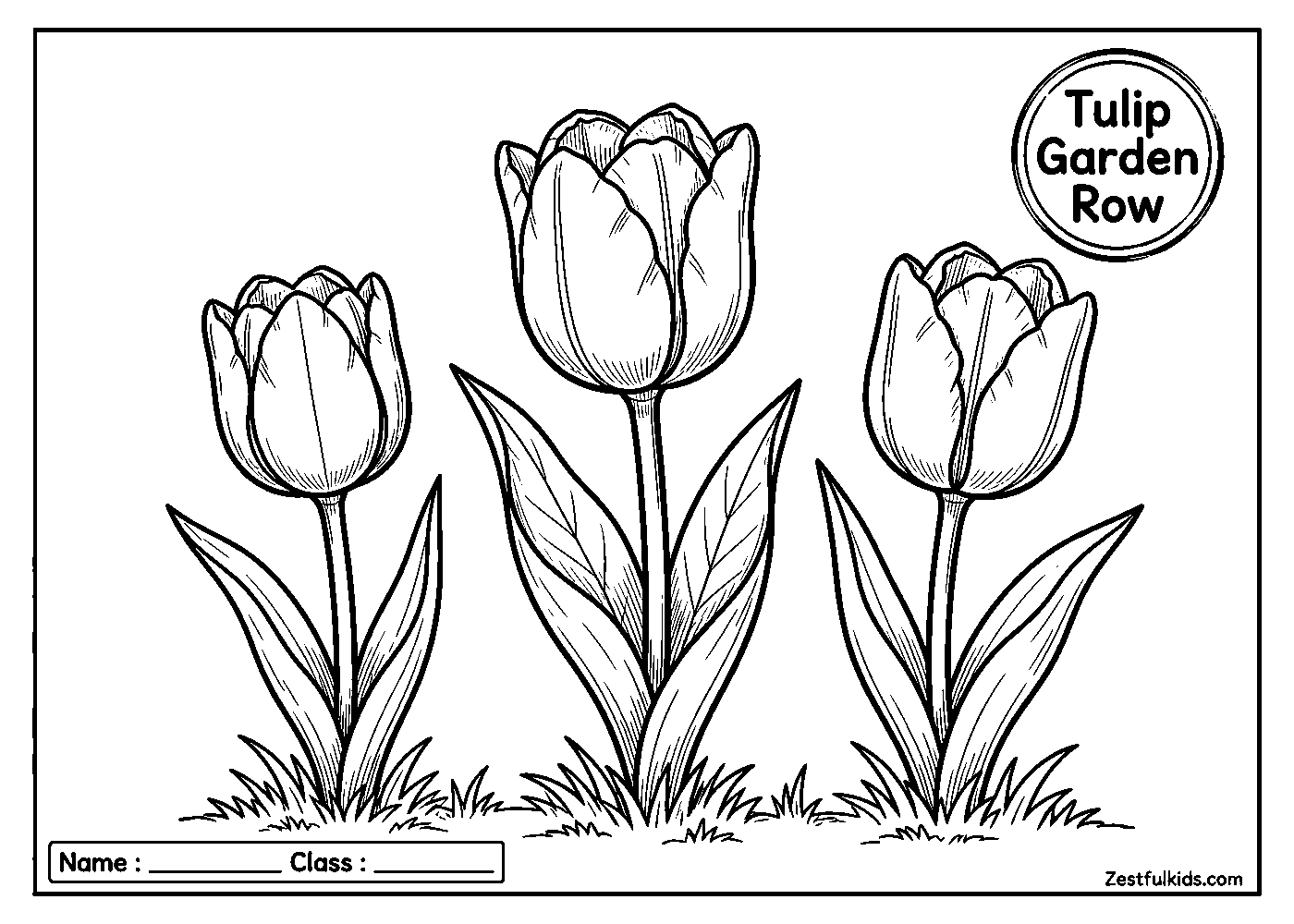
Another useful idea is to compare several tulip pictures and ask children to describe what looks different. They might notice petal shapes, the direction of the leaves, or the number of flowers in each design. If a child enjoys drawing, they can add a second flower with a different shape or create a small garden showing tulips at different stages of growth. Such additions allow the activity to develop naturally according to each child’s interests.
Simple Tips for Printing and Coloring
Before printing a tulip illustration, check the print preview to make sure the flower’s outlines are visible and the picture fits within the selected page layout. Use the paper size and orientation recommended by the particular file, if those specifications are provided. If the image looks cropped, review the scaling and margin settings before printing. Clear outlines are especially helpful when children want to color individual petals without crossing into nearby leaves or stems.
Choose coloring tools according to the amount of detail in the design. Crayons are convenient for broad areas, colored pencils provide greater control around narrow stems and petal edges, and markers create stronger blocks of color. A sheet of scrap paper can be useful for testing color combinations before applying them to the main illustration. For younger children, placing the materials within easy reach and providing enough space to spread out the page can make the session more comfortable.
There is no need to insist that every tulip look realistic. Some children may enjoy carefully matching natural flower colors, while others may prefer unusual patterns and imaginative backgrounds. Let them decide whether to color the leaves first, begin with the petals, or plan the entire picture before starting. This freedom makes the finished artwork more personal and allows children with different artistic preferences to enjoy the same activity.
Extend the Fun with a Flower-Themed Art Project
Tulip coloring can become part of a larger collection of nature-inspired artwork. After finishing the picture, children might draw a flowerpot, design a garden sign, or create a greeting card featuring their favorite tulip colors. They can also give their flower a name and write a short description of the garden where it grows. For children who prefer visual storytelling, a simple drawing of a garden path or a sunny afternoon can provide a setting for their finished flower.
A mixed-theme art collection can make the experience even more interesting. Children might place their tulip picture alongside illustrations of landscapes, insects, or animals and invent a story connecting the different scenes. For a playful change of subject, they can explore these cute dinosaur illustrations and imagine a friendly dinosaur wandering through a garden filled with colorful flowers.
With their recognizable petals, graceful stems, and wide range of possible colors, Tulip Coloring Pages provide a versatile activity for children who enjoy flowers and creative projects. From simple red blooms to imaginative gardens filled with unusual color combinations, each picture can reflect a child’s individual ideas. A few coloring tools, a suitable workspace, and the freedom to experiment are all useful starting points for a rewarding floral art session.

