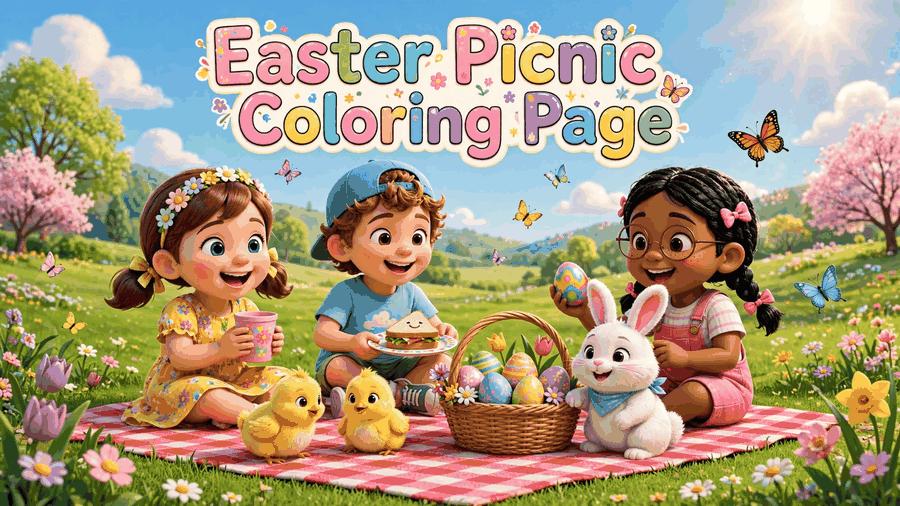
Easter Picnic Coloring Page brings the cheerful spirit of spring to children’s creative activities. With picnic-inspired coloring ideas, Easter traditions, and seasonal details, children can enjoy a relaxing artistic experience while imagining a lovely outdoor celebration.
Discover the Charm of an Easter Picnic
Easter is often associated with colorful eggs, spring flowers, cheerful decorations, and special moments spent with family. A picnic adds another enjoyable element to the celebration, bringing the idea of outdoor fun into a creative activity. Children can imagine a peaceful afternoon surrounded by nature, enjoying delicious treats and celebrating the season with their loved ones.
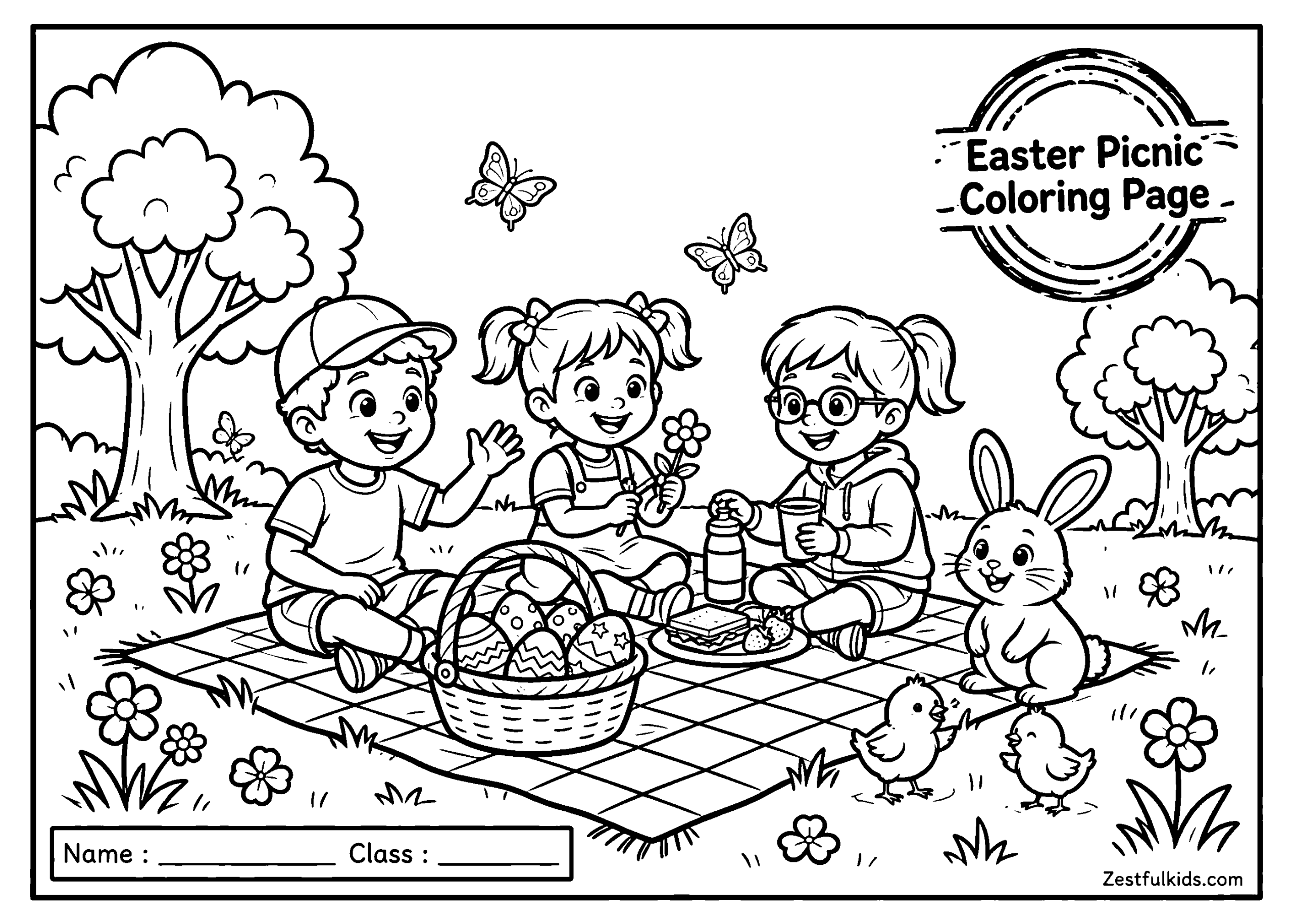
An Easter picnic coloring activity combines two familiar themes in a way that encourages imagination. The Easter celebration introduces seasonal symbols, while the picnic setting offers plenty of possibilities for creative color choices. Children can picture a blanket spread across the grass, a basket filled with treats, or a collection of decorated eggs waiting to be discovered.
The theme also works well for families who want to introduce Easter traditions through simple art activities. Rather than focusing only on holiday decorations, children can explore the atmosphere of a springtime gathering and create their own interpretation of a memorable picnic.
What Makes Easter Picnic Coloring Page Interesting?
One appealing feature of this theme is the variety of objects that can be represented through coloring. Easter eggs, picnic baskets, flowers, food, and outdoor scenery all provide different shapes and details for children to explore. Each element offers an opportunity to experiment with colors without requiring a complicated coloring technique.
Easter eggs can become the most eye-catching part of an imaginary picnic. Children may decorate them with stripes, dots, zigzags, tiny flowers, or other simple patterns. Pastel shades such as pink, yellow, lavender, mint green, and light blue can create a traditional springtime appearance, although brighter combinations are equally welcome.
Picnic accessories provide another interesting coloring opportunity. A basket might be decorated in warm brown shades, while a picnic blanket could feature alternating squares or colorful stripes. If the illustration includes food, children can use familiar colors to make sandwiches, fruit, cakes, and other picnic treats look inviting.
The surrounding environment can complete the scene. Green grass, blooming flowers, leafy trees, and a clear blue sky are possible choices for an outdoor setting. Children can also invent their own background details when the illustration leaves enough open space.
Choosing Colors for Eggs, Baskets, and Spring Scenery
A little planning can make the coloring experience more enjoyable. Before starting, children can look at the different objects in the illustration and decide which colors might work together. They do not need to follow a strict color scheme because the purpose is to create a picture that reflects their own imagination.
For Easter eggs, pastel combinations are a popular choice. A single egg might have a yellow base with pink circles, while another could feature blue stripes and small purple decorations. Using different patterns helps make each egg look distinctive, even when similar colors appear throughout the picture.
Picnic baskets can be colored with shades of light or dark brown to suggest woven material. A red, blue, or yellow picnic blanket can create contrast against the green grass. If flowers are included, children can experiment with different petal colors instead of making every flower look identical.
Colored pencils are useful for small decorative patterns and areas that require careful control. Crayons work well for larger spaces such as blankets, baskets, and outdoor backgrounds. Washable markers can also be considered, particularly when using suitable paper that prevents excessive ink from showing through.
Turning an Easter Picnic into a Creative Activity
Coloring does not have to end when the last section of the illustration is filled. Parents and teachers can use the Easter picnic theme as a starting point for simple activities that encourage children to express their ideas.
One enjoyable option is to invite children to imagine what they would bring to an Easter picnic. They might choose fruit, sandwiches, homemade cookies, drinks, or decorated eggs. After discussing their choices, they can add small details to the picture if there is enough blank space or draw additional picnic items on a separate sheet of paper.
Another activity is creating an Easter egg pattern challenge. Children can think of three different designs using simple shapes such as circles, triangles, waves, and lines. They can then use those patterns to decorate the eggs in their illustration or create their own egg designs separately.
Families can also connect the coloring activity with a real outdoor experience. During a family picnic, children can observe the colors of flowers, trees, grass, and other natural surroundings. These observations may give them new ideas when choosing colors for their Easter-themed artwork.
For children who enjoy exploring different settings, a visit to police helicopter illustrations can introduce a completely different subject. The contrast between an outdoor celebration and an exciting flying vehicle offers another way to keep creative activities varied.
A Seasonal Coloring Choice for Home and Classroom
Easter Picnic Coloring Page can be included in a collection of seasonal activities for children. At home, parents may use it during a quiet afternoon, as part of an Easter preparation activity, or as entertainment when children gather with siblings and cousins. Teachers and caregivers can also introduce the theme during classroom art sessions or seasonal discussions.
For classroom use, the illustration can become a starting point for a short conversation about outdoor gatherings. Children can describe what they might see at a picnic, identify different foods, or talk about the weather they would enjoy during a spring outing. These simple discussions make the activity more interactive without turning it into a complicated lesson.
When selecting a printable, consider the amount of detail in the illustration. Children who prefer straightforward coloring may enjoy designs with larger shapes and fewer small decorations. Those who like spending more time on their artwork may prefer pictures with additional patterns, picnic accessories, or surrounding scenery.
It is also helpful to check the image on screen before printing. A print preview allows adults to see whether the illustration fits the selected paper and whether its details remain clear. Choosing paper that works with the intended coloring materials can make the finished artwork easier to handle and display.
For another nature-inspired activity, children can explore small waterfall scenes. Flowing water, rocks, plants, and natural surroundings offer a different visual experience from the cheerful atmosphere of an Easter picnic.
Displaying and Sharing Children’s Easter Artwork
Once the coloring is finished, children may enjoy showing their artwork to family members or classmates. Parents can create a small seasonal display at home using the completed pictures. In a classroom, several illustrations can be arranged together to create a cheerful Easter art corner.
Another idea is to let each child explain one detail they particularly enjoyed coloring. They might talk about an egg pattern, a picnic basket, or the colors they selected for the flowers. This gives children an opportunity to share their creative decisions and appreciate the different approaches used by others.
Every finished picture can look different, even when children work with the same theme. Some may prefer soft pastel shades, while others might choose bold colors and unusual combinations. There is no single correct way to color an Easter picnic scene.
With its combination of holiday symbols, picnic accessories, and springtime inspiration, Easter Picnic Coloring Page offers a pleasant creative activity for families, teachers, and caregivers. It brings the atmosphere of an outdoor celebration into a simple art experience where children can explore colors, invent little details, and enjoy making their own seasonal artwork.
