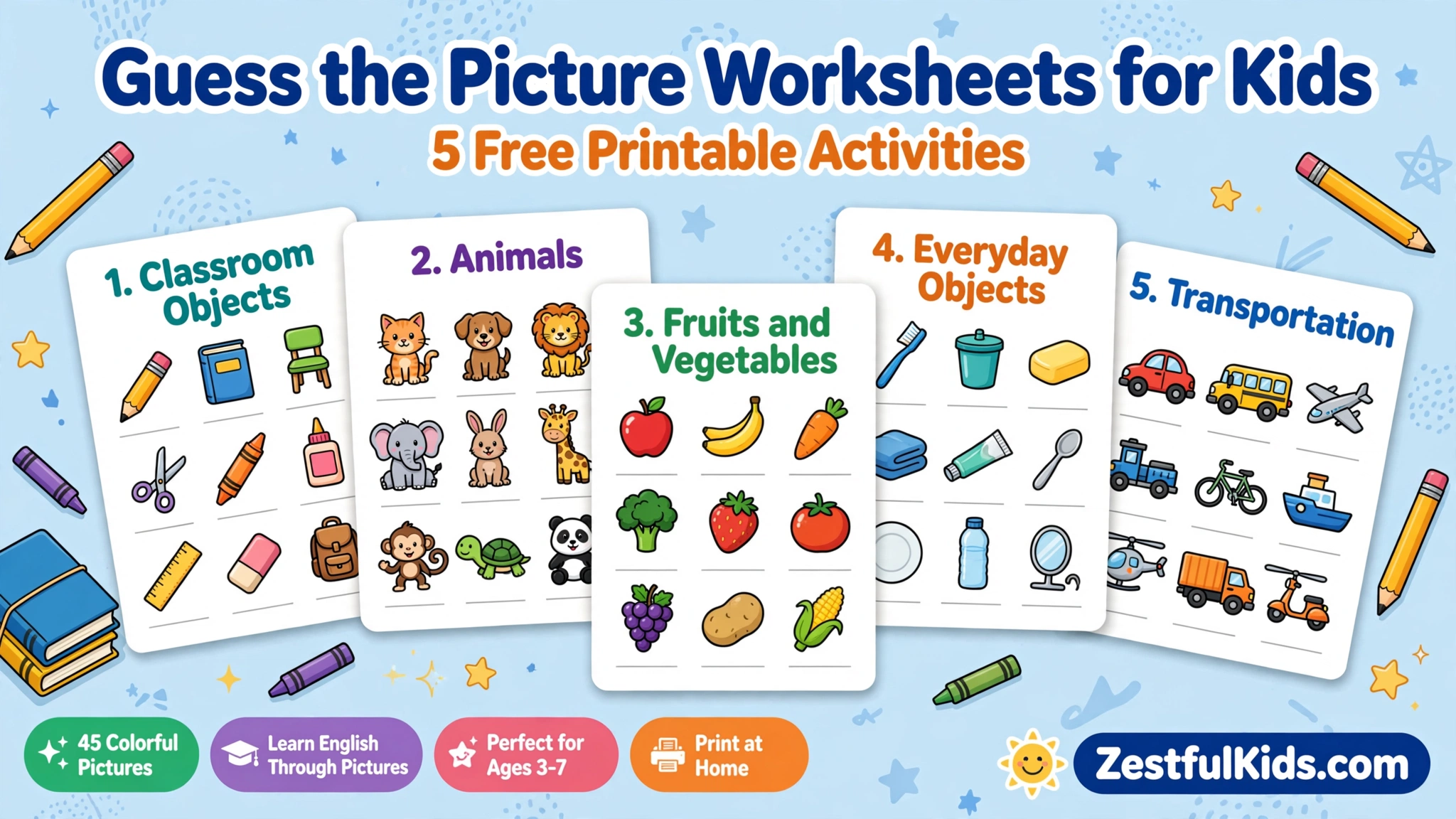
Guess the Picture Worksheets for Kids – 5 Free Printables – Looking for a fun and easy way to keep little learners engaged? These Guess the Picture Worksheets for Kids are a playful way to help children recognize everyday objects, learn new words, and practice writing while having fun! Whether you’re a parent, preschool teacher, or homeschooling family, these five free printables make learning feel a little more like playtime. With cute 3D-style pictures and simple answer boxes, kids can look at each picture, guess what it is, and write down their answers. The best part? You can print them at home and use them whenever your little learners need a fun activity!
What Are Guess the Picture Worksheets?
Guess the Picture worksheets are simple picture-based activities where children look at an image and try to identify the object. For example, a child might see a yellow fruit and guess “banana,” or spot a familiar animal and write “rabbit” in the answer box. It’s a small activity, but it gives children plenty of opportunities to practice important early learning skills. Because the activity feels like a little guessing game, children can enjoy learning without feeling like they’re doing another worksheet.
These worksheets help children develop several important skills:
- Vocabulary building: Discovering the names of animals, fruits, vehicles, and everyday objects.
- Observation skills: Looking closely at pictures and noticing their shapes, colors, and features.
- Early writing practice: Learning to write familiar words in a fun, low-pressure way.
- Thinking skills: Using visual clues to figure out what each picture represents.
- Confidence: Feeling proud when they guess the correct answer!
5 Free Guess the Picture Worksheets for Kids
Ready to start guessing? Explore these five printable worksheets, each featuring nine colorful 3D-style illustrations and blank answer boxes for little learners. Every worksheet introduces a different theme, making it easy to choose an activity that matches your child’s interests. From familiar animals to everyday household objects, each page offers a simple opportunity to practice observation, vocabulary, and early writing skills. Print your favorite theme and let the guessing fun begin!
1. Guess the Animals Worksheet
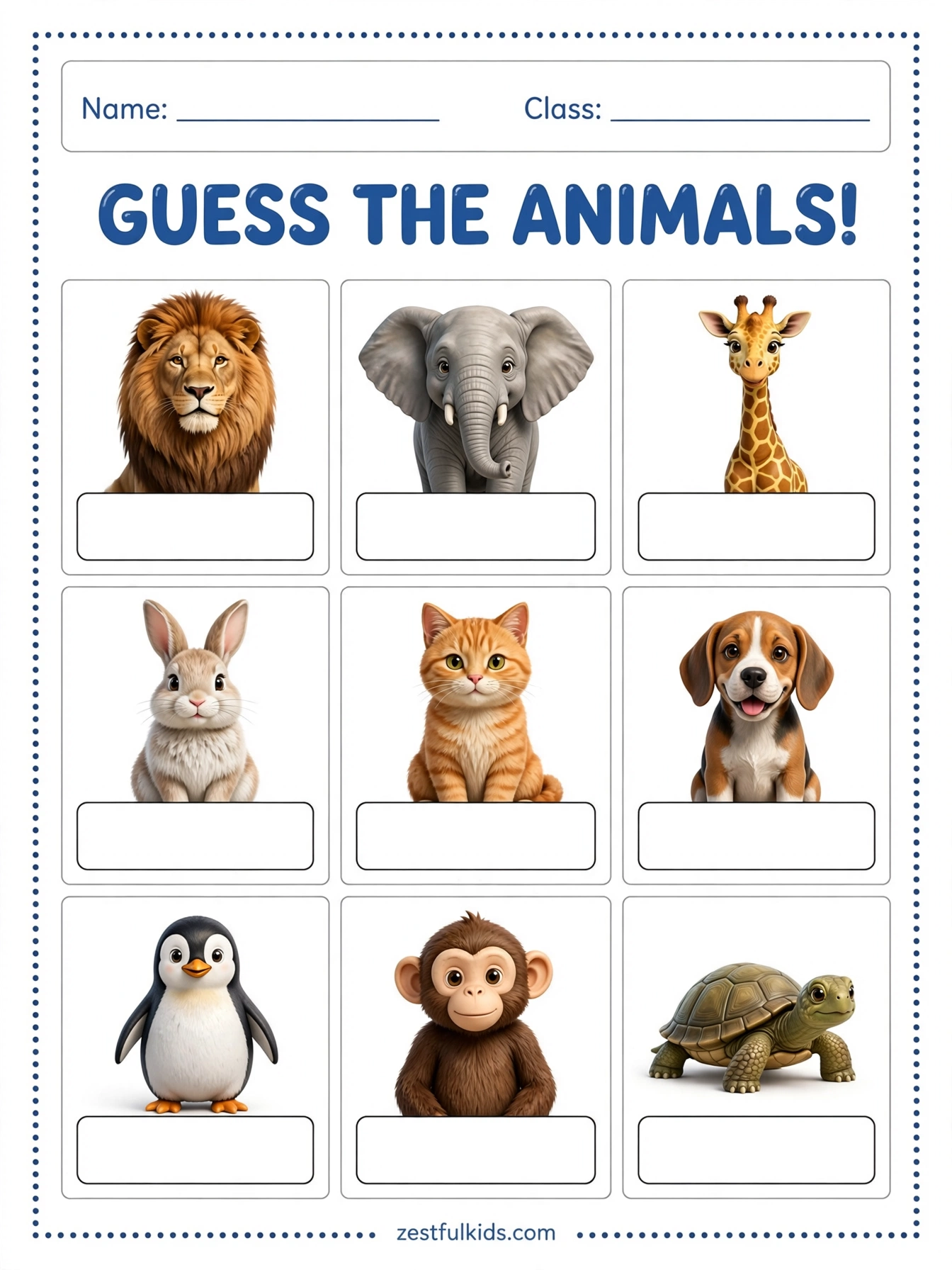
Lions, elephants, rabbits, and penguins—oh my! This animal-themed worksheet is a fun way for children to practice recognizing some of their favorite animals. Each picture gives kids a chance to look carefully, think about what they see, and write the animal’s name in the box below. It’s a simple activity that combines picture recognition with early spelling practice.
What kids can learn:
- Recognizing familiar animals.
- Practicing animal names and spelling.
- Connecting pictures with words.
- Building observation skills.
Fun idea: Make animal sounds together before revealing the answer. Can your little learner guess which animal is roaring, hopping, or waddling? You can also ask them to describe each animal’s color, size, or special features. These little conversations make the activity more interactive while encouraging children to express their ideas.
2. Guess the Fruits Worksheet
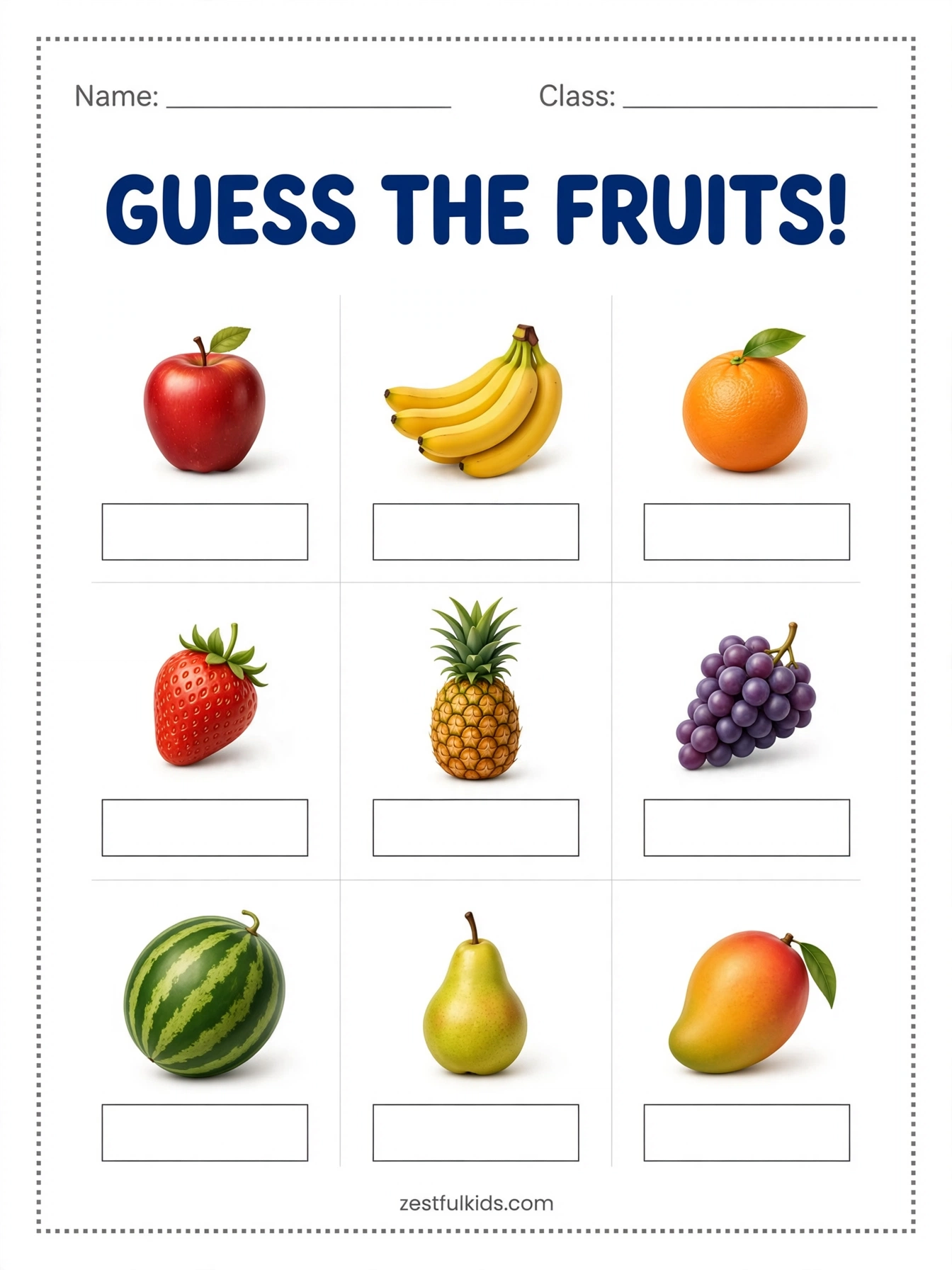
Apples, bananas, strawberries, and mangoes make this worksheet a colorful little adventure! Children can explore familiar fruits while practicing their vocabulary and early writing skills. The realistic 3D-style pictures make each fruit interesting to look at and easy to discuss. It’s a cheerful way to connect picture recognition with foods children may already know and enjoy.
What kids can learn:
- Identifying common fruits.
- Learning fruit names and spelling.
- Recognizing colors and shapes.
- Connecting everyday foods with their names.
Fun idea: After finishing the worksheet, ask your child to name three fruits they enjoy eating. If you have some fresh fruit at home, turn it into a little show-and-tell activity! Invite your child to compare the real fruit with the picture and describe its color, shape, or texture. This simple extension helps connect the printable activity with the world around them.
3. Guess the School Objects Worksheet
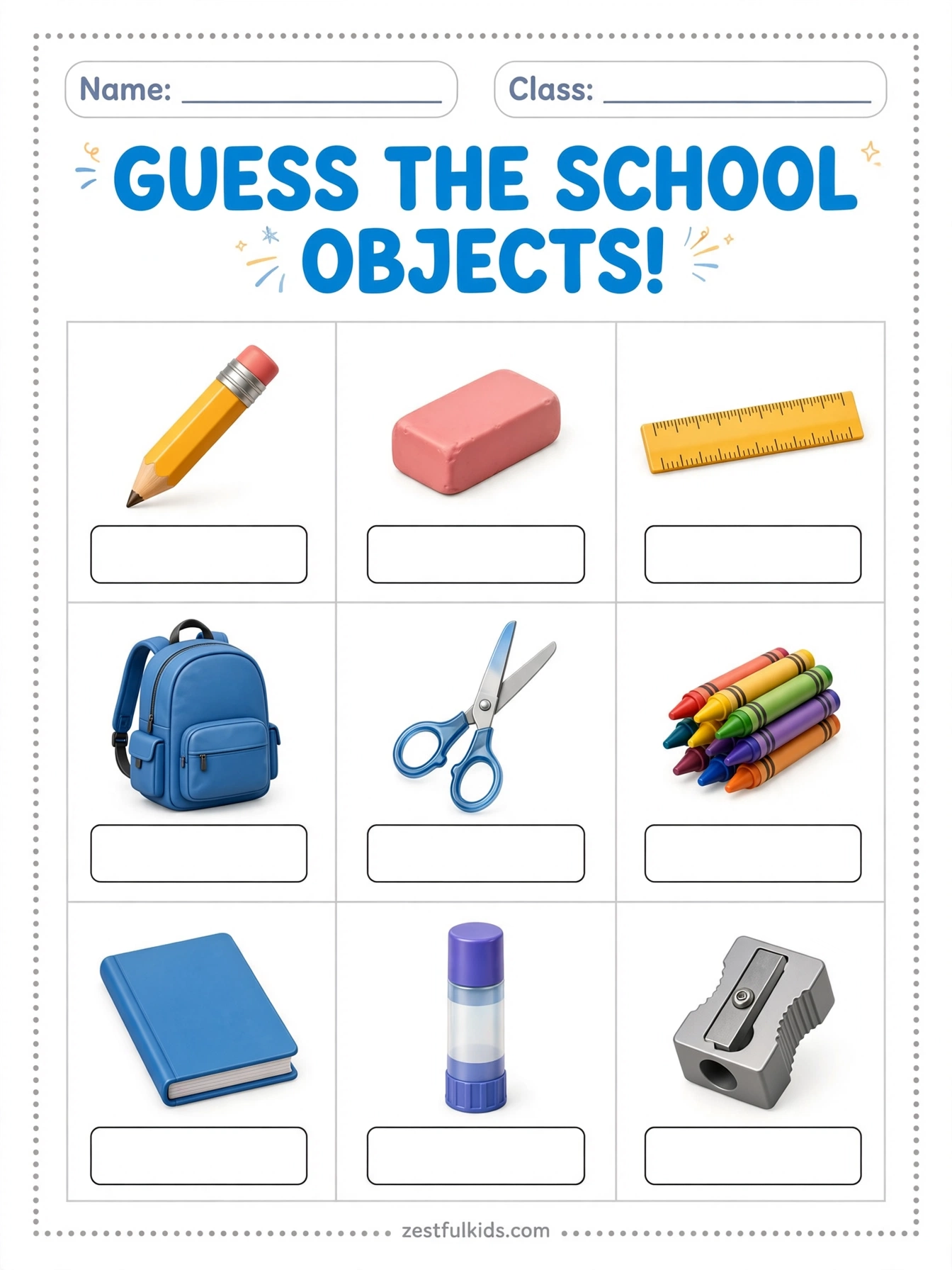
What’s hiding in your school bag? This worksheet features familiar classroom essentials, such as pencils, erasers, rulers, and notebooks. It’s a great choice for preschoolers and early elementary learners who are building their vocabulary and becoming more familiar with school supplies. Children can look at each illustration, identify the object, and practice writing its name in the blank box.
What kids can learn:
- Recognizing common classroom objects.
- Practicing everyday vocabulary.
- Learning to spell familiar words.
- Developing independence through simple activities.
Fun idea: Once your child finishes the worksheet, invite them to find three matching objects around the house or in their school bag. Ask them to explain what each object is used for and how it helps them learn. You can also encourage them to find an object that is a different color or shape from the pictures. Learning becomes even more exciting when pictures connect to real life!
4. Guess the Vehicles Worksheet
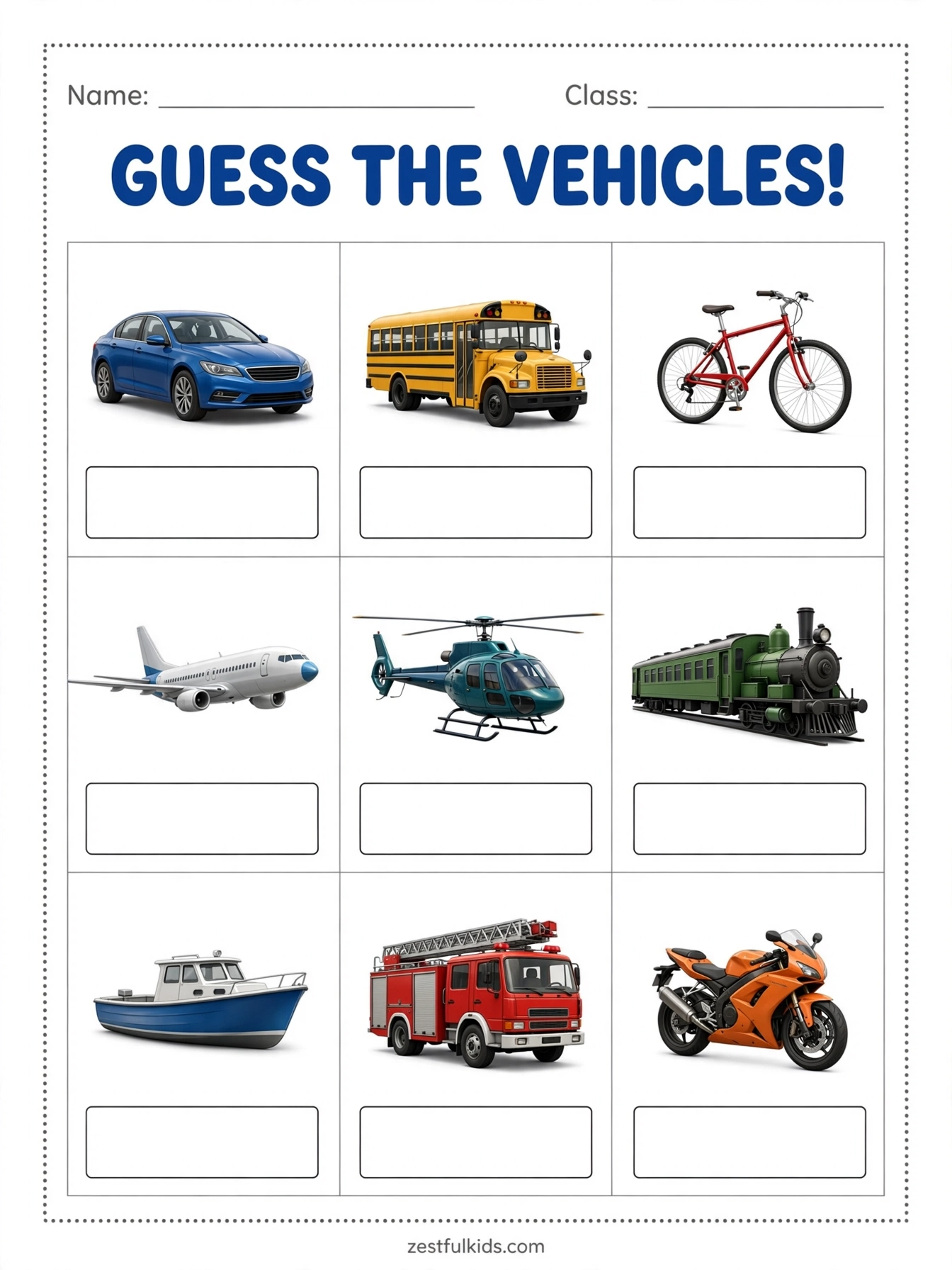
Beep beep! It’s time for a little transportation adventure. From cars and school buses to airplanes, trains, and boats, this worksheet invites children to identify different vehicles and practice writing their names. It’s especially fun for kids who love things that move, fly, or travel. The different vehicle shapes also give children plenty of opportunities to observe details and compare what they see.
What kids can learn:
- Identifying different types of transportation.
- Expanding vocabulary.
- Recognizing differences between vehicles.
- Practicing handwriting and spelling.
Fun idea: Ask your child where each vehicle travels. Does it move on the road, fly through the sky, or travel across the water? You can even imitate the sounds of their favorite vehicles and invite your child to guess which one you’re describing. This playful approach adds movement, conversation, and imagination to a simple worksheet activity.
5. Guess the Everyday Objects Worksheet
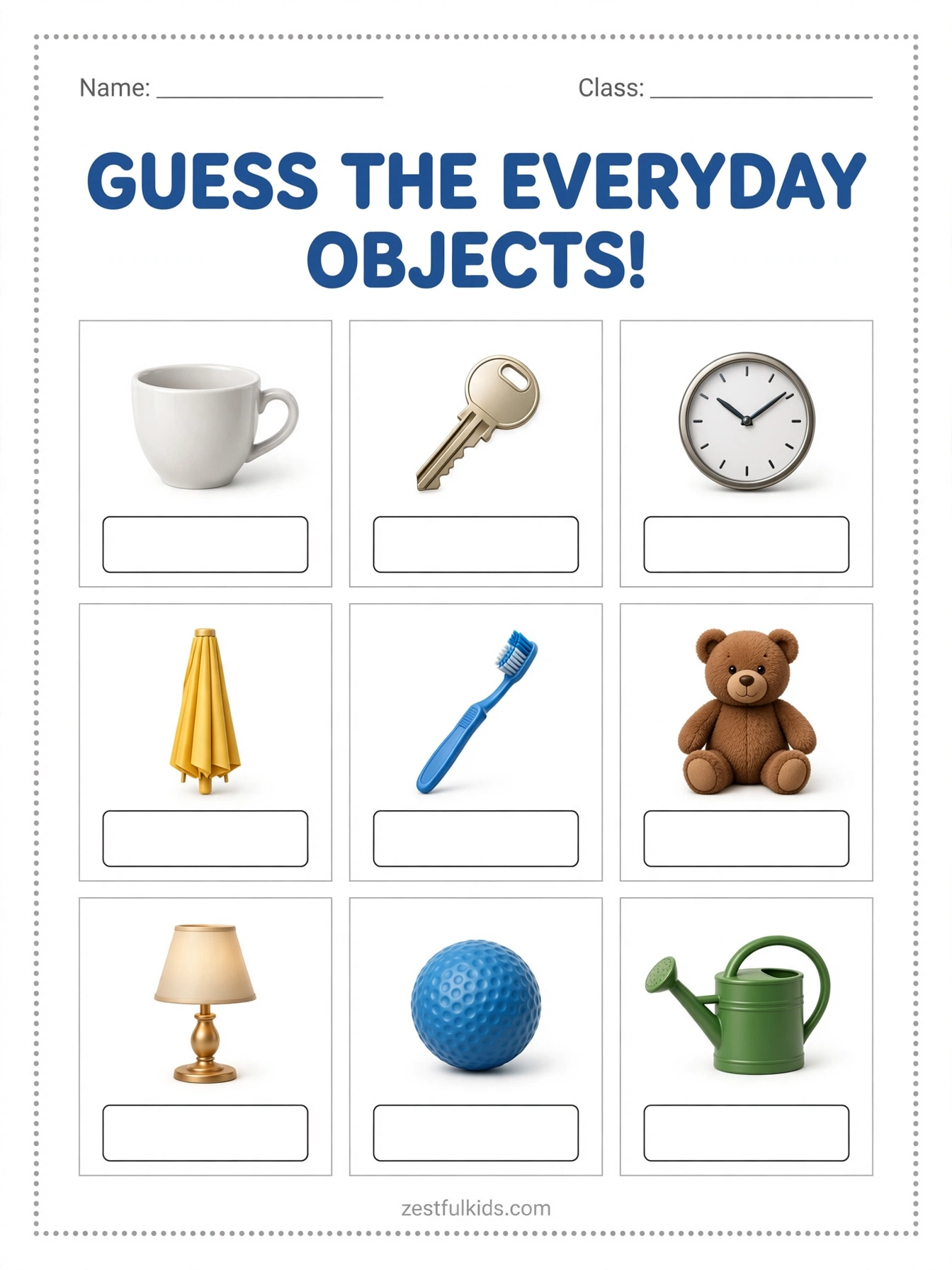
Sometimes, the most exciting things to learn about are the objects we see every day! This worksheet features familiar items such as cups, keys, clocks, umbrellas, and teddy bears. Children can practice recognizing these objects while discovering that learning opportunities are all around them. By identifying familiar items and writing their names, little learners can strengthen their vocabulary through an activity that feels simple and enjoyable.
What kids can learn:
- Identifying familiar household objects.
- Building practical everyday vocabulary.
- Improving visual recognition.
- Practicing independent thinking and writing.
Fun idea: Play a quick guessing game after the worksheet. Describe an object without saying its name and let your child guess what it is. For example, “You use me when it’s raining, and I help keep you dry.” Can they guess the umbrella? Take turns describing other household objects and see how many your child can identify from the clues.
How to Use These Free Printable Worksheets
You don’t need a complicated lesson plan to make these worksheets enjoyable. A few simple steps are enough to help children get started and feel comfortable with the activity. You can use them at home, in preschool, during homeschooling, or as a quick classroom warm-up. Keep the atmosphere relaxed and let your child enjoy discovering each picture at their own pace.
1. Print your favorite worksheet. Choose one of the five themes and print the page on A4 paper. Keep a few extra copies handy for repeat activities, especially if your child enjoys a particular theme. You can also print different worksheets throughout the week to introduce new vocabulary and keep learning fresh.
2. Look at each picture together. Give your child time to observe the image before asking for an answer. Try questions such as, “What do you think this is?” or “What clues can you see?” This encourages children to think carefully rather than simply rushing to fill in the answer boxes.
3. Let your child write the answer. Encourage them to fill in the blank box below each picture. Younger children can say the answer aloud, trace letters, or ask an adult for help. Older children can practice spelling independently or write a short sentence about the object.
4. Celebrate every effort. The goal isn’t to get every answer right on the first try. Encourage curiosity, praise their effort, and enjoy the process together. When a child makes a mistake, give them a gentle clue and let them try again.
5. Make it a little game. Set a gentle challenge, take turns guessing, or see how many pictures your child can identify without help. You can even give clues about an object’s color, shape, or purpose. Keep things relaxed and fun so children can enjoy the activity without feeling pressured.
Why Picture Guessing Games Are Great for Kids
Children naturally enjoy exploring pictures, asking questions, and figuring things out. Picture guessing activities give them a simple way to practice these skills while staying engaged. As children identify pictures and connect them with words, they get opportunities to strengthen vocabulary, observation, and early literacy skills. The activity can also encourage curiosity by helping children notice details they might otherwise overlook.
These worksheets can also encourage conversation between children and adults. A simple picture of a fruit might lead to a discussion about favorite snacks, while an image of a bus might inspire a story about the school journey. These everyday conversations can make learning feel more meaningful and enjoyable. That’s one reason playful learning can be so valuable, as children often find it easier to engage when an activity feels fun and inviting.
If you’d like to explore this idea further, read our article on Why Kids Learn Better When Learning Feels Like Play. You can also explore more printable activities to keep little hands and minds busy. For more creative fun, check out our Cute Capybara Coloring Pages – 5 Free Printable Designs for Kids. For early literacy practice, try our Alphabet Worksheets for Kids – 26 Fun Printable A–Z Activities.
Together, these activities offer a variety of ways to explore letters, pictures, creativity, and new words. You can alternate between picture guessing, coloring, and alphabet practice to give children different learning experiences throughout the week. Each activity provides a simple opportunity to explore something new while practicing important early skills. Choose the activities that best match your child’s interests and learning level.
Simple Ways to Make the Activity More Fun
Want to get even more out of your printables? Try turning the worksheets into little games that encourage children to think, talk, and explore. You don’t need extra materials or a complicated setup to make the experience enjoyable. A little creativity can turn a simple printable into a fun learning moment. Here are a few easy ideas to try at home or in the classroom.
Turn it into a family guessing game. Take turns naming the pictures and see who can guess them first. You can give clues instead of saying the answer directly, making the activity a little more challenging. This is a lovely way to encourage family interaction while practicing vocabulary.
Use the worksheets during quiet time. Keep a few printed pages ready for a calm afternoon activity, a classroom center, or a rainy day indoors. Children can work independently or complete the worksheets with a little guidance from an adult. Having a familiar activity available can also make it easier to create a simple learning routine.
Add a little drawing. After identifying an object, let your child draw something related to it. For example, they could draw a tree after guessing a bird or a fruit bowl after identifying an apple. This adds a creative element to the activity and gives children another way to express what they have learned.
Adjust the activity to your child’s level. Younger learners can name the pictures aloud, while older children can write complete words or even short sentences. You can also offer hints when a child needs help or introduce more challenging vocabulary when they are ready. This flexibility makes the worksheets useful for different ages and abilities.
Repeat favorite worksheets. Children often enjoy familiar activities, and repeating a worksheet gives them another chance to practice what they’ve learned. They may recognize more pictures, remember spellings, or complete the activity with greater confidence the next time. Remember, there’s no need to rush, so let your child explore at their own pace and enjoy the little moments of discovery.
Download Your Free Guess the Picture Worksheets
Ready for some picture-guessing fun? Choose your favorite worksheet from the five themes—animals, fruits, school objects, vehicles, and everyday objects—and get ready to learn through play. Each worksheet includes nine pictures arranged in a neat grid, with a blank answer box under every image. They’re designed for simple, hands-on practice at home, in preschool, or in the classroom.
Choose a theme that interests your child and print the page to get started. You can use the worksheets for independent practice, parent-child activities, classroom warm-ups, or a quick vocabulary game whenever you need an easy learning activity. If your child enjoys one theme, try another worksheet to introduce new words and keep the experience interesting. These printables are an easy way to add a little learning fun to an ordinary day.
Printing tip: For the best results, print on A4 paper using the actual-size or 100% scale setting. Check that the dotted border and writing boxes remain visible before printing multiple copies. Use standard white paper for everyday practice or slightly thicker paper if you want the worksheets to last longer. Make sure the answer boxes have enough room for your child to write comfortably.
Final Thoughts
Learning doesn’t always need to involve books, long lessons, or complicated activities. Sometimes, all it takes is a picture, a pencil, and a little curiosity! These 5 free Guess the Picture Worksheets for Kids offer a simple way to encourage observation, vocabulary development, and early writing practice while keeping learning light and enjoyable. They’re easy to prepare, flexible to use, and suitable for a variety of learning moments at home or in the classroom.
Print a page, sit down with your little learner, and see how many pictures they can guess. You might be surprised by how much fun a simple worksheet can bring! Celebrate each correct answer, encourage them when they need a little help, and enjoy the conversations that come along with the activity. Happy guessing and happy learning from ZestfulKids!

