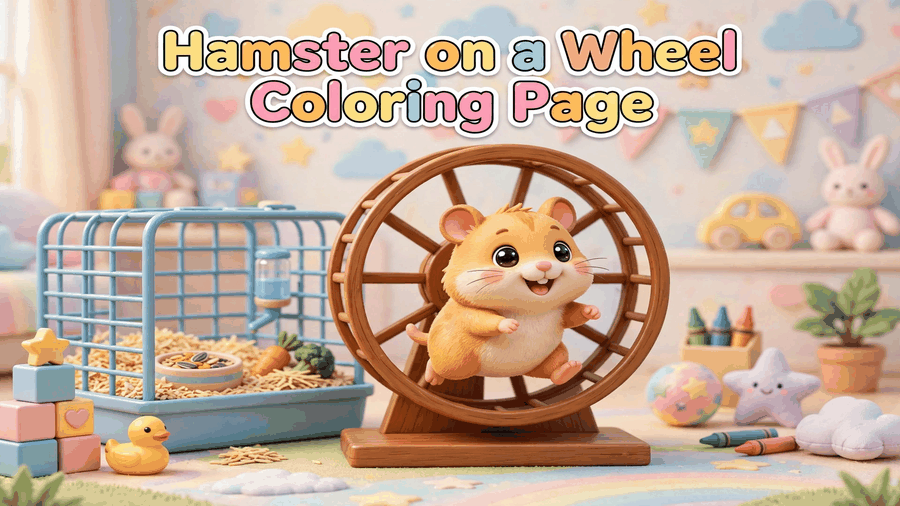
Hamster on a Wheel Coloring Page brings a familiar pet activity to life through a fun coloring experience. Children can explore colors, imagine a playful hamster, and enjoy a creative moment inspired by this energetic little animal.
Why a Hamster Running on a Wheel Makes a Fun Coloring Theme
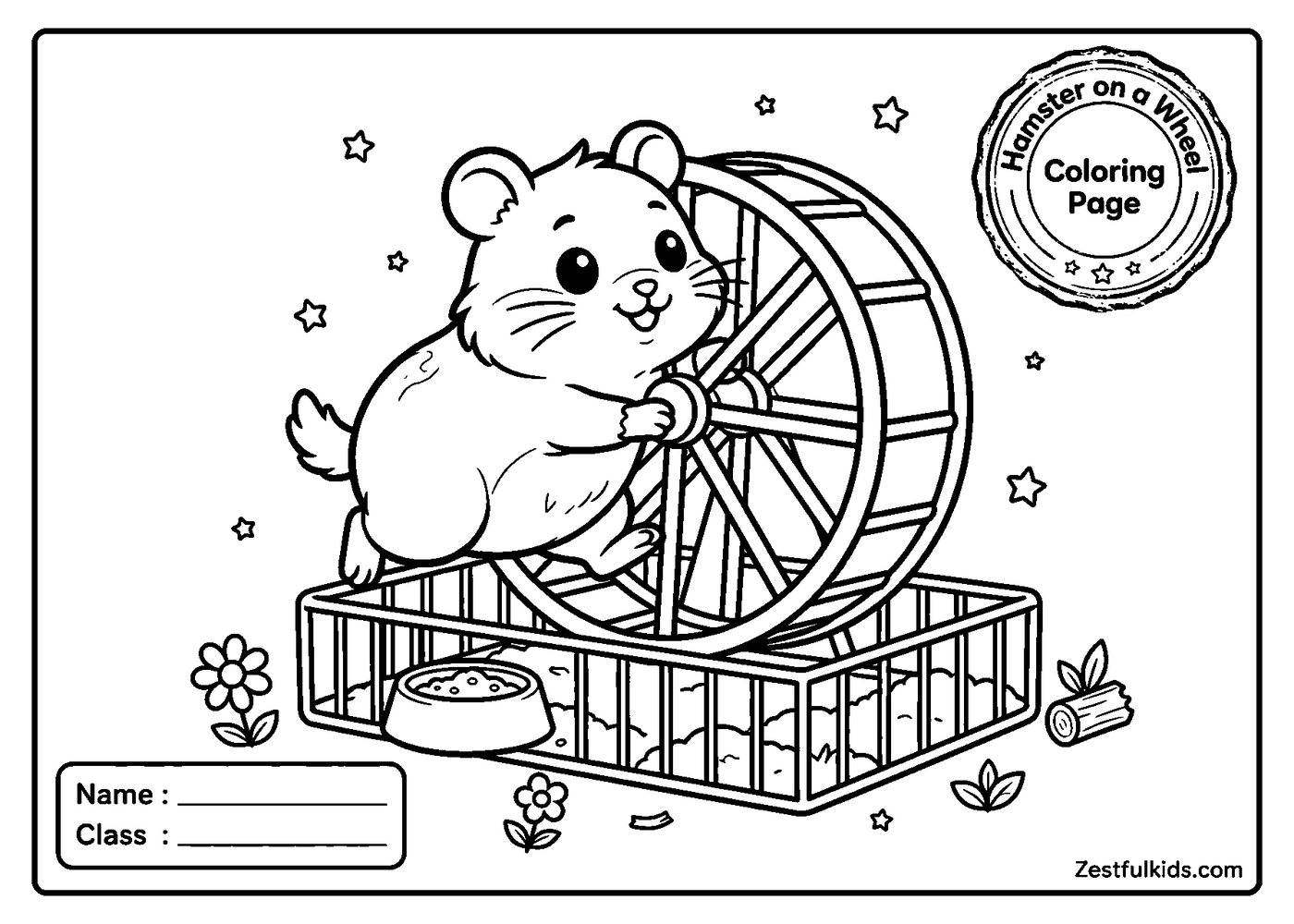
Hamsters are small animals with distinctive features that make them interesting subjects for children’s artwork. Their rounded bodies, tiny paws, short legs, soft-looking fur, and little ears provide plenty of details to explore with crayons or colored pencils. A hamster running on its exercise wheel adds another interesting element because the circular shape creates a clear visual focus.
Unlike a simple animal portrait, a hamster on a wheel suggests movement and activity. Children can imagine the hamster enjoying its exercise routine, running around inside its enclosure, or getting ready for another playful moment. This familiar scene gives young artists an opportunity to add personality to an ordinary pet activity.
The wheel itself also offers a different coloring experience from the hamster’s body. Its curved structure, supporting frame, and circular outline can be explored with contrasting shades. Children might choose bright colors for the wheel while keeping the hamster’s fur in softer natural tones.
Exploring Colors Through the Hamster and Its Exercise Wheel
One enjoyable part of this theme is deciding how the hamster should look. Hamsters come in several coat colors and patterns, so children have room to experiment without needing to follow just one color combination. Golden brown, cream, white, gray, and reddish-brown are possible choices for creating a familiar pet appearance.
Children who prefer imaginative artwork can take a different approach. A hamster with purple patches, a light blue wheel, or colorful decorations can turn an ordinary pet scene into something unique. There is no need to make every detail realistic, especially when the main purpose is to enjoy the activity.
The exercise wheel provides another opportunity to experiment. Red, yellow, green, and orange can make the wheel stand out, while gray or brown can create a more understated appearance. If the illustration includes visible spaces between the wheel’s parts, children can use different shades to distinguish each section.
For a more balanced result, try choosing three or four main colors before starting. One color can be used for the hamster’s fur, another for the wheel, and the remaining shades can be saved for smaller details or optional decorations.
Creative Details Children Can Add to the Scene
A hamster on a wheel can inspire several small storytelling ideas. Once the main illustration has been colored, children can imagine what happens before or after the hamster starts running. These ideas can be used as drawing prompts alongside the printable activity.
For example, children might draw a small food bowl nearby, a piece of fresh carrot, or a few sunflower seeds. If they want to create a complete pet environment, they can add bedding, a water bottle, or a little hiding house around the hamster. These extra objects are optional creative additions rather than features that need to appear in every coloring design.
The background can also change the atmosphere of the picture. A simple pastel-colored setting gives the hamster plenty of attention, while a more detailed enclosure can make the scene feel like a miniature pet home. Children who enjoy drawing patterns might decorate the background with tiny stars, dots, or curved lines.
Parents and teachers can encourage children to explain their choices while working. They might describe the hamster’s imagined name, favorite food, or daily routine. This turns a quiet coloring session into an opportunity for conversation and storytelling.
Choosing Coloring Tools for Different Parts of the Illustration
The rounded shape of a hamster makes crayons and colored pencils practical choices for this activity. Crayons work well for filling larger areas, especially the body and wheel, while colored pencils offer more control around the eyes, ears, paws, and other smaller features.
Washable markers can create brighter results, particularly for children who enjoy bold colors. However, it is helpful to test the markers on a separate sheet first because some types can show through thin paper. Placing an extra sheet underneath the coloring page can also help protect the surface below.
For children who like combining different techniques, colored pencils can be used to create light and dark areas in the hamster’s fur. Gentle strokes around the body can suggest a soft texture without requiring complicated shading. The exercise wheel can be colored more evenly to create a visual contrast with the animal.
There is no need to finish every section in one sitting. Children can color the hamster first, take a short break, and return later to complete the wheel or background. Working at a comfortable pace allows them to enjoy the picture without feeling rushed.
Making the Printable Activity More Meaningful at Home or School
A hamster-themed coloring activity can fit naturally into different everyday settings. At home, parents can introduce it during a quiet afternoon, a weekend craft session, or a break from screen-based entertainment. Teachers and caregivers can also include animal-themed printables in creative activity sessions.
Before coloring begins, adults can introduce a few simple facts about hamsters. These small rodents are known for their cheek pouches, which they use to carry food, and many pet hamsters use exercise wheels as part of their daily activity. It is worth explaining that a properly sized, safe wheel is important for a pet hamster’s comfort.
Children can then observe the illustration and identify the different parts they recognize. They might point out the animal’s ears, paws, eyes, body, and wheel. Younger children can focus on choosing colors and filling larger spaces, while older children may enjoy adding patterns, shadows, and extra details.
For a related nature-inspired activity, families can also explore small waterfalls. The flowing water and natural surroundings offer a different subject for children who enjoy moving between animal and outdoor themes.
Another creative option is to introduce a mythical creature after finishing the hamster illustration. The Hippogriff offers an imaginative change of subject, allowing children to explore fantasy-inspired shapes and color combinations.
Helping Children Enjoy Their Finished Hamster Artwork
Once the coloring is complete, give children a chance to look at the finished picture and share what they like about it. They might be proud of the hamster’s unusual fur pattern, the bright exercise wheel, or the little details they added around the scene. Encouraging them to describe their artwork makes the experience feel personal without turning it into a competition.
The finished page can be displayed on a refrigerator, placed in a children’s art folder, or included in a collection of favorite animal pictures. If several family members participate, each person can create a different interpretation of the same theme.
Parents and teachers can also invite children to give their hamster a name and invent a short story about its daily routine. Perhaps it enjoys running before breakfast, takes a nap after playing, or collects sunflower seeds for later. These simple ideas help connect the picture with a child’s imagination.
A Hamster on a Wheel Coloring Page offers a cheerful way to combine animal-themed creativity with a familiar scene from the world of small pets. Whether children choose natural fur colors, bright decorative shades, or their own imaginative combinations, the activity gives them room to create an illustration that feels entirely their own.
