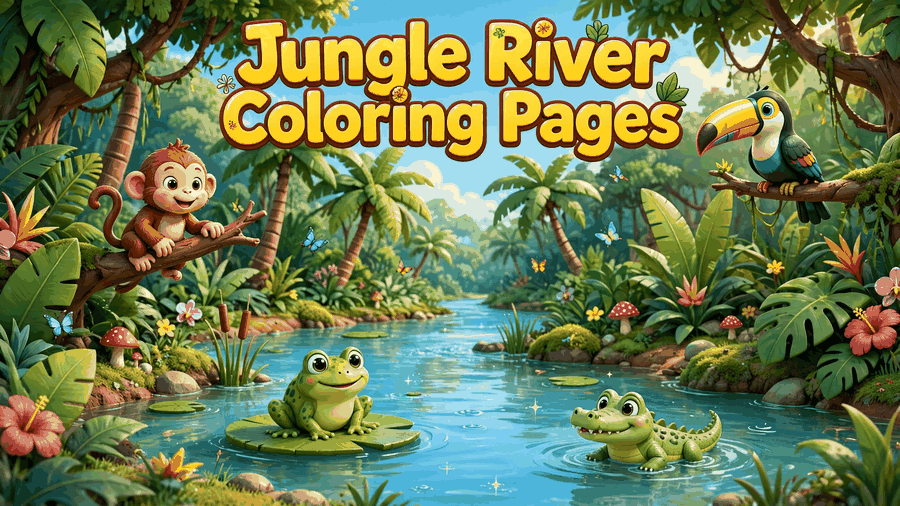
Jungle River Coloring Pages bring tropical waterways, lush greenery, and imaginative nature scenes to children’s creative activities. These printable designs offer a fun way to explore the beauty of jungle landscapes while experimenting with colors and artistic ideas.
A jungle river creates an interesting setting for a coloring activity because it combines flowing water with dense vegetation and the atmosphere of a tropical forest. Unlike a simple picture of a river, this theme invites children to imagine an entire natural environment. The water may wind between green riverbanks, while tall trees and leafy plants create a peaceful landscape around it. Every part of the scene offers an opportunity to experiment with different shades and make the illustration feel lively.
Discover the Beauty of a Tropical River Landscape
A tropical river is more than a body of water surrounded by trees. It is part of a natural environment where plants, water, and wildlife exist together. This combination makes jungle river illustrations appealing for children who enjoy nature-inspired pictures.
The river can be imagined as a winding blue pathway that travels through a thick forest. Its banks might feature large leaves, tangled roots, grasses, and tropical plants. These natural elements create different shapes and textures, giving children plenty of details to explore while coloring.
The surrounding jungle also offers opportunities to use a variety of green shades. Light green can represent fresh leaves, while darker tones can make large trees and shaded areas stand out. Children can also introduce yellow-green, olive, or turquoise to give the landscape a more imaginative appearance.
Water does not always need to be colored bright blue. Light blue, aqua, turquoise, and even blue-green can create different impressions of a tropical river. Children can choose one main color or combine several shades to suggest reflections and gentle movement.
What Makes Jungle River Coloring Pages Interesting?
One of the most enjoyable features of this theme is the contrast between flowing water and thick vegetation. The river creates an open area within the landscape, while the surrounding plants provide plenty of visual details. This contrast helps children explore different coloring approaches within a single picture.
The theme also leaves room for imagination. A child might picture a quiet morning in the rainforest, with sunlight passing through the leaves and reflecting on the water. Another child may imagine a mysterious jungle adventure where the river leads to an undiscovered part of the forest.
Depending on the illustration, the natural setting may inspire ideas about tropical animals, birds, insects, and aquatic life. These can be discussed as possibilities rather than assumed features of every coloring design. Parents and teachers can encourage children to think about which creatures might live near a jungle river.
This makes the activity suitable for both independent coloring and shared creative sessions. Children can focus on filling the shapes, while adults can introduce simple conversations about rivers, forests, and the natural world.
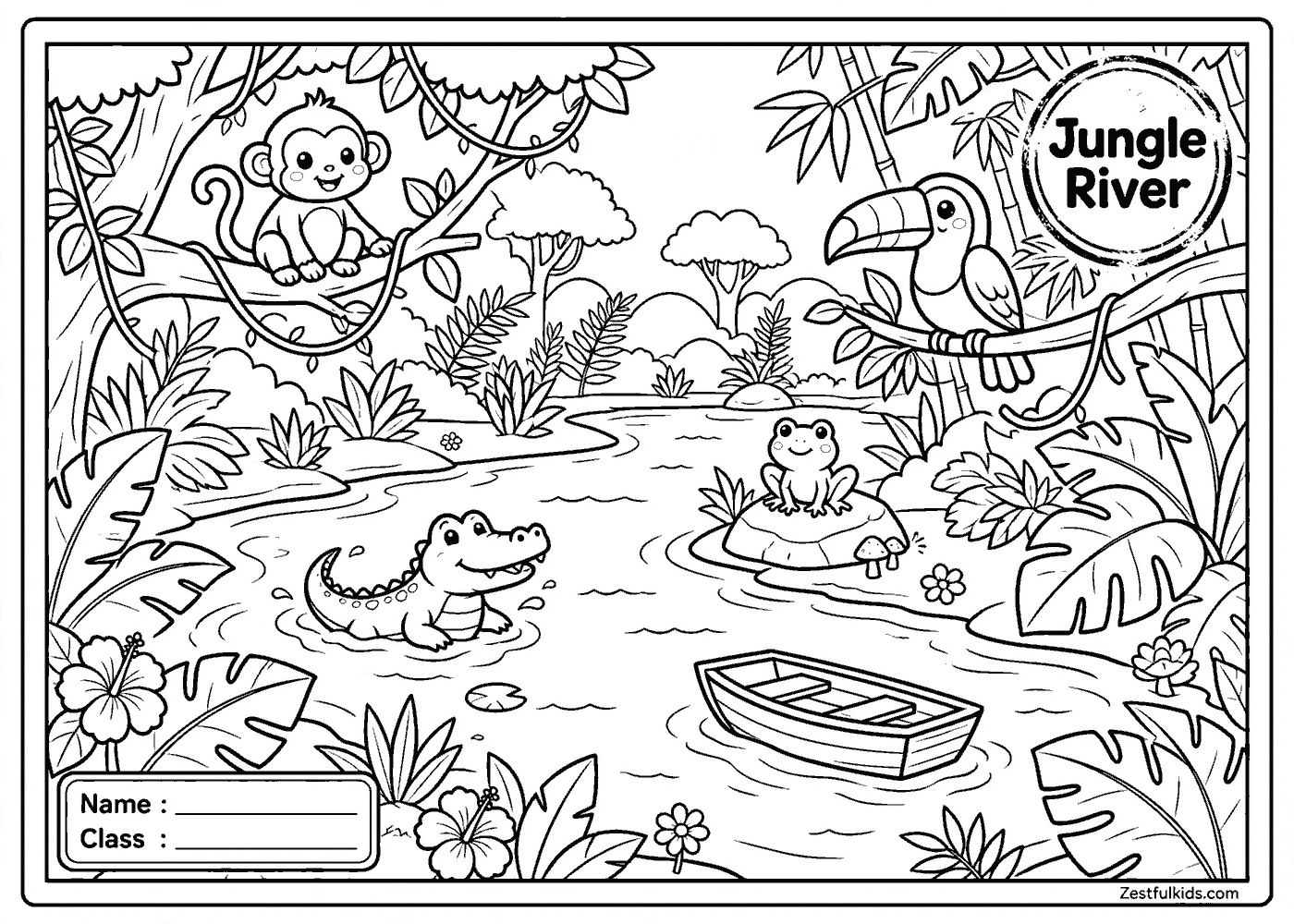
Creative Color Combinations for Jungle River Scenes
Choosing colors is an important part of making a jungle landscape visually interesting. Rather than using the same green throughout the picture, children can experiment with several related shades to create variety.
Here are some practical color ideas for different parts of a jungle river illustration.
Different Shades of Green for the Forest
Green is naturally the dominant color in many tropical forest scenes. However, using only one shade can make the vegetation look flat. Combining light green, leaf green, dark green, and yellow-green can help distinguish different plants and areas of the forest.
For large leaves, children can use a lighter shade in the middle and a darker shade around the edges. Tree trunks can be colored brown, reddish brown, or grayish brown, depending on the appearance they want to create.
Blue and Turquoise for the River
The river can become the main visual attraction through a combination of blue and turquoise. Light blue works well for open water, while darker blue can be used along the riverbanks or in areas imagined to be deeper.
Children can leave a few small sections lighter to represent sunlight reflecting on the water. Even simple color variations can make the river look more interesting without requiring complicated techniques.
Natural Colors for the Riverbanks
The land beside the water can include earthy shades such as brown, tan, beige, and muted green. These colors work well for soil, exposed roots, stones, and fallen branches when such details appear in the illustration.
For a more imaginative result, children can introduce warm yellow or orange to represent sunlight reaching the forest floor. There is no need to follow realistic colors exactly. Creative choices are part of what makes each finished picture unique.
Turn Coloring Time Into a Jungle Exploration Activity
Jungle river illustrations can provide a starting point for activities beyond filling shapes with colors. Parents and teachers can use the natural setting to introduce simple observations about tropical environments.
For example, children can look at the river and describe how water moves through the landscape. Adults can explain that rivers provide water for many living things and that plants along riverbanks are part of a larger ecosystem.
Another activity is to invite children to imagine what might be found around the river. They could describe a bird resting on a branch, a butterfly flying above the plants, or a small fish swimming beneath the surface. These ideas can become short storytelling exercises after the coloring is finished.
For children who enjoy drawing, a blank area beside the illustration can be used to add an imaginary jungle detail. They might draw a small wooden bridge, a distant waterfall, or an additional tropical plant. This gives them an opportunity to extend the original scene without changing its main composition.
Nature-themed activities can also connect with other printable subjects. Children interested in prehistoric flying creatures may enjoy exploring these baby pterodactyl illustrations, which offer another imaginative way to engage with nature and ancient wildlife.
Choosing the Right Coloring Tools
The best coloring tools depend on the illustration’s shapes, the paper being used, and the child’s preferences. Crayons are a practical choice for younger children because they are easy to hold and allow broad areas to be filled without much effort.
Colored pencils are useful when children want more control over smaller details. They can layer different shades of green, create subtle variations in the water, or add texture to tree trunks and leaves. For larger areas, washable markers can provide strong and noticeable colors.
Before using markers, it is helpful to check whether the paper can handle them without excessive ink bleeding. Placing an extra sheet underneath the coloring page can also protect the surface below.
If the illustration is intended for printing, parents and teachers should check the available file format and printing settings before preparing copies. Print preview can help identify unexpected cropping or margins. Choosing a paper type that works with the selected coloring tools will also make the activity more comfortable.
Make Each Jungle River Picture Different
There is no single correct way to color a tropical landscape. Some children may prefer a realistic rainforest filled with deep green vegetation and blue water. Others might choose brighter colors to create a fantasy jungle with unusual plants and imaginative scenery.
One enjoyable challenge is to choose a particular time of day before starting. A morning jungle could feature fresh green leaves and bright blue water, while an evening scene might use darker greens and warmer colors. Children can also imagine a rainy day, adding gray clouds or darker shades to suitable areas if the illustration allows.
Another idea is to create a color theme with only three or four main colors. Limiting the palette encourages children to think carefully about how each shade contributes to the overall picture. They can also compare their finished artwork with family members or classmates and notice how different color choices change the atmosphere.
For another nature-inspired activity, children can explore lily pond flowers and experiment with coloring delicate petals, leaves, and peaceful water scenery. This provides a different perspective on aquatic environments while maintaining the connection with plants and nature.
Enjoy a Creative Journey Through the Jungle
Jungle River Coloring Pages offer a refreshing theme for children who enjoy landscapes, tropical plants, and outdoor-inspired artwork. The combination of flowing water and forest vegetation creates opportunities to experiment with color combinations, imagine natural surroundings, and develop original picture ideas.
Parents, teachers, and caregivers can make the experience more engaging by discussing the landscape, suggesting simple coloring challenges, or inviting children to create their own jungle stories. Whether they choose realistic forest colors or an imaginative palette, each finished illustration can reflect their personal interpretation of a tropical river environment.
