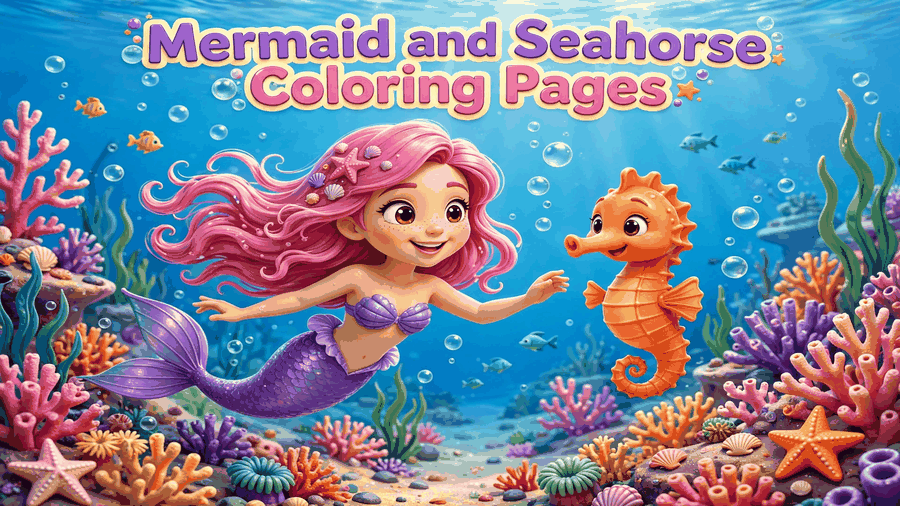
Mermaid and Seahorse Coloring Pages bring an imaginative underwater world to life through creative coloring activities. Children can explore colorful ocean-inspired scenes, discover fascinating sea creatures, and create their own magical marine adventures.
Discover the Magical World of Mermaids and Seahorses
Mermaids and seahorses make an interesting combination for children’s coloring activities because they bring together fantasy and real marine life. Mermaids are familiar figures in fairy tales, often imagined with flowing hair, shimmering tails, and a connection to the ocean. Seahorses, on the other hand, are real sea animals with distinctive shapes that make them easy to recognize and fun to color.
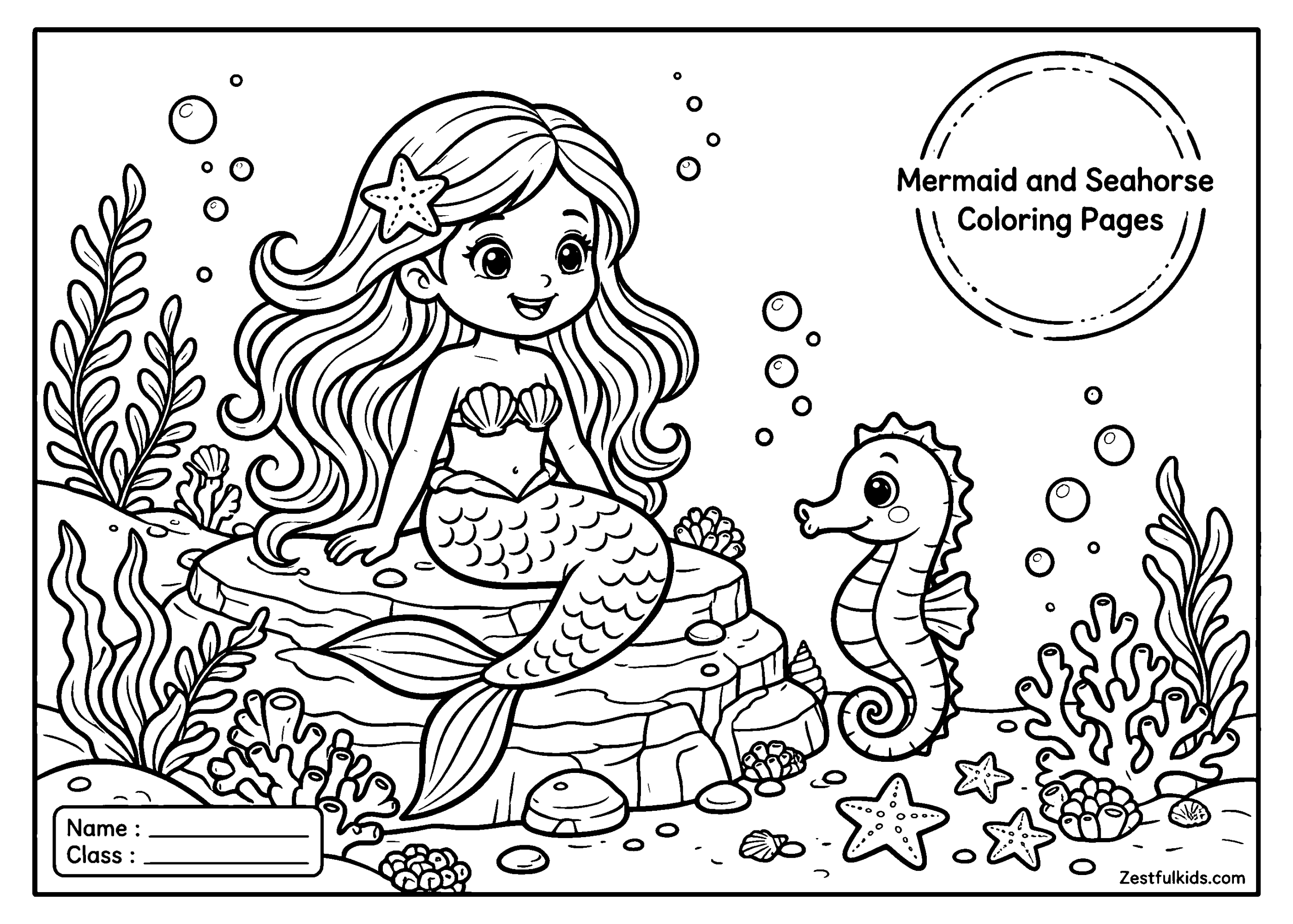
Putting these two subjects together creates an opportunity for children to explore different kinds of underwater characters. They can imagine a mermaid meeting a tiny seahorse among sea plants or swimming through a peaceful underwater setting. Even simple illustrations can inspire stories about friendship, exploration, and life beneath the waves.
The contrast between a fictional mermaid and a real seahorse also gives parents and teachers a natural way to introduce conversations about imagination and marine animals. Children can enjoy the fantasy element while learning that seahorses actually live in the sea.
What Makes Mermaid and Seahorse Coloring Pages Interesting?
One appealing feature of this theme is the variety of shapes and details children can explore. A mermaid’s tail offers plenty of room for experimenting with different color combinations, while a seahorse has a recognizable curved body, small fins, and a curled tail.
These contrasting features make the activity enjoyable without requiring complicated coloring techniques. Children can use familiar colors or create imaginative combinations that make their underwater scenes unique.
Here are some details that can inspire their coloring choices:
- Mermaid tails: Try turquoise, purple, blue, pink, or a combination of several shades to create a fantasy-inspired appearance.
- Mermaid hair: Choose natural shades such as brown and black or imaginative colors like lavender, coral, and bright blue.
- Seahorses: Use yellow, orange, golden brown, or green as creative options.
- Underwater surroundings: Add shades of blue and green to suggest ocean water, seaweed, and aquatic plants.
- Small decorative details: If the illustration includes bubbles, shells, or other ocean elements, use contrasting colors to make them stand out.
Children do not need to follow realistic color choices. A purple seahorse or a mermaid with rainbow-colored hair can be just as enjoyable as a more natural-looking design.
Choosing Colors for an Underwater Scene
Color selection can make a big difference in the overall appearance of a finished coloring page. Rather than filling every part with a different bright color, children can experiment with a small group of complementary shades.
For example, a combination of turquoise, light blue, and sea green can create a calm underwater atmosphere. Adding coral pink, sunny yellow, or soft purple introduces contrast without making the picture look too crowded.
Another interesting approach is to give the mermaid and seahorse different visual styles. A mermaid could have a deep blue tail with lighter scale details, while the seahorse could feature warm orange and yellow shades. This makes both subjects easier to notice when they appear together.
Children can also experiment with patterns if the illustrations provide enough open space. Repeating two or three colors across a mermaid’s tail or a seahorse’s body can create a coordinated appearance. The goal is not to produce a perfect picture but to enjoy the process of making individual artistic decisions.
Simple Coloring Techniques for Young Artists
Mermaid and seahorse illustrations can include both large areas and smaller details. Choosing the right coloring tools can make the activity more comfortable, especially for children who are still practicing how to stay within outlines.
Crayons are a practical choice for younger children because they are easy to hold and suitable for filling larger spaces. Colored pencils offer more control when working on small areas, such as facial features, fins, and decorative patterns. Washable markers can also be useful when children want stronger, more noticeable colors.
A few simple techniques can make the finished artwork more interesting:
- Start with larger sections: Color the mermaid’s hair, tail, and the main body of the seahorse before moving to smaller details.
- Use light pressure first: Colored pencils allow children to build up color gradually without making the paper look too dark.
- Try two-tone coloring: Combine a lighter and darker shade on larger areas to create visual variety.
- Pay attention to the outlines: Encourage children to work slowly around smaller shapes and curved sections.
- Add a personal touch: If there is empty space, children can draw extra bubbles, tiny fish, or sea plants around the main subjects.
These techniques are suggestions rather than rules. Children should feel comfortable choosing their own approach and coloring at a pace that suits them.
Turn Coloring Time into an Ocean Story
A coloring activity can become more engaging when children create a simple story around the pictures. Instead of treating the mermaid and seahorse as separate subjects, parents or teachers can invite children to imagine how the two might meet.
Perhaps the mermaid is exploring a coral garden when she notices a seahorse swimming nearby. Maybe the seahorse becomes her guide through an underwater landscape filled with interesting marine life. Children can invent names for the characters, describe their surroundings, or explain where their imaginary adventure takes place.
For an additional creative activity, ask children to draw something that could appear in the same underwater environment. They might add sea stars, shells, small fish, coral formations, or a treasure chest. These extra drawings are optional and can be created after the original coloring page is complete.
Families who enjoy nature-inspired artwork can also explore Daisy Flower Crown designs for a different creative theme. The floral subject offers a pleasant contrast to the imaginative underwater setting.
Using Mermaid and Seahorse Coloring Pages at Home and School
These coloring pages can fit naturally into different activities at home, in classrooms, or during family creative time. At home, parents can introduce them as a relaxing art activity during a quiet afternoon or a rainy day. Children can work independently or share coloring materials with siblings and friends.
Teachers may also use the theme as a starting point for a broader lesson about the ocean. After coloring, children can discuss which details belong to fantasy and which represent real animals. A short conversation about seahorses can introduce their unusual body shape, curled tails, and way of moving through the water.
For group activities, each child can choose a different color combination and explain their choices to the class. Another option is to let children create individual underwater scenes and display their finished artwork together. This gives everyone an opportunity to share a personal interpretation of the same theme.
If children enjoy coloring subjects beyond the ocean, a Cartoon Bus theme can provide another activity featuring vehicles and everyday transportation. Switching between different subjects helps keep printable art sessions varied and interesting.
Making the Most of Printable Coloring Activities
Before printing, parents and teachers can check the available image and use the print preview to see how the illustration will appear on paper. Selecting an appropriate paper setting and checking the margins can help prevent important parts of the design from being cut off.
It is also helpful to prepare coloring materials before children begin. Place crayons, colored pencils, or washable markers within easy reach and provide a comfortable surface for drawing. For younger children, having a few basic colors ready can make it easier to start without feeling overwhelmed by too many choices.
Once the coloring is finished, the artwork can be kept in a folder, displayed on a classroom board, or included in a collection of children’s creative projects. Parents can also ask children to describe their favorite part of the illustration and give their mermaid or seahorse an imaginative name.
Mermaid and Seahorse Coloring Pages offer a combination of fantasy, ocean-inspired details, and creative freedom. Whether children prefer realistic marine colors or unusual magical combinations, the activity gives them an enjoyable way to explore an underwater theme through their own artwork.
