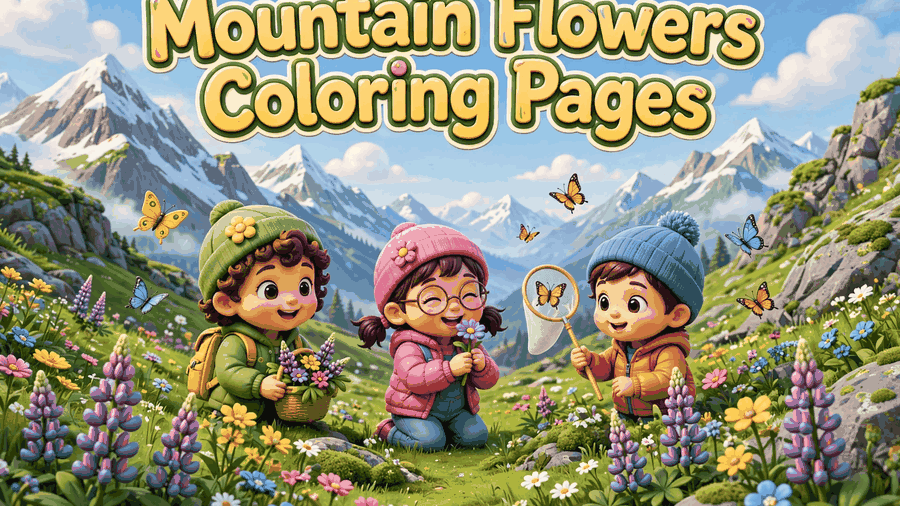
Mountain Flowers Coloring Pages introduce children to the beauty of wildflowers growing in high-altitude landscapes. From delicate petals to tiny blossoms among rocky slopes, these nature-inspired illustrations offer an enjoyable way to explore flowers, colors, and mountain scenery through creative activities.
Discover the Beauty of Flowers Growing in the Mountains
Mountain landscapes are home to many fascinating plants. Unlike flowers commonly found in gardens, mountain wildflowers often grow in environments with changing temperatures, strong sunlight, rocky ground, and limited growing space. Some appear in open meadows, while others grow between stones or along grassy slopes. These natural settings make mountain flowers an interesting subject for children’s coloring activities.
One of the most appealing features of mountain flowers is their variety. Small blossoms can grow close to the ground, while other plants produce taller stems with several flowers. Their petals may have rounded, pointed, or delicate shapes, creating different areas for children to explore with coloring materials.
Mountain Flowers Coloring Pages provide an opportunity to appreciate these natural details through art. Children can experiment with flower colors, create contrasting backgrounds, and imagine what a peaceful mountain meadow might look like. They do not need to follow realistic colors throughout the picture. A creative interpretation can be just as enjoyable as a nature-inspired one.
What Makes Mountain Flowers Interesting to Color?
Flowers offer several visual elements that make them suitable for coloring. Petals, leaves, stems, and flower centers each have different shapes and can be colored individually. Mountain-themed illustrations also create opportunities to explore how flowers appear within a larger natural environment.
Petal Shapes and Flower Centers
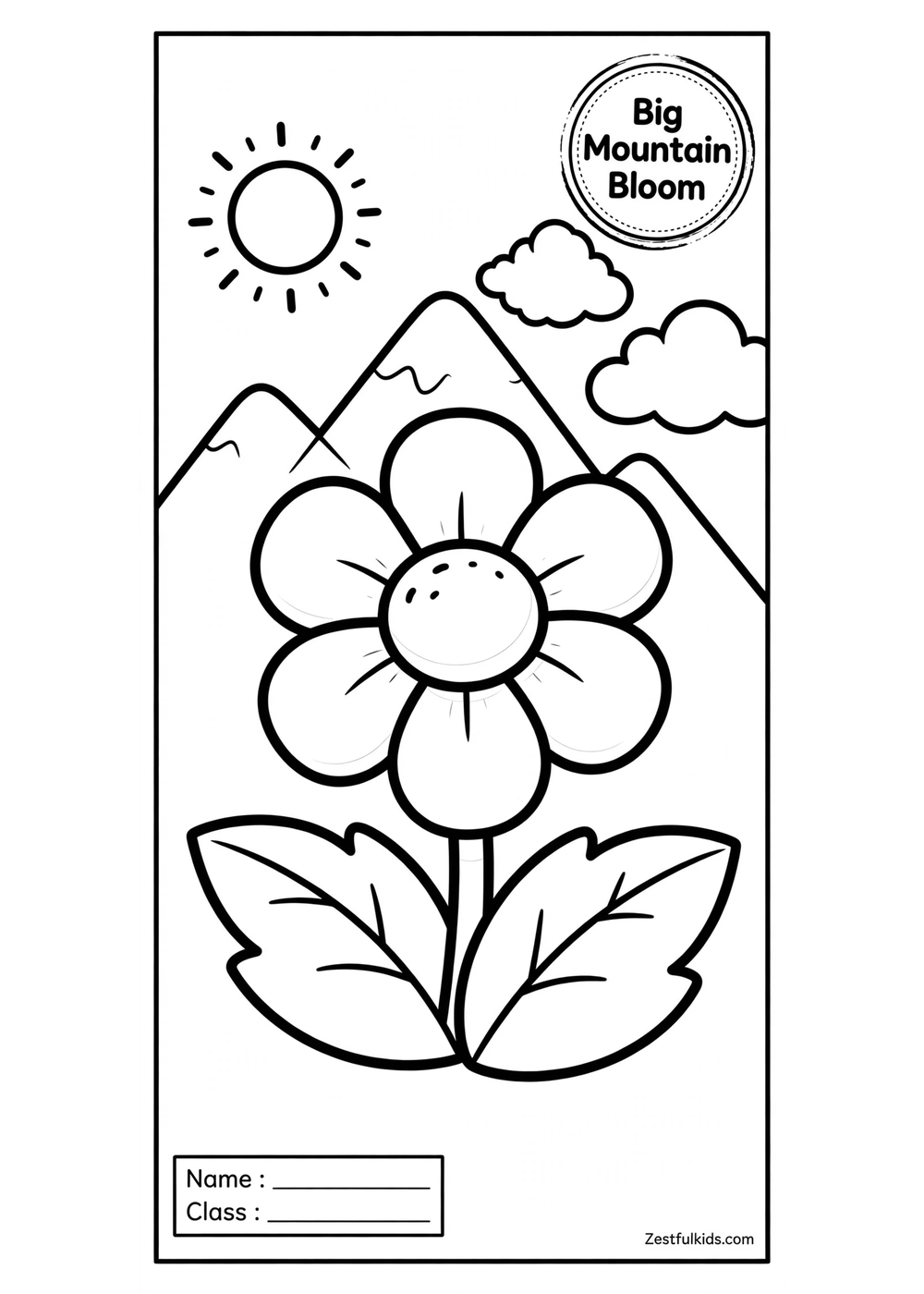
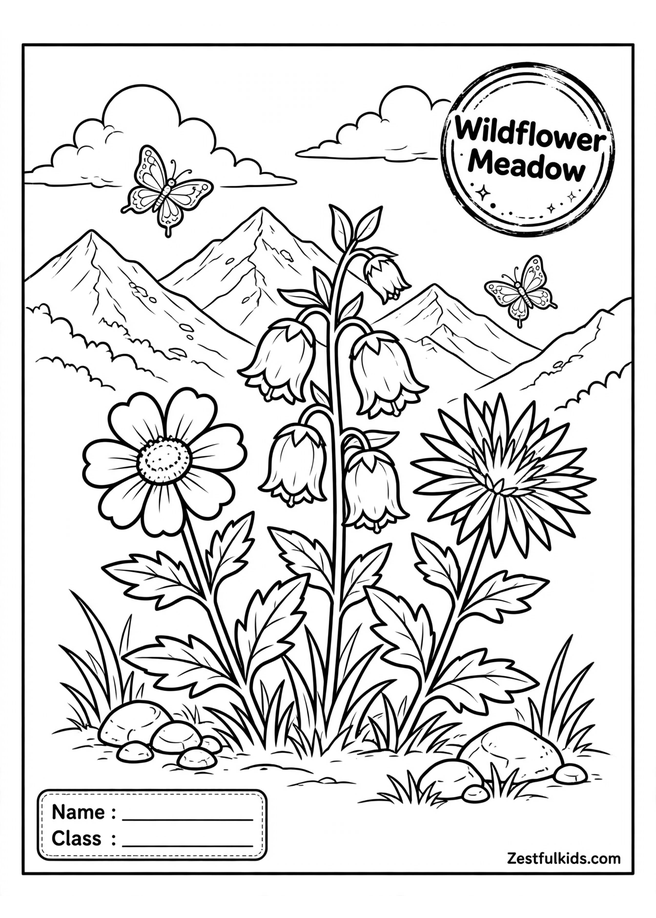
A flower’s petals are often the first details children notice. Some blossoms have broad petals arranged around a prominent center, while others have narrow petals that create a more delicate appearance. These differences allow children to experiment with various coloring techniques.
For a simple approach, try using one main color for the petals and a contrasting shade for the center. Yellow petals with orange centers, purple petals with pale yellow centers, or pink blossoms with darker pink details can create attractive combinations. Children can also use two shades of the same color to give individual petals more variety.
Leaves, Stems, and Natural Greenery
The green parts of mountain plants deserve attention too. Leaves can have different sizes and arrangements, while stems may appear straight, curved, or slightly branching. Coloring these details with several shades of green can make a flower look more distinctive.
Light green works well for fresh-looking leaves, while darker green can be used for shadows or overlapping areas. Children who prefer imaginative artwork can also experiment with unusual colors, such as blue-green foliage or purple stems.
Flowers Against Mountain Scenery
A mountain flower becomes even more interesting when considered as part of its surroundings. Rocky slopes, distant peaks, grassy meadows, and open skies can provide different background possibilities. If these elements appear in an illustration, children can use contrasting colors to separate the flowers from the scenery.
For example, a green meadow with purple flowers creates a different atmosphere from a rocky gray landscape with bright yellow blossoms. Even a simple blue sky can help make the foreground flowers stand out.
Choosing Colors Inspired by Mountain Nature
Mountain flowers do not all share the same appearance. Their colors vary depending on the plant species, location, and growing conditions. This variety gives children plenty of room to explore different palettes.
Some familiar wildflower-inspired colors include violet, purple, yellow, white, pink, and blue. These shades can be combined with natural greens and earthy colors to create a landscape that feels connected to the outdoors.
Here are a few combinations children can try:
- Alpine meadow: Combine purple, yellow, pink, and white flowers with fresh green grass.
- Rocky mountain slope: Use gray and brown for stones, with bright flowers providing colorful accents.
- Sunny mountain morning: Choose light blue for the sky, soft green for the plants, and warm yellow for flower centers.
- Dreamy flower garden: Experiment with lavender, pastel pink, mint green, and pale blue.
- Wildflower contrast: Use dark green leaves alongside brightly colored petals to make individual blossoms more noticeable.
These suggestions can be adapted to the actual illustration. Children may prefer realistic flower colors, but there is no need to limit their choices to botanical accuracy.
Turn a Coloring Activity into a Nature Exploration
Mountain flower illustrations can also provide a starting point for simple conversations about plants and their environments. Parents and teachers can introduce the idea that different flowers grow in different places. Some prefer sunny open spaces, while others are adapted to cooler mountain conditions.
Children can observe the shapes of the flowers in their pictures and compare them with photographs of real wildflowers. This can lead to interesting discussions about petals, leaves, stems, and the environments where plants grow.
A simple activity is to ask children to create their own imaginary mountain meadow. They can choose which flowers grow there, decide how tall the plants should be, and select colors for the surrounding landscape. If the illustration has enough open space, they can also add details such as clouds, distant hills, or small rocks.
Another idea is to create a flower color collection. Children can select three different colors for blossoms and use them consistently throughout their artwork. After finishing, they can describe which combination they enjoyed most and why.
For families who enjoy combining nature themes with imaginative creatures, baby phoenix illustrations offer a different creative direction. This fantasy subject can complement a nature-inspired art session with something more imaginative.
Coloring Tools and Techniques for Flower Details
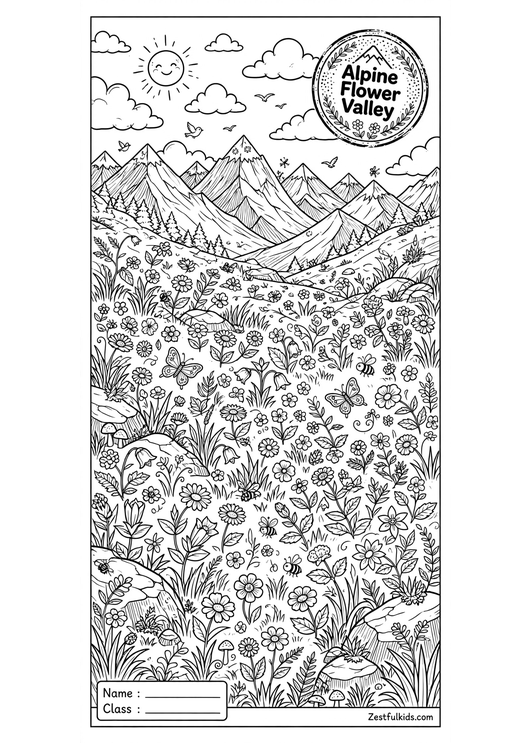
The choice of coloring materials can influence how children approach a mountain flower illustration. Colored pencils are particularly useful for smaller petals, narrow stems, and detailed flower centers. They allow children to apply gentle pressure and gradually build up different shades.
Crayons are suitable for larger areas, such as mountain backgrounds, open skies, and grassy sections. Their broader coloring surface can help children cover these areas without spending too much time on small strokes. Washable markers are another option when stronger colors are preferred, although testing them on spare paper first is sensible to check whether the ink passes through.
Children can try several simple techniques while working on their pictures:
- Layering: Apply a light shade first, then add a darker color near the flower center or petal edges.
- Color repetition: Repeat the same flower colors in different parts of the illustration to create visual consistency.
- Background contrast: Choose a background shade that helps the flowers remain easy to distinguish.
- Gentle shading: Use lighter and darker greens to create variation among leaves and stems.
- Color experimentation: Try unexpected combinations to turn familiar wildflowers into imaginative creations.
There is no need to use every technique in one picture. Let children choose the methods that feel comfortable and enjoyable.
Making Printable Coloring Time Easy to Prepare
Before starting, select an illustration that matches the child’s interest and preferred level of detail. Some children enjoy pictures with large flower shapes, while others prefer illustrations containing smaller petals, leaves, and surrounding scenery. Choosing a comfortable design can make the activity easier to enjoy.
When preparing a printable, check the file’s available printing options and use the print preview to see how the illustration fits on the selected paper. Make sure the important outlines are visible and not cut off near the edges. Having the coloring materials ready beforehand can also help children settle into the activity.
Mountain flower themes can work well in both individual and group activities. At home, parents can join children in choosing flower colors or imagining the location of a mountain meadow. In classrooms, teachers can invite children to create different versions of the same natural setting and compare their artistic choices.
For another activity connected to outdoor life, children exploring the countryside can provide an additional theme for discussing nature and rural scenery. Pairing different outdoor subjects can give children more opportunities to explore landscapes through creative artwork.
Mountain Flowers Coloring Pages bring together the delicate details of wildflowers and the beauty of natural surroundings. Whether children choose realistic botanical shades or invent their own colorful mountain gardens, each picture offers room for personal expression. With a few coloring tools and plenty of imagination, an ordinary flower illustration can become a beautiful scene inspired by the outdoors.
