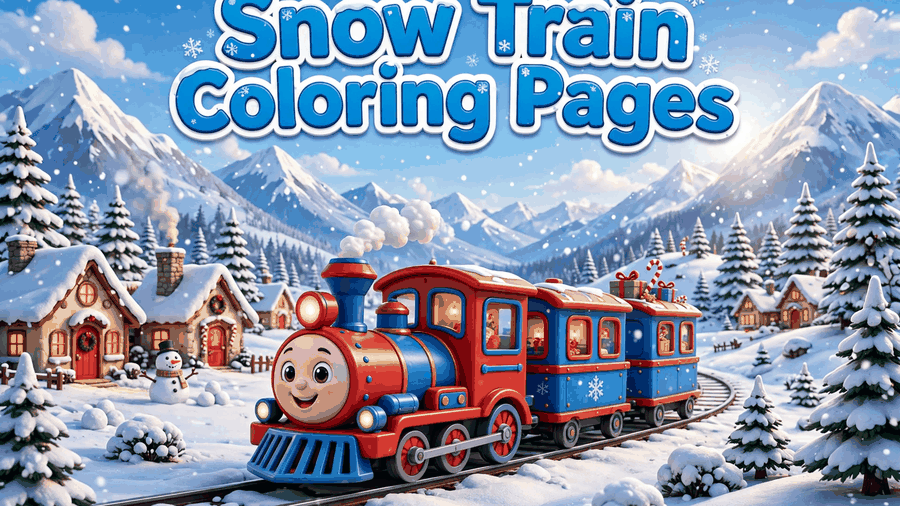
Snow Train Coloring Pages bring the excitement of railway travel into a beautiful winter setting. With snowy tracks, frosty surroundings, and imaginative train journeys, these illustrations give children an enjoyable way to explore transportation and seasonal scenery through coloring.
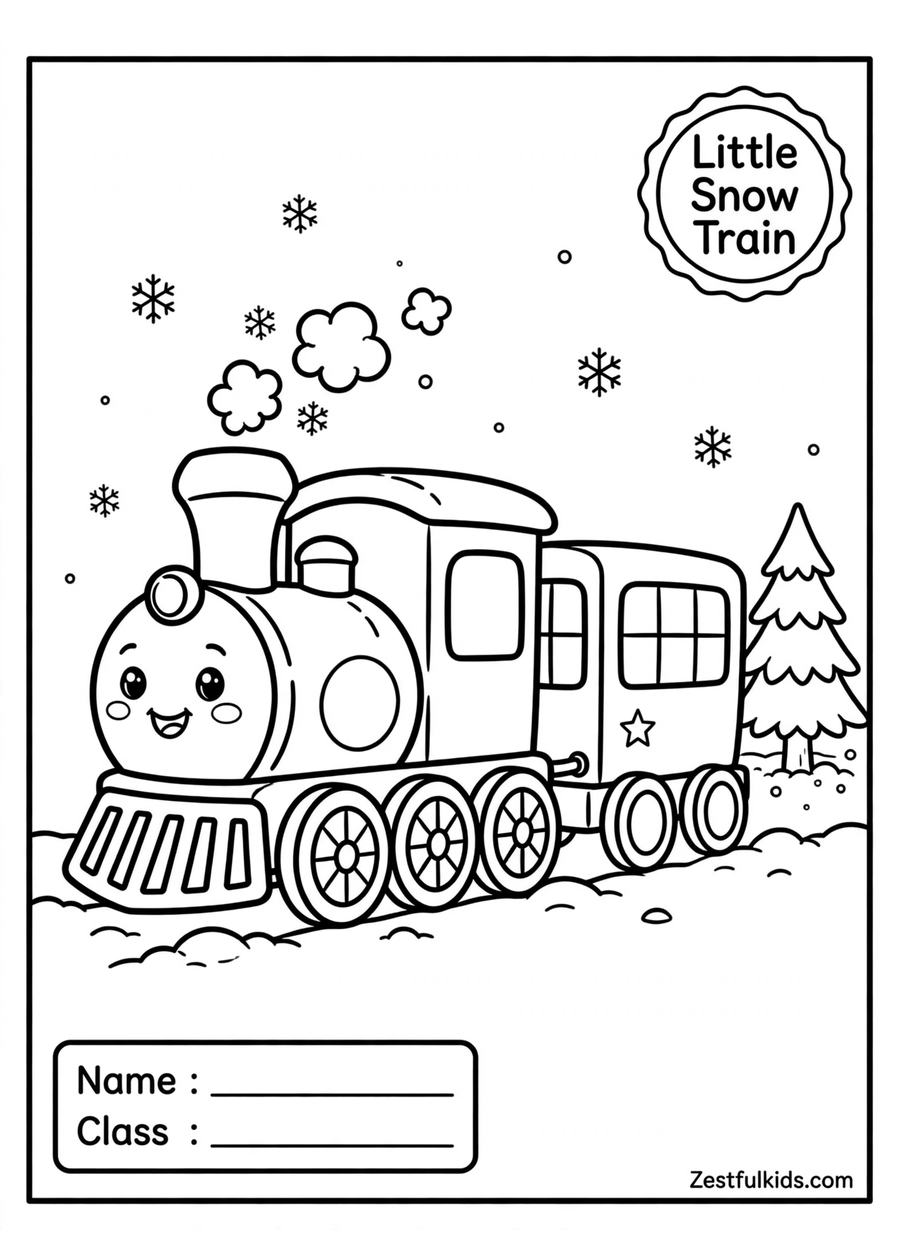
A Winter Railway Adventure to Imagine
A train traveling through a snowy landscape creates a distinctive scene. Unlike an ordinary railway journey, a winter train adventure can include snow-covered tracks, frozen hills, tall pine trees, and distant mountains. The combination of transportation and winter scenery makes this theme interesting for children who enjoy vehicles as well as outdoor landscapes.
Snow Train Coloring Pages offer an opportunity to explore these two subjects together. Children can focus on the train itself, experiment with different colors for its body and carriages, or imagine the surrounding environment as a quiet winter destination. Every color choice can change the atmosphere of the illustration.
Snow trains can also inspire different imaginary journeys. One child might picture a train traveling between snowy villages, while another may imagine an exciting trip through a mountain railway. These ideas can make coloring time feel like a small storytelling adventure rather than simply filling spaces with colors.
Exploring the Details of a Snow Train
Trains contain many recognizable features that make them interesting subjects for coloring. Their overall shape, windows, wheels, doors, and connecting carriages provide different sections to work on. Depending on the illustration, children may also find railway details that help establish the setting.
Locomotive and Carriages
The locomotive is often the most noticeable part of a train. Its front section, body, windows, and wheels create several areas where children can experiment with color combinations. They might choose classic red and black, a combination of blue and silver, or a completely imaginative design.
Carriages offer another opportunity to create visual variety. Each carriage could have a different color, or children can repeat the same palette throughout the train for a coordinated appearance. Bright colors can also help the train stand out against a mostly white winter background.
Wheels, Windows, and Railway Features
Small train details deserve attention too. Wheels can be colored dark gray or black, while windows might feature light blue shades to suggest reflections from the winter sky. Metallic-looking sections can be represented with gray, silver, or charcoal-colored pencils.
If railway tracks are included, children can use brown or gray for the rails and wooden sleepers. These details can make the train look more recognizable without requiring complicated coloring techniques.
Snow and Winter Surroundings
The snowy environment provides a different coloring challenge. Although snow is usually associated with white, children can introduce pale blue, light gray, or soft lavender to suggest shadows and cool winter light. These gentle shades can help distinguish snowy ground from the white parts of the paper.
If the illustration includes trees, mountains, or small buildings, each element can contribute to the overall winter atmosphere. Green pine trees, brown wooden houses, and blue-gray mountains create a natural-looking setting. Children can also invent a colorful winter village with cheerful rooftops and decorated windows.
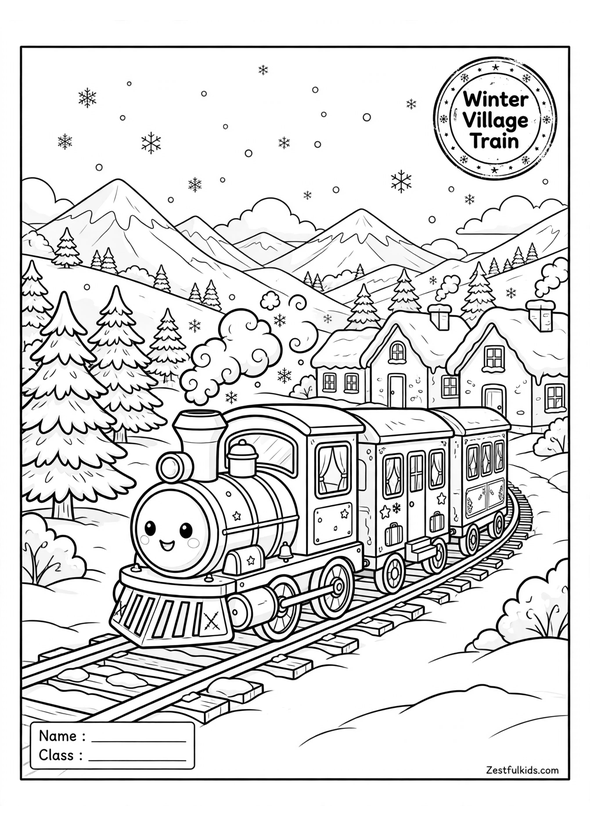
Creative Winter Color Palettes for Children
Choosing colors is one of the most enjoyable parts of a train-themed illustration. A winter scene does not have to be completely white and gray. Adding a few strong colors can create an interesting contrast between the vehicle and its surroundings.
Here are several combinations children can try:
- Classic railway: Red for the locomotive, black for the wheels, and dark gray for railway tracks.
- Icy blue journey: Light blue, navy, silver, and white for a cool winter appearance.
- Festive winter train: Red, green, gold, and white for a cheerful seasonal atmosphere.
- Mountain railway: Dark green trees, brown tracks, gray mountains, and a bright-colored train.
- Fantasy snow adventure: Purple, turquoise, pink, and pale blue for an imaginative winter journey.
Children can also give each carriage its own color theme. For example, the first carriage might be green, the second yellow, and the third blue. Repeating certain colors on the locomotive and carriages can help the entire train look connected.
Turn the Train Illustration into a Story
A snow train can be the starting point for a simple creative storytelling activity. Before coloring, parents or teachers can invite children to imagine where the train is going. Perhaps it is traveling toward a snowy village, carrying passengers to a winter celebration, or crossing a mountain to reach a special destination.
Once the coloring is finished, children can give their imaginary train a name. They might also describe its destination, the weather along the railway, and the people waiting at the next station. These details can be discussed naturally without turning the activity into a formal writing assignment.
Another enjoyable idea is to create a winter travel announcement. Children can imagine themselves as the train conductor and describe the journey in a few sentences. They could mention the snowy scenery, the next station, and what passengers might see along the way.
For families who enjoy combining coloring with seasonal activities, New Year family celebrations provide another theme for creative moments at home. It can be an interesting addition to a collection of winter and holiday-inspired activities.
Which Coloring Materials Work Best?
Different coloring tools can produce different effects on a snow train illustration. Colored pencils are useful for small sections such as windows, wheels, locomotive details, and railway components. They also make it easier to apply light shades when coloring snow and winter shadows.
Crayons are practical for larger areas, including the train body, snowy ground, and open sky. Children who prefer stronger colors can use washable markers, although testing them on spare paper first is a good idea to check whether the ink shows through.
For a more interesting winter effect, try these simple techniques:
- Soft shading: Use pale blue or light gray along selected snow edges to suggest shadows.
- Color blocking: Give the locomotive and each carriage clearly defined colors.
- Small details: Use colored pencils for windows, wheels, lamps, and other narrow sections.
- Background contrast: Choose darker colors for distant trees or mountains so the snowy areas remain visible.
- Pattern creation: Add simple stripes or decorative shapes to the train carriages when the illustration provides suitable open spaces.
There is no need to apply every technique. Children can choose whichever approach matches their comfort and interests.
Preparing a Snow Train Printable Activity
Before printing, look at the illustration and consider how much detail the child will enjoy coloring. Some children prefer a large locomotive with broad coloring spaces, while others enjoy pictures containing multiple carriages and smaller railway details. Selecting an appropriate design can help make the activity more comfortable.
Check the available printing settings and use print preview to make sure the illustration fits the chosen paper size. Important outlines should remain visible, especially around the train wheels, windows, and smaller decorative elements. Prepare the coloring materials in advance so children can begin without unnecessary interruptions.
This theme can also be included in a broader transportation activity. Children can compare a train with other vehicles, discuss how railway tracks differ from roads, or imagine how winter weather changes the appearance of a journey. These conversations can be kept simple and connected to the picture they are coloring.
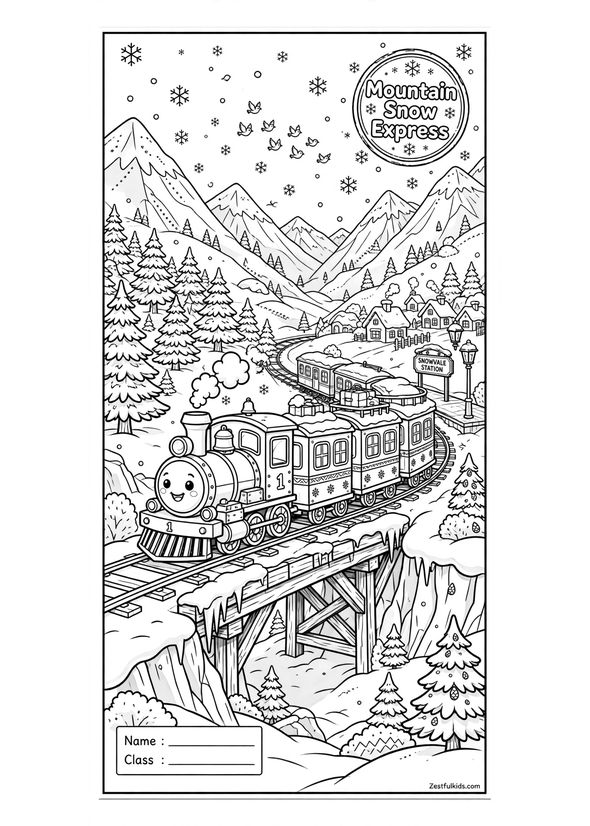
Extend the Creativity Beyond Winter
After completing a snow train illustration, children may enjoy exploring other subjects that introduce different colors and visual patterns. A change of theme can make the next coloring session feel fresh while keeping the same creative routine.
For a softer and more nature-inspired activity, tulip illustrations offer an opportunity to explore flower shapes, colorful petals, and green leaves. The contrast between a snowy railway and a blooming flower garden can also inspire children to think about different seasons and environments.
Snow Train Coloring Pages combine the recognizable features of railway transportation with the atmosphere of a winter adventure. Children can experiment with locomotive colors, create their own snowy landscapes, and imagine destinations for their fictional journeys. With a little imagination, each finished illustration can become a unique winter travel scene.
