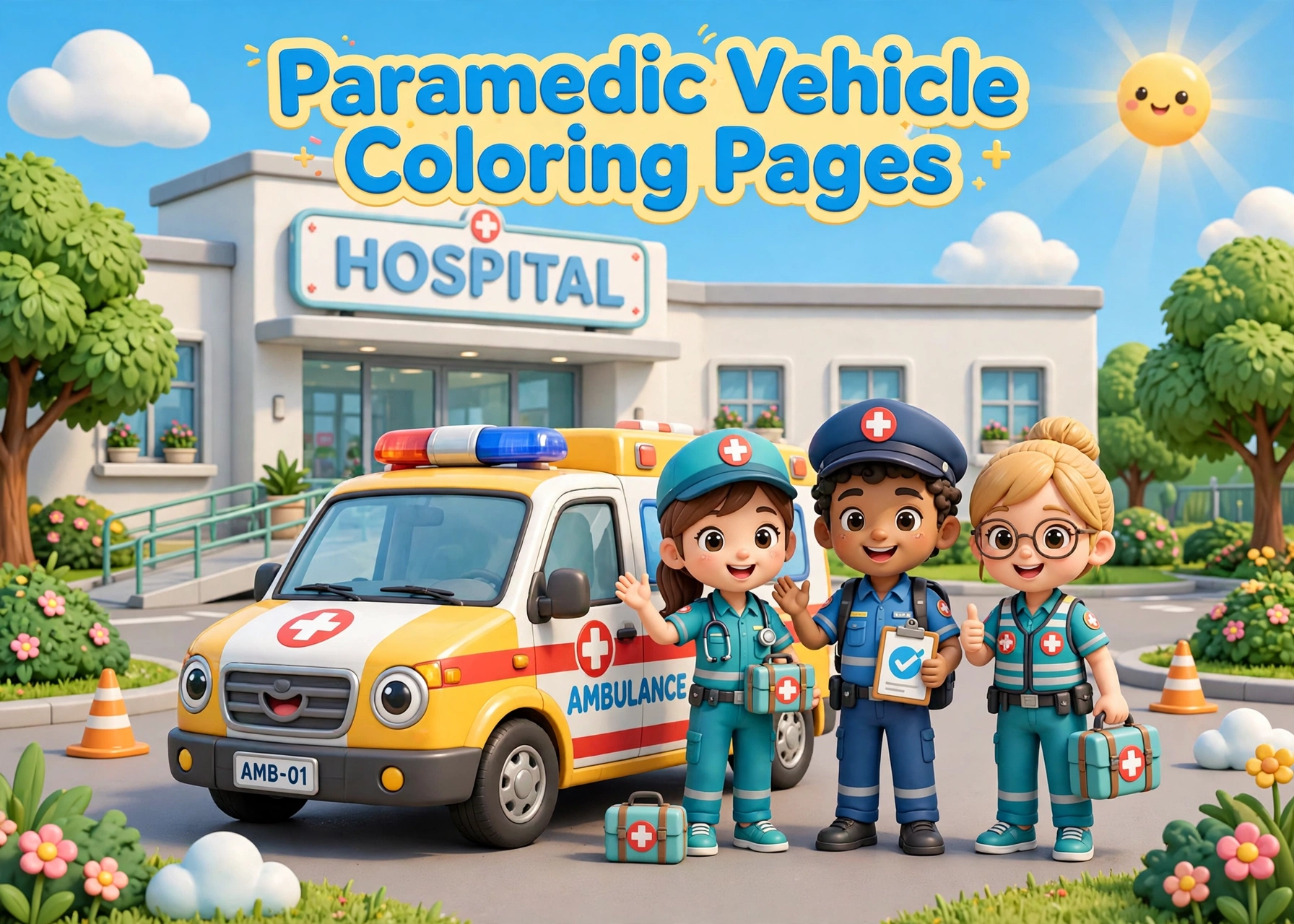
Paramedic Vehicle Coloring Pages introduce children to the important vehicles used by emergency medical teams. Through recognizable ambulance features, medical equipment, and imaginative rescue scenes, children can explore emergency services while enjoying a creative coloring activity.
Discover the Role of a Paramedic Vehicle
When someone needs urgent medical assistance, paramedics are among the first professionals who may arrive to provide help. Their vehicles are designed to transport medical personnel, essential equipment, and patients who need attention. Often recognized by their distinctive appearance, paramedic vehicles play an important role in emergency response and healthcare services.
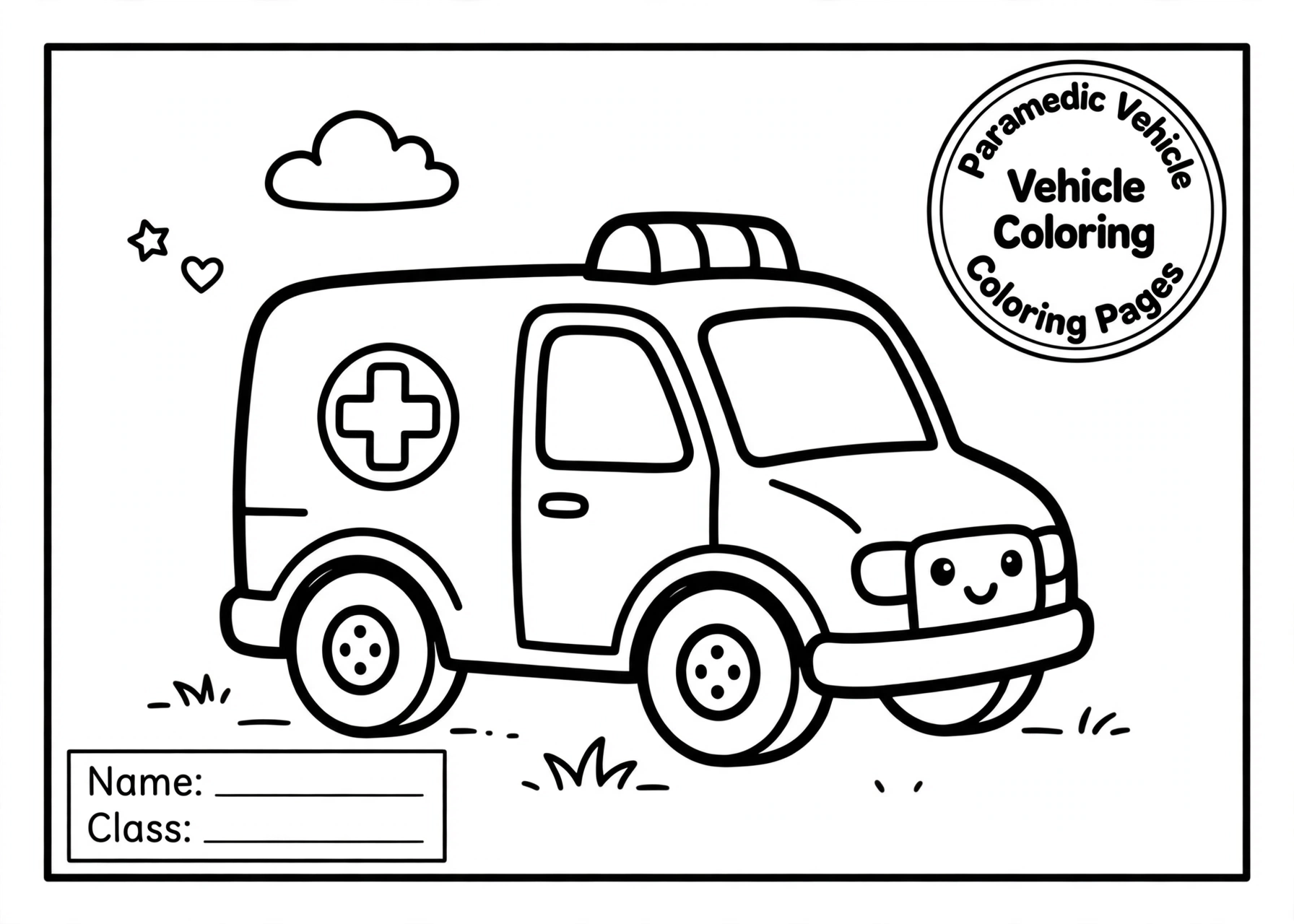
For children, an ambulance or paramedic vehicle can be an interesting subject because it combines familiar transportation features with a meaningful community service. Its body, wheels, windows, doors, and emergency markings offer different shapes to explore through coloring. The vehicle may look like a van or another specially designed emergency transport vehicle, depending on the illustration.
Coloring these vehicles also creates an opportunity to introduce children to the people who help others during emergencies. Parents and teachers can explain that paramedics provide medical assistance, assess patients, and help transport people to appropriate healthcare facilities when necessary. This simple introduction gives the vehicle a real-world context beyond its appearance.
Recognizing the Important Features of an Ambulance
Paramedic vehicles have several recognizable details that make them different from ordinary cars and vans. One of the most noticeable features is the emergency identification marking. Many ambulances use a combination of white and contrasting colors, such as red, blue, or fluorescent yellow, to make them easier to recognize.
Children can pay attention to the vehicle’s main body and decide which colors they would like to use. A traditional white ambulance with red details is a familiar choice, but creative alternatives are also welcome. The wheels can be gray or black, the windows light blue, and the emergency markings bright red.
Other features may include emergency lights, side doors, rear doors, mirrors, and special identification symbols. Some vehicles also have visible medical markings that help distinguish them from other types of transportation. If these details appear in the illustration, children can use contrasting colors to make each feature stand out.
It is useful to explain that ambulance designs can vary between countries and emergency service providers. Not every paramedic vehicle looks exactly the same, so children can enjoy coloring different styles without assuming there is only one correct appearance.
From Emergency Lights to Medical Equipment
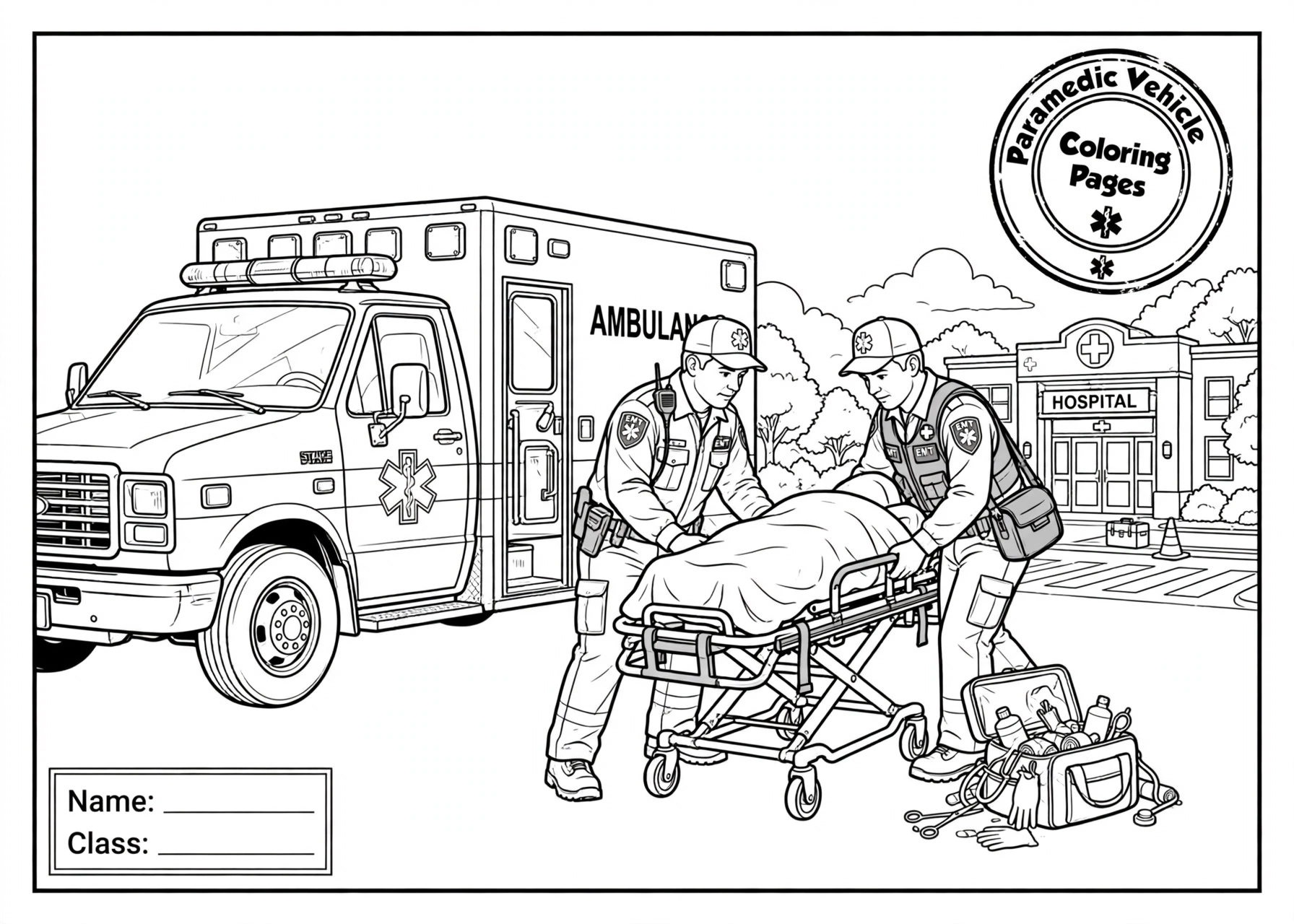
The interesting details of a paramedic vehicle are not limited to its exterior. Some illustrations may include an open rear door or a view of the medical area inside the vehicle. These details can introduce children to the equipment that paramedics use when helping patients.
Depending on the design, children might encounter visual references to a medical bag, stretcher, first-aid supplies, or other emergency equipment. A medical bag could be colored dark green, blue, or red, while a stretcher might use a combination of gray and light blue. These are optional color suggestions that can help make the illustration more detailed.
Emergency lights are another recognizable feature. Children can use red and blue to represent the lights commonly associated with emergency vehicles in many places. If the illustration includes light beams, simple alternating shades can suggest that the vehicle is responding to an urgent call.
Parents and caregivers can also explain that paramedics use specialized equipment according to a patient’s needs. The conversation can remain age-appropriate and reassuring, focusing on how trained professionals help people rather than describing frightening emergencies.
Creative Coloring Ideas for Paramedic Vehicles
A paramedic vehicle offers a useful combination of large coloring areas and smaller details. Children can start with the main body before moving to the windows, wheels, lights, and emergency symbols. This approach helps them organize the different parts of the illustration without feeling overwhelmed by the smaller features.
Here are some ideas for creating an attractive finished picture:
- Vehicle body: Use white as a traditional base or choose another light shade for a creative interpretation.
- Emergency markings: Add red, blue, or yellow details to make the vehicle recognizable.
- Windows: Use pale blue or light gray to suggest glass.
- Wheels: Combine black or dark gray with lighter gray centers.
- Emergency lights: Choose contrasting red and blue shades.
- Background: Add a hospital, road, ambulance station, trees, or nearby buildings if there is room.
Children who enjoy more detailed artwork can add road markings or a simple city environment around the vehicle. Others may prefer to concentrate entirely on the ambulance. Both approaches are perfectly suitable for a relaxed coloring session.
Turn the Vehicle into a Community Helper Story
A paramedic vehicle can inspire a simple storytelling activity about community helpers. After finishing the illustration, children can imagine that the vehicle is preparing for its next assignment. Perhaps it is parked outside an emergency station, traveling toward a hospital, or waiting for a paramedic team to finish checking its equipment.
Parents and teachers can introduce a few familiar emergency service roles during the activity. Paramedics provide medical care, ambulance drivers help transport emergency teams and patients, and hospital professionals continue providing medical treatment when patients arrive. These roles work together as part of a wider healthcare service.
It is also a good opportunity to discuss the importance of calling emergency services when someone genuinely needs urgent help. Adults can explain that emergency numbers should only be used for real emergencies and that children should ask a trusted adult for assistance. Keeping the conversation calm and practical helps children understand the purpose of emergency vehicles.
For another seasonal creative activity, families can explore these Christmas designs, which offer a completely different theme filled with holiday decorations and festive scenes.
Choosing Coloring Materials for Vehicle Details
The best coloring tools depend on the amount of detail in the selected illustration. Crayons are suitable for larger areas such as the vehicle body and background. Colored pencils provide better control for smaller features, including emergency symbols, mirrors, lights, and wheel details. Washable markers can create strong colors for the emergency markings, although children should use them carefully to avoid unwanted ink marks.
A combination of coloring materials can also produce interesting results. Children might use crayons for the main vehicle and colored pencils for the smaller details. If they want to create a more realistic appearance, they can use several shades of gray around the wheels and windows while keeping the body relatively simple.
There is no need to make every part of the vehicle look perfectly realistic. Some children may prefer a bright red ambulance, while others might create a colorful emergency vehicle with unusual patterns. The purpose of the activity is to encourage personal creativity while exploring a recognizable subject.
Combine Emergency Vehicle Activities with Other Themes
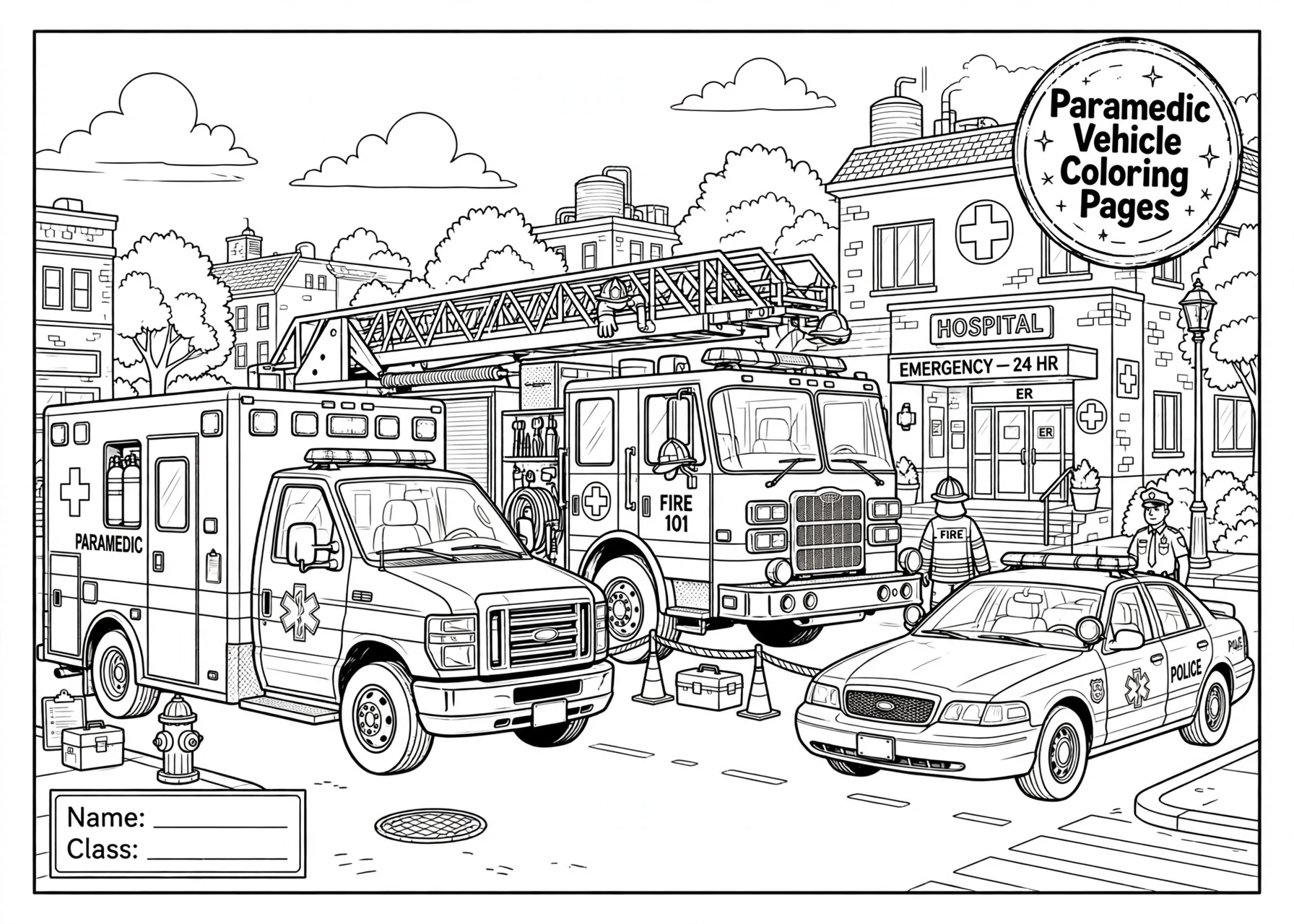
Children who enjoy transportation and special vehicles may appreciate exploring different subjects after completing a paramedic illustration. They can compare the shape of an ambulance with a fire engine, police vehicle, or rescue truck. Each vehicle serves a different purpose, which creates an opportunity to discuss how various community services work.
For children who enjoy imaginative characters as well as vehicles, these friendly dinosaurs offer another creative direction. Their playful prehistoric theme provides a fun contrast to the realistic appearance of emergency transportation.
Parents and teachers can also arrange several completed illustrations together as a community helper display. A paramedic vehicle can be placed alongside other emergency service pictures, creating a small collection that introduces children to people who help keep communities safe.
Preparing a Comfortable Coloring Activity
Paramedic Vehicle Coloring Pages can be used at home, in classrooms, or during themed creative sessions about transportation and community helpers. Before printing a selected design, check the print preview to ensure that the illustration fits properly on the page. Choose paper that works well with the coloring materials available, especially when children prefer markers or colored pencils.
Prepare a comfortable workspace with enough room for the printable and coloring tools. Children can work independently or share their finished pictures with classmates and family members. Once the artwork is complete, invite them to describe the vehicle’s features and explain which colors they selected.
Through this activity, children can explore the recognizable appearance of emergency medical vehicles while discovering the important work of paramedics. The combination of transportation details, emergency markings, and creative possibilities makes this theme an enjoyable addition to coloring activities about everyday life and community helpers.
