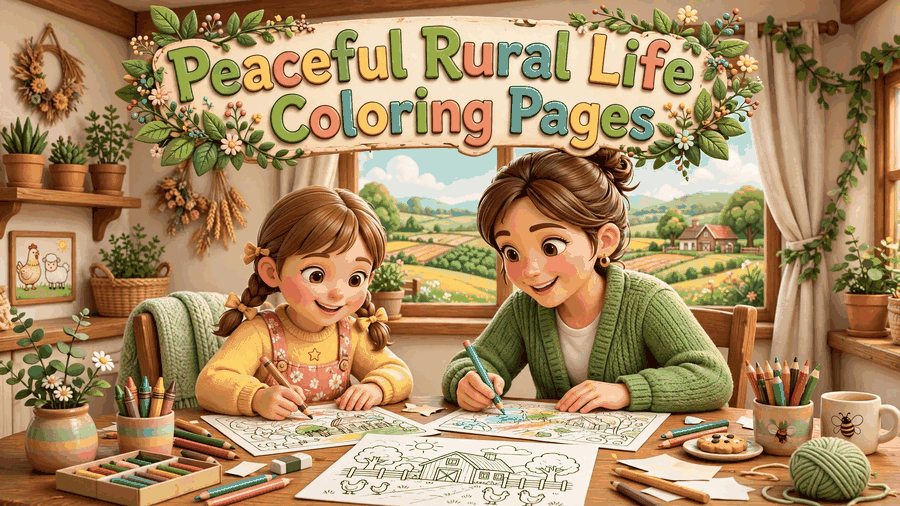
Peaceful Rural Life Coloring Pages invite children to explore quiet countryside scenes, green fields, farmhouses, and everyday village life through creative coloring and imaginative storytelling.
A Closer Look at Life in the Countryside
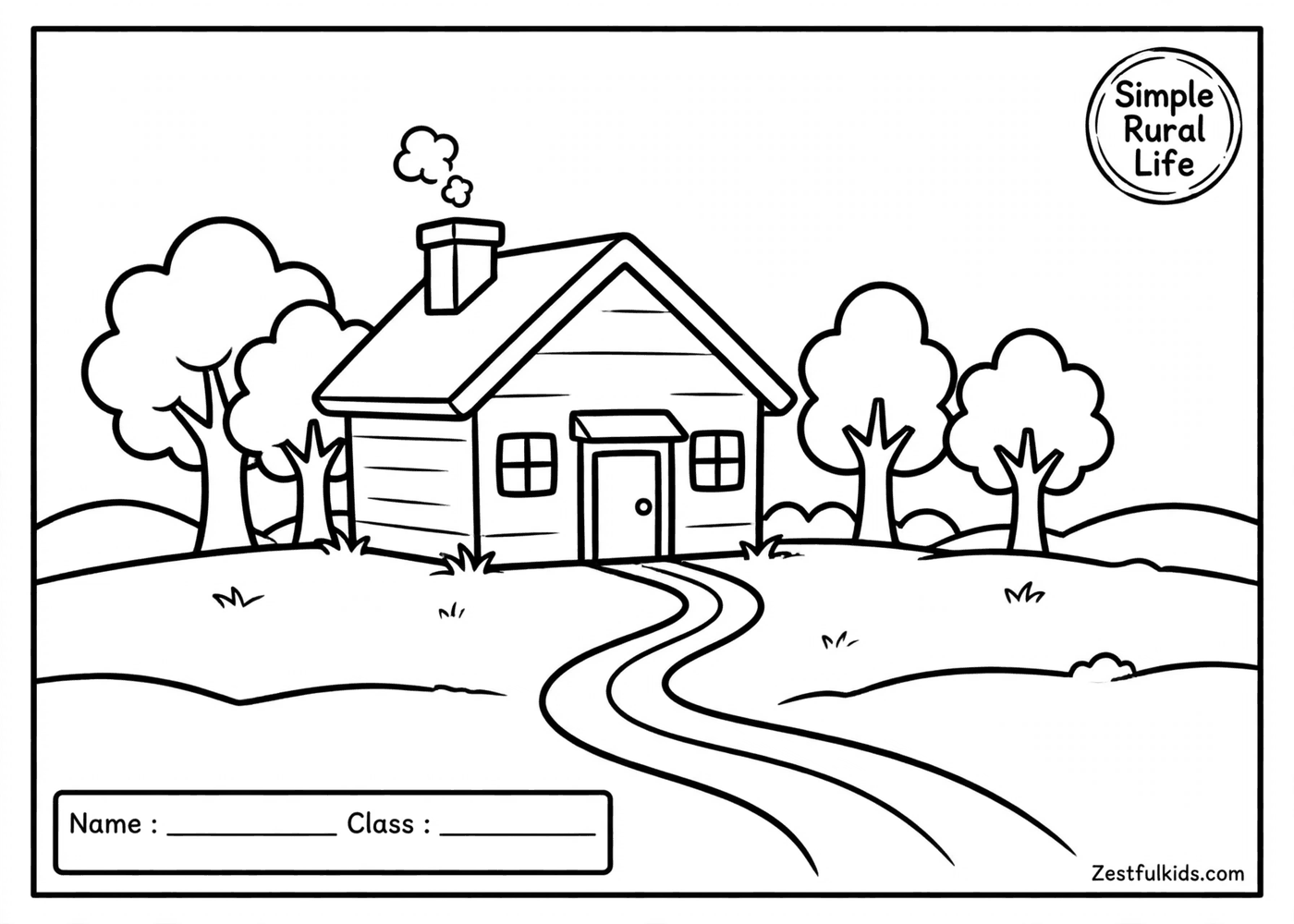
A winding path between green fields, a farmhouse surrounded by trees, and a few animals grazing nearby can capture the charm of rural life. Unlike busy city scenes filled with traffic and tall buildings, countryside settings often feature open spaces, natural landscapes, and familiar daily activities. Peaceful Rural Life Coloring Pages give children an opportunity to explore these details through color while imagining what it might be like to spend a day in a village.
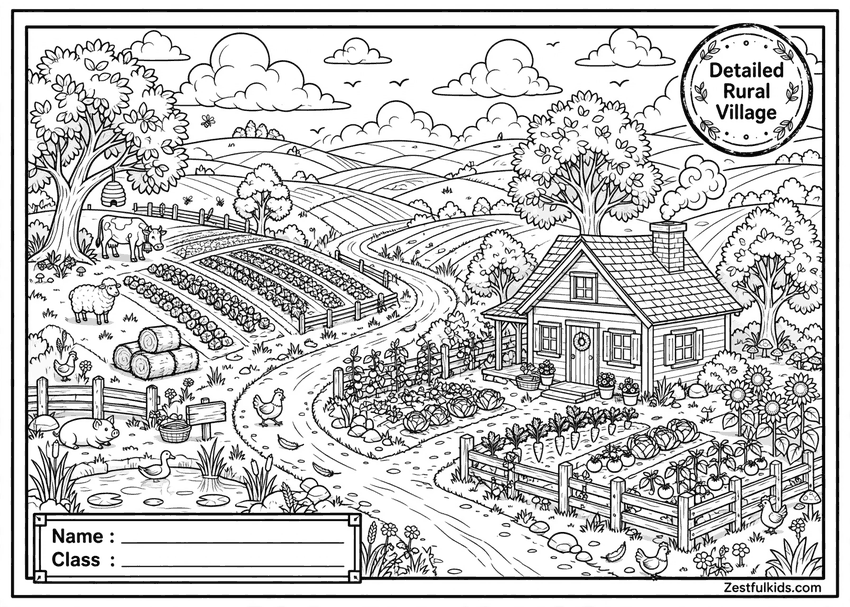
Rural life can look different depending on the region, climate, and local traditions. Some countryside scenes may suggest farming, with crops growing in neat rows and tools used to care for the land. Others might feature small houses, gardens, dirt roads, wooden fences, or animals resting in a pasture. These are possible elements of rural illustrations rather than details that must appear in every design.
The theme offers plenty of room for personal interpretation. Children can imagine a quiet morning when farmers begin their work, an afternoon when animals gather near a field, or an evening when the sky changes color above the rooftops. Even a simple landscape can become the setting for a story about people, animals, and the natural world around them.
Build a Countryside Scene One Color at a Time
Rural landscapes often contain several layers, making them interesting subjects for a coloring activity. The foreground might include a path, flowers, or a fence, while fields and trees occupy the middle distance. Hills, clouds, or distant buildings may appear farther away. Looking at these areas before coloring helps children decide where to begin and how to make different parts of the picture stand out.
Green is an obvious starting point for fields and grass, but the countryside includes many other colors. Olive green can suggest mature vegetation, while lighter greens work well for fresh grass. Trees can combine dark green leaves with brown trunks, and paths may use tan, beige, or muted gray. A farmhouse can be painted in warm cream, brick red, pale blue, or another shade that contrasts with its surroundings.
The sky can change the mood of the entire illustration. Light blue creates the familiar look of a clear day, while pale orange and pink can suggest sunrise or sunset. Soft gray clouds can introduce variety without making the picture feel too dark. Children can also leave small areas of white paper to represent sunlight or bright clouds.
For a simple approach, choose three main colors before beginning: one for vegetation, one for buildings or paths, and one for the sky. Additional shades can be added as the picture develops. This method offers a starting point for children who are unsure where to begin, while still leaving room for unexpected color choices.
What Can Children Discover in a Rural Landscape?
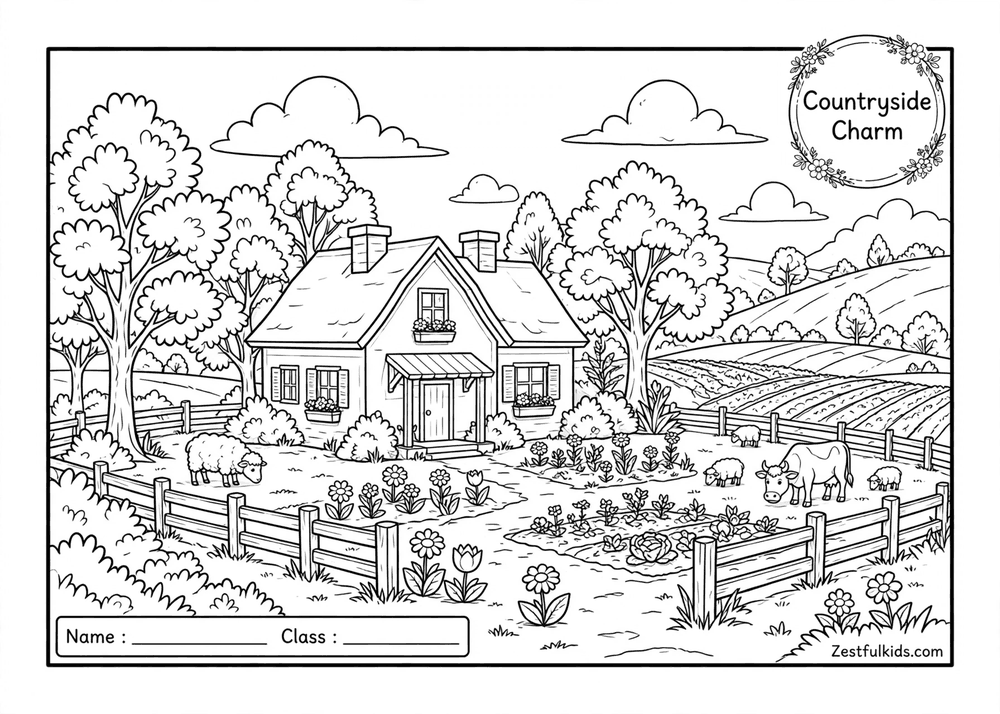
Countryside illustrations can provide natural opportunities to notice how different parts of an environment relate to one another. A field may be used for growing crops, a garden can provide space for flowers and vegetables, and a fence may separate a pasture from a path. When these elements appear in the picture, parents and teachers can use them to start simple conversations about their purposes.
Children might compare a cultivated field with a patch of wild grass or notice how trees provide shade around a house. If the illustration includes farm animals, they can discuss what those animals might eat and where they might rest. The conversation should follow the actual details of the design rather than assuming that every rural scene includes a farm or livestock.
Another useful activity is to invite children to identify the parts of the picture they would like to visit. One child might choose a garden full of flowers, while another prefers an open field or a quiet path beneath the trees. They can explain their choices and imagine what they might see, hear, or do in that setting.
For a related activity focused on natural scenery, children can explore these countryside nature designs. Comparing different countryside illustrations can help them notice how landscapes change with the arrangement of plants, open spaces, and other environmental features. They may also discover new ideas for coloring hills, trees, and fields in their own artwork.
Try Different Ways to Color Rural Life
A countryside scene does not have to look exactly like a real place. Children can choose a realistic palette based on familiar landscapes or create an imaginative village where the fields are golden, the rooftops are purple, and the trees have unusual shades of green and blue. Both approaches allow them to explore how colors work together.
For a natural appearance, colored pencils are useful for blending different greens across fields and adding small marks to suggest grass. Crayons work well for larger areas, such as the sky or a broad stretch of land. Washable markers can create stronger blocks of color for houses, fences, and other clearly outlined objects.
Children who enjoy adding details can draw small flowers along a path, birds in the sky, or vegetable plants beside a farmhouse if there is enough blank space. A few carefully chosen additions can make the scene feel more personal without covering the original outlines. It can help to finish the main landscape before adding these optional decorations.
Another idea is to create two different versions of the same rural setting. One can represent a sunny summer afternoon, using bright greens and a clear blue sky. The other can show an autumn landscape with yellow fields, orange leaves, and warmer shades across the horizon. This comparison encourages children to think about how seasonal changes influence the appearance of familiar places.
Preparing a Printable for a Relaxed Art Session
Before printing Peaceful Rural Life Coloring Pages, review the available file and check the print preview. Make sure the illustration fits within the printable area and that important lines are not cut off near the edges. Choose paper that suits the coloring materials, especially if children plan to use markers or layer several shades of colored pencil.
Set up a comfortable workspace with a few coloring tools within easy reach. Children do not need a large collection of supplies to complete a countryside scene. A small selection of greens, browns, blues, and a few accent colors can cover many landscape details, while additional shades can be introduced when needed.
A practical coloring order is to start with the sky, continue with distant fields or hills, and then work toward the objects in the foreground. This sequence can make the landscape easier to organize, although children should feel free to begin with whichever feature interests them most. If the picture contains a prominent farmhouse or animal, coloring that subject first may be more enjoyable.
Parents and teachers can also let children work at their own pace. Some may want to complete every section, while others might prefer to focus on a few favorite details. The purpose is to enjoy the artwork and explore the scene, not to make every finished page look identical.
Add Animals to the Countryside Collection
Animals are an important part of many rural settings, although not every countryside scene includes them. When children are ready for another subject, they can explore these zebra illustrations. The zebra’s bold black-and-white stripes offer a striking contrast to the softer greens and earthy colors often used in countryside landscapes.
This change of subject creates a different coloring challenge. Instead of deciding how to shade fields, rooftops, and trees, children can focus on the zebra’s distinctive markings, body shape, and surrounding details. They can also compare how animals live in different environments, discussing the difference between a familiar farm setting and the grasslands where zebras are found in the wild.
Completed pictures can be stored together in a folder or arranged into a homemade book about landscapes and animals. Children may give each page a title, such as “A Sunny Day in the Village” or “The Quiet Farm Road,” and describe one detail they particularly enjoyed coloring. These small additions turn individual pictures into a collection of creative observations.
Peaceful Rural Life Coloring Pages offer a welcoming way for children to explore fields, homes, gardens, and the everyday details of countryside environments. Through thoughtful color choices and optional storytelling, a simple landscape can become a scene filled with personal meaning. Whether children prefer realistic farm colors or an imaginative village of their own design, the activity leaves plenty of room for creativity.

