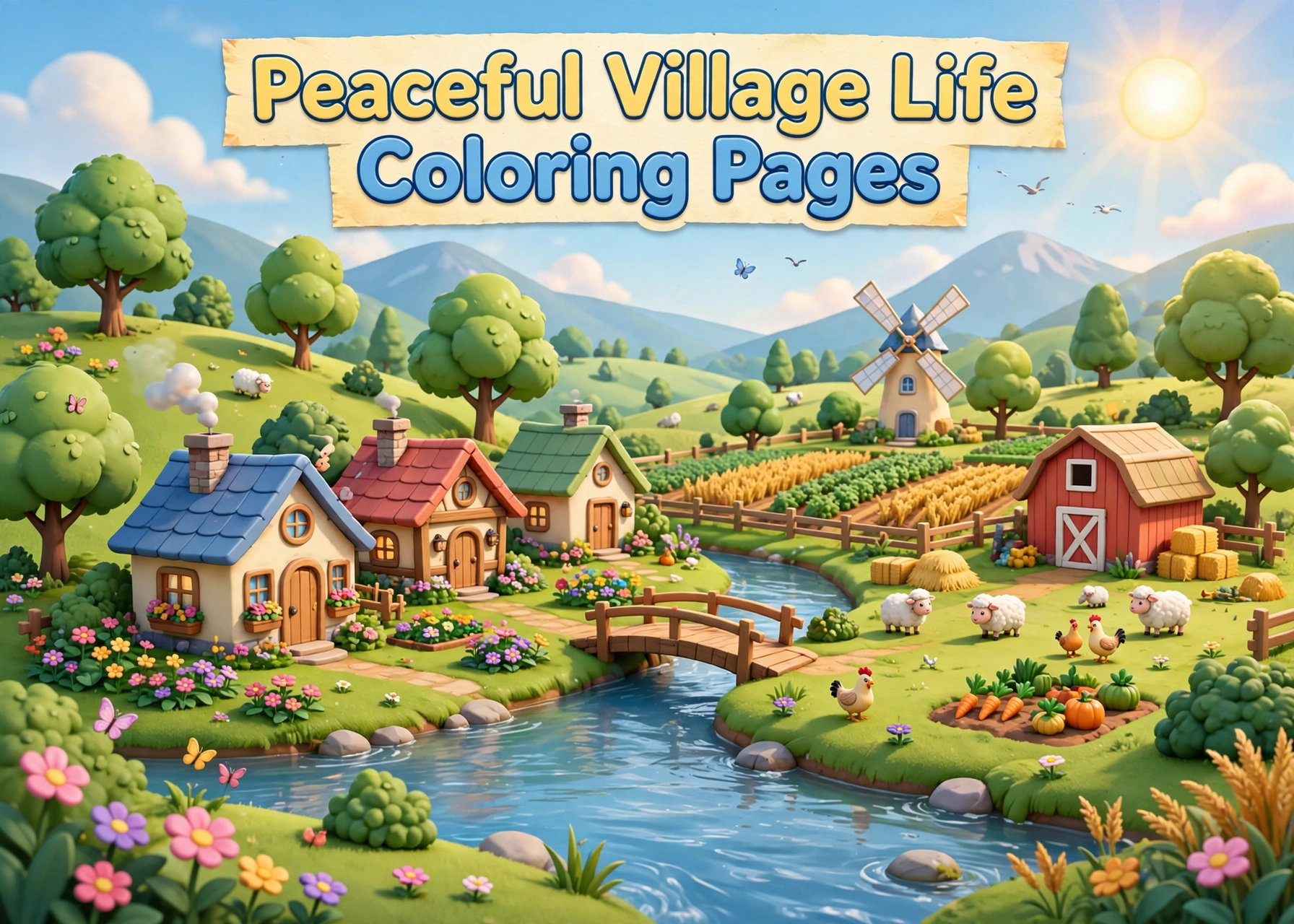
Peaceful Village Life Coloring Pages introduce children to the charm of countryside living through familiar rural scenery, traditional homes, green fields, and everyday village activities. These printable designs offer a creative way to explore simple surroundings while enjoying a relaxing art experience.
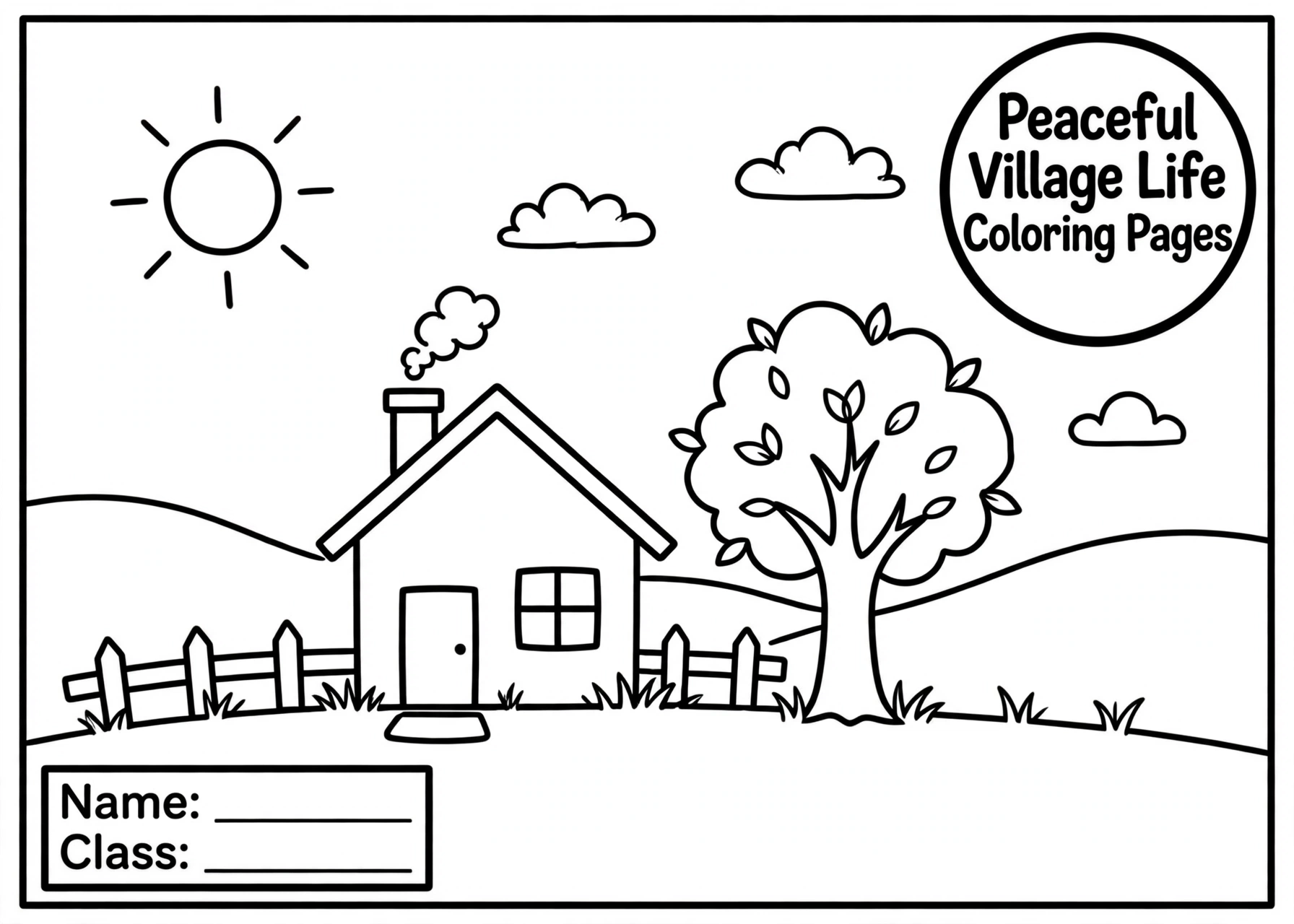
Discover the Charm of Everyday Village Life
A peaceful village often has a character that feels different from a busy city. Instead of crowded streets and tall buildings, the scenery may include small houses, open fields, narrow pathways, gardens, and trees. Daily activities happen at a gentler pace, with neighbors greeting one another and people taking care of their homes, farms, and animals.
These details make village life an interesting subject for children’s coloring activities. A simple house can become a colorful home with a bright roof, painted doors, and flower-filled surroundings. A winding path might lead toward a rice field, while trees provide shade beside a quiet road.
Village scenery also offers a mixture of natural and man-made elements. Children can move between coloring rooftops, fences, plants, wooden doors, and open landscapes. Each object has a different shape and texture, giving them plenty of choices when planning their artwork.
Rather than treating the illustration as a picture that must follow realistic colors, children can imagine their own version of an ideal village. One might have colorful houses, another could feature a wide green meadow, and a third might include a garden filled with bright flowers.
Explore the Details of a Countryside Landscape
The beauty of a village illustration often comes from the small details that make the scenery feel familiar. Looking closely at these elements can help children decide which parts they want to emphasize with color.
Village houses are a natural starting point. Traditional rural homes can have tiled roofs, wooden walls, simple windows, and front porches. Red, brown, orange, or gray can be used for rooftops, while the walls might be painted cream, light blue, or soft green.
Gardens and plants add freshness to the surroundings. Children can use different shades of green for leaves and grass, then introduce yellow, pink, purple, or red for flowers. Small plants beside a doorway can make a house look welcoming.
Village roads and pathways connect different parts of the landscape. Some paths might be imagined as dirt roads, while others could be paved with stones. Light brown, beige, and gray are useful choices for these surfaces.
Open fields create a sense of space. A rice field can be colored in different shades of green, while harvested farmland might use golden yellow and light brown. Children can also imagine distant hills or trees beyond the fields if the illustration leaves room for additional details.
Choosing Colors That Create a Calm Atmosphere
A countryside scene does not need extremely bright colors to look attractive. Soft and natural shades can help create the peaceful atmosphere suggested by the theme.
Here are some useful combinations to try:
- Leaf green and olive: Suitable for trees, bushes, grass, and garden plants.
- Sky blue and white: Useful for open skies and fluffy clouds.
- Terracotta and brown: Good choices for traditional rooftops, wooden fences, and village paths.
- Golden yellow: Can represent sunlight, ripe crops, and harvested fields.
- Light beige and cream: Work well for house walls, pathways, and other neutral surfaces.
- Flower pink and purple: Add small decorative touches to gardens and outdoor spaces.
Children can also experiment with the time of day. A morning village might have a pale blue sky and fresh green surroundings. An afternoon scene could use warmer yellow tones, while an imaginary sunset might include orange, pink, and purple across the sky.
These color choices can be discussed before coloring begins, but children should remain free to choose their own combinations. A brightly painted village can be just as enjoyable as a realistic countryside landscape.
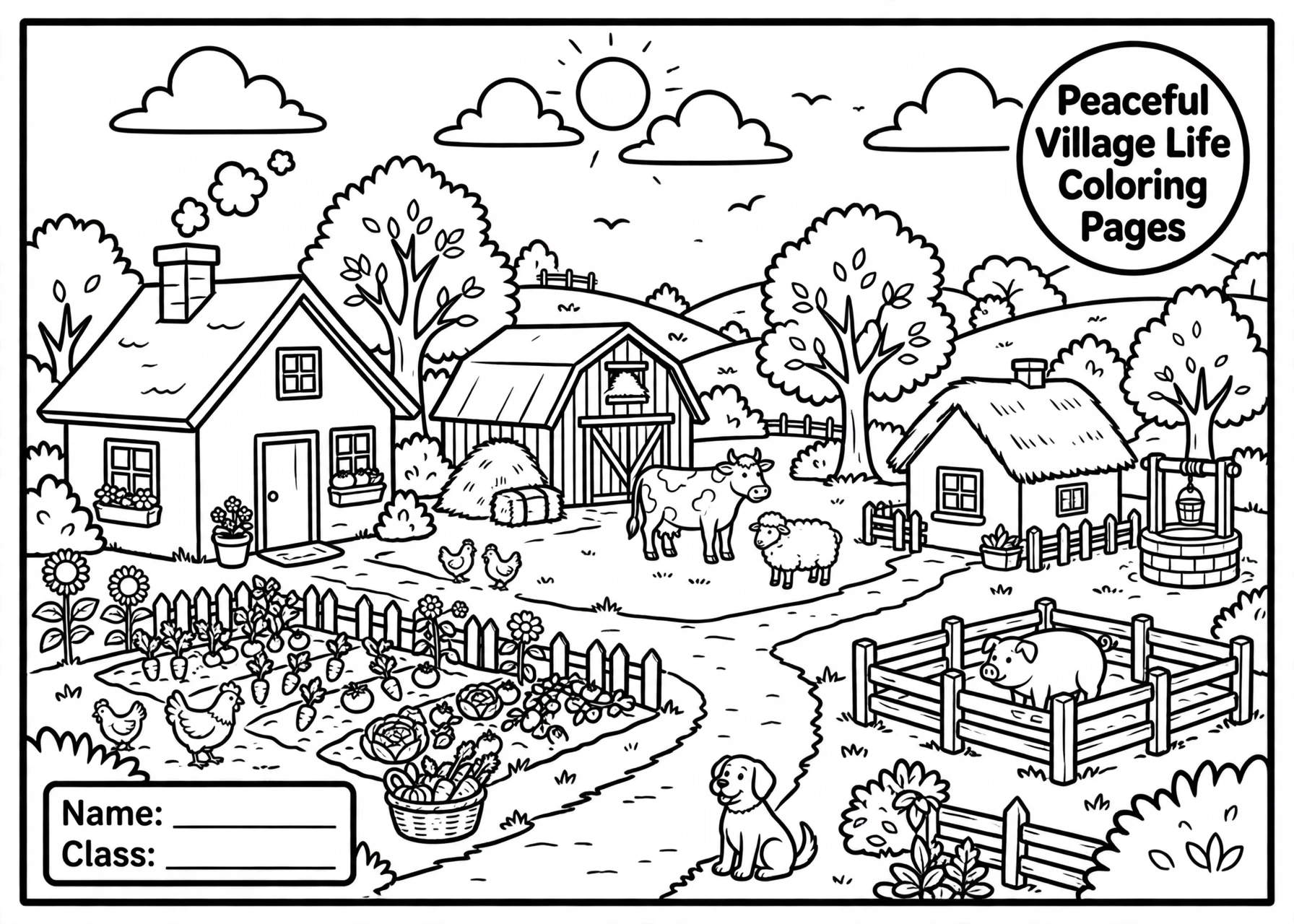
Imagine the Stories Behind the Village Scenes
Village life is not only about buildings and landscapes. It also involves people, routines, and small activities that make a community feel alive.
Children can imagine a family watering plants outside their home, a farmer working in the fields, or neighbors chatting along a village pathway. If the illustration includes people, these imagined situations can help children think about what might be happening in the scene.
Another idea is to create a short story about a day in the countryside. The story might begin with the sound of birds in the morning, followed by someone opening the windows of a small house. Later, people might visit the garden, walk along the road, or spend time outdoors before sunset.
Parents and teachers can encourage children to give their imaginary village a name. They might call it Green Valley Village, Sunny Meadow, or Little Flower Village. Children can then describe what makes their chosen place special.
For a classroom activity, several finished illustrations can become part of a larger imaginary village display. Each child can contribute a house, garden, road, or landscape and explain where their creation belongs. This provides a simple way to combine individual artwork into a shared countryside scene.
Natural Coloring Techniques for Houses and Landscapes
A village landscape may contain large areas alongside smaller architectural details. Choosing suitable coloring materials can make these different sections easier to complete.
Crayons are useful for broad spaces such as skies, fields, and house walls. Colored pencils provide more control when adding details to windows, roof tiles, flower petals, and fences. Washable markers can create stronger colors for doors, rooftops, and decorative features.
Layering two shades of the same color is another simple technique. For example, children can use light green for the main area of a tree and darker green around selected sections. A roof can also have alternating shades of red or brown to make its individual sections more noticeable.
It is usually practical to begin with the larger areas and finish with smaller details. Children can color the sky and landscape first, followed by houses, plants, and any people or objects included in the design.
Connect Village Life with Other Creative Themes
Children who enjoy peaceful countryside scenery may also like exploring seasonal and nature-inspired subjects. Christmas, for example, introduces a different atmosphere filled with decorated trees, festive ornaments, and familiar holiday traditions. Families can discover these Christmas illustrations when looking for another activity during the holiday season.
For children who prefer imaginary creatures, a sleeping baby dinosaur offers a charming alternative. Its gentle appearance provides a different subject from houses and landscapes while keeping the activity playful. These sleeping baby dinosaur illustrations can add variety to a collection of creative activities.
Moving between countryside scenes, seasonal decorations, and friendly creatures allows children to explore different subjects without repeating the same coloring experience.
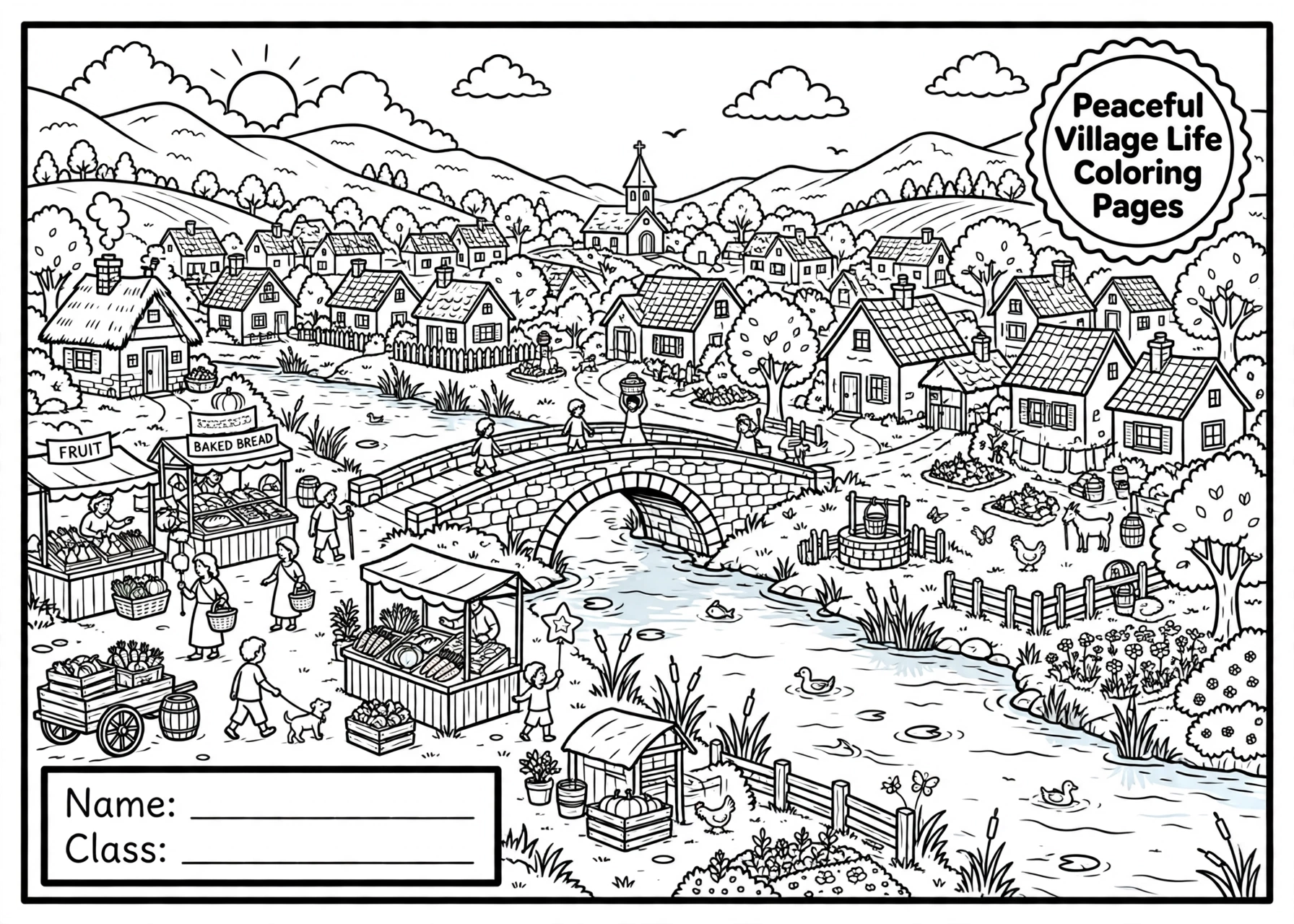
Preparing a Relaxed Countryside Coloring Activity
A comfortable workspace is useful when children want to spend time filling in the details of a village illustration. Prepare a flat table, enough space for the paper, and a selection of coloring materials. Keeping a few natural colors together can also make it easier to work on houses, trees, and fields.
Before printing, check the preview to ensure that the illustration fits within the selected paper size. Adjust the printer settings if necessary to prevent important parts of the design from being cropped. The paper choice can depend on the available file and whether children plan to use crayons, colored pencils, or markers.
There is no need to finish every section in one sitting. Some children may enjoy concentrating on the architecture, while others prefer decorating the gardens and surrounding landscape. Allowing time for these different approaches makes the activity more flexible for home or classroom use.
Peaceful village scenery offers children an opportunity to explore familiar buildings, natural surroundings, and the simple activities of countryside communities. With thoughtful color choices and a little imagination, each finished picture can become a personal interpretation of a welcoming village.
