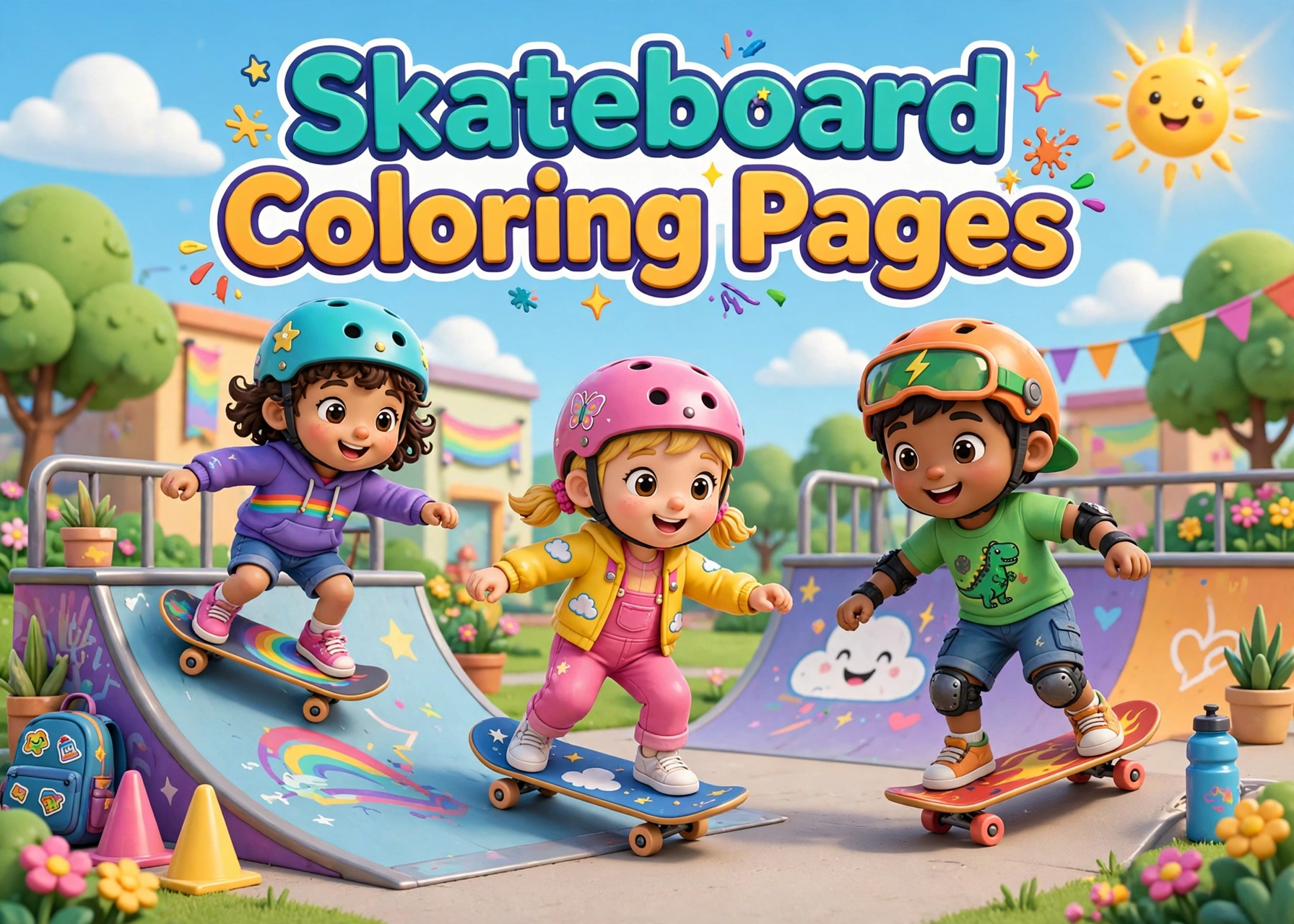
Skateboard Coloring Pages bring the excitement of skateboarding into a creative activity, featuring a popular sport known for its colorful boards, impressive tricks, and energetic street culture. Children can explore different designs while experimenting with patterns, colors, and imaginative skatepark scenes.
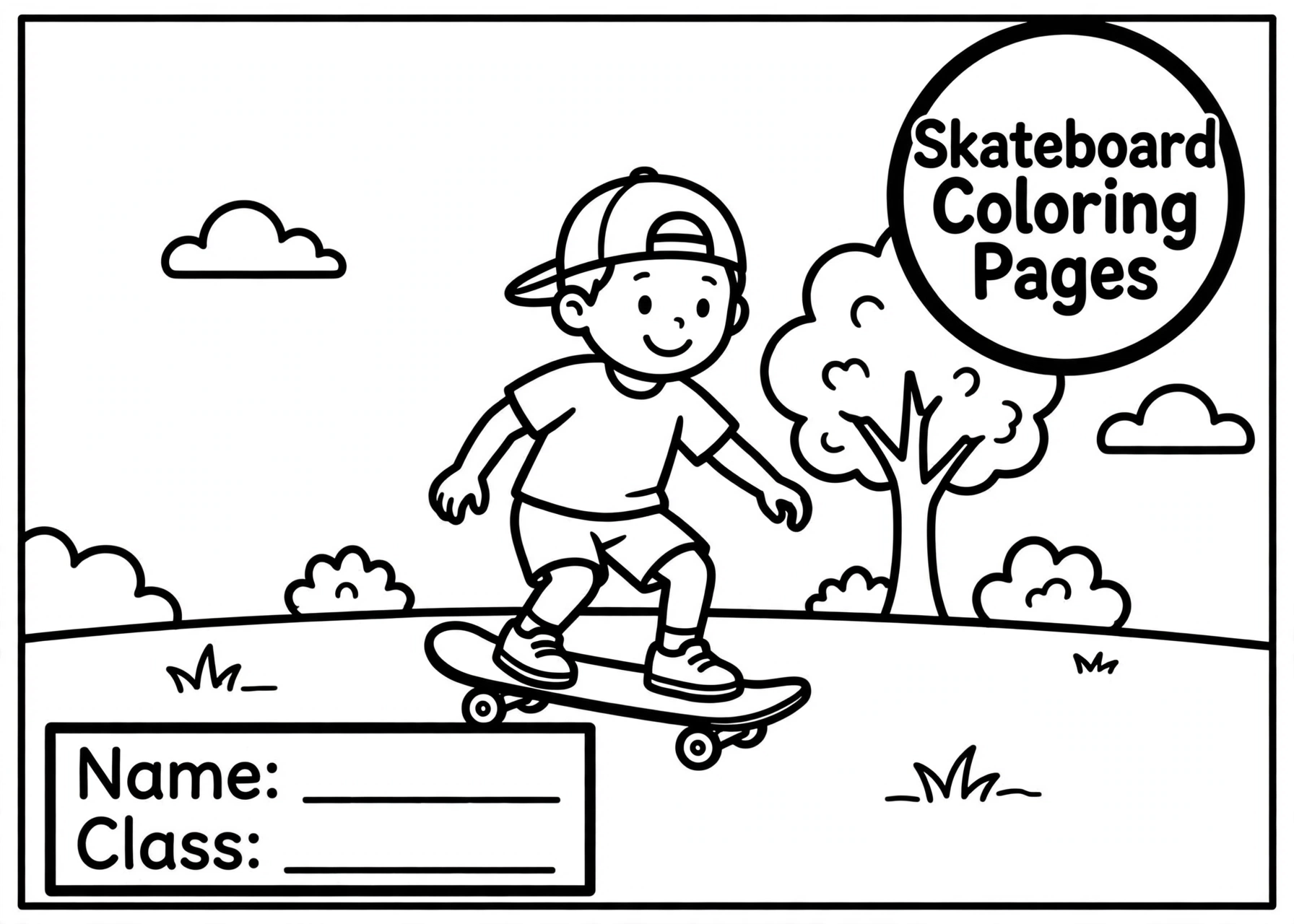
More Than a Board: Exploring Skateboarding Through Art
A skateboard may look like a simple piece of equipment, but its design contains several interesting details. A typical skateboard has a flat deck, four wheels, two trucks, and a grip surface that helps the rider keep their feet in place. Each part has a different shape, making skateboards an enjoyable subject for children who like coloring vehicles and sports equipment.
The deck is usually the most noticeable part because it offers a wide surface for creative decoration. Skateboards can feature bold graphics, geometric patterns, cartoon characters, lettering, or colorful illustrations. Children can use their own ideas to turn an ordinary board into something that reflects their personal style.
The wheels and trucks provide additional coloring opportunities. Wheels are commonly seen in different colors, while the metal trucks can be represented with gray or silver shades. The grip tape on top of the deck is often dark, although children can experiment with other colors when creating an imaginative design.
Skateboarding is also closely connected to movement and balance. A skateboarder may cruise along a smooth path, practice turning, or attempt tricks at a skatepark. These activities provide inspiration for children who want to imagine a complete skateboarding scene rather than simply coloring the board.
Design a Skateboard with a Personal Style
One of the most enjoyable parts of a skateboard-themed activity is designing the deck. Unlike many everyday objects, skateboard decks can have highly creative graphics. There is plenty of room to experiment with colors, shapes, and decorative patterns.
Children can begin by choosing a main color for the board. Bright red, electric blue, purple, orange, and green are all interesting possibilities. After selecting the base color, they can add contrasting patterns or imaginary artwork.
Here are a few design ideas to try:
- Geometric patterns: Combine triangles, circles, zigzags, and lines to create a modern-looking skateboard.
- Flame graphics: Use red, orange, and yellow to create a design inspired by speed and movement.
- Rainbow stripes: Arrange several bright colors across the deck for a cheerful appearance.
- Nature-inspired artwork: Add flowers, leaves, clouds, or mountain shapes to create a different style.
- Space designs: Use dark blue, purple, and silver with imaginary stars and planets.
- Graffiti-inspired lettering: Decorate the board with colorful letters, outlines, and creative symbols.
Children can also give their skateboard a name. A board called Lightning Rider might have yellow and blue graphics, while Rainbow Cruiser could feature several bright stripes. This small activity makes the coloring process more personal.
What Happens at a Skatepark?
A skatepark is a place where skateboarders can practice and enjoy different riding techniques in a designated environment. These parks often contain specially designed surfaces and obstacles that create opportunities for different movements.
Some familiar skatepark features include ramps, quarter pipes, rails, steps, and curved transitions. Each structure serves a different purpose. A ramp helps riders move between different heights, while rails can be used for certain sliding tricks. Smooth open areas are useful for practicing basic movements and maintaining balance.
If children want to imagine a skatepark background, they can use gray for concrete surfaces and add bright colors to selected obstacles. Safety signs, benches, trees, and surrounding buildings can also be included as optional details when there is enough space.
A skateboard illustration can inspire a short imaginary adventure. Children might picture a rider arriving at the park, choosing a favorite board, and practicing a new trick. They can even invent a name for their imaginary skatepark, such as Sunset Skate Zone or Rainbow Ramp Park.
This storytelling approach works well for families and classroom activities because it gives children something to discuss while they color.
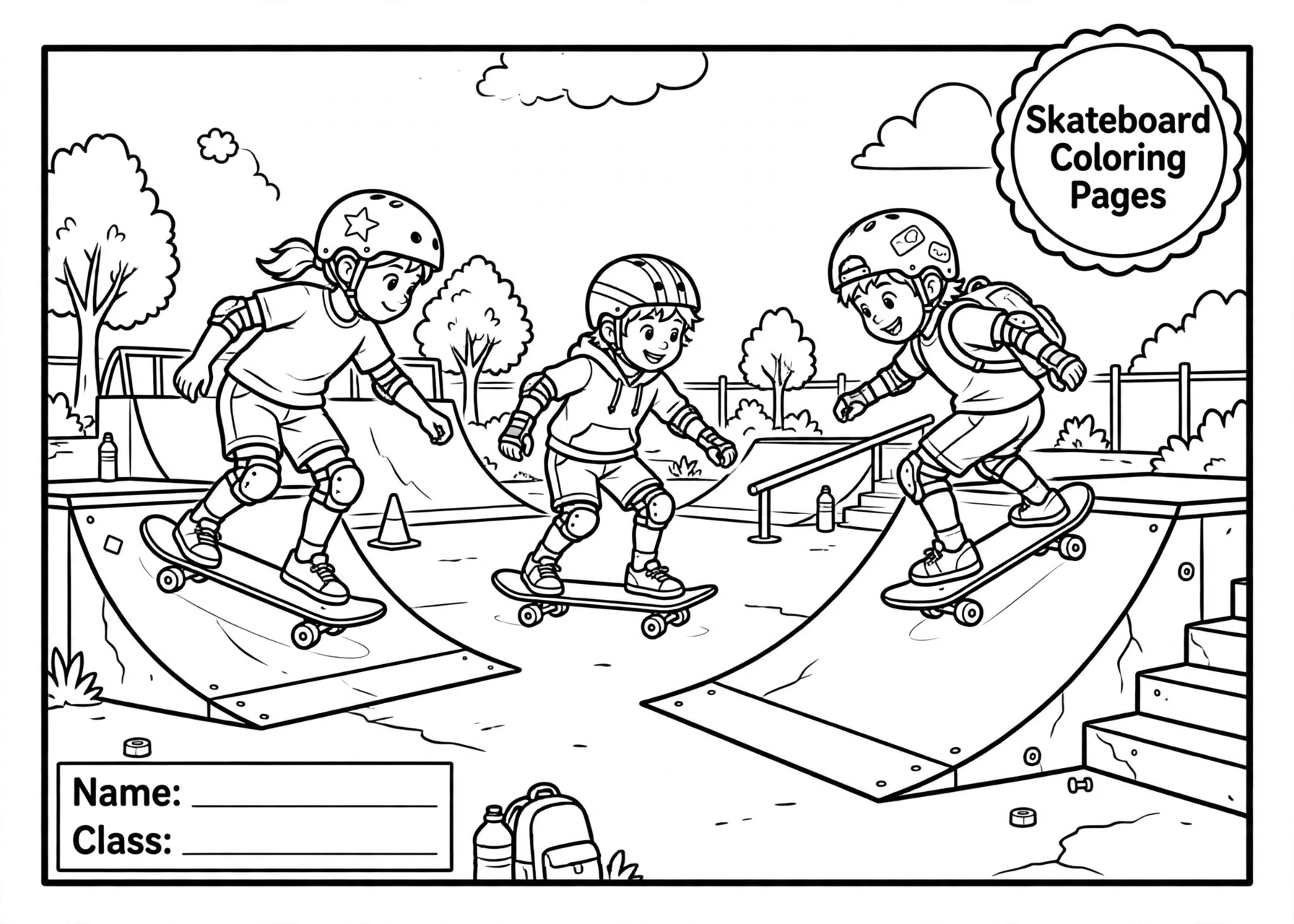
Recognizing Different Skateboarding Tricks
Skateboarding includes several tricks that involve different combinations of balance, movement, and board control. Learning their names can add an interesting sports connection to a coloring session.
An ollie is one of the best-known skateboard tricks. It involves lifting the board off the ground without using the hands. A kickflip is another recognizable trick in which the board rotates beneath the rider’s feet. A manual involves balancing on either the front or rear wheels while moving.
Children do not need to understand every technical detail to enjoy these ideas. Parents can simply introduce a few trick names and explain that skateboarders practice carefully before attempting more difficult movements.
If an illustration includes a skateboarder in action, children can imagine the movement taking place. They might choose bright clothing colors for the rider and decorate the skateboard with a distinctive design. A few motion lines, if space allows, can also suggest speed and direction in an additional drawing.
Choosing the Best Colors and Coloring Materials
Skateboard illustrations often combine large surfaces with smaller mechanical details. Using different coloring materials can make the activity easier and more enjoyable.
Colored pencils are useful for adding patterns to the deck, drawing small graphics, and creating different shades. They allow children to work carefully around the wheels, trucks, and other details.
Crayons are practical for filling larger sections, such as clothing, backgrounds, and skateboard decks. Washable markers can produce bold colors that make decorative graphics stand out, although children should check the paper before using them to avoid ink showing through.
A helpful approach is to complete the skateboard deck first, followed by the wheels and trucks. If the illustration includes a rider, children can then choose colors for the helmet, shirt, trousers, and shoes. Background details can be finished last.
There is no need to make every skateboard look realistic. An unusual combination of colors can be just as appealing as a design inspired by real skateboarding equipment.
Extend the Fun with Other Transportation and Character Themes
Children who enjoy skateboard illustrations may also like exploring other subjects connected to movement and everyday adventures. An airport shuttle bus, for example, offers a completely different vehicle design, with large windows, wheels, doors, and space for passengers. These airport shuttle bus illustrations provide another opportunity to experiment with vehicle colors and transportation-related details.
For a softer change of subject, children can explore a Christmas-themed kitten. Its playful appearance and seasonal setting introduce a different kind of creative experience. Families can discover these Christmas kitten illustrations when looking for an animal-themed activity with a festive atmosphere.
Alternating between sports equipment, vehicles, and animals can make a collection of children’s artwork more varied. Each theme introduces different shapes and visual details to explore.
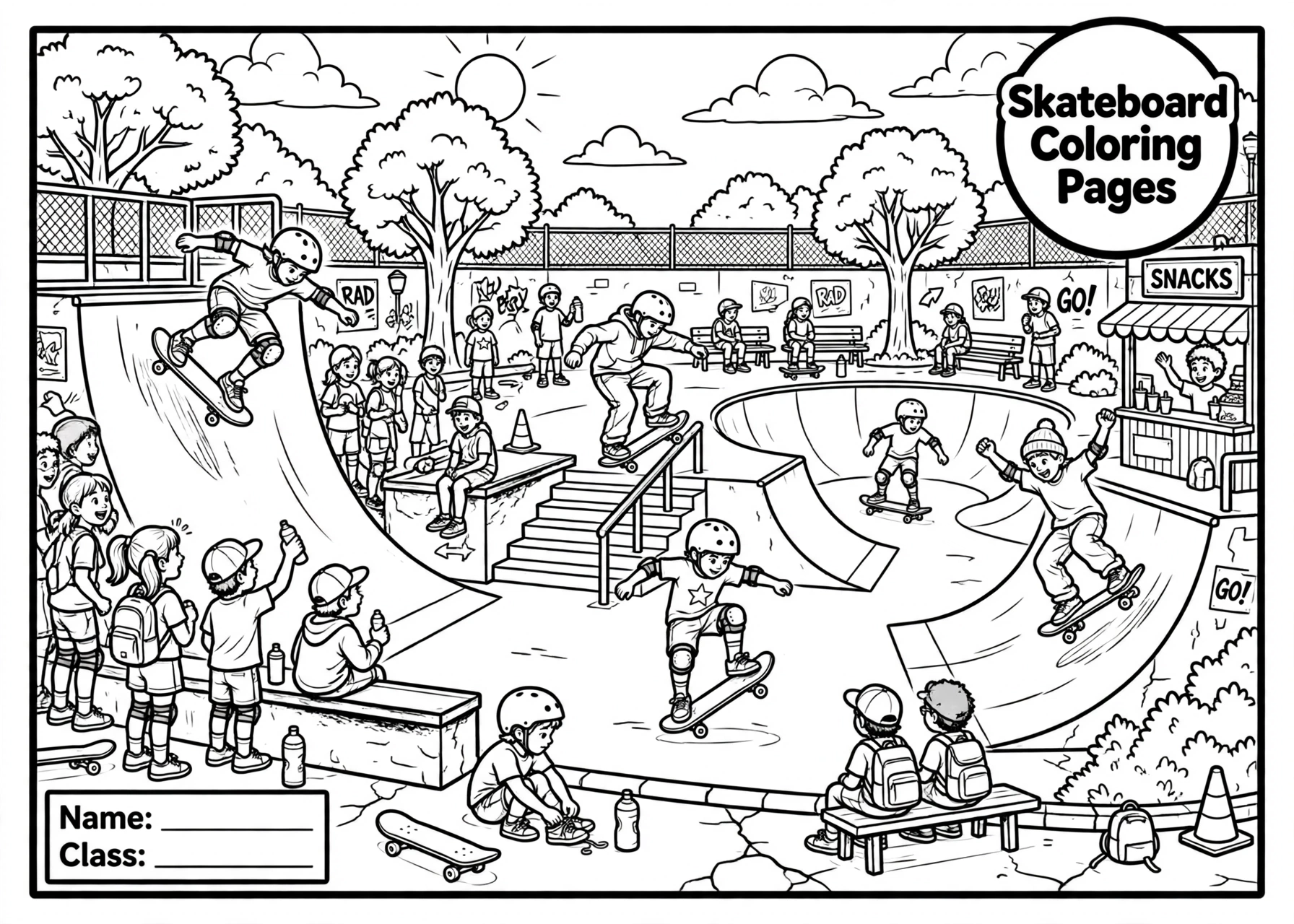
Preparing a Fun Skateboard Coloring Session
A comfortable workspace helps children focus on their artwork. Prepare a flat table, suitable paper, and a selection of crayons, colored pencils, or washable markers. Keeping several colors nearby makes it easier to experiment with skateboard graphics and clothing designs.
Before printing, check the print preview to make sure the illustration fits within the selected paper size. Adjust the settings if necessary to prevent important details from being cropped. The best paper choice depends on the available file and the coloring materials being used.
Parents and teachers can also turn the finished artwork into a small design activity. Children can give their skateboard a name, describe its graphics, and explain where they would like to ride it. They might even draw a matching helmet or design a small skatepark on a separate sheet of paper.
Skateboarding combines movement, personal style, and creative expression. Through skateboard-themed illustrations, children can explore the details of the sport, invent their own deck designs, and imagine exciting skatepark adventures while enjoying an engaging coloring activity.
