Children Playing in the Countryside Coloring Pages bring rural adventures to life through creative coloring. These printable activities invite children to explore outdoor play, peaceful village surroundings, and imaginative scenes inspired by countryside life.
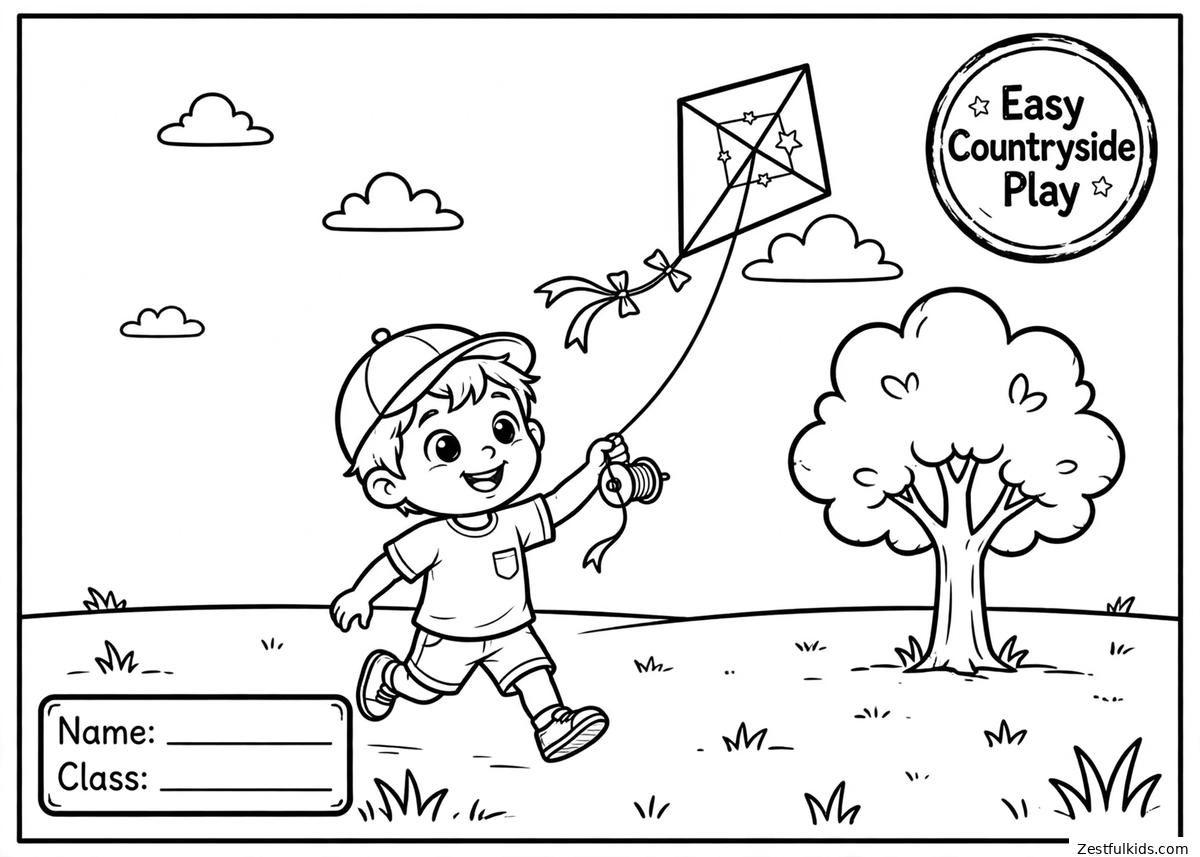
Discover the Joy of Countryside Adventures
The countryside offers a setting where everyday play can feel like a small adventure. Open fields, winding paths, grassy yards, and quiet village surroundings provide plenty of inspiration for scenes featuring children enjoying time outdoors. Children Playing in the Countryside Coloring Pages capture the charm of these simple experiences, giving young artists an opportunity to imagine what life beyond busy streets might look like. Depending on the illustration, children may find inspiration in the people, outdoor activities, and natural surroundings depicted on the page.
What makes this theme appealing is its connection to familiar childhood experiences. Running across an open field, playing with friends, walking along a country lane, or exploring a garden are activities that children can easily imagine themselves enjoying. Even if they live in a city or suburban neighborhood, they can use the pictures as a starting point for discovering a different environment. The countryside theme also leaves room for personal interpretation, allowing each child to choose colors and add small details that reflect their own ideas.
Rather than treating every scene as a picture that must be colored in a particular way, parents and teachers can encourage children to notice what is happening in the illustration. The clothes worn by the children, the appearance of the ground, and the surrounding plants can all become opportunities to make thoughtful color choices. A simple rural scene can also inspire a conversation about outdoor games, village traditions, and the different places where children spend their free time.
Bringing Rural Landscapes to Life with Color
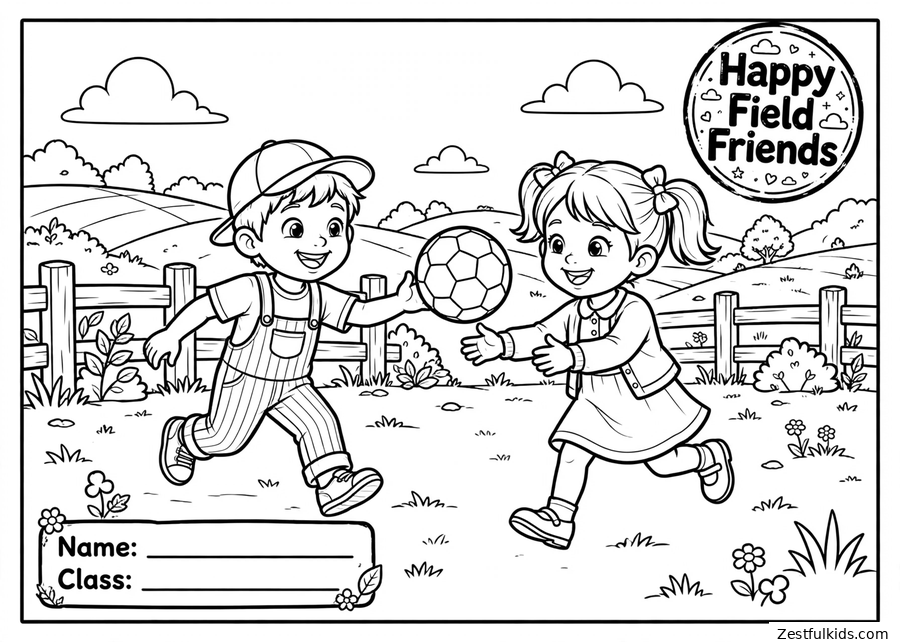
Countryside scenes often feature a mixture of natural colors and everyday details. Green grass, brown soil, blue skies, and leafy trees are familiar starting points, but children do not need to follow realistic colors throughout the picture. A sunny field could have yellow-green grass, while distant hills might be shaded in lighter green to make them appear farther away. If the illustration includes flowers, fences, or a small path, these details can help create contrast without overwhelming the main subjects.
The children in the picture deserve just as much attention as the landscape. Bright shirts, patterned dresses, colorful shorts, and differently colored shoes can make each figure easy to distinguish. Children can select a small palette of three or four colors and repeat them throughout the illustration to create a coordinated appearance. Alternatively, they can give every character a different combination, especially when the scene suggests a group of friends playing together.
Light and weather can also influence the overall look. For an imagined sunny afternoon, warm yellow tones and a bright blue sky may suit the scene. A cooler palette of pale blue, soft green, and gray could suggest a cloudy day, while deeper greens and earthy browns can make a countryside setting feel lush after rainfall. These are optional creative choices rather than rules, so children should feel comfortable experimenting with whichever colors they enjoy.
Turn Everyday Outdoor Play into a Story
Coloring a countryside scene can be more interesting when children imagine the events taking place beyond the outlines. If several children appear together, they might be playing a familiar game, sharing a discovery, or planning their next adventure. A child coloring the picture could invent names for the characters and explain what happened just before the scene began. These details can turn a finished illustration into a small story that is unique to its creator.
Parents can encourage storytelling with simple prompts connected to the picture. Ask children where the characters are going, what they might do next, or which part of the countryside they would most like to explore. If the illustration contains a path, children might imagine where it leads; if it shows an open field, they could invent a game suitable for that space. When the page does not include particular objects, children can draw extra details on a separate sheet or add them to the background if there is enough room.
Teachers can adapt the activity for a classroom by inviting children to describe one detail they added and explain why they chose it. They might talk about the difference between a rural landscape and a busy town, or compare outdoor games they have played with those imagined in the picture. These conversations work best when children are free to share different experiences without assuming that every family has access to the same outdoor spaces.
For children who enjoy combining coloring with other creative themes, a dinosaur adventure can provide a playful contrast to everyday countryside life. The dinosaur coloring activity featuring a dinosaur with 500 teeth offers another imaginative subject to explore. Children could invent a story about discovering dinosaur footprints near a country path, then draw their own prehistoric visitor on a separate sheet of paper.
Choosing Coloring Tools for Different Details
The best coloring materials depend on the child’s preferences and the amount of detail in the illustration. Wax crayons work well for filling broad areas such as grass, open skies, and clothing. Colored pencils offer more control when adding small patterns, defining the edges of shoes, or creating different shades in trees and bushes. Washable markers can produce strong colors, although it is worth checking the paper first because some markers may show through thin sheets.
For a relaxed coloring session, children can begin with the largest areas before moving to smaller details. Filling the background first may help establish the overall color scheme, while starting with the children in the scene can make the main subjects stand out. There is no single correct order, and allowing children to choose their own approach can make the process more enjoyable.
If the picture includes several figures and many background elements, it may help to pause occasionally and look at the page from a little distance. Children can then decide whether any areas need additional color or whether leaving some sections white creates the effect they want. Adults should avoid correcting every unexpected color choice; an orange tree or purple field may simply be part of the child’s imagined countryside.
Bringing Nature into the Coloring Experience
A countryside coloring activity can also encourage children to pay closer attention to plants, weather, and the appearance of outdoor spaces. If they have visited a village, farm, park, or garden, invite them to compare the illustration with something they remember seeing. They might notice the shapes of leaves, the color of a dirt path, or the way distant trees appear smaller than nearby ones. Children who have not visited the countryside can use the picture to imagine a setting they would like to explore.
For an additional nature-inspired activity, families can explore Kawaii Flower Coloring Pages. The flower theme can complement a countryside scene by introducing ideas for gardens, meadows, and colorful plants. Children might choose a few flowers they would like to add to an imaginary village field or create a separate garden picture that belongs to the same setting.
Another option is to invite children to draw a small countryside scene after completing their coloring page. They can include a favorite outdoor game, a tree for shade, or a path connecting different parts of the landscape. The drawing does not need to be detailed; a few simple shapes can communicate the idea. This extension gives children a chance to move beyond the original outlines and create a setting that reflects their own experiences and imagination.
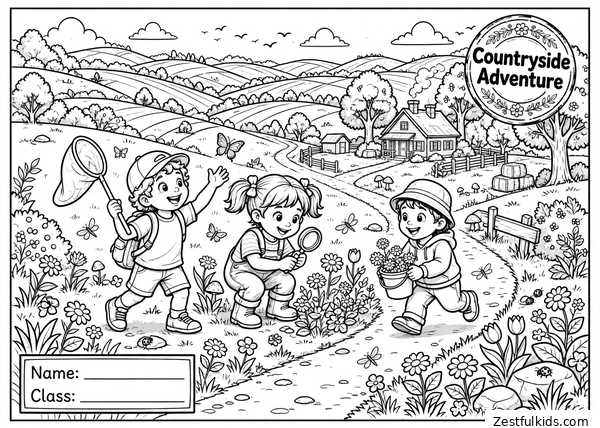
Printing and Enjoying the Activity at Home or School
Before printing a coloring design, check the preview to ensure that the main illustration fits within the printable area and that important outlines remain visible. Choose the paper size supported by the file and printer settings, and adjust the scaling if necessary. Standard printer paper is often suitable for crayons and colored pencils, while thicker paper may be preferable for some marker activities when compatible with the printer.
Prepare a comfortable workspace with enough room for the page, coloring materials, and any additional paper children may want for drawing. At home, the activity can be part of a quiet afternoon or a creative break between other tasks. In a classroom, completed pictures can be displayed together to show how different children interpreted the same countryside theme.
Children Playing in the Countryside Coloring Pages offer more than an opportunity to fill outlines with color. They provide a starting point for exploring outdoor play, imagining rural surroundings, and creating stories about childhood adventures. Whether children choose natural shades or invent a colorful world of their own, each finished picture can reflect a different way of seeing the countryside.
