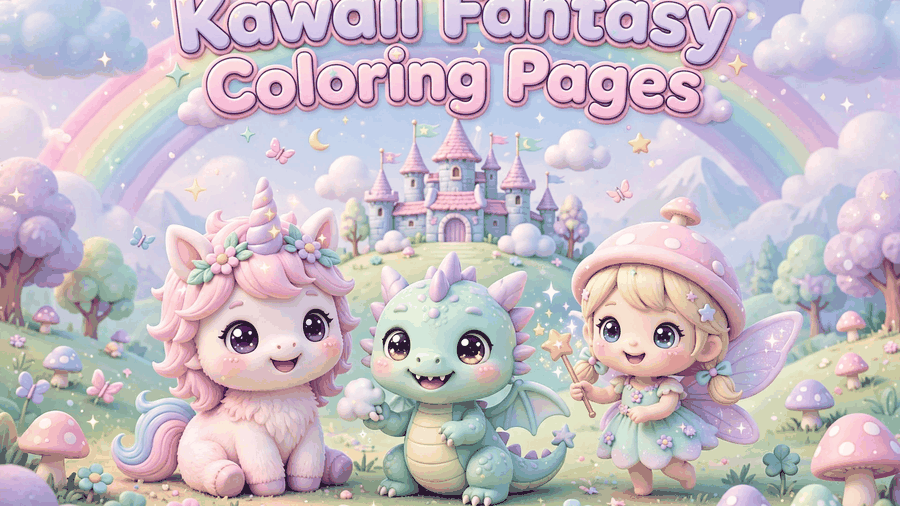
Kawaii Fantasy Coloring Pages bring adorable magical creatures and dreamy worlds to life through creative coloring activities. Children can explore a charming combination of cute characters, fantasy elements, and imaginative scenes while choosing colors that make every illustration feel unique.
Discover the Charm of Kawaii Fantasy Coloring Pages
Kawaii art is known for its adorable appearance, featuring rounded shapes, expressive faces, and charming little details. When combined with fantasy themes, this style creates an imaginative world where magical creatures, enchanted objects, and whimsical settings can become part of a child’s coloring experience. The illustrations encourage children to think beyond familiar everyday subjects and experiment with their own ideas about color and design.
Fantasy themes offer plenty of possibilities for visual exploration. A magical creature might have sparkling wings, a tiny crown, or an unusual combination of features. Enchanted castles, floating stars, rainbows, mushrooms, and dreamy clouds are also popular elements in fantasy-inspired artwork. These details give children different areas to explore without requiring them to follow a particular color scheme.
What makes kawaii fantasy illustrations especially appealing is their balance between fantasy and simplicity. Cute facial expressions and friendly shapes can make imaginative subjects feel approachable, while decorative details provide opportunities for more careful coloring. Children can decide whether to create a soft pastel atmosphere, a colorful magical kingdom, or an entirely unexpected fantasy world.
What Children Can Explore in a Magical Coloring World
Kawaii fantasy artwork brings together several visual themes that can inspire different coloring approaches. Rather than treating every illustration in the same way, children can explore the individual elements and decide how each one should look.
Cute Magical Creatures
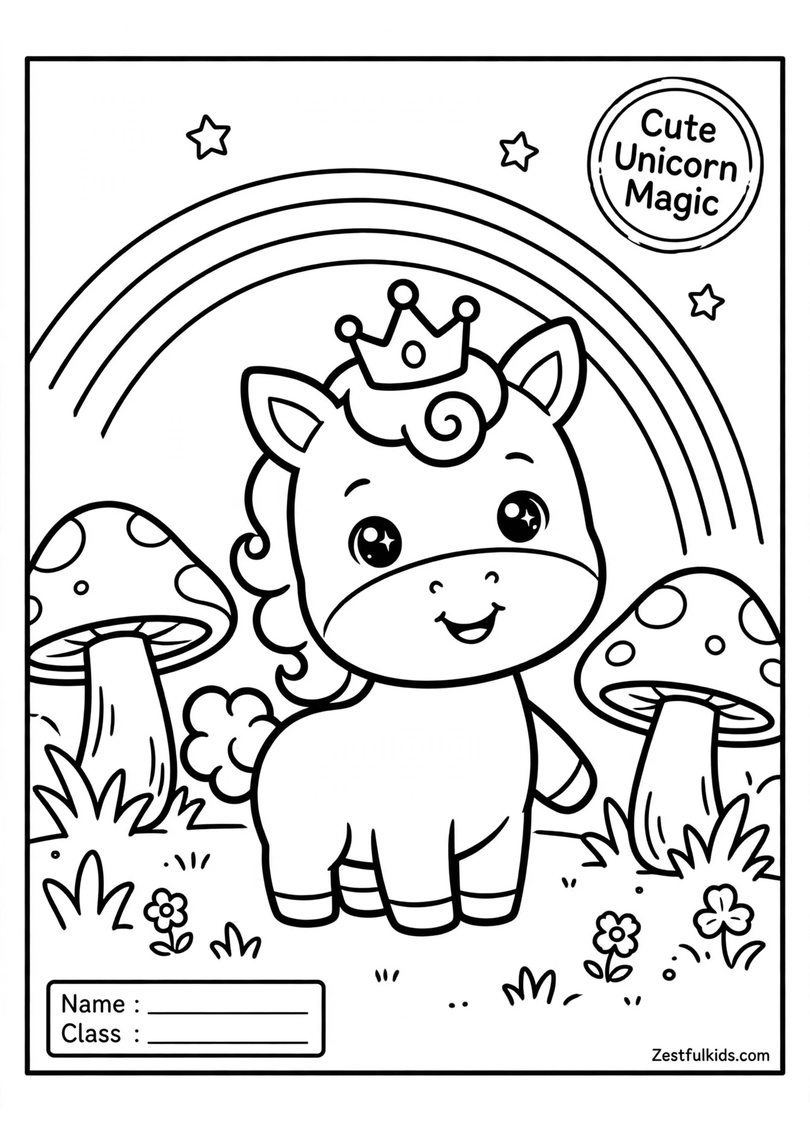
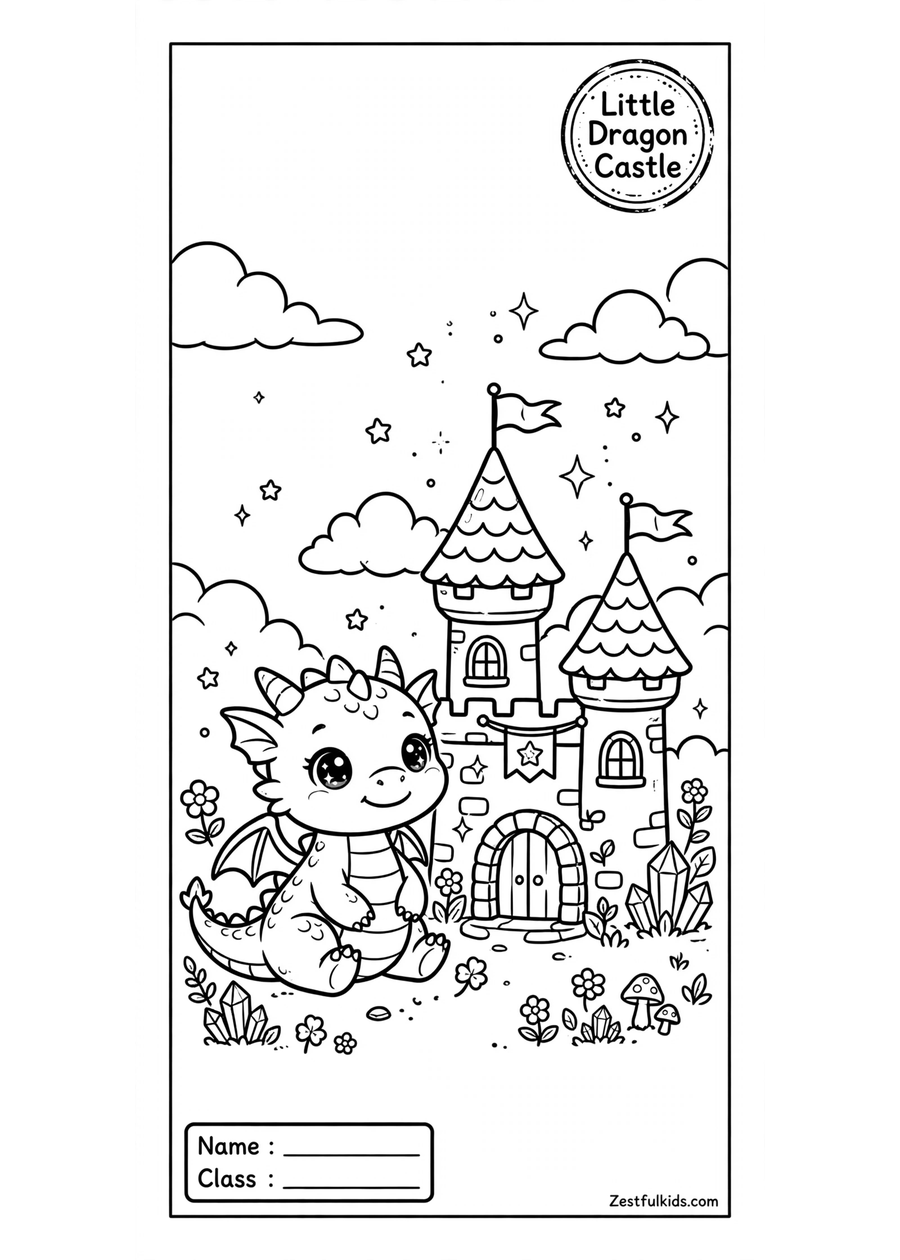
Fantasy creatures are an enjoyable starting point for imaginative coloring. Depending on the illustration, children may encounter subjects such as unicorns, little dragons, fairies, or other fictional beings. Their appearance can be customized with unusual color combinations, making it possible to create a character that feels completely personal.
For example, a child might give a unicorn a lavender mane, a mint-green body, and a golden horn. A friendly dragon could have turquoise scales, pink cheeks, and colorful wings. These are optional ideas rather than fixed rules, allowing children to experiment with their own designs.
Enchanted Places and Dreamy Scenery
Fantasy settings provide another interesting direction. A magical castle can feature pastel towers, colorful rooftops, and decorative windows, while a fantasy garden might include oversized flowers, mushrooms, and sparkling stars. Children can use background colors to establish whether their imaginary setting feels peaceful, mysterious, or full of excitement.
Simple scenery can also make a picture feel more complete. Soft blue can represent a dreamy sky, while green and yellow can suggest a magical garden. Adding small details such as glowing stars or colorful clouds is another way to give the illustration an individual character.
Magical Objects and Decorative Details
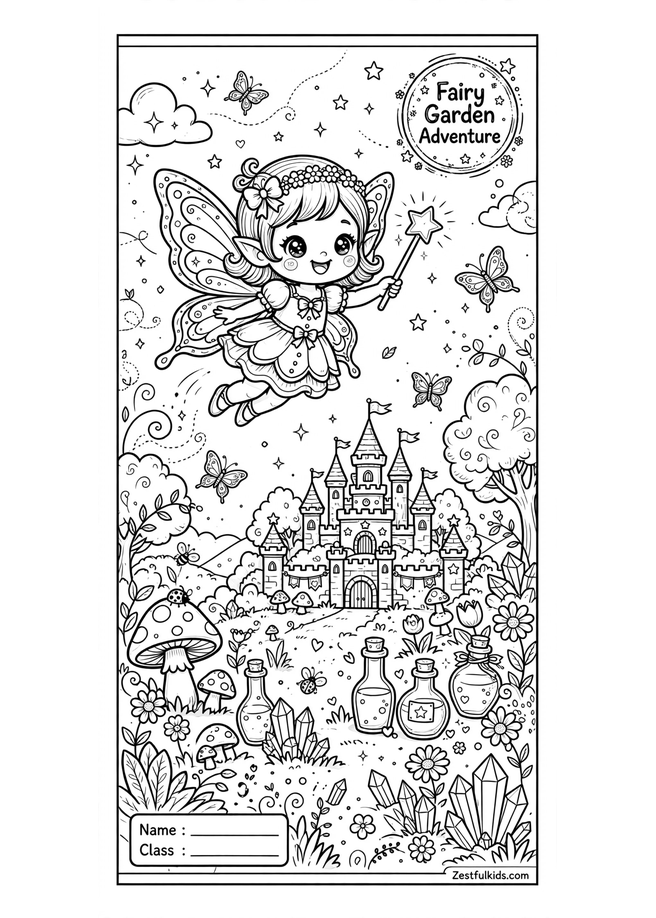
Not every fantasy illustration needs to focus on a creature or an entire setting. Wands, magic potions, tiny stars, crystals, and enchanted accessories can also become interesting coloring subjects. Their smaller shapes provide opportunities to combine different colors within a single illustration.
Children can try using contrasting shades to make certain objects stand out. For instance, a purple magic potion bottle could have a bright pink label and a yellow decorative star. Small details are also a good reason to keep colored pencils or fine-tip markers nearby.
Creative Color Combinations for Kawaii Fantasy Illustrations
There is no single correct palette for kawaii fantasy artwork. Some children enjoy gentle pastel colors, while others prefer bright shades that make every part of the picture stand out. Both approaches work well, depending on the atmosphere they want to create.
Pastel pink, baby blue, lavender, and mint green can produce a soft and dreamy appearance. These colors are particularly suitable for imaginary gardens, cute magical creatures, and fairy-tale settings. Children can combine several light shades while using a slightly darker color to emphasize outlines or small decorative features.
For a more vibrant result, try combining coral, turquoise, sunny yellow, and bright purple. These colors can make magical accessories, fantasy costumes, and decorative backgrounds look lively. Another interesting approach is to use one dominant color and add two or three contrasting shades to create visual variety.
Children can also explore simple color patterns. A rainbow-inspired mane, alternating colors on a dragon’s wings, or different shades on a magical castle roof can make an illustration more distinctive. Parents and teachers can encourage children to explain why they selected particular colors, turning the activity into a relaxed creative conversation.
How to Make Coloring Time More Enjoyable
A comfortable workspace can make a difference when children are working on detailed fantasy illustrations. Prepare a flat surface, arrange the coloring materials, and allow enough room for the paper to remain in place. Colored pencils are useful for small decorative areas, while crayons work well for larger sections that need broader coverage.
Washable markers can provide stronger colors, especially when children want bright fantasy characters or bold decorative elements. However, it is sensible to test markers on a spare sheet first because some types may show through thinner paper. Children should also be reminded to use gentle pressure when coloring small areas so that the paper remains neat.
There are several simple ways to make the activity more engaging:
- Create an original character: Give a magical creature a name, personality, and special appearance.
- Design a fantasy setting: Add an imaginary sky, garden, or castle atmosphere using background colors.
- Experiment with patterns: Use stripes, dots, stars, or alternating shades on suitable areas of the illustration.
- Tell a short story: Encourage children to describe where their magical character lives and what happens in its imaginary world.
- Try a color challenge: Choose three main colors and see how many different combinations can be created.
These activities can be adapted to different interests and coloring abilities. Younger children may prefer larger areas and simpler color choices, while older children might enjoy spending more time on decorative details and background patterns.
Choosing and Preparing Kawaii Fantasy Coloring Pages
When selecting an illustration, consider how much detail the child enjoys working with. A design with larger shapes may be more comfortable for someone who prefers straightforward coloring, whereas an illustration containing tiny stars, accessories, and decorative patterns may appeal to children who enjoy spending extra time on a picture.
It is also helpful to consider the child’s interests. Some may be attracted to cute animals and magical creatures, while others may prefer enchanted buildings or imaginary landscapes. Exploring different subjects can keep coloring sessions interesting without making every activity feel the same.
For families who enjoy illustrations featuring familiar animals, cute dog designs offer another approachable subject to explore. These pictures provide a different creative direction while maintaining the enjoyable experience of coloring friendly characters.
Before printing a selected design, check the available file and its printing options. Use the print preview to make sure the illustration fits the chosen paper size and that important parts are not cut off near the edges. If the printer offers adjustable quality settings, select an appropriate option for producing clear outlines.
Parents and teachers can also prepare several coloring materials before the activity begins. Keeping pencils, crayons, or washable markers within reach allows children to concentrate on their illustrations instead of repeatedly searching for supplies.
Combine Fantasy Art with Other Creative Themes
Kawaii fantasy coloring can be part of a broader collection of imaginative activities. After completing a magical creature, children might enjoy exploring different scenery, nature-inspired illustrations, or other subjects that offer new opportunities for color experimentation.
For example, landscape illustrations can introduce a different visual experience through mountains, open skies, natural scenery, and outdoor environments. Children can compare the colors they use for a fantasy kingdom with those they choose for a more familiar landscape.
Teachers can incorporate this contrast into classroom art sessions by inviting children to create two different atmospheres. One picture might represent an imaginary magical world, while another could show a peaceful outdoor setting. Children can then describe the differences between their color choices and the visual details they enjoyed most.
Kawaii fantasy illustrations are also suitable for relaxed family coloring sessions. Adults can join children in choosing palettes, discussing imaginary characters, or creating short stories inspired by the finished pictures. The activity does not need complicated instructions or a strict final result.
With Kawaii Fantasy Coloring Pages, every illustration offers room for personal interpretation. A familiar magical creature can become something entirely different through an unexpected color combination, while a simple fantasy setting can turn into a colorful world filled with individual ideas. These printable activities give children an enjoyable way to explore cute fantasy themes, experiment with artistic choices, and make each finished picture their own.
