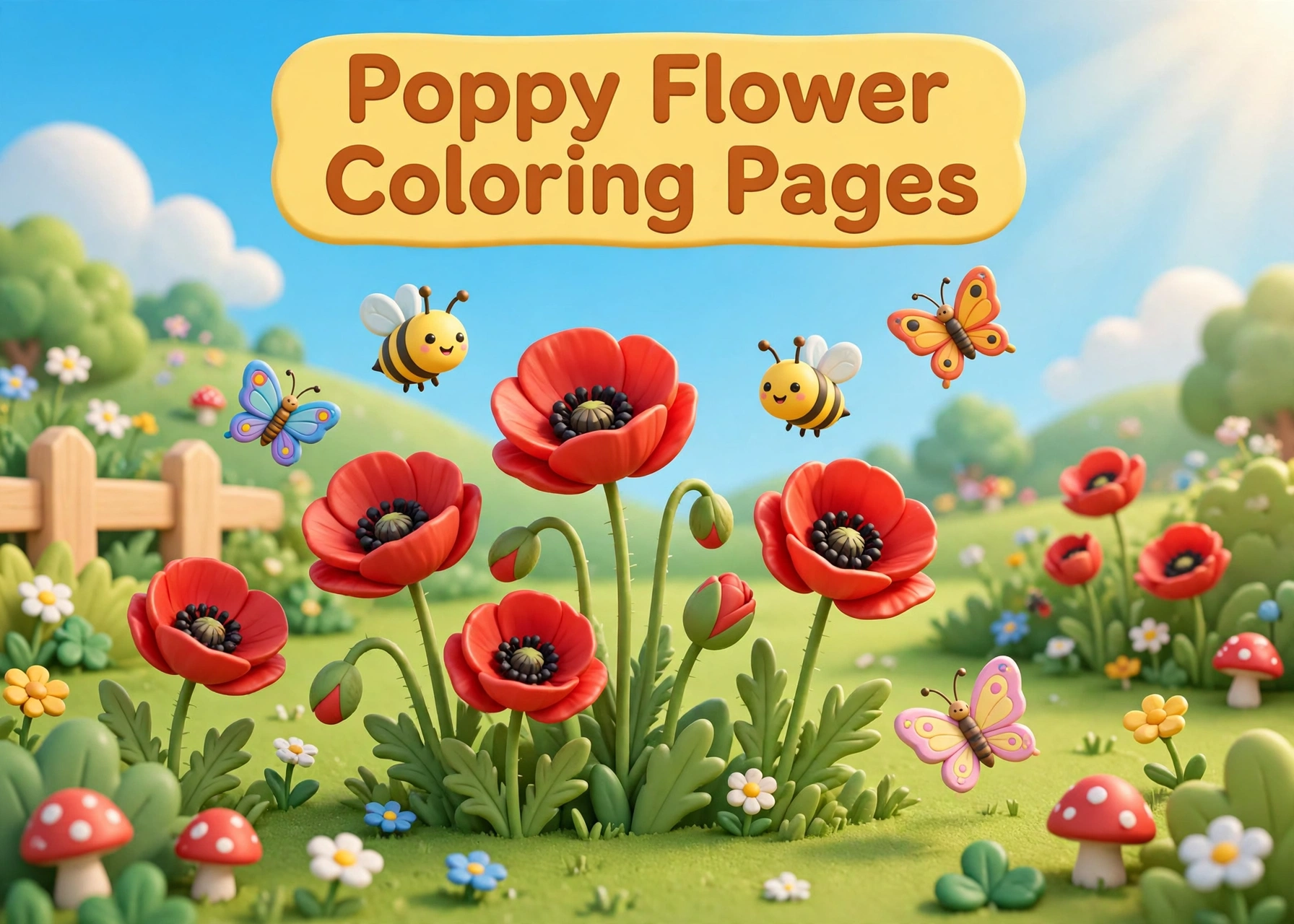
Poppy Flower Coloring Pages bring the delicate beauty of poppies into a creative activity for children. With their rounded petals, distinctive centers, and slender stems, these flowers offer lovely shapes and natural details to explore through coloring.
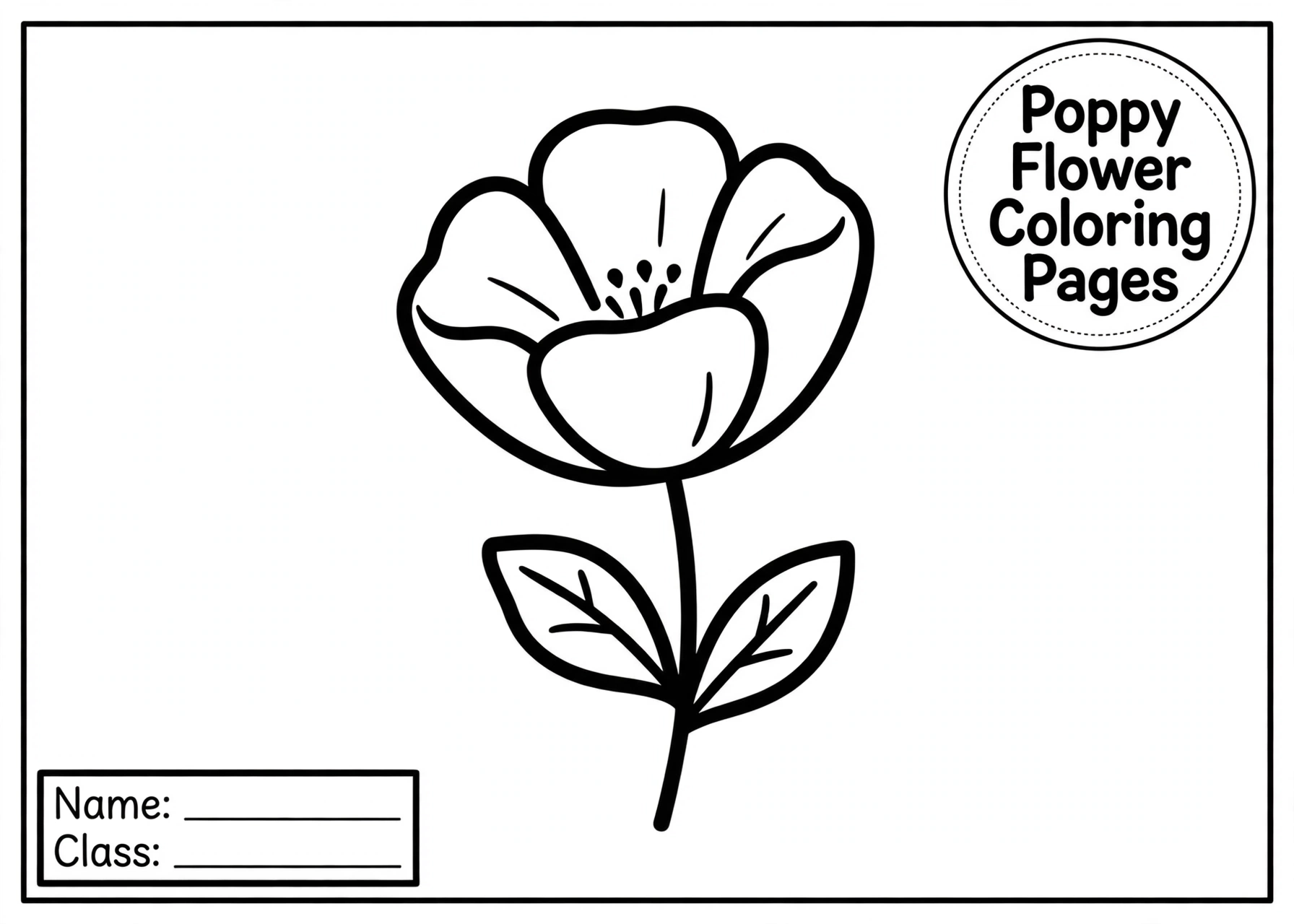
Getting to Know the Poppy Flower
Poppies are flowering plants known for their delicate petals and distinctive appearance. Many varieties have broad, papery petals that look almost like thin pieces of fabric. Their flowers can appear in several colors, including red, orange, pink, white, and purple, making them an interesting subject for young artists.
One recognizable feature is the center of the flower. Depending on the variety, it may contain a cluster of stamens surrounding a central structure. This creates a different texture from the smooth appearance of the petals and gives children an interesting detail to work on.
Poppy plants also have slender stems and leaves with divided or slightly feathery shapes. These features create a natural contrast between the large flower head and the finer parts of the plant. When children explore a poppy illustration, they can notice how the different elements come together to form a complete flower.
Poppy Flower Coloring Pages offer an opportunity to observe these natural characteristics while enjoying a relaxed art activity. Children can follow realistic flower colors or create their own imaginative versions.
Choosing Colors for Different Poppy Varieties
One of the enjoyable aspects of coloring poppies is the variety of colors found in nature. Although the red poppy is particularly familiar, poppies are not limited to one appearance. Some varieties produce orange, pink, purple, or white flowers.
Children can use these natural variations as inspiration when choosing their coloring materials. A bright red flower with a dark center creates a classic appearance, while orange and yellow tones can produce a warmer look. Soft pink and purple combinations are suitable for a more delicate floral design.
Here are some color combinations to consider:
- Red poppy: Bright red petals with a dark brown or black center.
- Orange poppy: Orange petals with golden yellow highlights and a dark center.
- Pink poppy: Light pink petals with deeper pink shading near the base.
- White poppy: White or very pale cream petals with soft gray details.
- Purple poppy: Lavender or violet petals combined with darker purple accents.
- Leaves and stems: Several shades of green, from fresh light green to deeper forest green.
Children do not need to follow these suggestions exactly. They can mix different shades, create unusual patterns, or give every flower in a group a different appearance.
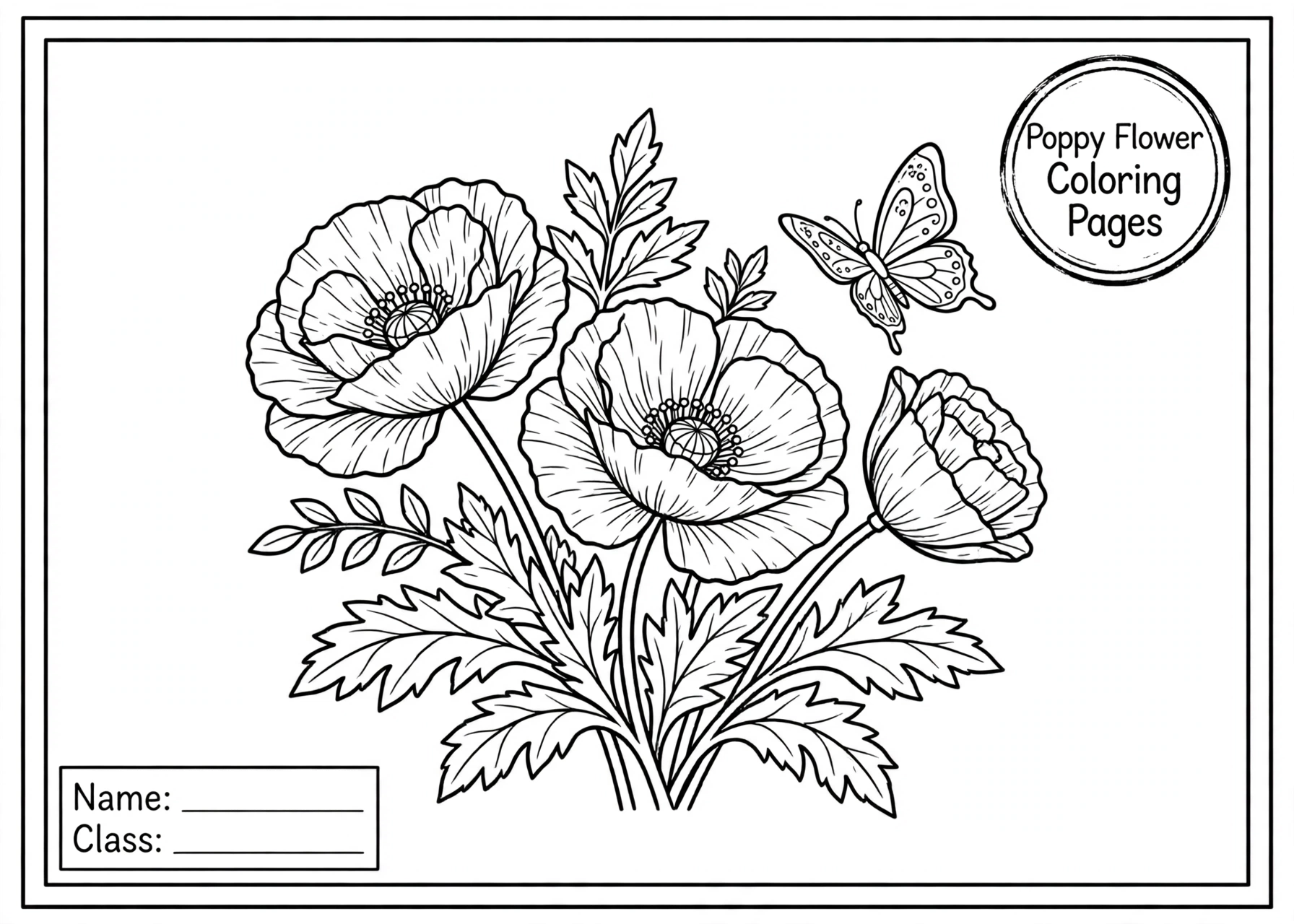
Look Beyond the Petals: Small Details Worth Coloring
A flower is made up of more than its colorful petals. Paying attention to the smaller parts of a poppy can make the coloring experience more interesting.
The flower center is a good place to begin. Its darker tones can create contrast against bright petals, helping the main flower stand out. Children can use short pencil strokes or small circular movements to color this area carefully.
The petals provide a larger space for experimenting with color. Some poppies have slightly overlapping petals, creating natural areas of light and shadow. Children can use a lighter shade near the edges and a deeper color closer to the center if the illustration shows enough detail.
Leaves and stems offer another opportunity to vary coloring techniques. Instead of using one green throughout the entire plant, children can alternate between light and dark shades. This gives the leaves a more natural appearance without requiring complicated shading.
If the illustration includes several flowers, children can make each one slightly different. They might use red for one poppy, orange for another, and pink for a third. This creates a colorful arrangement while keeping the overall theme consistent.
Create a Garden Scene Around Your Poppies
Poppies can look beautiful on their own, but they are also associated with gardens, meadows, and open fields. These natural settings provide additional inspiration for children who want to make their artwork more detailed.
Imagine a small group of poppies growing among green grass. The flowers might stand at different heights, with their stems moving gently in the breeze. A blue sky, soft clouds, and a few distant plants could complete the scene.
Children can add these background details themselves when there is enough open space around the main illustration. They might draw a butterfly near a flower, a small bee flying above the petals, or a few additional leaves around the stems.
For a more natural color palette, use several shades of green for the surrounding vegetation. Brown and beige can represent soil or a garden path, while pale blue creates a calm sky. If children prefer a fantasy-inspired garden, they can use brighter colors and add decorative details of their own.
This kind of activity allows children to make decisions about the setting rather than simply coloring the flower outlines.
Simple Techniques for Coloring Flower Illustrations
Different coloring tools can produce different effects on poppy illustrations. Colored pencils are particularly useful for blending shades across petals. Children can start with a light layer and gradually add stronger colors near the center or along overlapping sections.
Crayons are convenient for filling larger petals and leaves. Their soft texture creates a gentle finish, especially when children use several shades of the same color. Washable markers provide stronger, more noticeable colors and work well for bold floral designs.
A few practical techniques can make the activity easier:
- Start with the main flower petals before moving to the smaller details.
- Choose two or three related shades for each flower rather than using too many colors at once.
- Color the center with a darker shade to create contrast.
- Work carefully around the outlines of narrow stems and leaves.
- Complete the background after the flowers have been colored.
There is no need to achieve perfect shading. Simple color choices can already make a poppy illustration look attractive and distinctive.
Turn Flower Coloring Into a Nature Activity
A poppy-themed coloring session can also introduce children to the variety of flowering plants found in gardens and natural landscapes. Parents and teachers can use the illustration as a starting point for discussing how flowers grow and what plants need to survive.
Explain that plants generally need sunlight, water, air, and suitable growing conditions. Children can also learn that flowers play an important role in plant reproduction and that many flowering plants attract pollinators such as bees and other insects.
Another simple activity is comparing different flower shapes. Ask children to look at the poppy’s broad petals and compare them with other flowers they know. They can draw a second flower beside the poppy and identify which parts look similar or different.
For more inspiration from the natural world, children can explore these cute wildflowers, featuring another enjoyable subject for discovering the variety of shapes and appearances found in flowering plants.
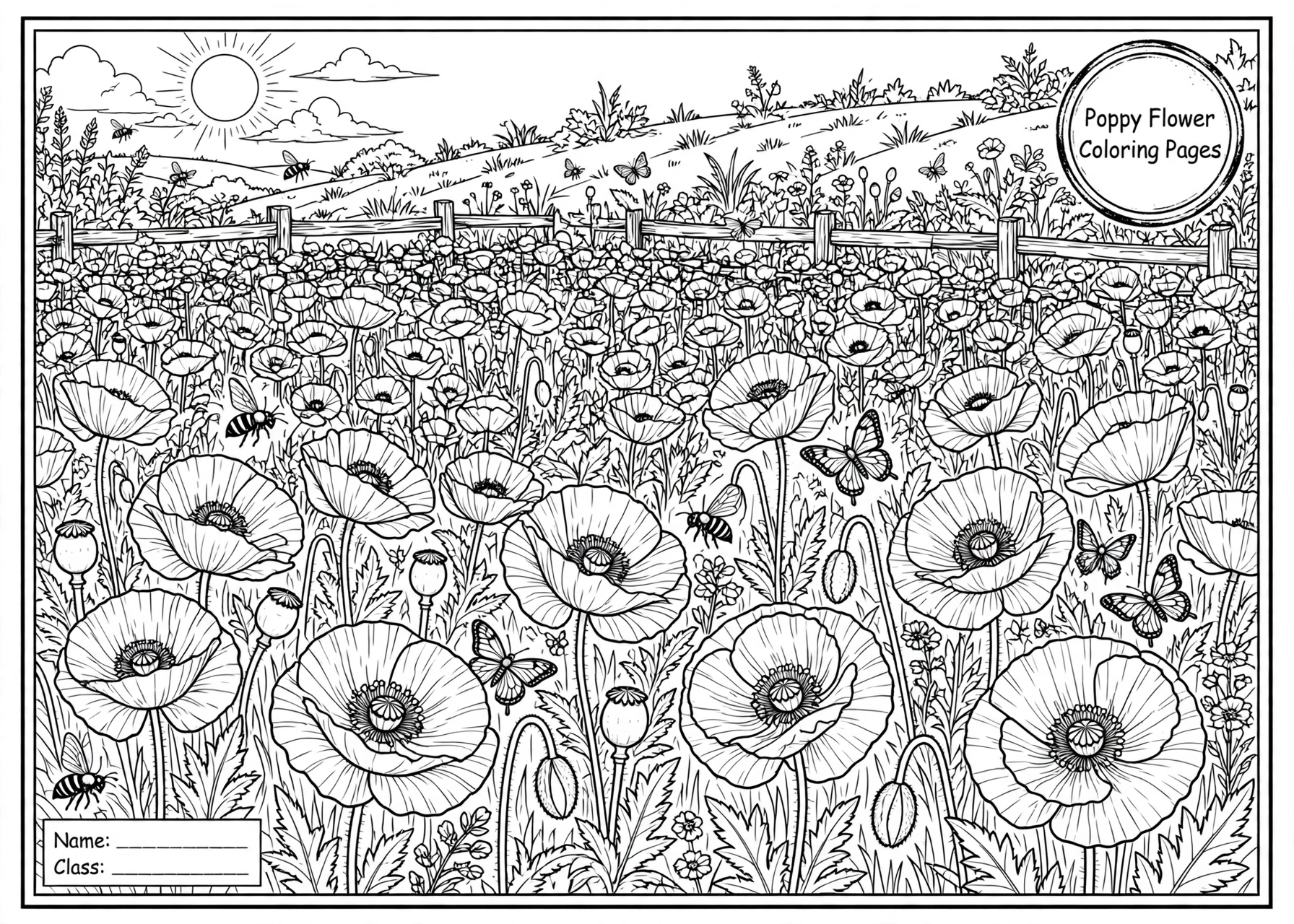
Preparing Poppy Flower Printables for Coloring Time
When choosing Poppy Flower Coloring Pages, consider the amount of detail in the design. A simple flower with broad petals may be suitable for children who prefer larger coloring areas. More detailed illustrations with several leaves, overlapping petals, and additional flowers can provide a different experience for children who enjoy careful coloring.
Before printing, check the image preview to ensure that the flower outlines are clear and the illustration fits within the selected paper settings. Choose paper that works with the coloring materials available at home or in the classroom. Standard printing paper is generally suitable for crayons and colored pencils, while thicker paper may be preferable for markers if supported by the printer.
Prepare the coloring tools in advance and give children enough room to work comfortably. They can complete the flower first and then decide whether to add their own garden scenery.
Families looking for another gentle nature-inspired subject can also discover an Easter bunny and lamb, combining adorable animals with a seasonal theme.
Poppies offer a wonderful combination of delicate petals, distinctive centers, and interesting natural colors. Through Poppy Flower Coloring Pages, children can explore these details, experiment with floral color combinations, and create their own interpretation of a beautiful flower garden.
