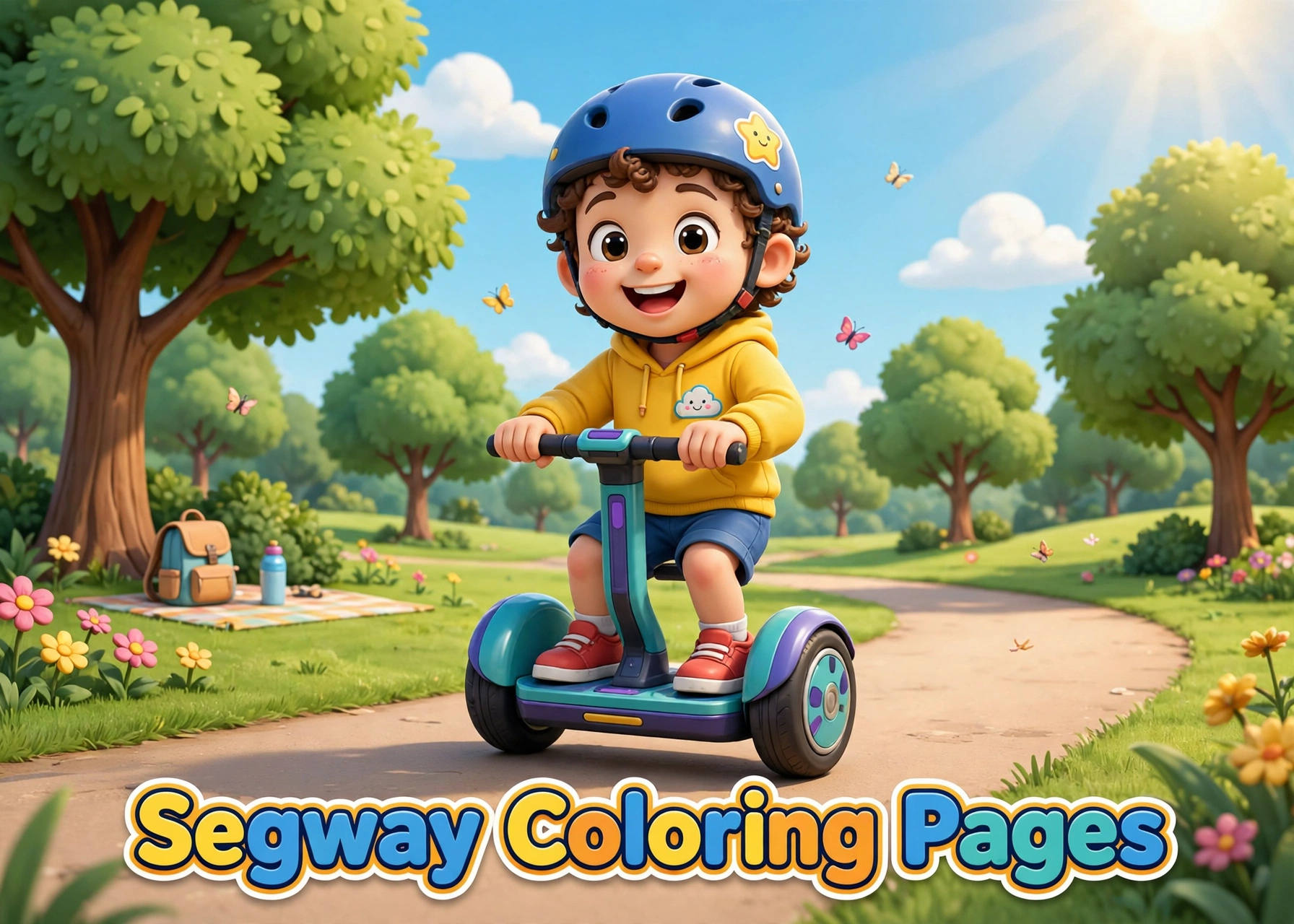
Segway Coloring Pages introduce children to a distinctive two-wheeled personal transporter, combining vehicle-themed creativity with opportunities to explore shapes, colors, and modern mobility.
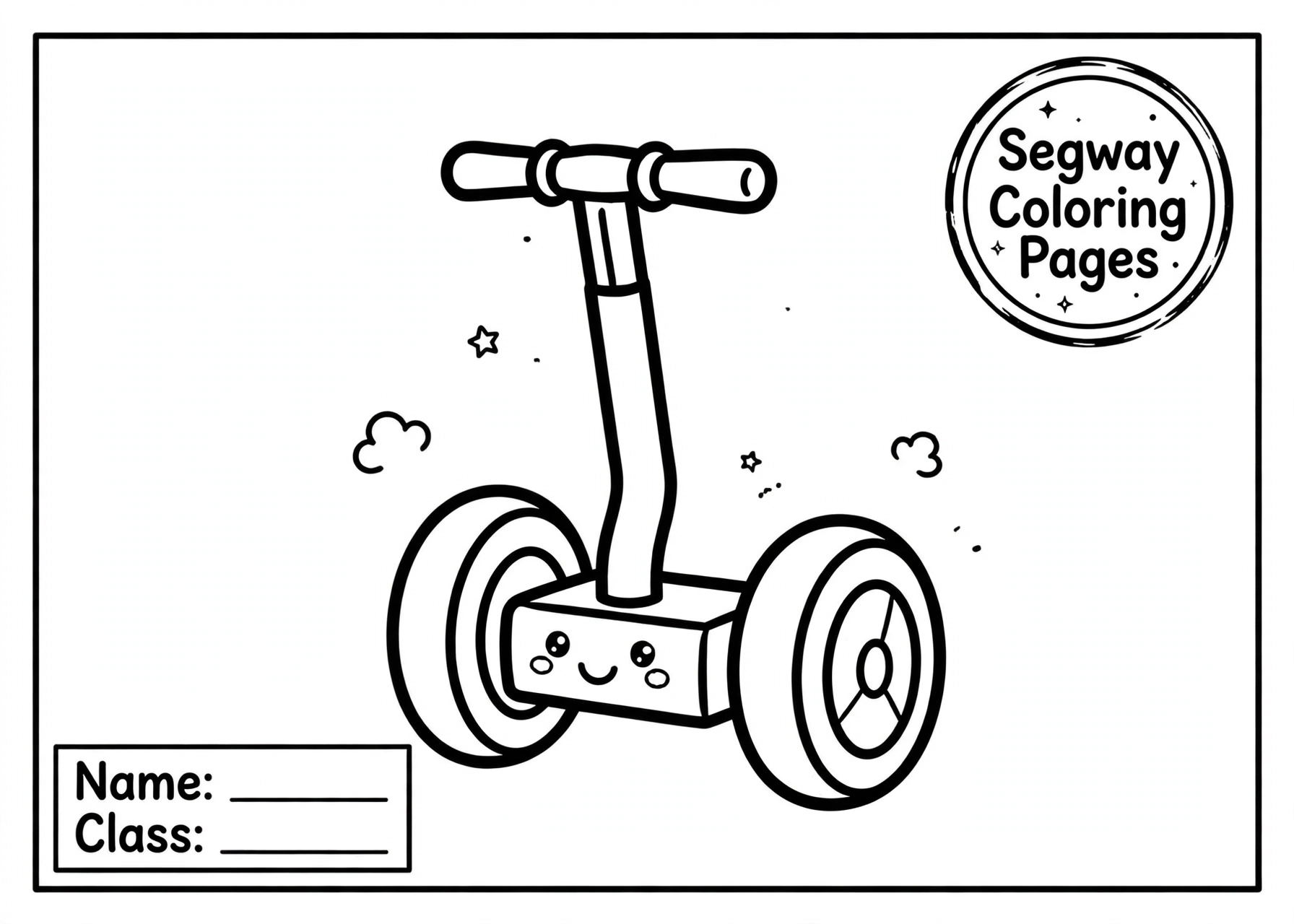
Getting to Know the Segway
A Segway has a recognizable design that makes it different from many familiar vehicles. Instead of four wheels, it typically has two wheels positioned side by side, a platform for the rider to stand on, and a handlebar for steering. Its compact structure gives children several interesting shapes and parts to explore while coloring.
Segways are often associated with short trips in places such as parks, large public spaces, and pedestrian areas where their use is permitted. They are electric personal transporters, so they do not have the same appearance as bicycles, scooters, or cars. This makes the subject a useful addition to a collection of vehicle-themed creative activities.
With Segway Coloring Pages, children can focus on the vehicle itself and imagine the places where someone might ride it. The activity can be approached realistically, using familiar colors and details, or imaginatively, with bright patterns and a completely original design.
Notice the Parts Before Choosing Colors
Looking at the different parts of a Segway can help children decide how to approach the illustration. The two wheels are among its most recognizable features. They can be colored dark gray or black, while the central body can have a brighter shade to make it stand out.
The standing platform is another important part. It connects the two wheels and provides a place for the rider’s feet. Children might choose a dark color for the platform and a contrasting shade for the outer frame. If the illustration includes visible details around the handlebar or control area, those can be colored separately.
The handlebar gives the Segway its upright appearance. It can be colored to match the main body or given a different shade for contrast. Some designs may include a rider, while others may focus on the vehicle alone, so children can adapt their color choices to the details actually shown.
A useful way to begin is to identify the largest sections and decide which colors should dominate. Once those areas are complete, smaller parts can receive additional shades. This approach helps the vehicle remain visually clear rather than becoming a collection of unrelated colors.
Creative Color Ideas for a Segway
Real Segways and similar personal transporters can have simple, modern finishes, but a coloring activity allows children to go beyond realistic designs. They can create a vehicle that looks practical, futuristic, playful, or completely imaginary.
Consider these combinations:
- Classic black and silver: A simple combination for a clean, modern appearance.
- Blue and white: A fresh look that works well with a bright outdoor setting.
- Red and charcoal: A bold contrast that makes the central body noticeable.
- Green and gray: A color scheme inspired by outdoor spaces and environmentally conscious travel.
- Purple and turquoise: A more imaginative design for a futuristic personal transporter.
Children can also add patterns if the illustration has enough open space. Stripes along the body, small geometric shapes, or contrasting sections on the platform can make the design feel personal. These additions are optional; the original outline should remain easy to recognize.
Colored pencils are helpful when working around smaller vehicle details. Crayons can cover larger sections, while washable markers provide stronger blocks of color. If markers are being used, placing a spare sheet underneath the artwork can help protect the surface below.
Imagine Where the Segway Might Travel
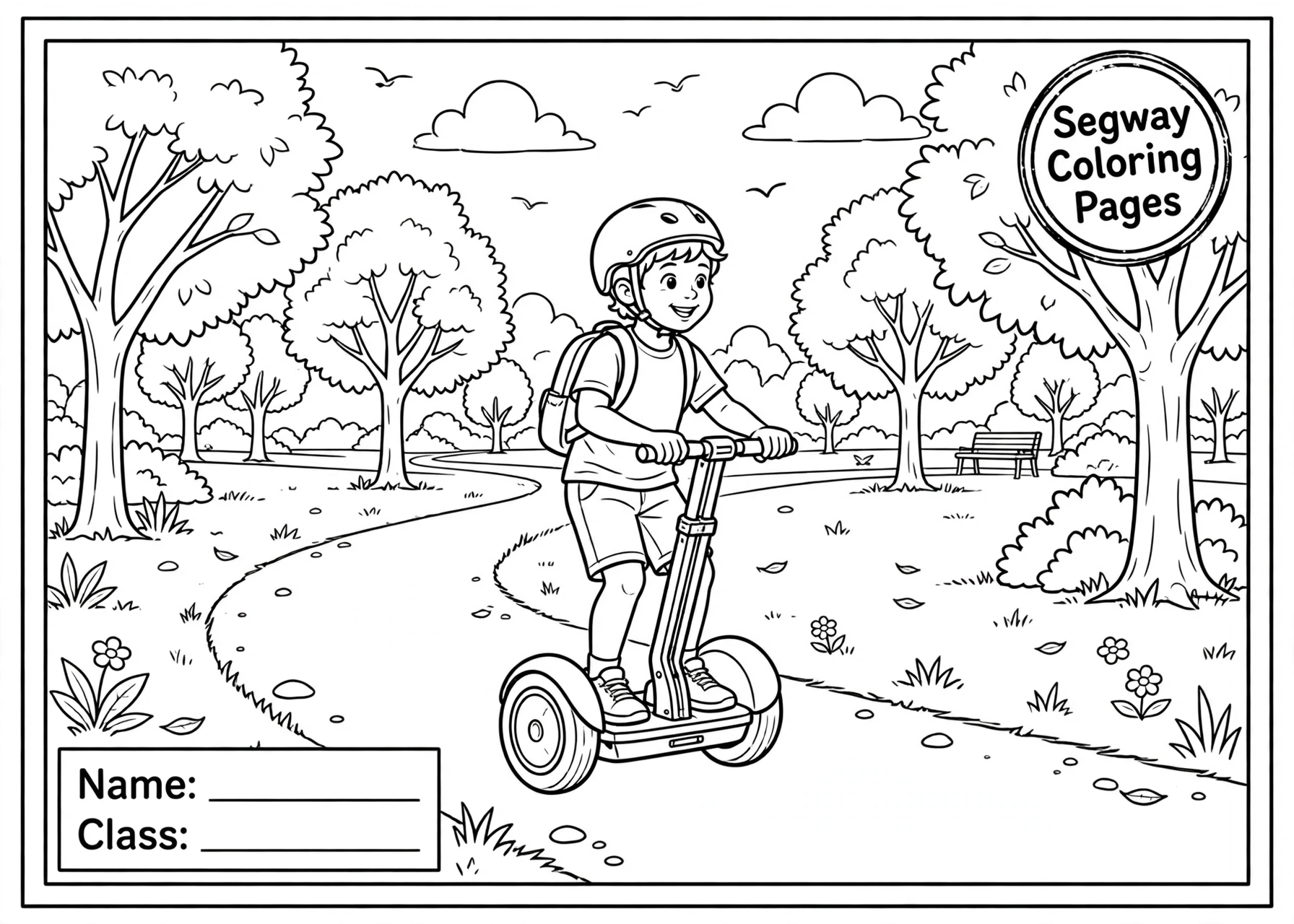
A Segway can be the starting point for a simple travel story. Children might imagine riding through a spacious park, moving along a designated path, or exploring a large outdoor attraction. These settings give them ideas for optional background details without requiring a complicated scene.
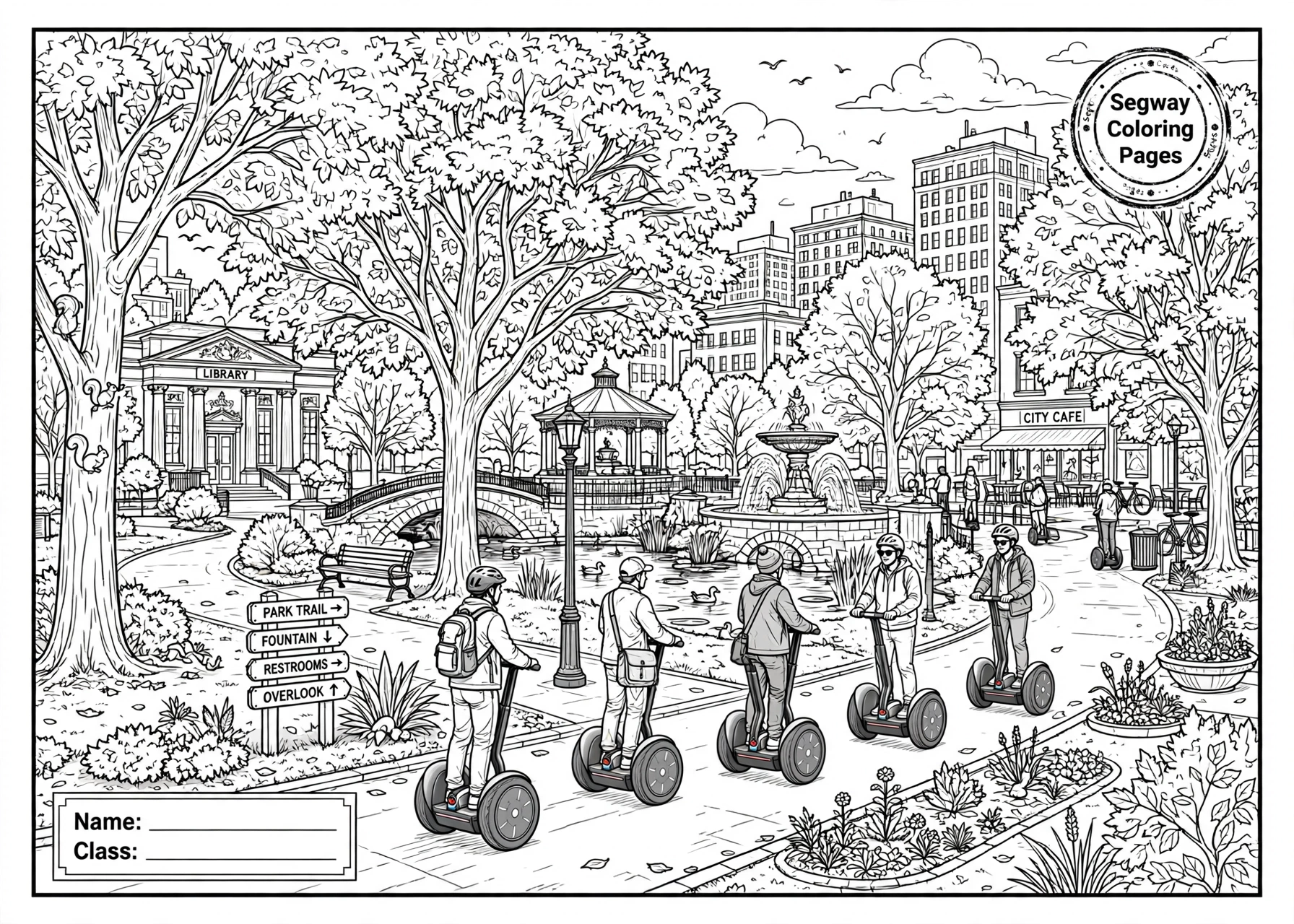
A park setting could include trees, benches, flowers, and a clear path. A more urban scene might feature buildings, sidewalks, and street signs. Children can decide whether the background should be detailed or left mostly open so that the vehicle remains the main focus.
It can also be interesting to compare the Segway with other ways of getting around. A bicycle uses pedals, a kick scooter is pushed along with one foot, and a Segway has an electric motor and a standing platform. Parents or teachers can discuss these differences in simple language while children work on their pictures.
The conversation can include a practical point about responsible riding. Segways are not suitable for every location, and local rules may restrict where they can be used. Riders should follow applicable regulations and wear appropriate protective equipment. For children, this is a useful reminder that interesting vehicles also come with safety responsibilities.
Add a Little Movement to the Activity
Although a coloring page is still, children can make the scene feel active through the details they add. A curved path, a few trees in the background, or a small sign can suggest that the Segway is traveling through a particular place. If a rider is included in the illustration, children can choose clothing colors that complement the vehicle.
Another option is to create a small vehicle-design challenge. Ask children to imagine a Segway for a special purpose, such as exploring a large garden or helping staff move around a spacious venue. They can choose a suitable color scheme and give their imagined design a name.
For a playful change of subject, children who enjoy activities involving movement might also like these dinosaurs playing tennis. The sporty theme offers a different way to explore action and activity through coloring.
Combine Modern Transport with Outdoor Nature
A Segway scene can also be connected to nature. Children might imagine a ride through a leafy park or along a path surrounded by plants. If they want to expand the picture, they can draw flowers, trees, or butterflies in the surrounding space.
The contrast between a modern electric transporter and a natural setting can make an interesting creative theme. Children could use greens and earthy shades for the scenery, then choose a brighter color for the Segway so that it remains the center of attention.
For more inspiration involving outdoor scenery, the jungle with butterflies theme offers another opportunity to explore plants, insects, and lively natural surroundings. It can also lead to a simple discussion about the differences between a managed park and a tropical jungle.
Preparing the Coloring Activity
Before starting, place the coloring sheet on a flat surface and arrange the chosen materials nearby. If the page is printed, check the print preview to make sure the vehicle and any surrounding details are visible within the printable area. Use paper that works with the selected coloring tools, especially if children plan to use markers.
Encourage children to take their time with the wheels, platform, and handlebar. These parts help define the Segway’s appearance, so coloring them with clear contrasts can make the finished picture easier to recognize. There is no need to use realistic colors throughout; a creative design is just as welcome.
Segway Coloring Pages offer a different kind of vehicle activity, introducing children to a modern form of personal transportation through simple visual exploration. By choosing colors, imagining travel settings, and adding optional details, children can turn a recognizable two-wheeled transporter into a design that reflects their own ideas.
