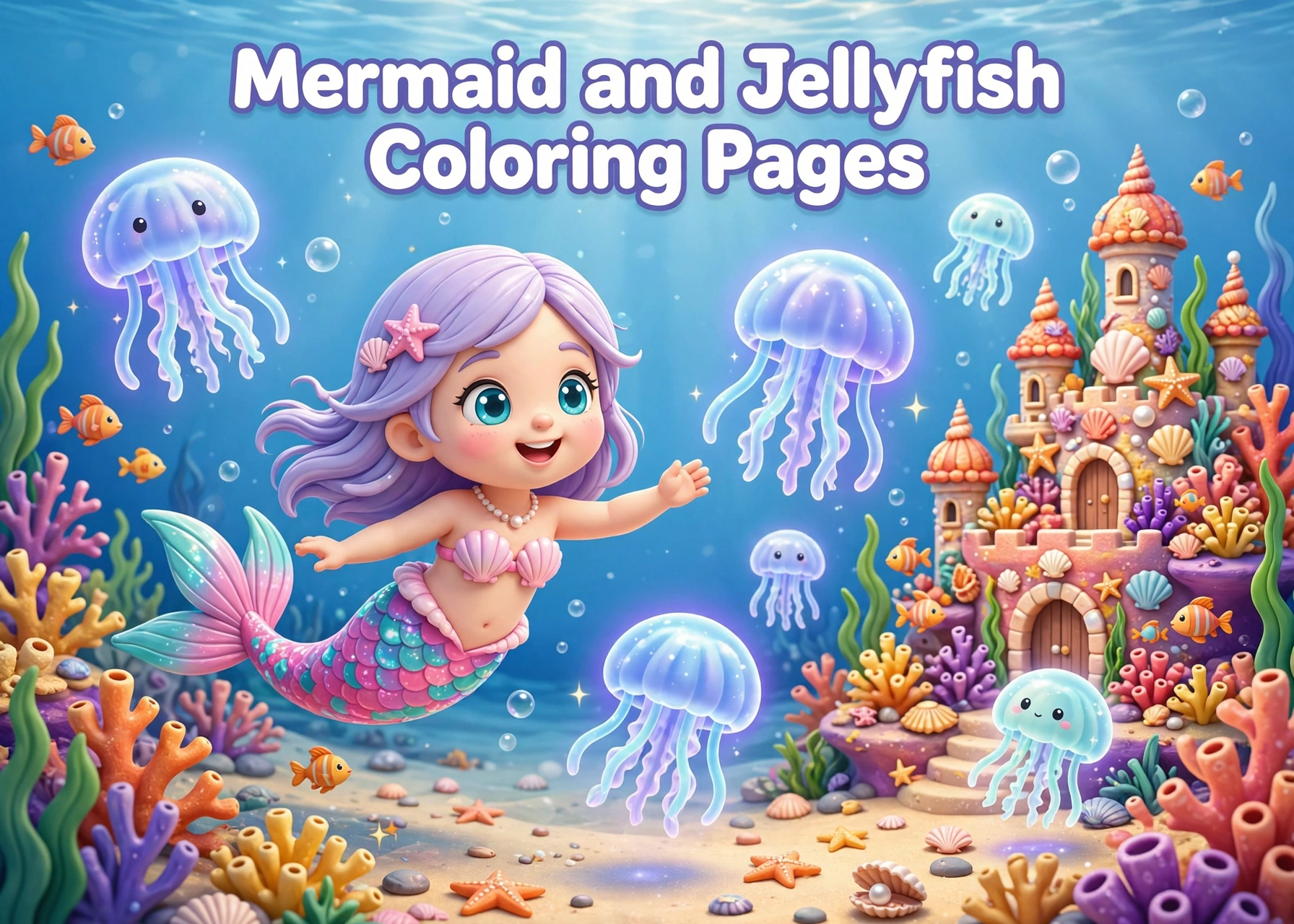
Mermaid and Jellyfish Coloring Pages bring an enchanting underwater world to life through imaginative characters and fascinating sea creatures. With flowing mermaid tails, floating jellyfish, and colorful ocean-inspired details, children can explore creative color combinations while enjoying a playful activity inspired by life beneath the waves.
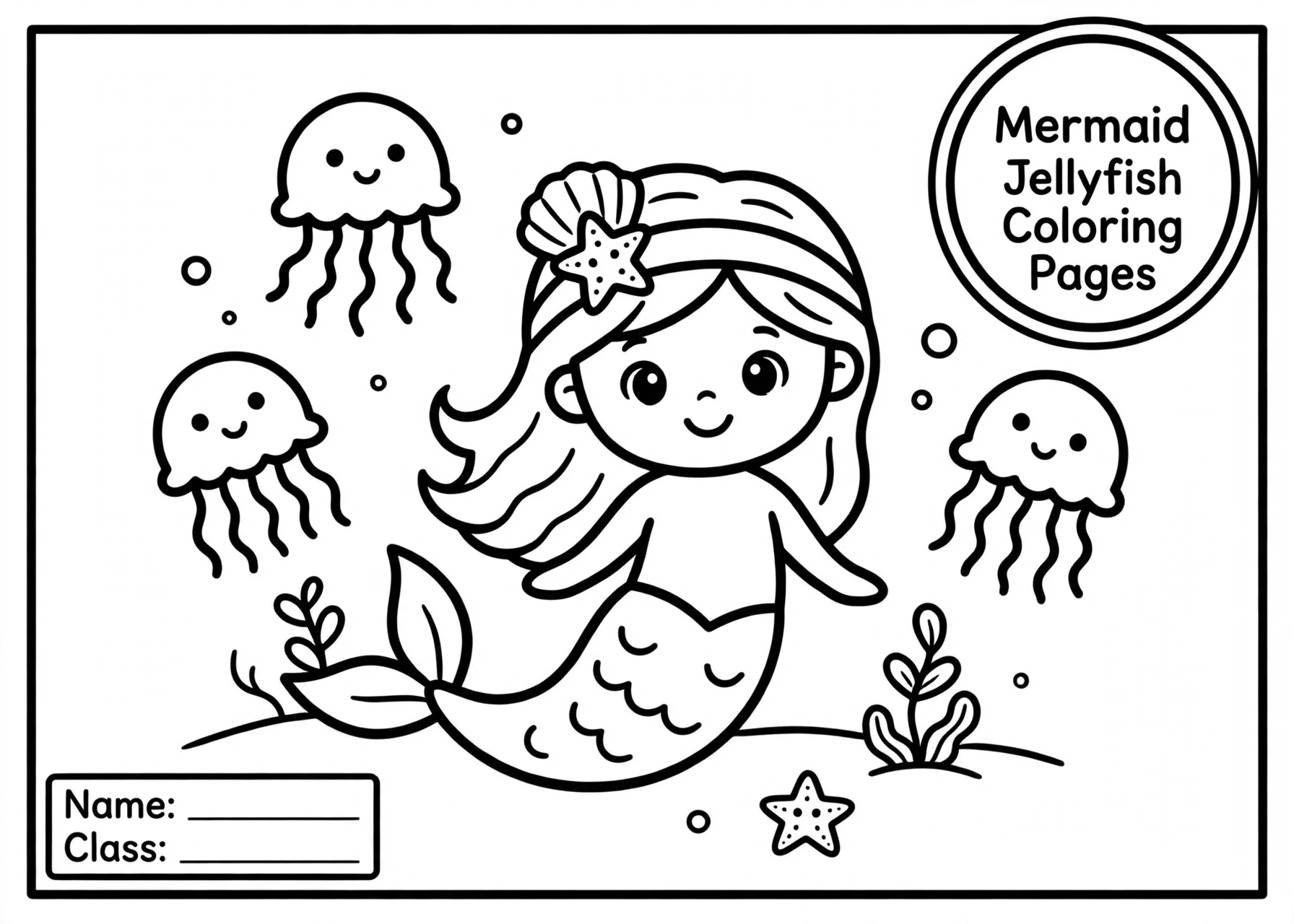
Two Different Characters in One Underwater World
Mermaids and jellyfish make an interesting combination because they have very different shapes and appearances. A mermaid is a mythical character, often imagined with a human upper body and a fish-like tail. Jellyfish, on the other hand, are real marine animals with soft, umbrella-shaped bodies and long trailing tentacles.
Bringing these two subjects together creates plenty of opportunities for artistic exploration. Children can imagine a mermaid swimming alongside jellyfish in a peaceful underwater setting. They might picture the mermaid discovering a group of floating sea creatures or exploring a magical ocean filled with unusual colors.
The contrast between the characters is also interesting from a visual perspective. A mermaid’s flowing hair and patterned tail offer different coloring possibilities from the rounded bell and delicate tentacles of a jellyfish. Children can give each subject its own color palette while making the entire picture look harmonious.
This theme works particularly well for children who enjoy fantasy stories, ocean animals, and imaginative underwater adventures.
Exploring the Shapes and Details of Jellyfish
Jellyfish have a distinctive appearance that makes them fascinating subjects for coloring. Their bodies usually have a bell-shaped structure, with tentacles extending underneath. Depending on the species, these tentacles can look long, short, thick, or delicate.
Children can use this unusual shape as inspiration when selecting colors. Pale blue, lavender, pink, turquoise, and light purple are lovely choices for an imaginary jellyfish. A darker shade around the bell can also create contrast, while lighter tones can make the body look more delicate.
Here are several coloring ideas:
- Jellyfish bell: Try lavender, light pink, turquoise, or soft blue.
- Tentacles: Use alternating colors such as purple and pink to create interesting patterns.
- Small details: Add yellow, white, or light blue accents where the illustration provides space.
- Ocean surroundings: Choose different shades of blue and green to suggest underwater scenery.
- Decorative elements: Coral, bubbles, and sea plants can introduce additional colors if children want to expand the scene.
Jellyfish are also interesting because they move through the water using gentle contractions of their bell-shaped bodies, while their tentacles trail behind them. Parents and teachers can share this simple fact while children color, helping them distinguish real marine animals from the mythical mermaid character.
Designing a Mermaid with a Personal Color Palette
Mermaids offer a different kind of creative challenge. Their appearance can be inspired by ocean colors, tropical fish, shells, and underwater plants. However, children do not have to follow realistic combinations when designing their own characters.
The mermaid’s tail is often one of the most enjoyable areas to decorate. Children can use shades of green, blue, purple, or pink to create an imaginative fish-like tail. If the illustration includes scale patterns, they can alternate lighter and darker colors to make each section stand out.
Hair provides another opportunity for personal expression. Some children may choose natural shades such as brown, black, or blonde, while others might prefer bright red, turquoise, or violet. The character’s clothing and accessories can be decorated with matching or contrasting colors.
A useful approach is to select a small color palette before beginning. For example, a mermaid might have a turquoise tail, purple hair, and pink decorative details. A jellyfish beside her could use lighter versions of the same colors, making the two characters appear connected.
Colored pencils are particularly useful for working on small scale patterns and hair details. Crayons can cover larger sections, while washable markers create stronger colors for bold underwater designs.
Imagine an Underwater Setting Beyond the Characters
The surrounding environment can make an underwater illustration more interesting. If children have additional space to draw, they can create an ocean setting filled with plants, rocks, and small marine creatures.
Seaweed can be represented with different green shades, while coral formations can be colored orange, pink, red, or purple. Small bubbles can remain white or receive a pale blue outline. Children can also add tiny fish swimming between the mermaid and jellyfish.
A few background ideas include:
A peaceful blue ocean
Use light blue near the main characters and darker blue around the edges to create the impression of deeper water.
A colorful coral garden
Add orange, pink, yellow, and purple coral shapes surrounded by green sea plants. This creates a lively setting without requiring complicated details.
A magical underwater kingdom
Children can imagine a distant underwater castle, sparkling bubbles, and decorative sea plants. These can be drawn separately if they are not included in the original illustration.
A nighttime ocean
Choose dark blue and violet for the water, then use lighter colors for the characters. This creates a different atmosphere from a bright daytime underwater scene.
The background should complement the mermaid and jellyfish rather than compete with them. Children can decide how much additional scenery they want to include.
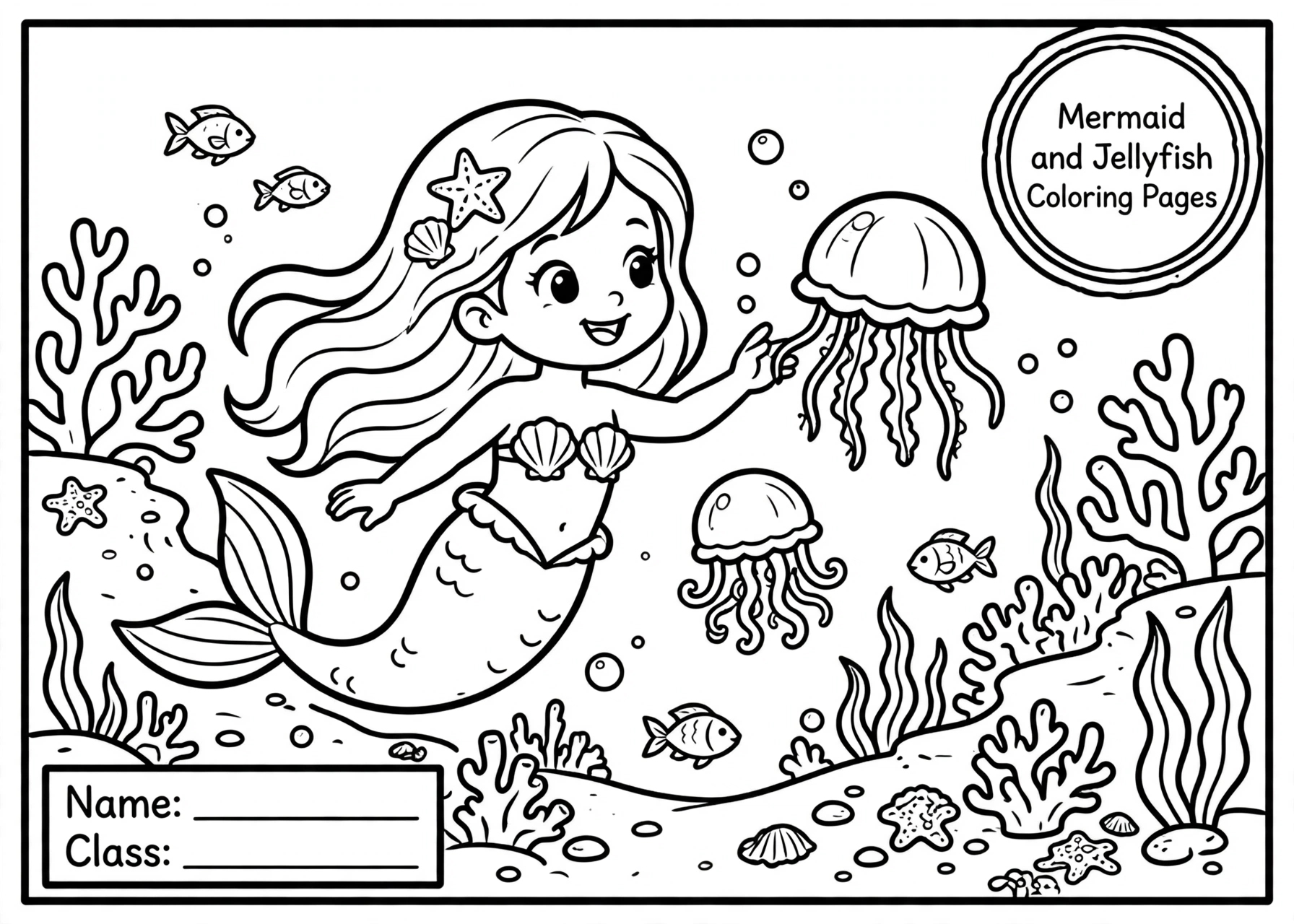
Turn the Picture into an Underwater Story
One way to make this coloring theme more engaging is to use the finished illustration as the starting point for a short story. Instead of simply coloring two subjects, children can imagine how a mermaid and a jellyfish might meet beneath the sea.
Perhaps the mermaid is exploring a coral garden when she notices a jellyfish drifting nearby. They might travel together through an underwater valley or discover a hidden collection of seashells.
Parents can encourage children to answer simple storytelling prompts:
- What is the mermaid’s name?
- Where did the jellyfish come from?
- What colors make their underwater home special?
- Which sea creatures might they meet along the way?
- What interesting place will they explore next?
Children can tell their stories aloud or write a few sentences on another sheet of paper. They can also draw an additional scene showing what happens after the first adventure.
For a creative change of scenery, children who enjoy exploring different subjects might also like the mechanical details of a steam train. Moving from an underwater fantasy to a transportation theme introduces an entirely different collection of shapes and objects to explore.
Choosing Coloring Materials for Ocean-Inspired Artwork
Different coloring tools can produce different effects, particularly when working with flowing hair, jellyfish tentacles, and small underwater decorations.
Colored pencils are useful for adding gradual changes between shades. Children can use light pressure for pale ocean colors and gradually increase the pressure to create darker sections. This technique works well for mermaid tails and jellyfish bells.
Crayons are convenient for filling larger spaces, especially when children want to complete the main characters quickly. Washable markers are another option for creating bright, clearly defined areas, although smaller details may require careful handling.
It is not necessary to use every available color. A combination of three or four main shades can already create an attractive underwater scene. Additional colors can be introduced for small details such as bubbles, coral, and decorative patterns.
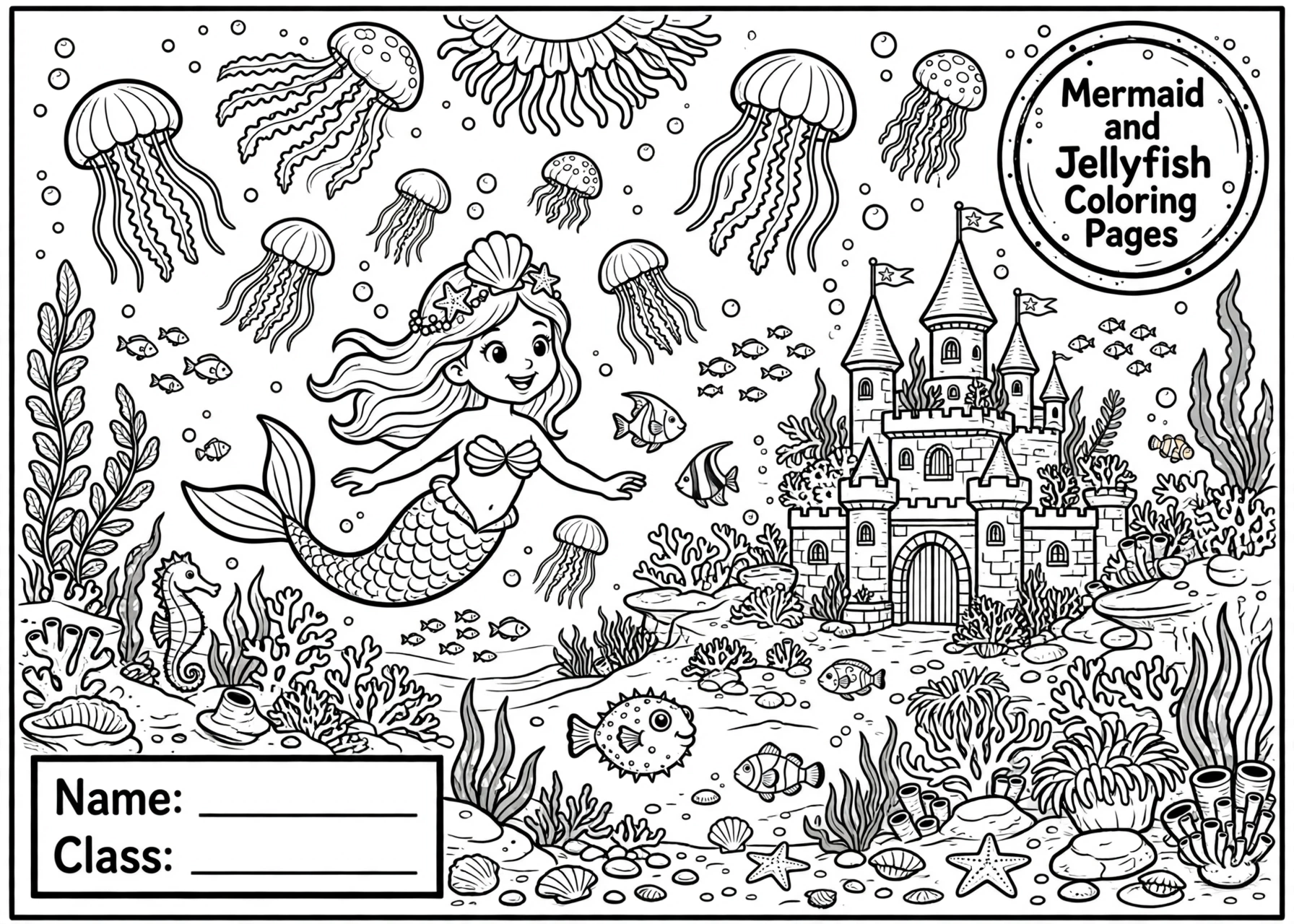
Preparing a Printable Coloring Activity
Before printing a selected illustration, check the available file and review the print preview. Make sure the entire design fits within the paper boundaries, and adjust the scaling or orientation if necessary.
Choose paper that suits the coloring materials. Standard printer paper is generally convenient for crayons and colored pencils, while thicker paper may be preferable when children plan to use markers. The best choice depends on the type of materials and the printer being used.
For a classroom activity, teachers can prepare several coloring tools and let children choose their preferred colors. At home, parents can create a comfortable space where children have enough room to work on their pictures without rushing.
After completing the artwork, children can write a title for their underwater scene and display it alongside their other creative projects. Families who want to continue exploring different everyday subjects can also introduce a mini bus theme for another coloring session.
Mermaid and Jellyfish Coloring Pages combine the mystery of mythical sea characters with the unusual appearance of real marine animals. Through imaginative color choices, ocean-inspired backgrounds, and simple storytelling activities, children can create their own underwater world while enjoying a creative break at home or school.
