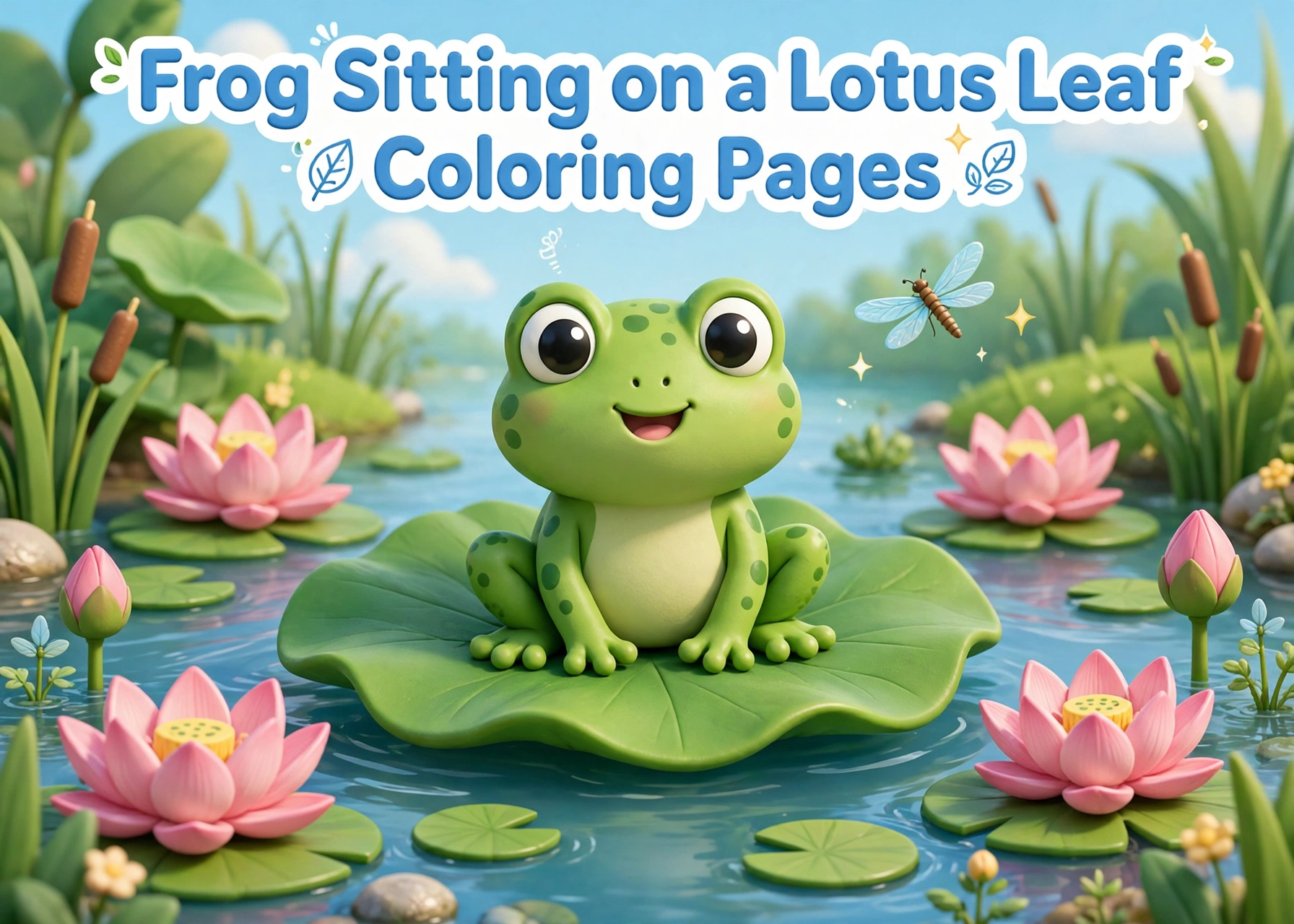
Frog Sitting on a Lotus Leaf Coloring Pages bring a peaceful pond scene to life through creative coloring. Children can explore the shape of a frog, the broad surface of a lotus leaf, and the natural beauty of a watery habitat while choosing their favorite colors.
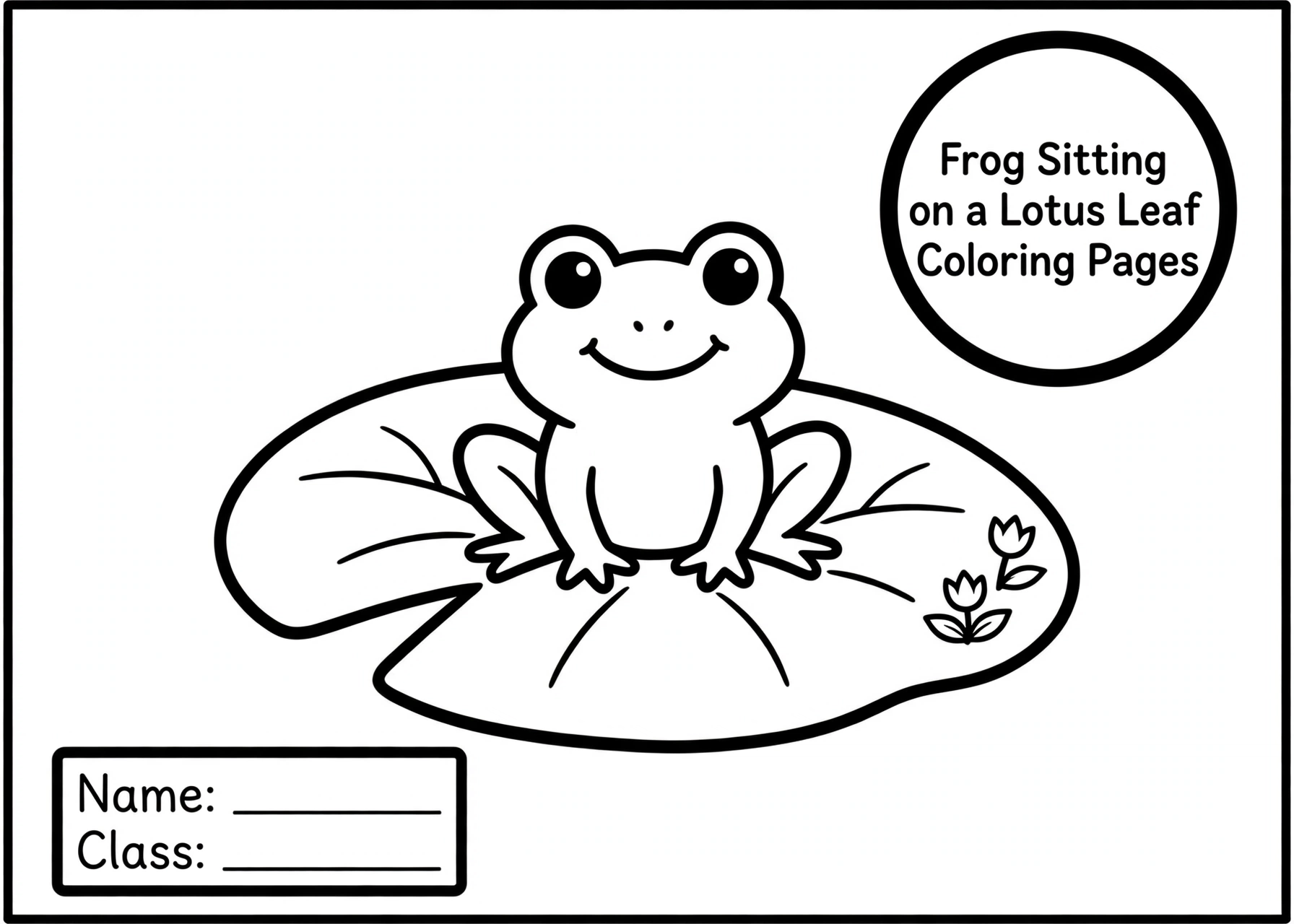
A Little Frog Resting in Its Pond Habitat
A frog sitting on a lotus leaf creates a charming scene inspired by life around freshwater ponds. Unlike illustrations showing frogs jumping or swimming, this setting captures a quieter moment. The frog appears to be taking a break on a floating leaf, surrounded by the calm atmosphere of its natural environment.
Lotus leaves are particularly interesting because of their broad, rounded shapes and distinctive appearance. They float on the water’s surface and can provide resting places for small animals. Their green surfaces contrast beautifully with the water beneath them, making them an appealing subject for children’s artwork.
Frogs also have recognizable physical features that make them enjoyable to color. Their large eyes, rounded heads, strong hind legs, and smooth-looking bodies provide several details for children to explore. Depending on the illustration, the frog may have its legs tucked underneath its body or positioned comfortably on the leaf.
The combination of these two natural subjects makes the theme different from an ordinary animal coloring activity. Children can focus on the frog itself while also imagining the pond environment where it lives.
Exploring the Shapes of a Frog and Lotus Leaf
One of the most interesting parts of this coloring theme is the contrast between the frog’s body and the large lotus leaf beneath it. Both subjects have distinct shapes that children can approach in different ways.
The frog’s eyes are often among the most noticeable features. Children can use shades of green for the body, darker green for small details, and black or brown for the pupils. Some frogs have lighter-colored undersides, so pale yellow or cream can be used to create a little contrast if the illustration provides enough space.
The legs offer another opportunity to experiment with color. Frogs have powerful hind legs that help them jump, while their toes can be adapted for gripping different surfaces. Children can use slightly darker shades around the legs to distinguish them from the rest of the body.
The lotus leaf is equally important. Its rounded shape can be colored in different shades of green, from fresh lime to deep forest green. A few lighter areas can suggest sunlight falling across the leaf. If the illustration includes visible veins, children can trace these details with a darker green pencil.
Rather than coloring every section in exactly the same shade, children can experiment with subtle differences. This approach makes the frog and its floating resting place easier to distinguish.
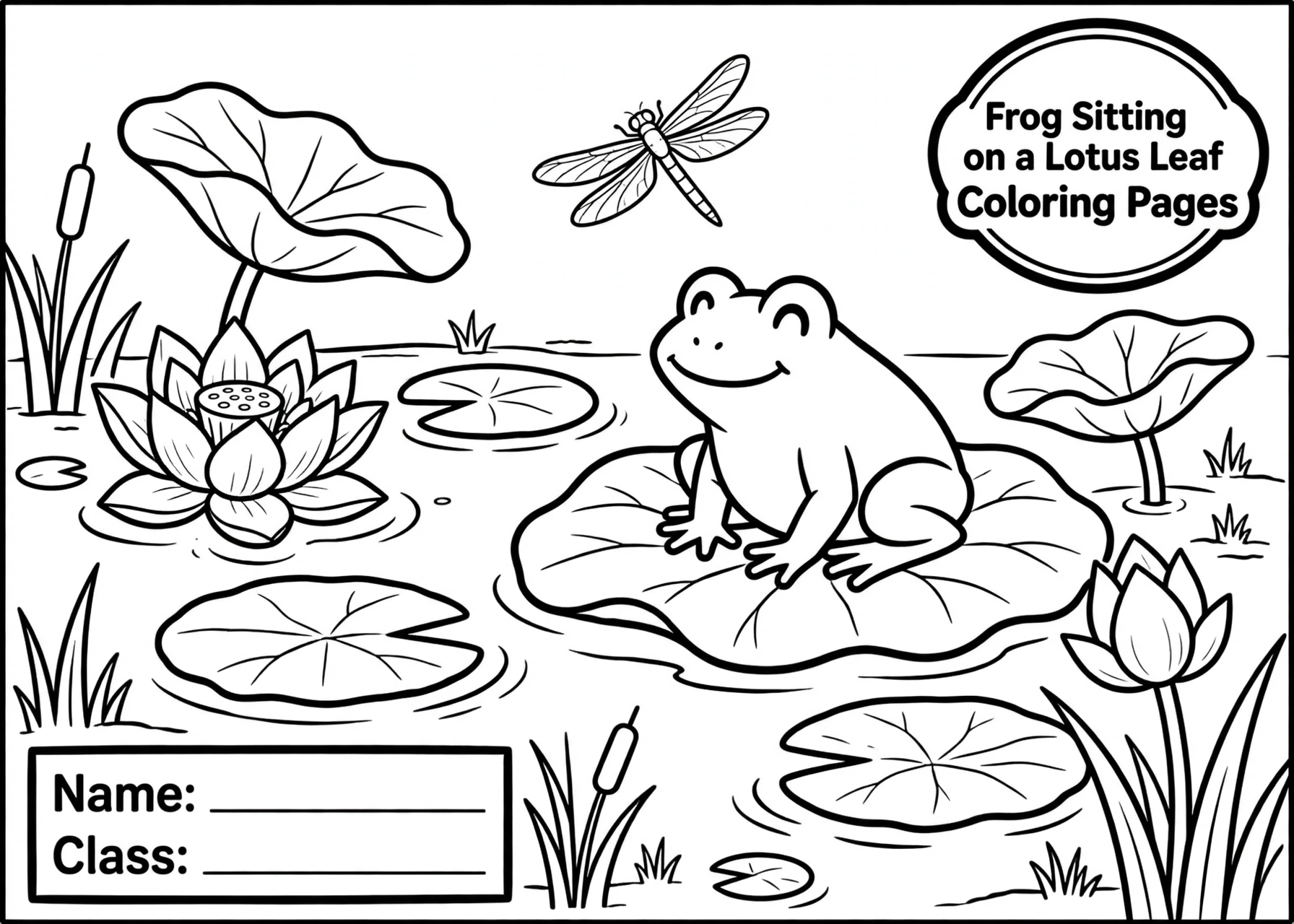
Choosing Colors for a Peaceful Pond Scene
The setting offers plenty of possibilities beyond the traditional green frog and leaf. Children can use the familiar colors of nature as inspiration or create an imaginative pond with unusual combinations.
For a natural-looking frog, light green, olive, and yellowish green are suitable choices. Some frog species also have brown, reddish, or darker markings, so children do not need to assume that every frog must look identical.
The lotus leaf can be darker than the frog to make the animal stand out. If the design includes water around the leaf, shades of blue and turquoise can create a refreshing background. A combination of light blue near the leaf and deeper blue farther away can suggest the appearance of a pond.
Small background details can make the scene more interesting when there is enough open space. Children might imagine tiny water ripples, floating petals, pond plants, or dragonflies nearby. These additions are optional and can be drawn separately if the original illustration does not include them.
For a softer appearance, colored pencils work well when blending different shades of green and blue. Crayons are convenient for larger areas, especially when children want to fill the lotus leaf or water quickly. Markers can provide stronger colors for the frog’s eyes and other small details, although thicker paper may be preferable to reduce ink bleeding.
What Makes a Lotus Leaf Interesting?
A lotus leaf is more than a decorative surface in this illustration. It represents an important feature of aquatic plant life and provides an opportunity to introduce children to plants that grow in water.
Lotus plants are known for their large, rounded leaves, which are often supported by long stems. Their leaves can float above the water or rise slightly above its surface, depending on the plant and its growing conditions. The distinctive leaf shape makes it easy to recognize in pond illustrations.
Another fascinating characteristic is the way water behaves on lotus leaves. Their surfaces have tiny structures that help water droplets gather and roll away rather than spreading easily across the leaf. This natural characteristic is commonly known as the lotus effect.
Parents and teachers can introduce this fact during coloring time without interrupting the creative activity. A simple explanation about how water droplets move across a lotus leaf can make the illustration more meaningful. Children can also observe pictures of lotus ponds to see how the leaves appear when viewed from above.
Creative Activities Inspired by Frog Sitting on a Lotus Leaf Coloring Pages
The finished picture can become the starting point for several simple activities at home or in the classroom. Instead of treating coloring as an activity that ends when the last section is filled, adults can encourage children to explore the pond setting in their own way.
One idea is to create a name for the frog. Children can imagine whether it is a quiet pond visitor, a curious explorer, or a little character waiting for a friend. They can then tell a short story about what happens after the frog leaves its lotus leaf.
Another activity is to draw a small pond around the main illustration. Children can add water plants, stones, flowers, and other creatures that might live near freshwater habitats. This works particularly well when the printable has enough blank space for additional drawings.
A simple observation game can also be introduced. Ask children to identify the frog’s eyes, legs, body, and the shape of the lotus leaf. They can then compare the colors they selected with photographs of real frogs and lotus plants. The purpose is not to make every picture scientifically accurate, but to help children notice the differences between artistic imagination and nature.
For children who enjoy drawing animals with different personalities, a cute dog offers another subject to explore. Moving from a pond animal to a familiar domestic animal can bring variety to a collection of creative activities.
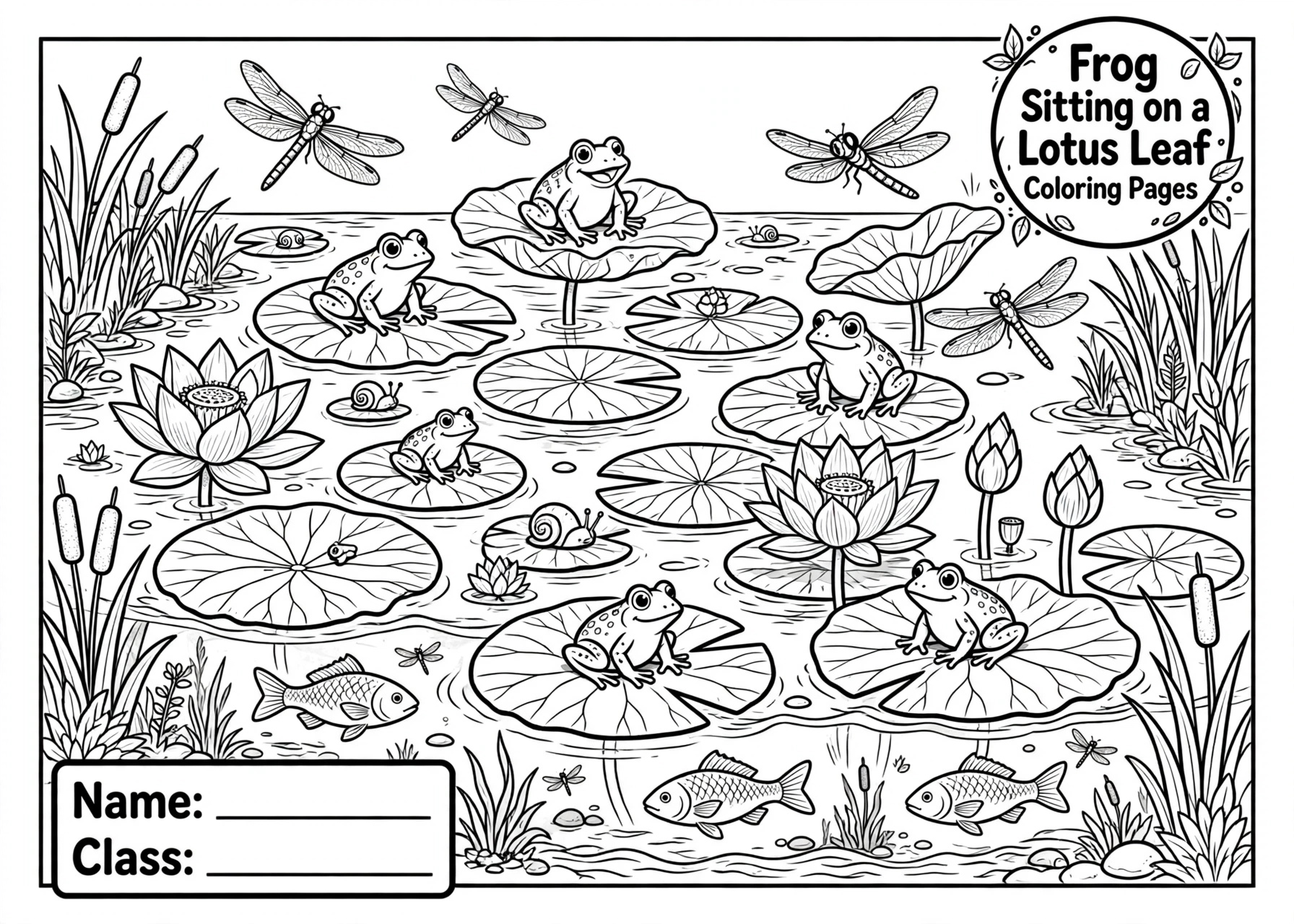
Making the Printable Activity Ready to Enjoy
A comfortable workspace and suitable coloring materials can make the activity easier to manage. Before printing a downloadable design, parents or teachers should check the available file format and review the print preview. This helps ensure that the illustration fits the selected paper and that its important outlines remain visible.
Place the printed sheet on a flat surface and provide a selection of crayons, colored pencils, or washable markers. Children can begin with the frog, continue with the lotus leaf, and finish with any surrounding details. However, there is no fixed coloring order, so they can work in whichever way feels comfortable.
For classroom use, teachers can invite children to display their finished pictures together. Different shades of green, blue, and other creative colors can make each frog look unique. The pictures can also become part of a wider nature-themed display about pond plants and animals.
Children who enjoy combining animals with imaginative scenes may also like exploring a little boy and dinosaur adventure. It introduces a different setting and provides another opportunity to create stories through pictures.
Frog Sitting on a Lotus Leaf Coloring Pages offer a lovely way to explore a small moment in nature. With the frog’s distinctive features, the broad lotus leaf, and the possibility of creating an entire pond setting, children have plenty of room to make the illustration their own.
