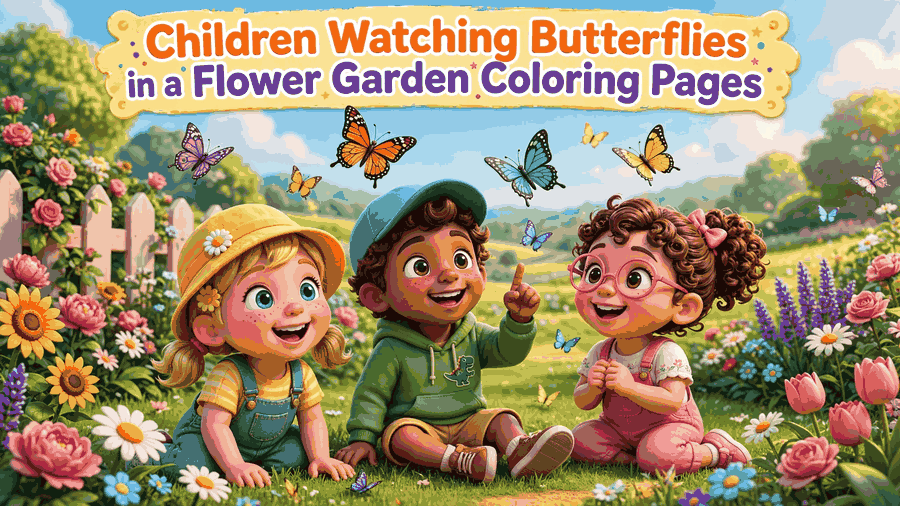
Children Watching Butterflies in a Flower Garden Coloring Pages capture a peaceful outdoor moment where curiosity, flowers, and colorful butterflies come together. This nature-inspired activity invites children to explore colors, observe garden details, and create their own beautiful scenes.
A Little Garden Scene Filled with Natural Beauty
A flower garden can become an exciting place for children to explore, especially when butterflies are flying between the blossoms. The combination of flowers, delicate wings, leaves, and young observers creates a scene that feels lively without being overly complicated. It also offers a refreshing change from coloring individual animals or objects because several elements can be brought together in one picture.
Children watching butterflies introduces a small storytelling element to the artwork. They can imagine the children discovering a butterfly resting on a flower or following its gentle movement through the garden. The butterflies become the center of attention, while the surrounding flowers provide plenty of opportunities for creative color combinations.
This theme also has a natural connection to outdoor experiences. Children who have visited a garden, park, or flower-filled yard may recognize the excitement of spotting a butterfly among the plants. Even without a real garden nearby, the illustration can inspire them to imagine their own colorful outdoor setting.
Exploring Butterfly Wings, Flowers, and Garden Details
Butterflies are particularly interesting subjects because their wings often feature patterns, shapes, and contrasting colors. Some butterflies have large patches of color, while others display small spots or lines along their wings. These features give children different ways to approach the coloring process.
Rather than using identical colors on both wings, children can experiment with matching shades or create their own decorative patterns. Orange with yellow, blue with purple, and pink with light green are possible combinations for a cheerful appearance. They can also choose darker outlines or contrasting shades to make the wing patterns easier to distinguish.
Flowers offer another opportunity to experiment. A garden does not need to contain flowers of just one color, so children can imagine a mixture of red, pink, yellow, purple, and white blossoms. Green leaves and stems can provide a natural contrast, while small areas of brown can represent soil or garden paths if they choose to add those details.
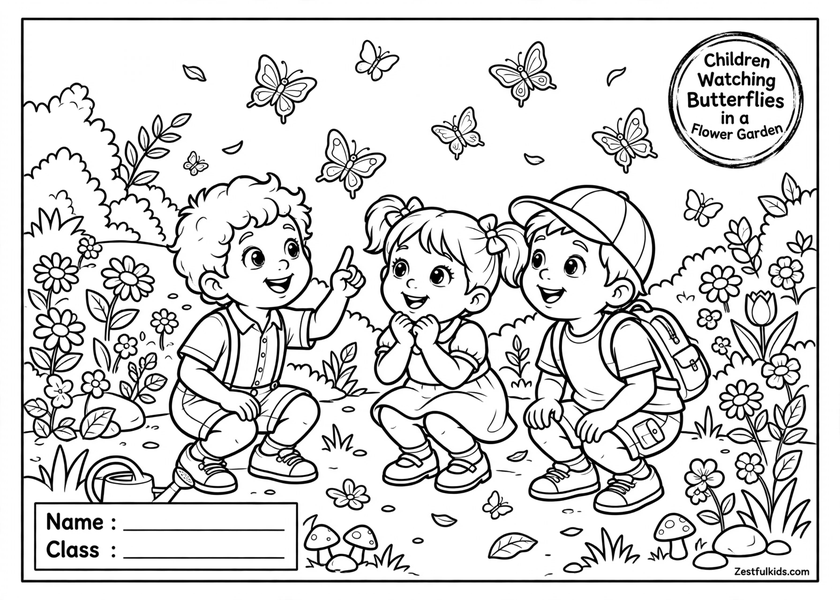
The children in the illustration can also be colored in different ways. Clothing, shoes, hairstyles, and other visible details allow each young artist to make the scene feel personal. Parents can encourage children to select colors that represent their favorite outfits or create entirely imaginary clothing designs.
Turning the Coloring Activity into a Garden Discovery
One enjoyable way to use this printable is to connect it with a simple nature observation activity. Before coloring, parents or teachers can talk about the different things that might be found in a flower garden. Children can think about petals, leaves, flower buds, butterflies, and the sunlight that helps plants grow.
A useful starting point is to discuss why butterflies visit flowers. Adult butterflies often feed on nectar, a sweet liquid produced by many flowering plants. As they move between flowers, they can also help transfer pollen, making them important visitors in many gardens.
Children can look at the butterfly illustrations and notice that not all butterflies have the same wing shapes or patterns. Some have rounded wings, while others have more pointed edges. Their colors also vary considerably, making butterflies a fascinating subject for simple observation and drawing activities.oom, teachers can invite children to name the flowers and insects they recognize. They can also draw an additional butterfly or flower on a separate sheet of paper. This creates a small extension activity without changing the original illustration.
Creative Ways to Color a Flower Garden
A garden scene offers more than one way to approach coloring. Some children may prefer a realistic appearance, while others enjoy using bright, unusual shades. Both approaches work well because the main purpose is to create an enjoyable interpretation of the scene.
For a natural-looking garden, try using different shades of green for leaves and stems. Flowers can have lighter centers with darker petals around them, while butterfly wings can feature two or three complementary colors. A light blue background can suggest an open sky if there is enough empty space in the illustration.
Children who enjoy imaginative artwork can create a fantasy garden instead. Purple leaves, rainbow-colored butterflies, or flowers with alternating shades can make the picture feel like a magical outdoor world. They might even invent a special name for their garden and describe the kinds of butterflies that visit it.
Choosing the right coloring tools can make the process easier. Crayons are useful for filling larger flower petals and clothing areas, while colored pencils provide more control around butterfly patterns and smaller details. Washable markers can produce stronger colors, although it is sensible to check whether the paper is thick enough to prevent ink from showing through.
There is also no need to color the entire picture in one sitting. Children can begin with the butterflies, move on to the flowers, and finish the remaining details later. Taking a relaxed approach allows them to concentrate on individual parts of the garden.
Bringing More Nature-Themed Activities into the Day
This flower garden theme can become part of a wider collection of activities about outdoor life and the natural world. Parents can combine coloring with a short garden walk, a picture book about butterflies, or a simple drawing challenge. Children can look for flowers in different shapes and discuss which colors they would use to represent them.
For families who enjoy exploring different subjects, a police motorcycle offers a completely different coloring experience. It introduces vehicles and community helpers, providing an interesting contrast to the peaceful atmosphere of a garden scene.
Another animal-themed activity worth exploring is owl illustrations. Owls have distinctive eyes, feathers, and body shapes that give children a different set of details to work with after completing their butterfly garden artwork.
At home, parents can keep completed pages in a folder dedicated to nature-inspired artwork. Teachers may also display selected pictures on a classroom board to create a colorful garden-themed display. Each child’s interpretation can be different, even when everyone starts with the same subject.
Making Every Garden Picture Personal
The most enjoyable part of a flower garden coloring activity is seeing how children interpret the same outdoor scene in different ways. One child may focus on creating detailed butterfly wings, while another may spend more time decorating the flowers and choosing colors for the children’s clothing. Neither approach needs to be more complicated than the other.
After finishing, invite children to describe what is happening in their picture. They might explain which butterfly caught their attention first, what flowers are growing in the garden, or where the children are exploring. These conversations give the artwork a personal story and allow children to share the ideas behind their color choices.
Children Watching Butterflies in a Flower Garden Coloring Pages bring together the beauty of flowers, the movement of butterflies, and the joy of outdoor discovery. With simple coloring tools and a little imagination, children can turn this peaceful garden scene into a creative piece of artwork that reflects their own ideas about nature.
