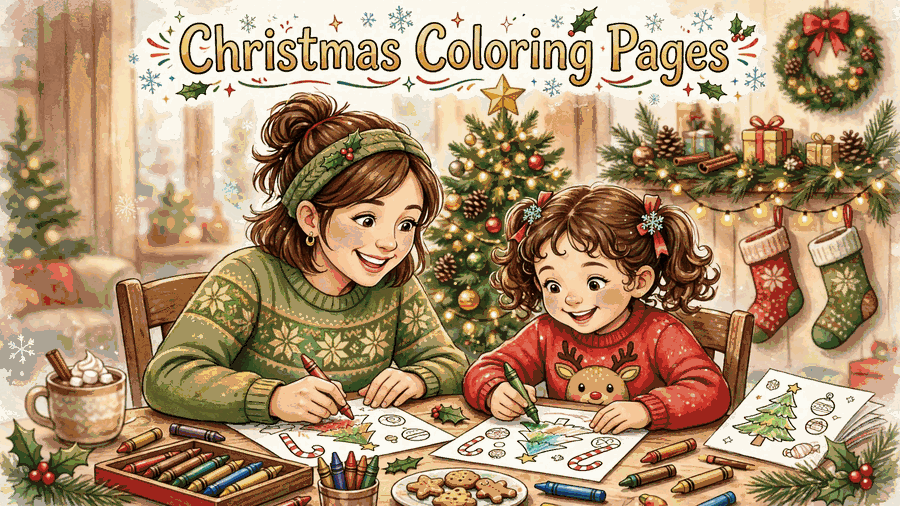
Christmas Coloring Pages bring the warmth of the holiday season to children’s creative time, with opportunities to color decorated trees, wrapped presents, snowy scenes, and cheerful seasonal characters. These printable activities can become part of family traditions, classroom celebrations, or quiet afternoons filled with festive imagination.
Create a Christmas Scene That Tells a Story
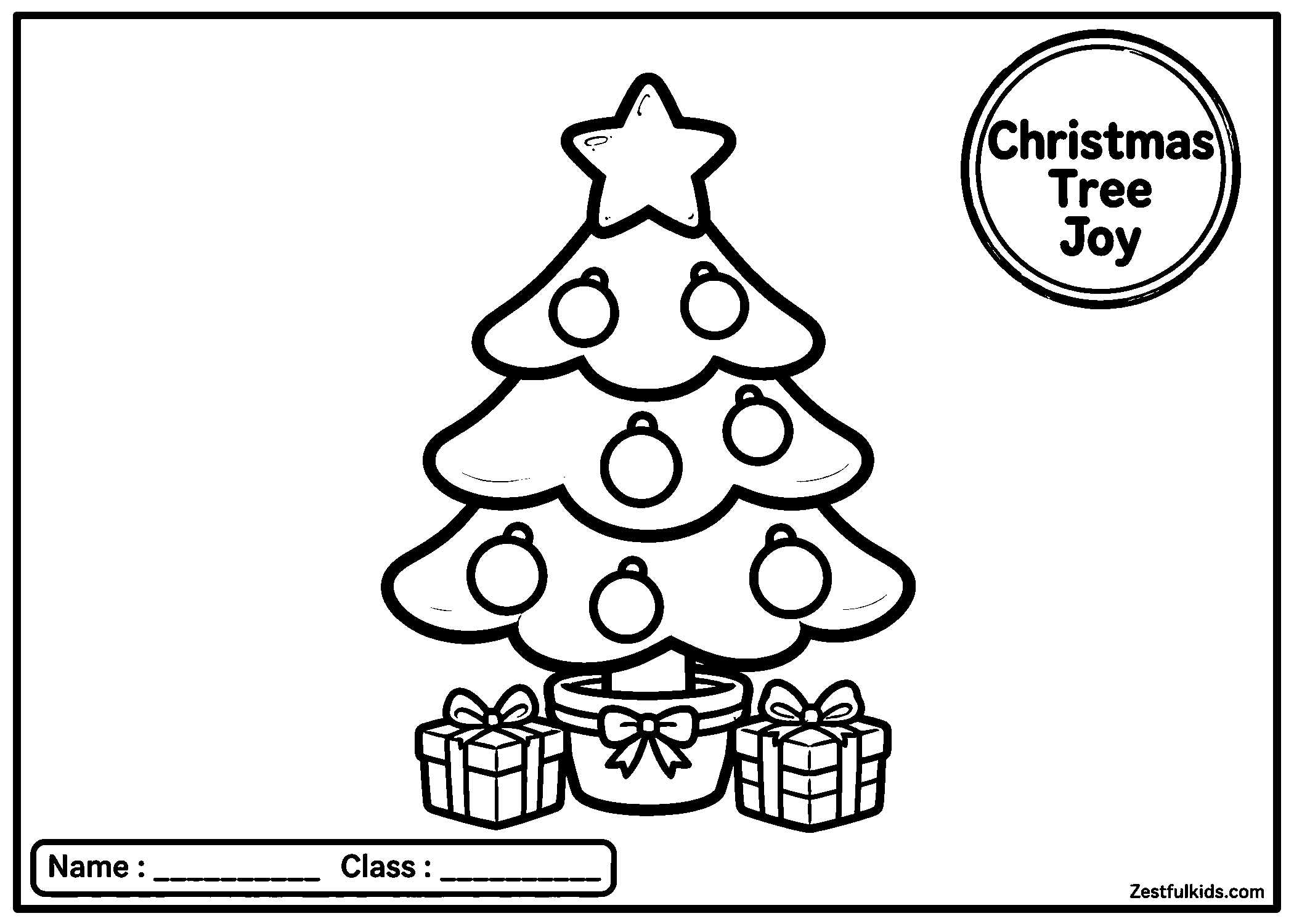
Christmas illustrations often combine familiar objects that help children imagine what the holiday might look and feel like. A decorated evergreen tree, a stack of presents, a glowing star, or a wreath on a front door can each become the starting point for a small story. Children might picture a family preparing their home for a celebration, Santa Claus delivering gifts, or woodland animals gathering beneath snow-covered branches. The scene does not need to be complicated to inspire imaginative ideas.
One enjoyable approach is to let children decide what is happening in the picture before choosing their colors. If the illustration shows a Christmas tree, they might imagine who decorated it and which ornament is their favorite. If it features presents, they can invent what might be inside each box. These conversations make the coloring session more personal without requiring children to write or complete an additional activity.
Christmas pictures also offer plenty of room for individual interpretation. Traditional red, green, gold, and white are familiar seasonal choices, but children can create a completely different atmosphere with turquoise, lavender, silver, or rainbow-colored decorations. A purple Christmas tree or a bright orange snowman can be just as welcome in an imaginative picture as a traditionally colored one.
Choose a Color Palette for the Holiday Mood
Before starting, children can select a few colors that work well together. This can help them make decisions as they move between different objects in the illustration, especially when the page contains several decorations or characters.
Here are some festive combinations to try:
- Classic Christmas: Combine deep green, bright red, white, and gold for a familiar holiday appearance.
- Winter wonderland: Use icy blue, pale gray, white, and silver-inspired shades to create a cool, snowy atmosphere.
- Candy-inspired decorations: Mix pink, red, white, and mint green for a playful look.
- Woodland Christmas: Choose forest green, warm brown, muted red, and golden yellow for a natural, cozy scene.
- Fantasy holiday: Combine purple, turquoise, bright pink, and yellow to create a colorful imaginary celebration.
Children can use one palette throughout the picture or give each object its own combination. For example, the tree might feature traditional green branches, while its ornaments use a mixture of bright colors. Wrapped presents can be decorated with contrasting ribbons, stripes, dots, or simple geometric patterns if the illustration leaves room for these additions.
Colored pencils are useful for small ornaments and delicate details, while crayons can cover larger areas such as tree branches, clothing, and backgrounds. Washable markers provide stronger color, although the paper should be suitable for the materials being used. There is no need to use every color available; a few carefully chosen shades can make a picture feel coordinated.
Make Christmas Decorations the Center of the Activity
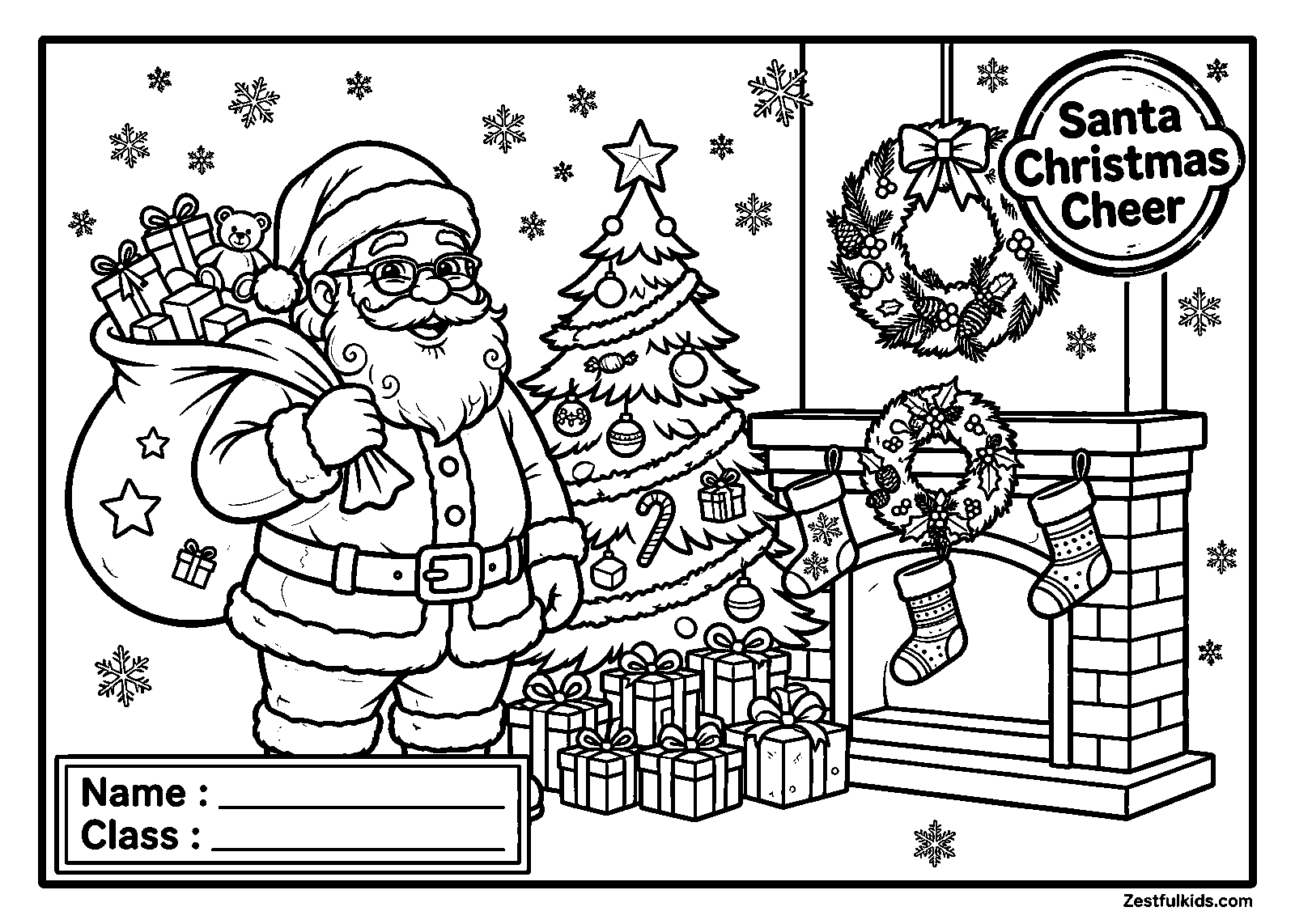
Holiday decorations provide an interesting variety of shapes for children to explore. Round baubles, pointed stars, curled ribbons, candy canes, and evergreen branches each offer a different coloring experience. Some designs may have large open spaces, while others may contain smaller decorative elements that invite more careful work. Choosing a picture that matches a child’s interest and comfort with detail can help keep the activity enjoyable.
For a decorated tree, children can alternate colors between ornaments or repeat a pattern from top to bottom. They might color every second bauble red, use gold for the stars, or give each branch a different shade of green. If the design includes strings of lights, the bulbs can be colored in a repeating sequence of yellow, blue, red, and green.
A wreath offers another opportunity to experiment with patterns. Children can color the leaves in several shades of green and use red berries or colorful ribbons as accents. If a picture includes stockings, they might invent different patterns for each one, such as stripes, stars, or zigzags. These ideas can be added when appropriate, but children should also feel free to work with the details already present in their chosen illustration.
Bring a Winter Wonderland to Life
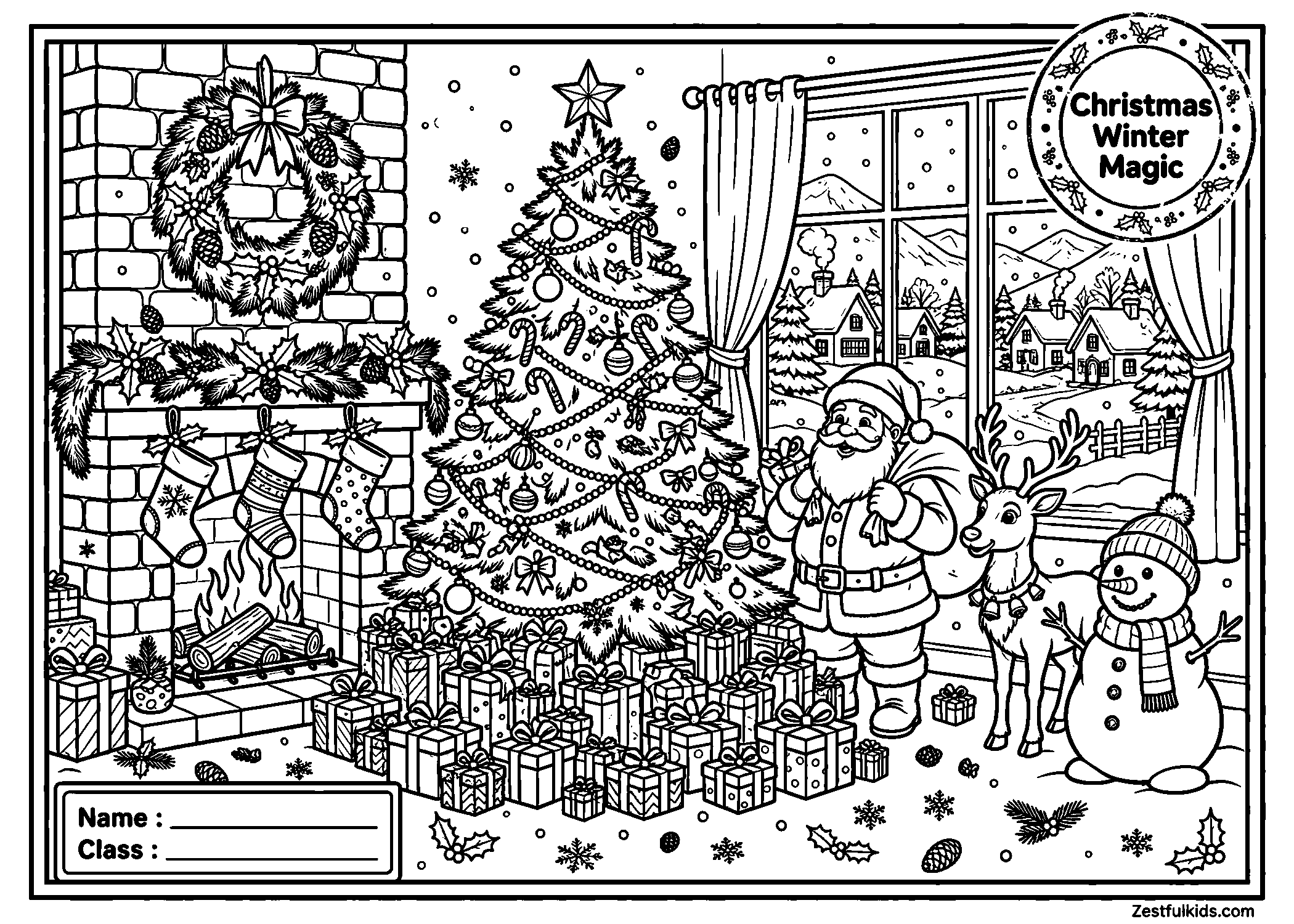
Not every Christmas scene needs to focus on gifts and decorations. Winter landscapes can introduce a different atmosphere, with snowy rooftops, frosty trees, icy paths, and quiet evenings beneath a starry sky. Children can use pale blue and light gray to suggest shadows on snow, leaving some areas white to represent untouched surfaces. A dark blue sky can provide contrast if the illustration includes nighttime scenery.
For children who enjoy imaginary winter settings, an ice castle can extend the seasonal theme beyond a traditional holiday scene. The ice castle illustrations offer another way to explore icy architecture, sparkling details, and imaginative winter environments. Children can experiment with cool colors or invent a magical palace with unusual shades and decorative patterns.
When adding a background to a Christmas picture, it helps to consider which part should attract the most attention. A detailed tree may stand out better against a simple sky, while a picture with only a few objects might benefit from extra snowflakes, clouds, or distant hills. Encourage children to add details gradually so that the main subject remains easy to see.
Turn Coloring Into a Family Christmas Tradition
Coloring can fit naturally into the preparations for a holiday gathering. Parents might place a few selected designs on the table while other family members prepare decorations, wrap presents, or organize seasonal activities. Children can work independently or share their pictures with siblings and relatives. The activity can be as short or as relaxed as the occasion allows.
A useful family idea is to create a small collection of finished Christmas pictures. Children can choose one to display on a bedroom door, place on a refrigerator, or use as inspiration for a handmade greeting card. If the artwork will be used as a card, adults can help select paper that folds neatly and check that the illustration will fit on the intended surface.
Families can also invite children to create a visual record of their holiday traditions. One picture might represent decorating the tree, another might show a festive meal, and a third might depict a snowy outdoor adventure. These drawings can be collected over time and revisited in later years, allowing children to see how their artistic choices change.
For a quieter seasonal activity, children who enjoy animal illustrations might also like a sleeping cat design. A curled-up cat resting near a warm window can complement the cozy atmosphere of Christmas without requiring every activity to feature holiday decorations. This gives children a choice between lively festive scenes and a more peaceful subject.
Prepare Your Christmas Coloring Pages for Printing
Before printing a selected design, check the preview to make sure the illustration fits within the page boundaries. Adjust the scaling or margins if necessary, particularly if important details appear close to the edges. Ordinary printer paper is often sufficient for crayons and colored pencils, while heavier paper may be preferable for certain markers. The right choice depends on the printer and the coloring materials available.
Set up a comfortable workspace with enough room for the paper and coloring supplies. A small tray or container can keep pencils and crayons organized, while a scrap sheet placed underneath the artwork can help protect the table when using materials that may transfer through the paper. Younger children may appreciate having a limited selection of colors within easy reach.
There is no need to finish every picture in one session. Children can color the main objects first and return to the background later, or complete one small section at a time. When the artwork is finished, invite them to describe their favorite detail or give the picture a title. These simple touches make the finished page feel like their own creation.
With familiar holiday symbols, imaginative winter scenes, and endless opportunities for personal color choices, Christmas Coloring Pages can become a flexible part of seasonal family activities. Whether children prefer carefully decorated trees, whimsical presents, or magical snowy landscapes, each picture offers a chance to make the Christmas season a little more creative.
