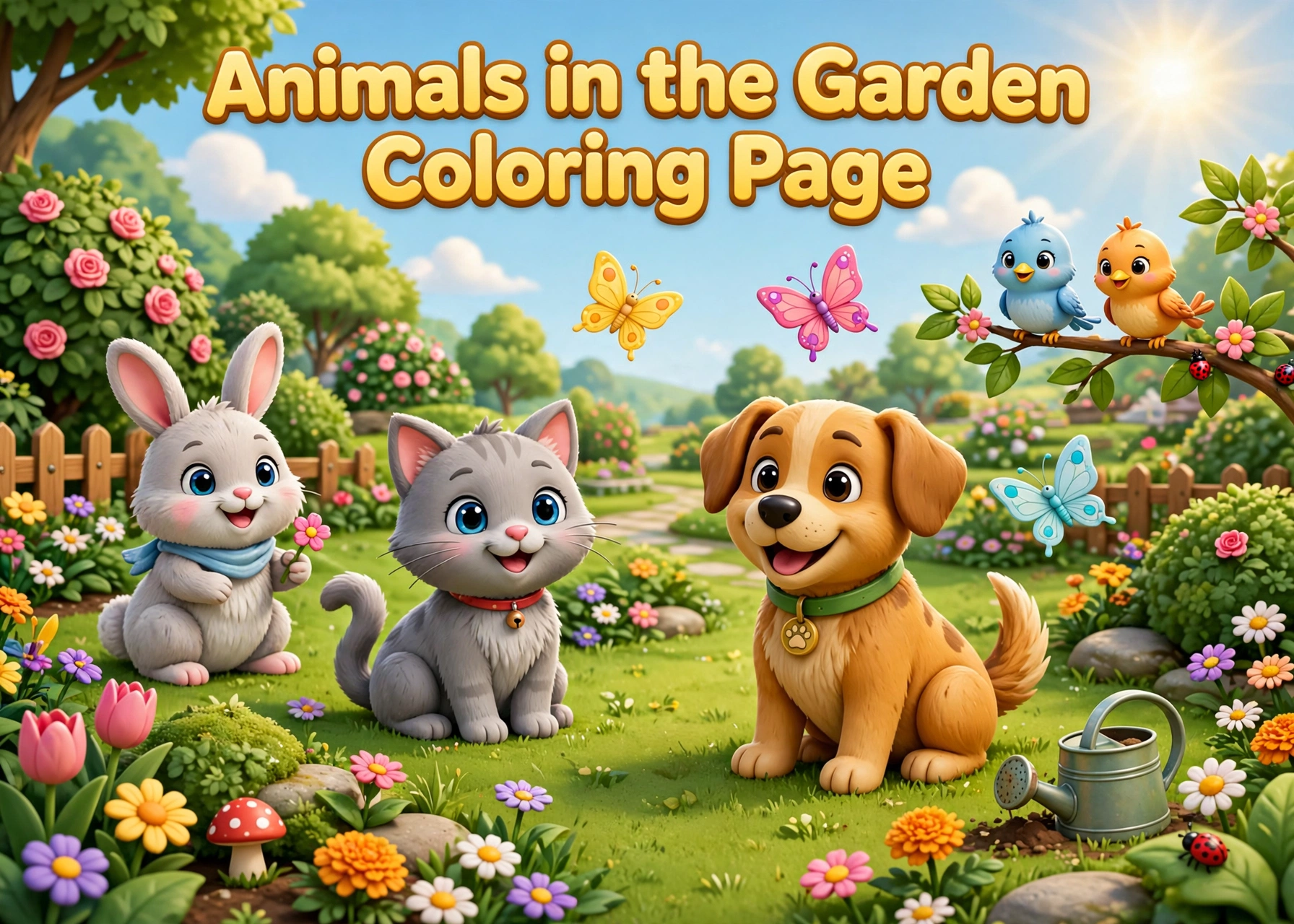
Animals in the Garden Coloring Page introduces children to the small creatures and familiar wildlife that can be found around a garden. This nature-inspired activity combines creativity, animal discovery, and imaginative coloring in an enjoyable way for young learners.
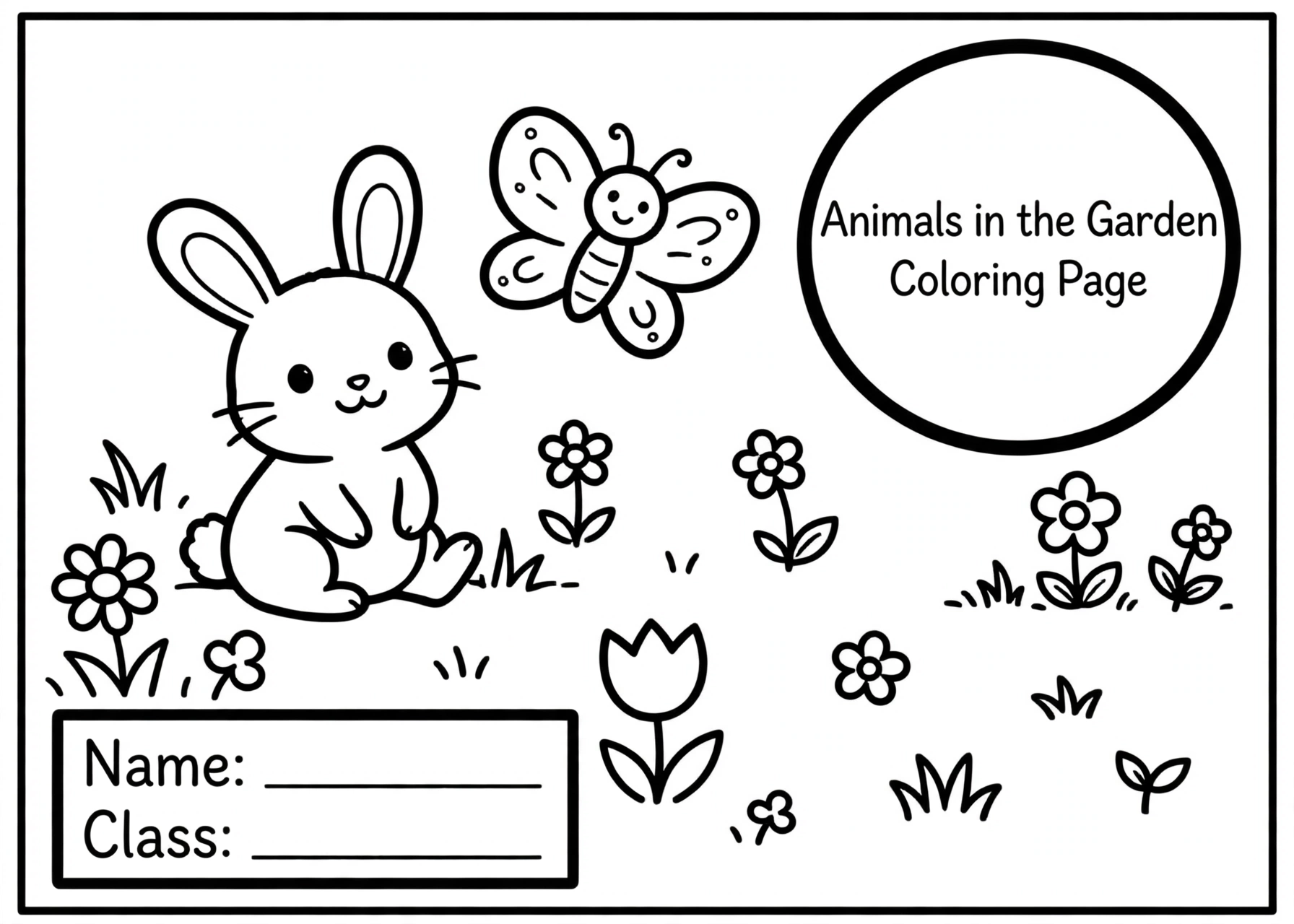
Discover the Little World of Animals in a Garden
A garden is more than a place where flowers bloom and vegetables grow. It can also become a lively home for different animals, from tiny insects crawling among leaves to birds visiting branches and small creatures exploring the ground. These natural surroundings offer plenty of interesting subjects for children to discover through pictures and coloring activities.
An Animals in the Garden Coloring Page brings this outdoor environment into a simple creative experience. Children can explore the appearance of different animals while deciding which colors suit each creature. Some may prefer realistic shades inspired by nature, while others might enjoy creating colorful imaginary animals. Both approaches allow children to make their artwork personal and enjoyable.
Garden animals also offer a wonderful opportunity to introduce everyday observations. A butterfly resting near a flower, a snail moving across a leaf, or a bird searching for food can inspire conversations about the living things that share outdoor spaces. These familiar examples make the theme interesting without requiring complicated explanations.
Which Garden Animals Can Inspire Children’s Artwork?
Gardens can attract many kinds of animals, depending on the climate, plants, and surrounding environment. Some creatures are commonly spotted in backyards, while others are more likely to appear in parks or larger green spaces. Their different shapes, patterns, and natural colors provide plenty of inspiration for coloring.
Butterflies and Bees Around Flowers
Butterflies are among the most recognizable garden visitors. Their broad wings feature beautiful patterns that children can decorate with bright combinations of yellow, orange, pink, purple, or blue. They can also experiment with symmetrical designs by using similar patterns on both sides of the wings.
Bees are another interesting subject because of their familiar striped bodies and delicate wings. Yellow and black are traditional choices, but children can use softer shades to create a more imaginative illustration. A flower-filled background can make these tiny pollinators look right at home.
Birds Visiting Trees and Garden Spaces
Birds bring movement and variety to outdoor environments. They may sit on branches, hop across the ground, or search for seeds near plants. Their feathers come in many colors, making them suitable subjects for children who enjoy experimenting with different coloring combinations.
A bird illustration can be decorated with brown, gray, green, or bright shades inspired by familiar garden birds. Children can also imagine the surrounding environment by adding a blue sky, leafy branches, or a small birdhouse if the design leaves room for additional details.
Snails, Ladybugs, and Other Small Creatures
Not every garden animal has wings or feathers. Snails, ladybugs, and worms are also interesting creatures that can be found in suitable outdoor habitats. Their distinctive shapes make them easy to recognize and fun to color.
Ladybugs are often associated with red shells and black spots, while snails can have brown, cream, or yellowish shells. Children can explore these natural patterns or invent their own combinations. These small creatures also encourage a closer look at details that might otherwise go unnoticed during an ordinary walk outside.
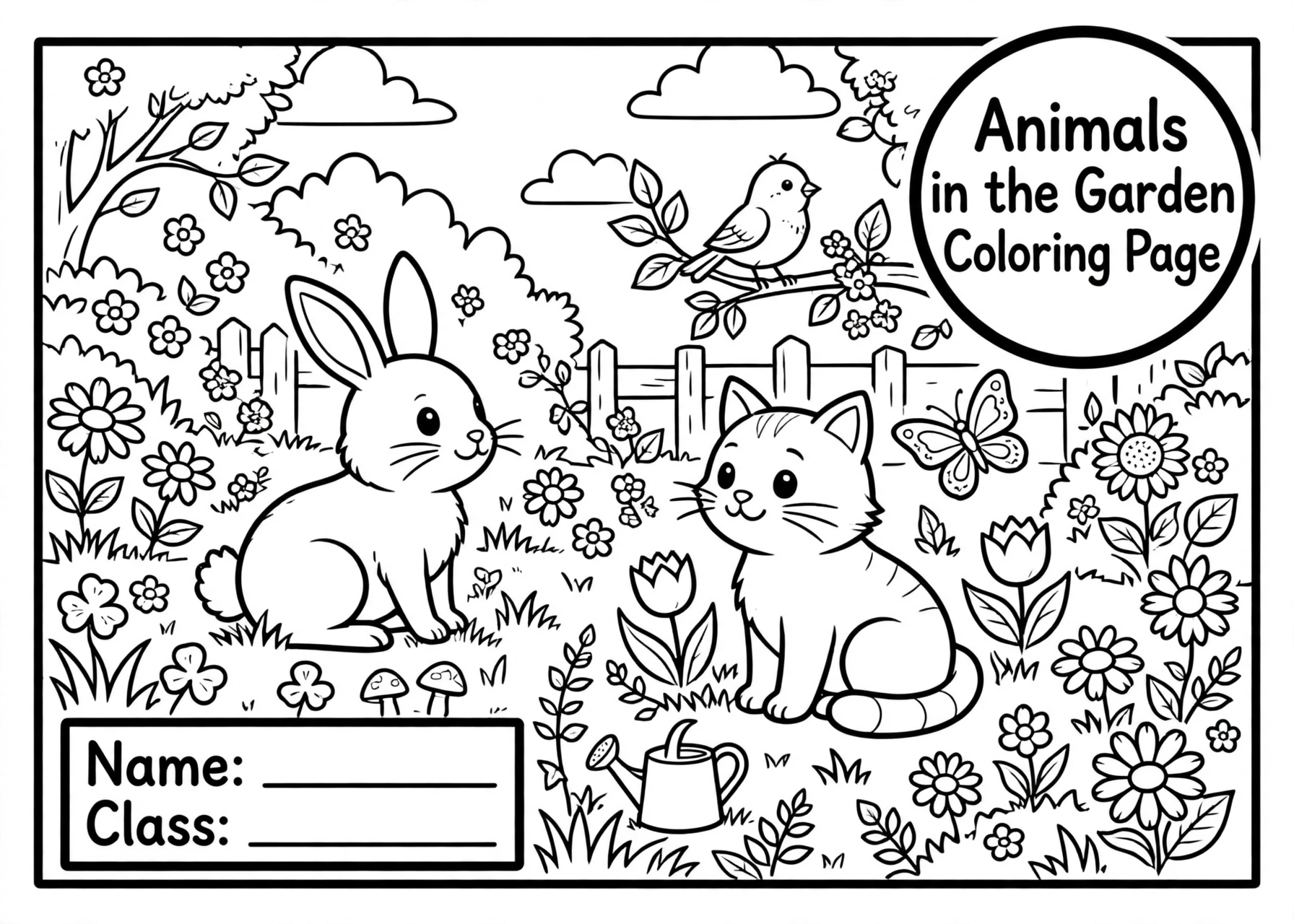
Choosing Colors for a Natural Garden Scene
Color selection can make a garden illustration feel lively and inviting. Green is an obvious choice for leaves and grass, but gardens contain many other colors throughout the year. Flowers may appear in shades of red, pink, purple, orange, and yellow, while soil, tree trunks, and stones provide more neutral tones.
Children do not have to follow realistic color combinations throughout the entire picture. A purple butterfly, a blue snail shell, or a brightly colored bird can turn an ordinary garden scene into an imaginative creation. The most important part is allowing them to make their own decisions and enjoy the process.
For a more natural appearance, parents and teachers can suggest using different shades of green instead of filling every leaf with the same color. Light green can represent fresh leaves, while darker green works well for shaded areas. Brown and beige can add variety to garden paths, branches, and soil.
Crayons are convenient for younger children because they are easy to hold and suitable for filling larger spaces. Colored pencils offer greater control when working on small details, such as butterfly wing patterns, feathers, or tiny spots. Washable markers can provide stronger colors, although adults should consider the paper quality before using them.
Turn Coloring Time into a Garden Discovery Activity
Coloring can become more engaging when children connect the pictures with things they have seen outdoors. Instead of treating every animal as an isolated subject, parents and teachers can encourage children to think about where each creature might live and what it might do in a garden.
For example, a butterfly might visit flowers, while a snail may prefer a damp area beneath leaves. Birds can look for seeds or insects, and ladybugs may crawl along plant stems. These simple observations help children understand that different animals interact with their surroundings in different ways.
Another enjoyable activity is to ask children to create their own garden setting around the animals. They can add flowers, grass, stones, small trees, or clouds if the illustration has enough open space. This turns a basic coloring activity into a personal nature scene without requiring additional materials.
Families can also combine coloring with a short outdoor observation session. After finishing their pictures, children can look at plants around the house or in a nearby garden to see whether they recognize any similar creatures. Adults should remind them to observe animals gently and avoid disturbing insects, nests, or other natural habitats.
Simple Ways to Make Each Coloring Page More Interesting
Children can approach the same garden theme in several creative ways. One useful idea is to focus on the patterns found on different animals. Butterfly wings, bird feathers, snail shells, and ladybug spots each have distinctive visual characteristics that can inspire different coloring techniques.
Another approach is to create a color theme for the entire picture. A spring garden might use fresh greens and pastel flowers, while a sunny afternoon scene could include warmer yellows and oranges. Children who enjoy imaginative artwork might prefer unusual combinations that make their garden look like a magical outdoor world.
Parents can also invite children to give names to the animals they color. A butterfly might become a visitor to a flower garden, while a little bird could be imagined as the guardian of a tree. These small storytelling ideas add another layer of enjoyment without turning the activity into a structured lesson.
For children who like exploring different subjects, other printable themes can provide a change of scenery. An energetic aircraft illustration, for instance, offers a completely different experience through fighter jets. Children who prefer fantasy-inspired artwork may also enjoy discovering a magical character through fairy queens.
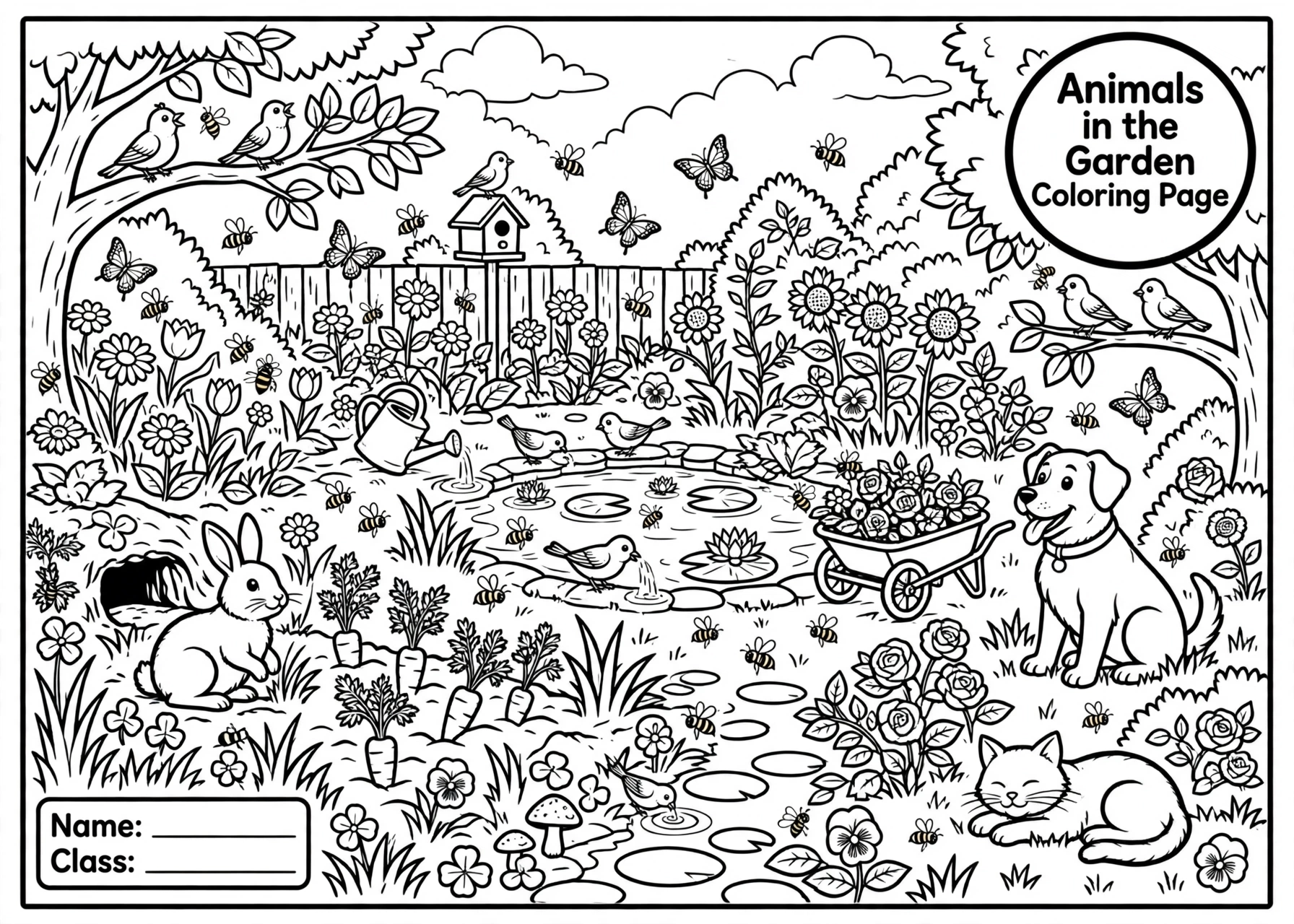
Helping Children Get the Most from Printable Activities
Before starting, adults can let children choose the animal or garden scene that interests them most. Giving them the freedom to select their preferred picture makes the activity feel more personal. It is also helpful to prepare coloring materials in advance so children can concentrate on their artwork without unnecessary interruptions.
When printing a selected design, check the preview to make sure the illustration is positioned properly on the page. Choose paper that works with the intended coloring materials, especially if children plan to use markers. Keeping a flat surface available can also make it easier to color small details and avoid folding the paper.
There is no need to rush the activity or expect every area to be colored perfectly. Some children may spend extra time decorating a butterfly’s wings, while others might prefer filling the background with flowers and greenery. Their choices can be different, and that variety is part of what makes creative activities enjoyable.
Animals in the Garden Coloring Page offers a simple way to bring the beauty of outdoor life into children’s creative routines. Through familiar creatures, interesting patterns, and colorful garden surroundings, children can create artwork that reflects both their observations and their imagination. It is a nature-inspired activity that families, teachers, and caregivers can include in a relaxed afternoon at home or as part of a classroom art session.
