Blooming Flower Coloring Pages invite children to explore the beauty of flowers through colors, patterns, and imaginative garden scenes. From delicate petals to fully opened blossoms, these printable activities offer a creative way to enjoy nature indoors while experimenting with different shades and artistic ideas.
Explore the Beauty of Flowers in Full Bloom
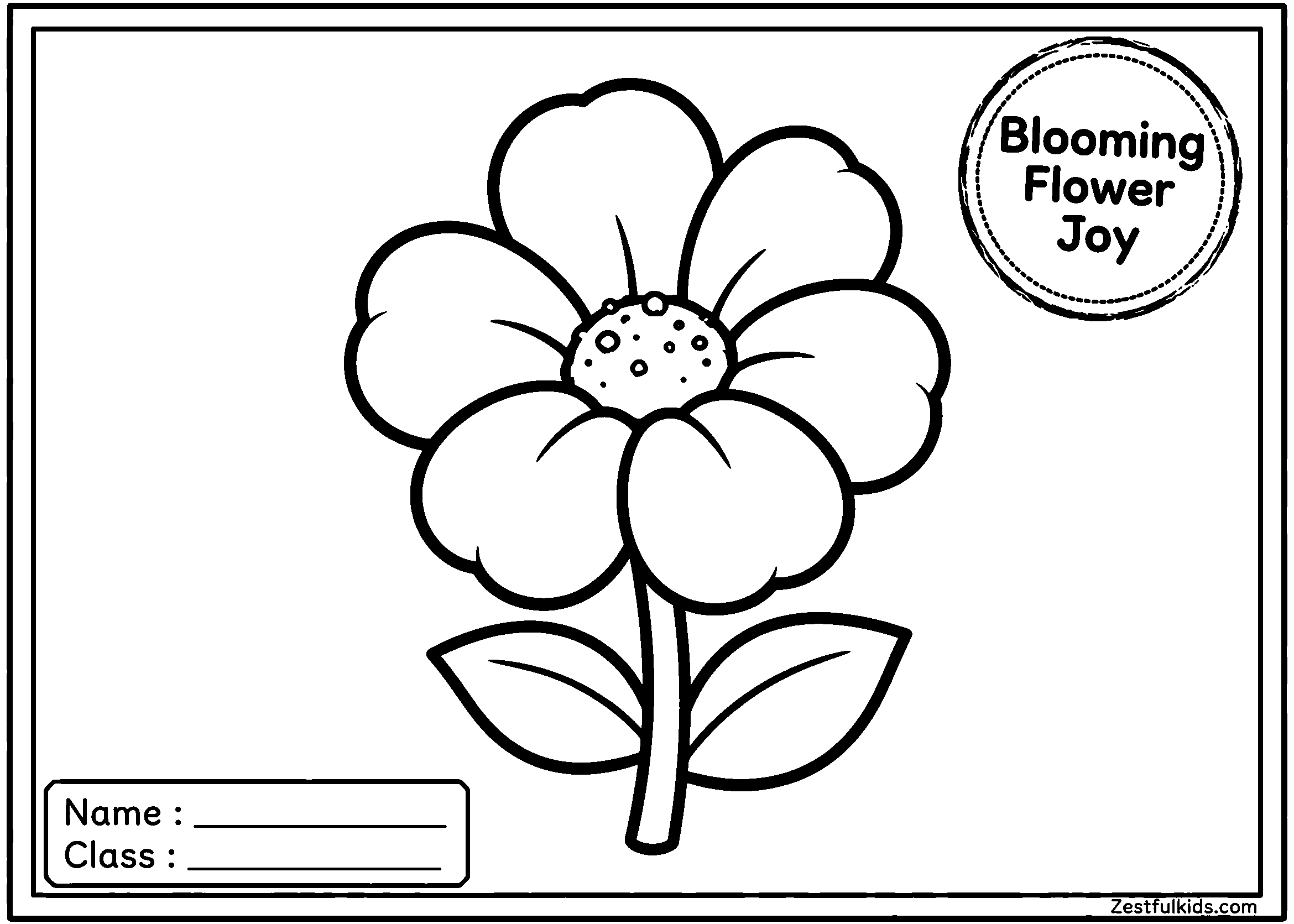
A flower in bloom has a visual charm that makes it an appealing subject for children’s artwork. Its petals spread outward from the center, creating shapes that can be colored in many different ways. Some flowers have rounded petals, while others feature long, narrow forms or layered arrangements that resemble small fans. These differences give children plenty of opportunities to experiment with color without needing to follow a single pattern.
Blooming flowers also provide a natural starting point for observing details. Children can look at the center of a blossom, notice how the petals overlap, and consider how the stem connects the flower to its leaves. Even a simple outline can encourage them to think about the parts that make each flower recognizable. If a chosen illustration includes several blossoms, children can give every flower a different color scheme or repeat the same palette to create a coordinated garden.
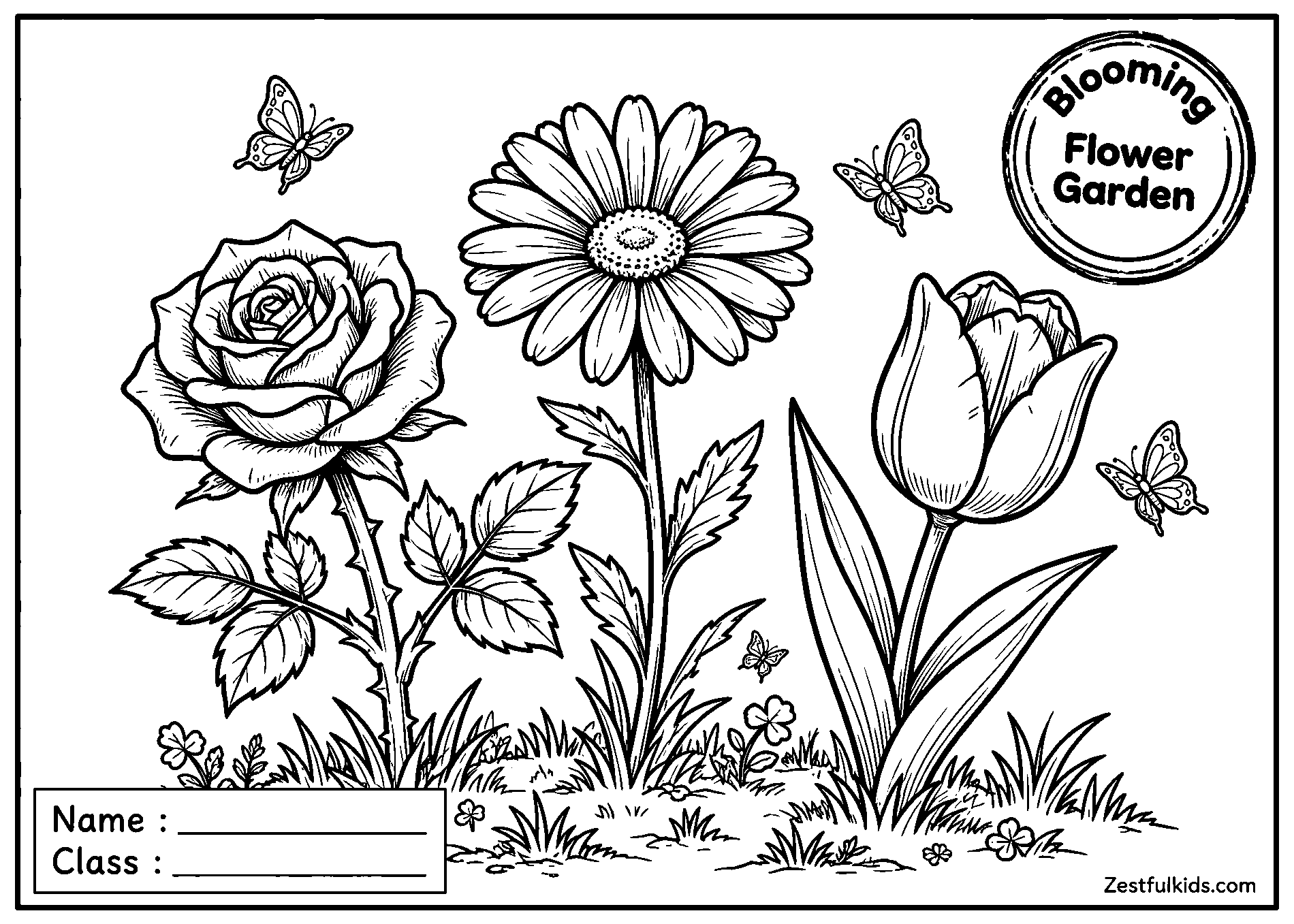
Parents and teachers can use these activities as a relaxed introduction to common garden flowers. Roses, daisies, tulips, sunflowers, and hibiscus are useful examples because their shapes and colors can be discussed alongside the artwork. However, children do not need to identify every flower correctly to enjoy the experience. The main attraction is the opportunity to turn a black-and-white drawing into a personal interpretation of nature.
Choosing Colors That Bring Each Blossom to Life
Flower coloring does not have to follow the colors found in a real garden. A rose can be orange instead of red, a daisy can have purple petals, and an imaginary blossom can combine several shades in one flower. Allowing children to make these decisions gives them freedom to explore combinations they find attractive. For a more natural-looking picture, they can use photographs of flowers as references and observe the subtle differences between petals, leaves, and stems.
Here are several color combinations to try:
- A cheerful spring garden: Combine pink, yellow, lavender, and light green to create a fresh, lively appearance.
- A warm summer scene: Use orange, golden yellow, red, and deep green for a picture that feels bright and sunny.
- A peaceful pastel arrangement: Choose pale pink, soft blue, lilac, and mint green for a gentle, coordinated palette.
- A dramatic flower display: Pair deep purple petals with lighter violet highlights and dark green leaves.
- A fantasy garden: Give each flower unexpected colors, such as turquoise petals with a yellow center or rainbow-colored layers.
Children can also practice using two shades of the same color. For example, they might color the outer petals light pink and add a darker pink near the flower’s center. A similar technique works with yellow and orange, blue and purple, or light green and forest green. These small variations can make a blossom appear more detailed without requiring complicated drawing skills.
Make Petal Patterns Part of the Creative Process
Petals provide an excellent opportunity to experiment with repetition and visual patterns. Rather than filling every petal with the same solid color, children can alternate two colors around the flower. They might color one petal red and the next pink, or repeat a sequence of yellow, orange, and red. When a flower has several layers, each layer can follow a different pattern while still using a coordinated set of colors.
For children who enjoy adding their own details, suggest drawing tiny dots, short lines, or simple curved marks inside larger petals. These additions should be optional, especially when the original illustration already contains small spaces or intricate outlines. Children can also leave a few areas white to create the impression of light reflecting on the petals. Colored pencils are particularly useful for these delicate touches, while crayons work well for larger shapes.
Some children may prefer a neat, realistic finish, while others will enjoy bold colors that extend beyond traditional flower palettes. Both approaches are appropriate for a creative activity. Instead of correcting every color choice, adults can invite children to explain their decisions and describe the kind of garden they are imagining.
Turn a Flower Illustration Into a Garden Scene
A blooming flower can stand alone as the main subject, but it can also inspire a larger scene. If the illustration leaves room for a background, children might add grass, a bright sky, garden soil, or a few clouds. They could draw small butterflies, bees, or ladybugs around the flowers if they want to expand the picture. These additions are optional ideas rather than features that should be assumed to appear in every design.
For a simple storytelling activity, ask children to imagine where their flowers grow. Perhaps they are planted beside a garden path, growing in pots on a balcony, or filling a meadow near a small pond. Children can give the place a name and describe what someone might see there during the morning or afternoon. Younger participants can tell their story aloud, while older children may enjoy writing a few sentences on a separate sheet of paper.
Families looking for another pattern-focused activity can explore animal mandala designs. The repeating shapes found in mandala artwork offer a different coloring experience from the natural curves of flower petals. Switching between the two subjects gives children a chance to try both organic floral forms and more structured decorative patterns.
Use Blooming Flowers for Seasonal Art Activities
Flowers can help children notice changes in the natural world throughout the year. Spring often brings fresh blossoms to gardens and parks, while summer displays a wide range of flowers in different shapes and colors. Teachers can connect a coloring session with a nature walk by asking children to observe the flowers they see outdoors. They can then choose colors for their artwork based on those observations or create an imaginary flower that would never appear in a real garden.
A classroom activity could focus on one flower at a time. Children might compare the broad petals of a sunflower with the layered petals of a rose, or discuss why some flowers have bright centers. If the selected illustration does not clearly represent a particular species, it is best to treat it as a general flower rather than assign it an exact botanical name. This keeps the activity accurate while allowing room for creative interpretation.
Seasonal coloring can also become part of a handmade display. Children may arrange their finished pictures together on a wall or combine them into a paper garden. Each child can choose a different flower design or color palette, making the display varied without requiring everyone to produce identical results. For a transport-themed contrast during a broader classroom art week, children could also try these airport shuttle bus illustrations, giving them an opportunity to move from natural forms to vehicles and everyday travel.
Prepare the Printable for an Enjoyable Coloring Session
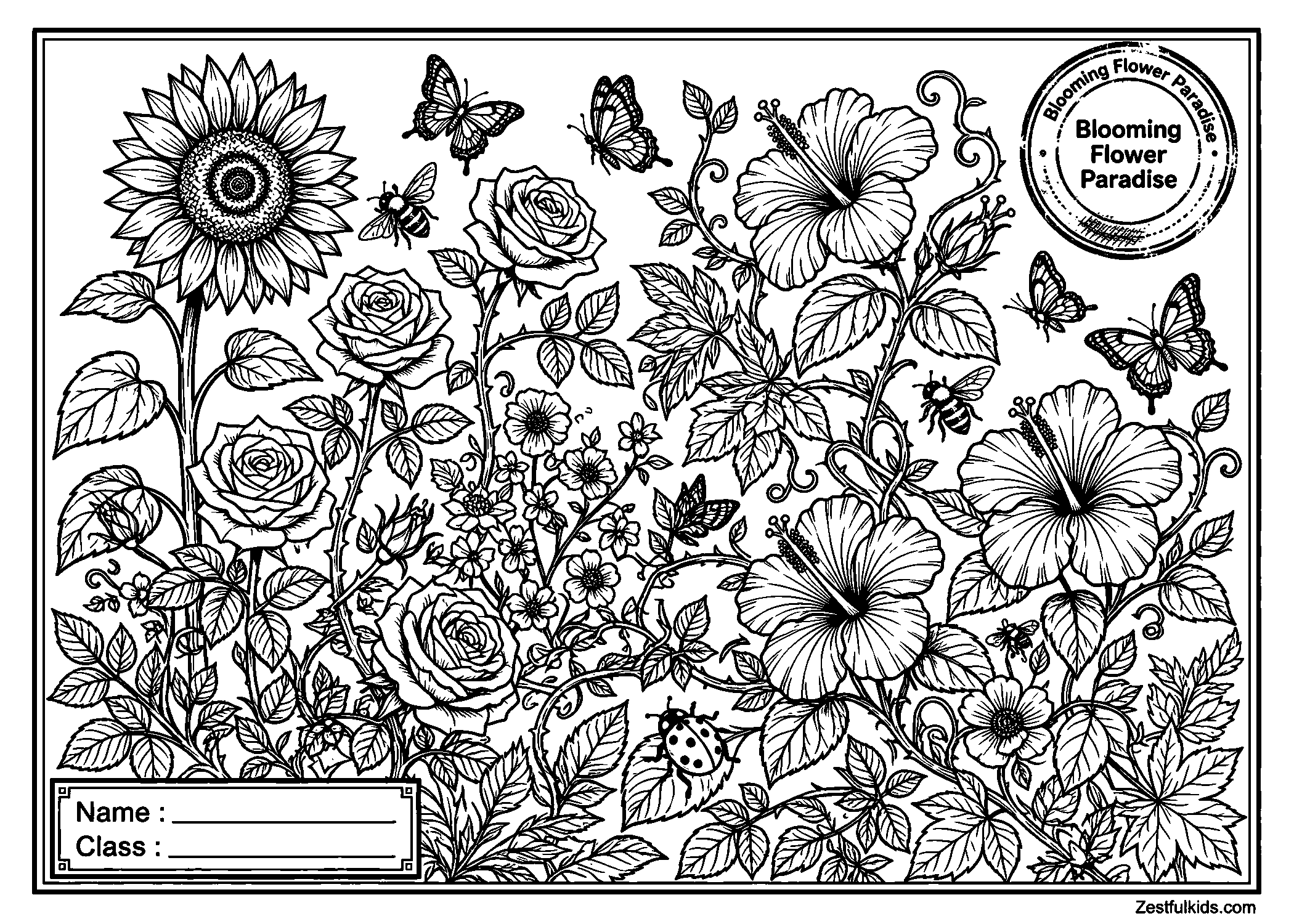
Before printing a selected flower design, check the print preview to make sure the illustration fits within the page boundaries. Adjust scaling or margins if any part of the drawing appears too close to the edge. Standard printer paper is often suitable for crayons and colored pencils, while thicker paper may be preferable for certain markers. The best choice depends on the printer and the coloring materials available.
Arrange the coloring supplies so children can reach them comfortably. A small selection of pencils or crayons is usually enough to begin, and additional colors can be introduced as the picture develops. If the illustration contains many petals, children may find it easier to color one section at a time rather than switch randomly between different parts of the page.
Once the artwork is finished, invite children to choose a title for their flower picture. Names such as Morning Garden, Rainbow Blossoms, or Flowers After the Rain can turn a simple coloring sheet into a personal piece of art. The finished picture can be displayed at home, added to a classroom collection, or kept alongside other nature-themed activities. With their varied shapes, repeating petals, and endless color possibilities, Blooming Flower Coloring Pages provide an inviting way for children to explore flowers through art at their own pace.
