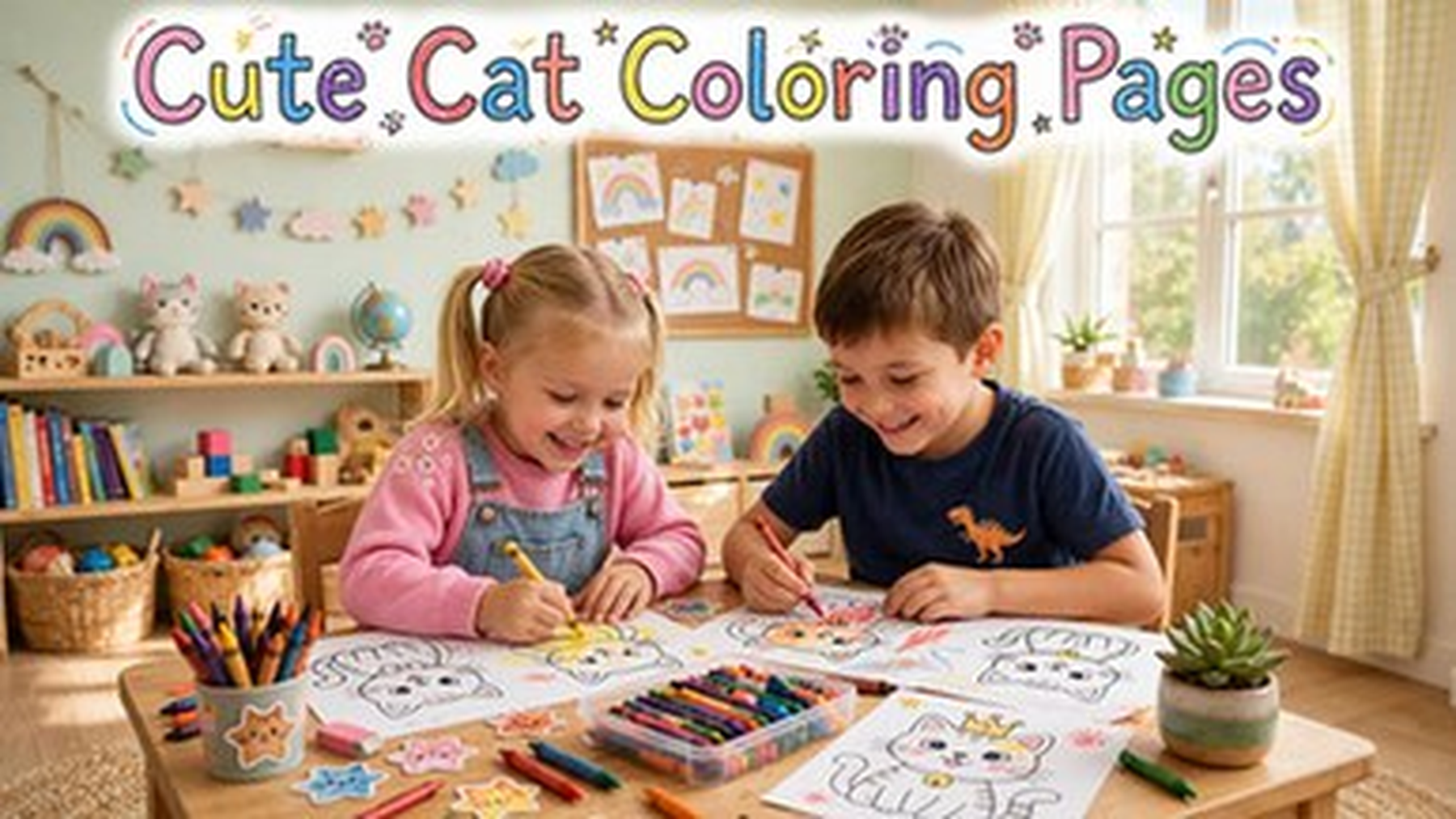
Cute Cat Coloring Pages offer a delightful way for children to explore colors, imagine playful feline adventures, and enjoy a creative activity at home or school. These printables can turn familiar cats into charming works of art.
Discover the Charm of Cute Cat Coloring Pages
Cats have a special appeal for children because of their expressive faces, soft-looking fur, pointed ears, and curious personalities. A simple drawing of a kitten can inspire an entire story, from a sleepy pet curled up in a basket to an adventurous cat exploring the garden. Cute Cat Coloring Pages give young artists an opportunity to bring these familiar animals to life through their own color choices. Rather than following a single correct color scheme, children can experiment with realistic shades or invent imaginative patterns that make each picture their own.
The appeal of cat-themed coloring activities also comes from their versatility. Some children enjoy carefully coloring the outlines of ears, whiskers, paws, and tails, while others prefer creating colorful backgrounds or adding their own decorative details. A cat might have orange stripes, gray fur, or even a purple coat covered with tiny stars. These possibilities make the activity enjoyable for children with different artistic interests, whether they like recognizable pets or whimsical animal characters.
Choosing a Cat Design That Suits the Activity
Not every cat illustration offers the same coloring experience. Before choosing a printable, parents and teachers can consider how much detail the child enjoys handling and how much time is available for the activity. A straightforward cat outline may work well for a short coloring break, while a more detailed scene can provide a longer project for a quiet afternoon. The best choice is one that feels inviting rather than overwhelming.
Simple Outlines for Everyday Coloring
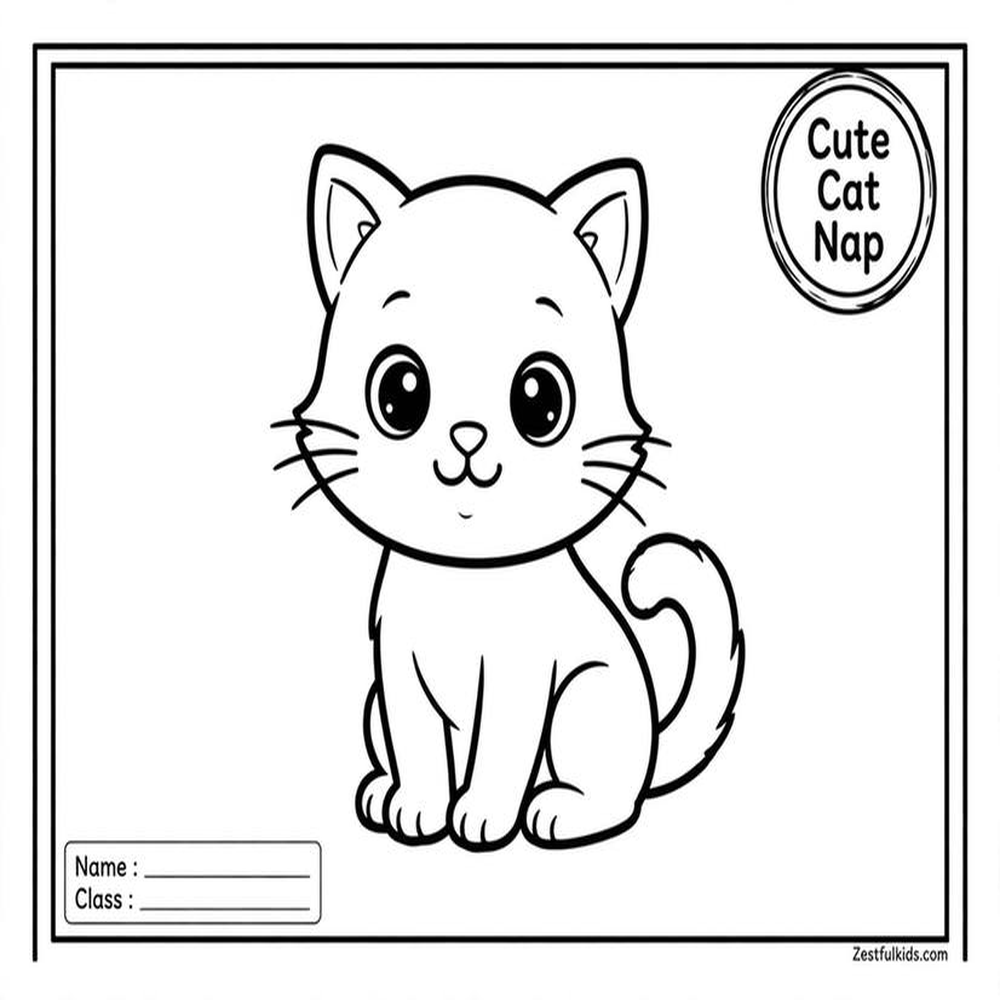
A cat with a rounded face, large eyes, and a clearly outlined body gives children recognizable shapes to work with. Large areas of fur are easy to fill with crayons or colored pencils, and smaller details such as the nose, ears, and paws offer opportunities to introduce contrasting colors. Children can also decide whether their cat should have solid-colored fur, stripes, spots, or patches. These simple decisions allow them to personalize the illustration without needing complicated drawing techniques.
Playful Cats for Imaginative Stories
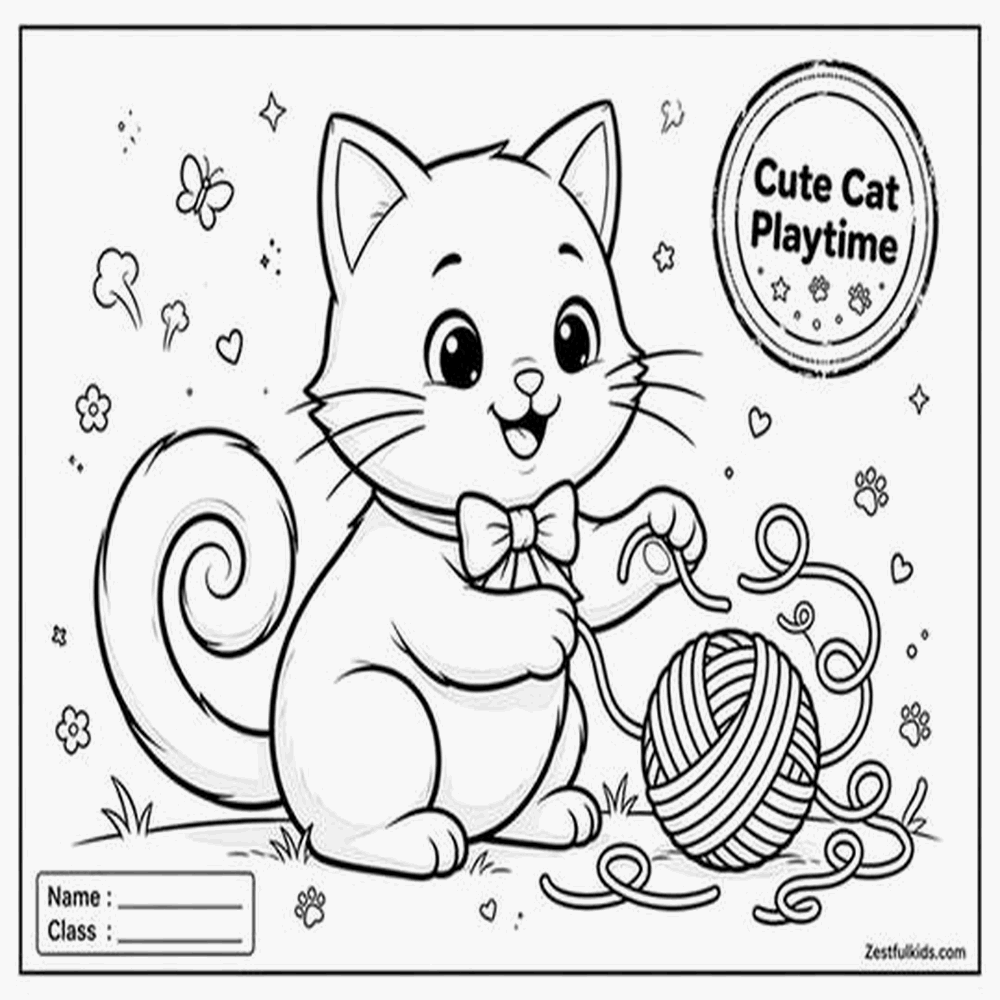
Some children enjoy coloring animals as part of an imaginary adventure. A cat could become a friendly garden explorer, a curious house pet, or the main character in a pretend story about a day at home. If the selected illustration includes accessories or a setting, children can choose colors that help establish the scene. If it shows only a cat, they can draw a background around the finished picture, adding a window, a cushion, a food bowl, or a favorite toy.
Families who enjoy imaginative characters may also appreciate fairy-themed activities, which offer another way to combine coloring with make-believe storytelling. Moving between animal illustrations and fantasy subjects can keep creative sessions varied without requiring an entirely different set of art supplies.
Color Ideas for Fur, Eyes, and Whiskers
One enjoyable part of coloring a cat is deciding how its appearance will look. Children can observe cats they know from home, books, or photographs and use those observations as inspiration. Domestic cats have many natural coat colors, including black, white, gray, cream, orange, and brown. Some have distinct stripes, while others have patches of different colors, so children have plenty of realistic examples to explore.
For a natural-looking cat, start with a light base color and add darker shades to selected areas. Gray fur can be paired with charcoal accents, while orange fur can include touches of pale yellow or brown. Colored pencils are useful when children want to create gentle shading or small patterns, whereas crayons work well for filling larger spaces. Water-based markers may also be suitable, provided the paper can handle them without excessive bleeding.
Whiskers and facial features deserve a little attention because they help define a cat’s expression. Children can leave the whiskers white if the paper allows, or carefully trace them with a white pencil when using darker colors. The eyes can be green, amber, blue, or another imaginative shade. A small pink or brown nose adds contrast, while a lightly colored area around the mouth can make the face stand out.
There is no need to insist that every cat look realistic. A child who chooses rainbow-colored fur or mismatched eyes is exploring a creative idea, not making a mistake. Adults can encourage these choices by asking the child to describe the cat’s personality or invent a name for the finished character.
Turn a Finished Cat into a Small Art Project
Coloring does not have to end when the last section of the illustration is filled. With a little extra time, the completed picture can become part of a larger activity that encourages children to make decisions and explain their ideas. These extensions are optional, so families can choose whichever approach fits their schedule and the child’s interest.
-
Create a cat character card. Invite the child to give the cat a name, choose its favorite food, and describe one funny habit. The information can be written beside the picture or on a separate sheet of paper.
-
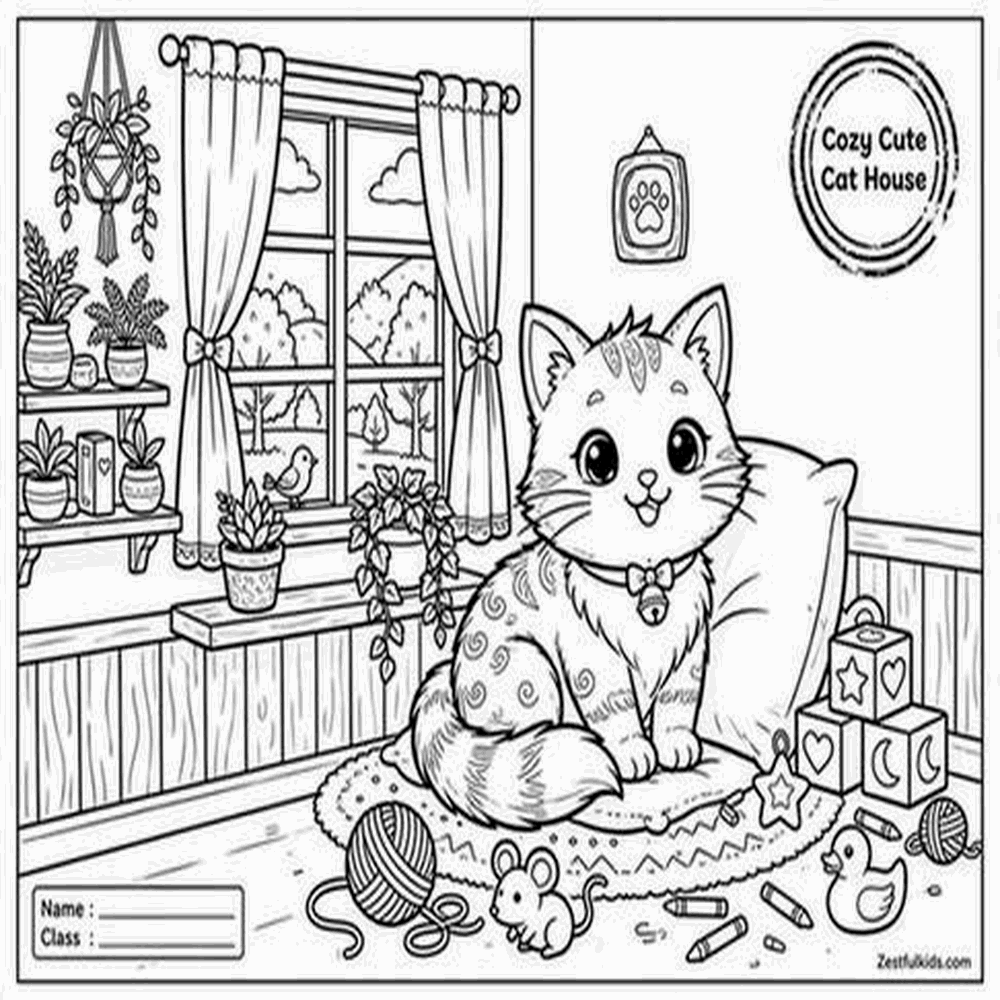
Design a cozy cat corner. Ask the child to draw a bed, a scratching post, a toy, or a sunny window around the colored cat. This works especially well when the original illustration has a plain background.
-
Explore patterns. Encourage children to invent spots, stripes, rings, or patches using two or three complementary colors. They can repeat a pattern across the tail or body to give the cat a distinctive appearance.
-
Make a mini gallery. Display several finished animal pictures together and let children choose a title for their collection. If the family has colored other animals, such as the ones featured in baby koala activities, the pictures can become part of a small collection of favorite creatures.
These additions do not need to be elaborate. A few minutes of drawing or storytelling can give the child another reason to engage with the finished artwork and share the ideas behind it.
Preparing the Printable for a Comfortable Coloring Session
A pleasant coloring session begins with a suitable workspace and materials that are easy for the child to use. Choose a flat table with enough room for the printable, crayons, and a separate sheet of paper for testing colors. Keep the tools within reach, but avoid placing too many options in front of younger children at once. A small selection of favorite colors can be a practical starting point, with additional shades introduced as needed.
Before printing, review the available file and its print settings. Check the preview to make sure the illustration is positioned correctly and that important outlines are not cut off by the printer margins. Select the paper size supported by the file and printer, and consider slightly thicker paper if the child plans to use markers. Printing a test page may help identify problems with scale or line visibility before preparing copies for a group.
For classroom activities, teachers can place the completed printables on desks alongside a simple prompt, such as choosing a name for the cat or describing its favorite place to sleep. Children who finish early can add a background or write a short sentence about their character. Those who need more time can focus on the main illustration without feeling pressured to complete extra tasks.
Parents and caregivers can use the same approach at home during a quiet afternoon, a rainy day, or a family art session. The printable can be introduced as an independent activity or completed together through shared color choices and conversation. Adults may offer suggestions, but leaving the final decisions to the child helps preserve the sense of ownership that makes creative work satisfying.
Celebrate Every Child’s Unique Cat Creation
Cute Cat Coloring Pages can offer much more than a picture to fill with color. They provide a familiar subject that children can interpret in many ways, from a realistic kitten with striped fur to a completely imaginary feline with bright patterns and unusual eyes. The activity can remain simple or grow into a drawing, storytelling, or display project according to each child’s interests. By choosing a suitable design, preparing comfortable materials, and welcoming different creative choices, parents, teachers, and caregivers can make cat coloring an enjoyable part of everyday family or classroom activities.
