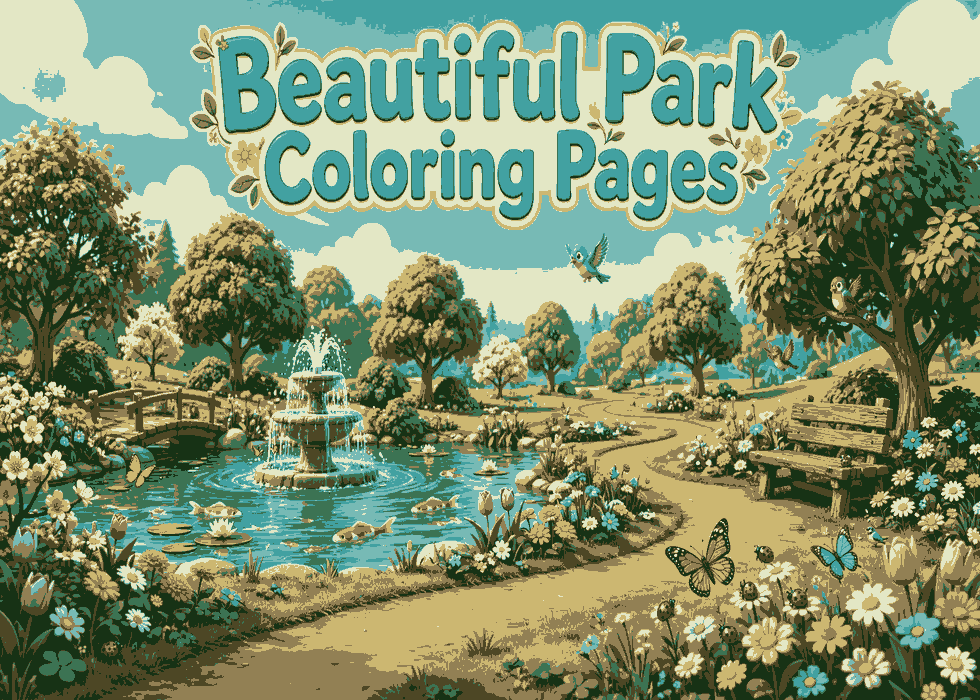
Beautiful Park Coloring Pages invite children to explore peaceful outdoor scenery through creative coloring. From leafy trees and winding pathways to flowers, benches, and open green spaces, park-themed artwork offers a wonderful opportunity to recreate the beauty of nature with colors and imagination.
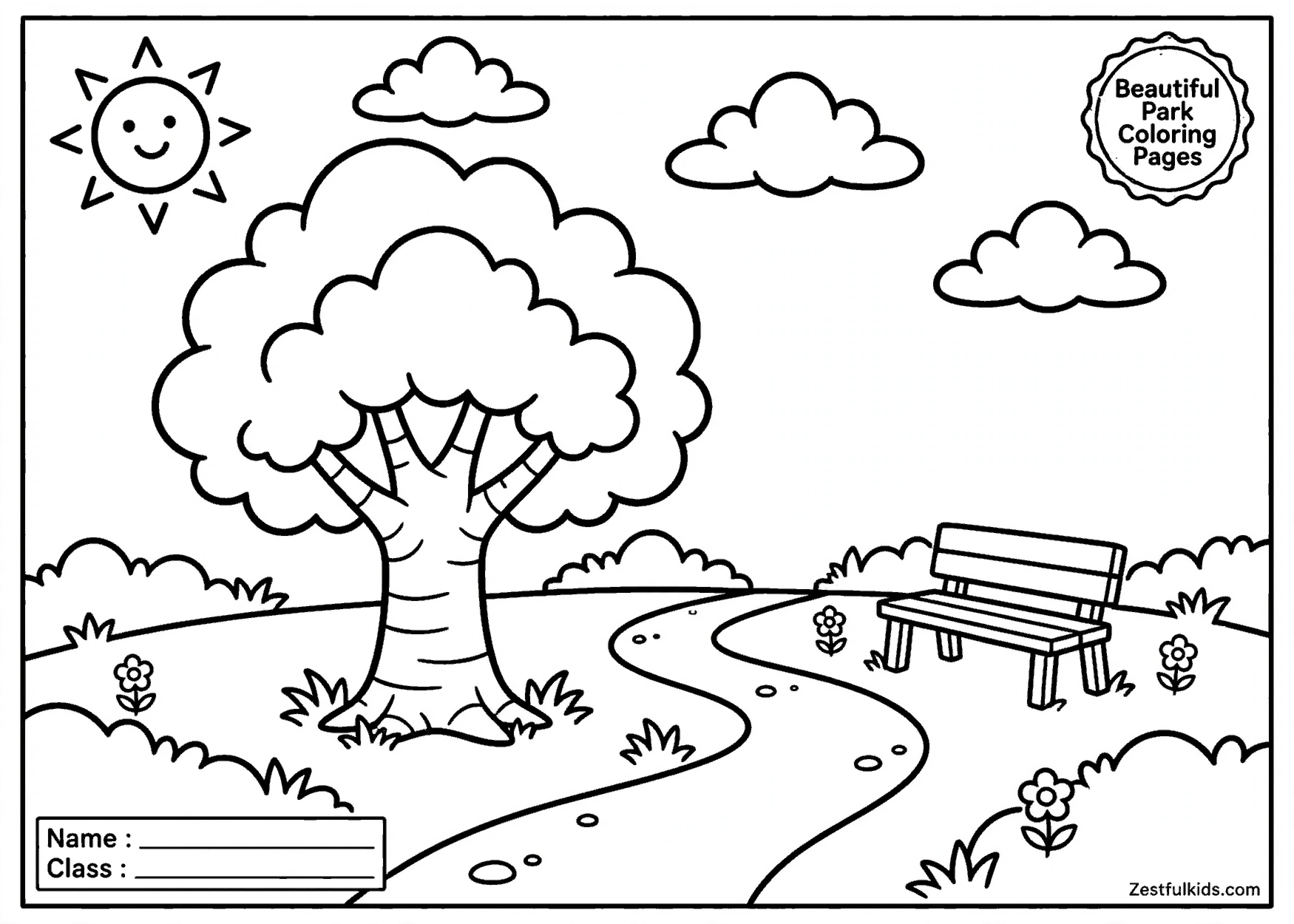
Discover the Details of a Beautiful Park
A park is more than an open green space. It is a place where people can relax, enjoy fresh air, walk beneath shady trees, and spend time outdoors. For children, a park also offers plenty of interesting things to observe, making it a lovely subject for a coloring activity.
Park illustrations can feature a variety of familiar outdoor elements. Trees may have broad leafy canopies or slender branches, while flowers add smaller details that children can decorate with different shades. Winding paths, grassy areas, benches, and garden features can also contribute to the overall scenery, depending on the design.
What makes this theme particularly enjoyable is the opportunity to color an entire environment rather than a single object. Children can decide how the different elements work together to create a welcoming outdoor setting. A tree might have bright green leaves, a pathway could be light brown, and nearby flowers might feature a mixture of pink, yellow, and purple.
Each coloring choice contributes to the atmosphere of the park. Some children may prefer a bright summer garden, while others might imagine a quiet park on a cloudy afternoon. The same scenery can look completely different depending on the colors and details they choose.
Bringing Park Scenery to Life with Color
Nature provides plenty of inspiration when choosing colors for a park illustration. Green is an obvious choice for grass, shrubs, and leaves, but using only one shade can make the scenery look flat. Combining light green, dark green, and yellow-green can create more variety across the landscape.
Trees can also be colored in different ways. Children might use brown for the trunks and several shades of green for the leaves. If the illustration includes flowering trees, they can add pink, white, or purple details to represent blossoms.
Flowers provide another opportunity to experiment. A garden might contain colorful combinations of red, orange, yellow, blue, and violet. Children can give each flower a different appearance or repeat a few favorite colors to create a coordinated garden.
The sky can influence the entire mood of the picture. Light blue suggests a clear afternoon, while pale gray can represent an overcast day. Children may also add a warm yellow sun or soft white clouds if the illustration leaves enough space.
Here are some simple color combinations to try:
- Fresh spring park: Combine light green grass, pink blossoms, yellow flowers, and a pale blue sky.
- Sunny afternoon: Use bright green, warm yellow, soft orange, and clear blue.
- Quiet woodland park: Choose deeper greens, natural browns, and muted shades for a peaceful atmosphere.
- Colorful flower garden: Mix several bright flower colors against a background of green leaves.
- Autumn scenery: Experiment with orange, golden yellow, reddish brown, and deep green.
Children do not need to follow realistic color combinations all the time. Purple grass, blue trees, or rainbow-colored flowers can turn an ordinary park scene into an imaginative landscape.
Small Details That Make a Park Interesting
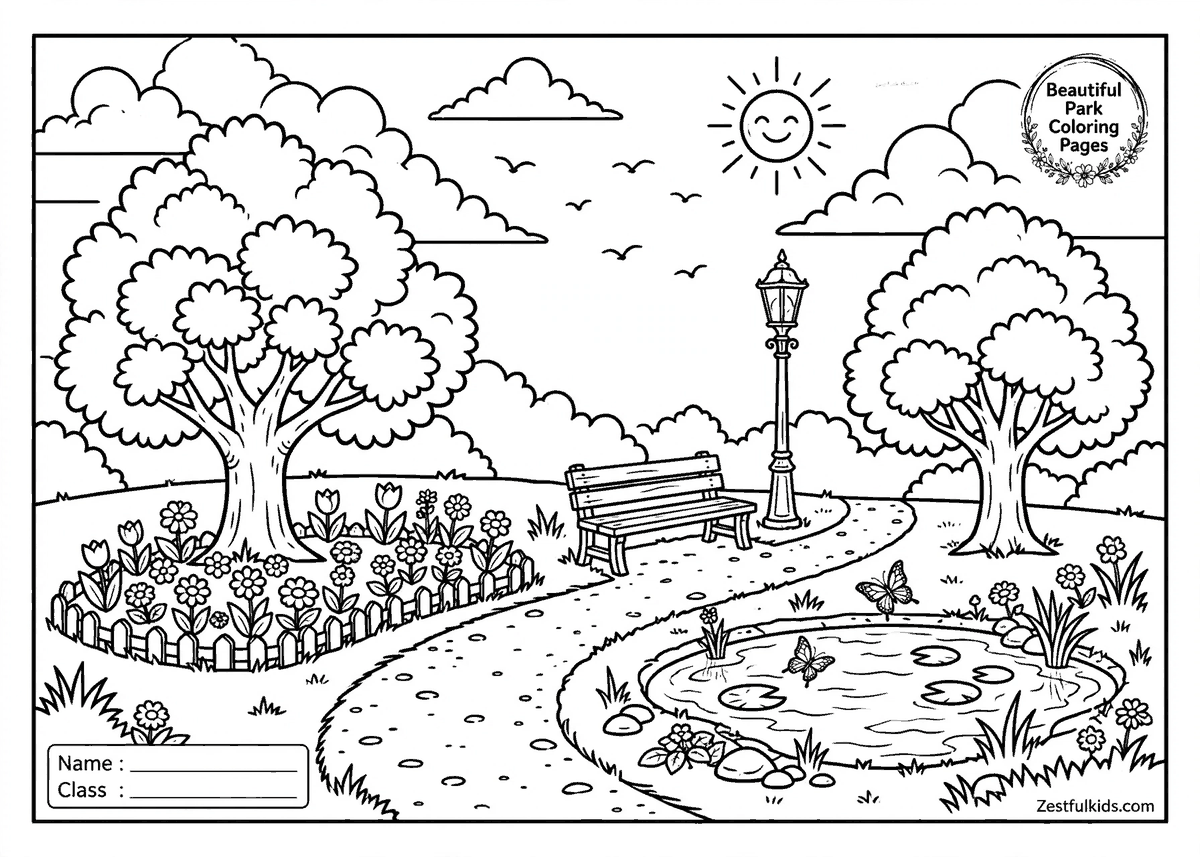
Large areas such as grass, trees, and the sky are usually easy places to begin. However, smaller objects can give a park illustration its character. A garden bench, for example, might be colored brown to resemble wood or gray to suggest metal. If a pathway is included, children can choose a different shade from the surrounding grass to make its shape more noticeable.
Other possible details include flowerpots, fences, lamp posts, stones, and garden decorations. These elements can help children think about how parks are designed and maintained. They can also encourage a closer look at the relationship between natural features and objects placed in outdoor spaces.
If the illustration includes birds, butterflies, or other small animals, these can become additional focal points. Children can choose natural colors or invent imaginative patterns. A butterfly with several contrasting wing colors, for instance, can add a lively touch to an otherwise green landscape.
Parents and teachers can encourage children to notice which objects belong to nature and which have been created by people. Trees, flowers, and grass are natural features, while benches, pathways, and playground equipment are examples of things people add to public spaces. This simple observation can lead to interesting conversations while children work on their pictures.
Turn a Coloring Sheet into a Park Design Challenge
A park-themed activity can go beyond choosing colors. Children can imagine that they are designing a small public garden and decide what would make the space enjoyable for visitors. They might suggest adding more trees for shade, colorful flower beds, or a comfortable place to sit.
After finishing the main illustration, invite children to draw one additional feature on a separate sheet of paper. It could be a small pond, a walking trail, a fountain, or a picnic area. They can then explain why they included that feature and how it might improve the park.
For classroom activities, teachers can display the finished artwork together and discuss how different parks can serve different purposes. Some parks are designed for walking and relaxing, while others have playgrounds, sports areas, or botanical gardens. Comparing these ideas helps connect the creative activity with familiar outdoor experiences.
Families who enjoy detailed patterns and decorative artwork may also find inspiration in Animal Mandala. Its intricate designs offer a different coloring experience from open landscape scenes and can provide another creative activity for children.
Enjoying Nature-Inspired Coloring at Home and School
Park scenery works well for a relaxed coloring session because children can approach the picture in their own way. Some may prefer to complete the largest areas first, while others might immediately focus on the flowers, leaves, or smaller objects. There is no need to impose one particular method as long as children feel comfortable with the activity.
Colored pencils are useful for adding different shades to leaves and flower petals. Crayons work well for larger sections such as the sky and grass, while washable markers can create strong, clear colors on individual objects. Children can also combine tools, using crayons for broad areas and colored pencils for smaller details.
For a group activity, each child can choose a different time of day or season for their park scene. One picture might represent a sunny morning, another a cloudy afternoon, and another an autumn landscape. Comparing the finished artwork can show how color choices change the atmosphere of the same general setting.
Children who enjoy outdoor wildlife can also explore Owl. This animal theme can complement a discussion about birds that may be seen in trees and green spaces, although the actual wildlife found in parks varies by location.
Preparing the Printable for a Comfortable Coloring Session
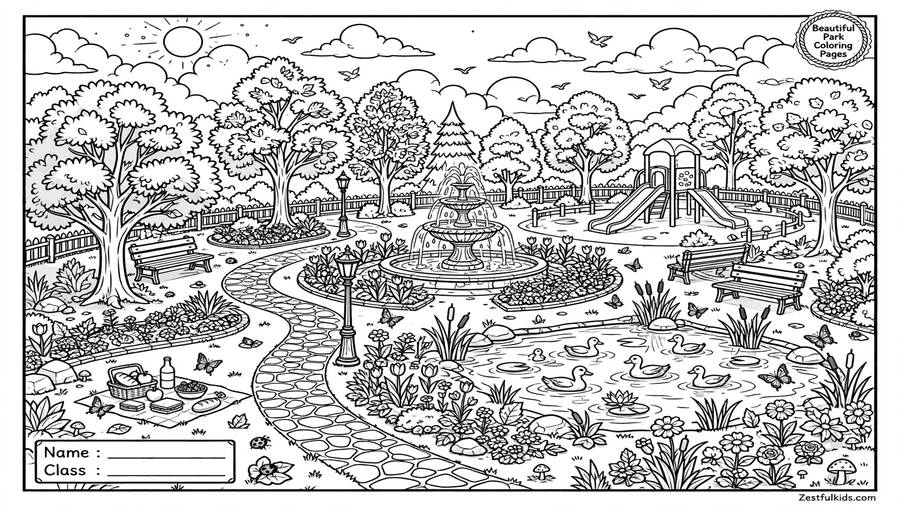
Before printing, check the available file format and use the print preview to see how the illustration fits on the selected paper. Make sure important parts of the design are not cropped by the printer margins. The appropriate paper choice will depend on the coloring tools children plan to use.
A basic set of crayons or colored pencils is enough for most park-themed artwork. If children want to add their own decorations, provide a few blank sheets of paper alongside the printed design. Keeping the materials within easy reach allows them to move naturally between coloring and drawing.
Once completed, the artwork can be displayed on a classroom board, placed in a family art collection, or used as inspiration for a real outdoor visit. Children might enjoy looking for similar trees, flowers, pathways, or garden features during their next trip to a local park.
Beautiful park scenery offers an inviting way for children to explore outdoor environments through art. By experimenting with natural colors, noticing small landscape details, and imagining their own garden designs, they can turn a simple coloring activity into a personal interpretation of a place where nature and everyday life come together.
