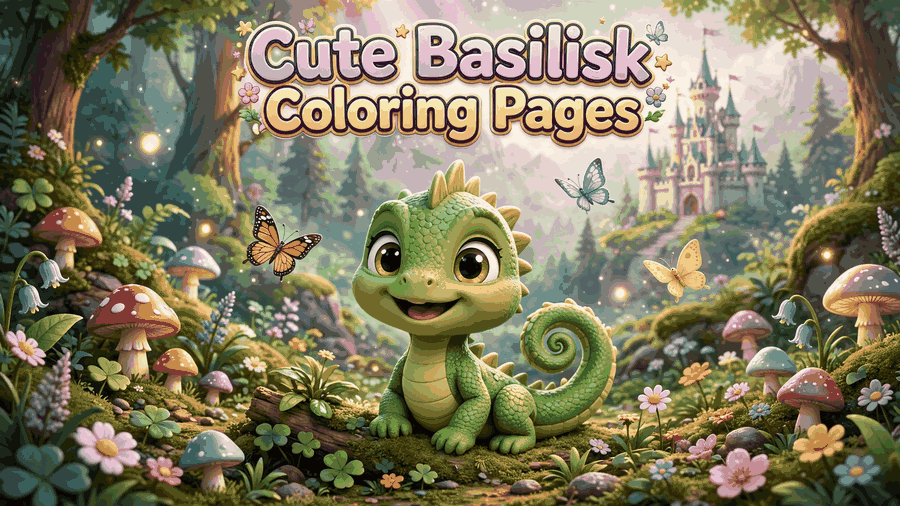
Cute Basilisk Coloring Pages introduce children to a fascinating legendary creature through imaginative artwork and creative coloring. With its unusual reptilian appearance and mysterious reputation, the basilisk offers an interesting subject for children who enjoy fantasy creatures, mythical stories, and artistic adventures.
Getting to Know the Basilisk Through Art
The basilisk is a legendary creature found in European mythology and folklore. It is traditionally described as a serpent-like monster, sometimes portrayed with features resembling a lizard, dragon, or rooster. Over time, its appearance has changed across stories, illustrations, and fantasy entertainment, giving artists plenty of freedom to imagine different versions of this unusual creature.
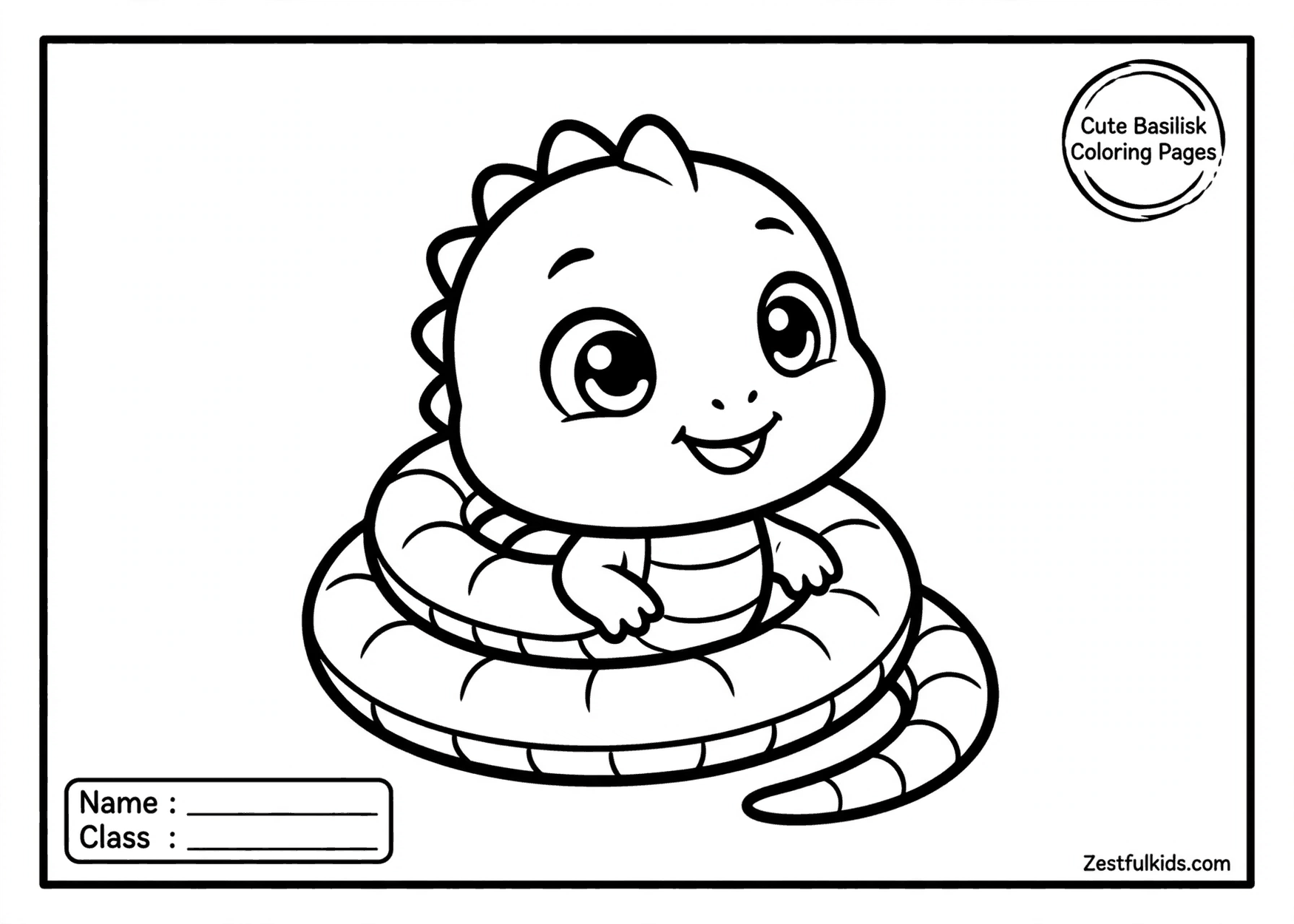
In children’s illustrations, a basilisk can be presented with a much friendlier personality than its frightening reputation in traditional legends. Large expressive eyes, a rounded face, small claws, and a curled tail can make the creature look curious rather than intimidating. Some artistic interpretations may emphasize its snake-like body, while others may give it more noticeable legs, scales, or dragon-inspired features.
This variety makes basilisk artwork particularly interesting for young coloring enthusiasts. Unlike familiar household animals, the creature does not have one universally accepted appearance that children must follow. They can explore different color combinations and create their own interpretation without worrying about whether the finished picture matches a real animal.
What Colors Suit a Cute Basilisk?
One of the most enjoyable parts of coloring a mythical reptile is deciding how its unusual appearance should look. Green is a natural starting point for a lizard-inspired creature, but there are many other possibilities. Children can use light green, emerald, turquoise, olive, or even bright yellow to give their basilisk a distinctive personality.
The scales offer an opportunity to experiment with more than one shade. For example, children can use a darker green along the back and a lighter shade on the belly. If the illustration includes a long tail, alternating colors can make its shape more noticeable. Small details such as claws, eyes, and decorative spikes can receive contrasting colors to create an interesting finish.
Here are some combinations worth exploring:
- Forest basilisk: Combine deep green, olive, and brown for a creature inspired by woodland environments.
- Rainbow basilisk: Use several bright colors across the body and tail for a playful fantasy appearance.
- Ice basilisk: Choose pale blue, turquoise, and lavender to create a creature that looks as though it belongs in a frozen kingdom.
- Golden basilisk: Combine yellow, orange, and gold-inspired shades for a magical appearance.
- Jungle basilisk: Mix different greens with small touches of yellow and brown to suggest tropical surroundings.
Children can also think about the creature’s personality when choosing colors. A bright and cheerful combination might suit a playful basilisk, while darker shades could create a mysterious fantasy character. There is no need to follow a fixed color guide because imagination is an important part of this activity.
Creating a Fantasy World Around the Basilisk
A mythical creature becomes even more interesting when children imagine the environment where it lives. Depending on the available space in the illustration, they can add a few simple background details to develop a small fantasy setting.
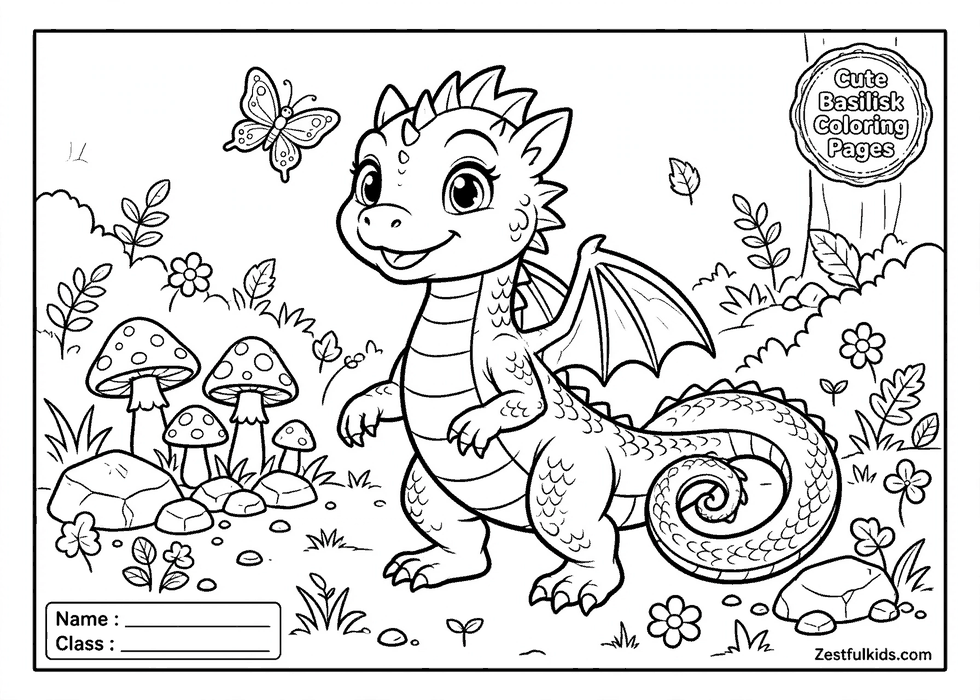
A forest is one possible choice. Tall trees, leafy plants, mushrooms, rocks, and winding paths can create the impression of a hidden habitat. Children might also imagine their basilisk resting beside a small pond or exploring a mysterious cave. These additions can be drawn around the original illustration if the design leaves enough room.
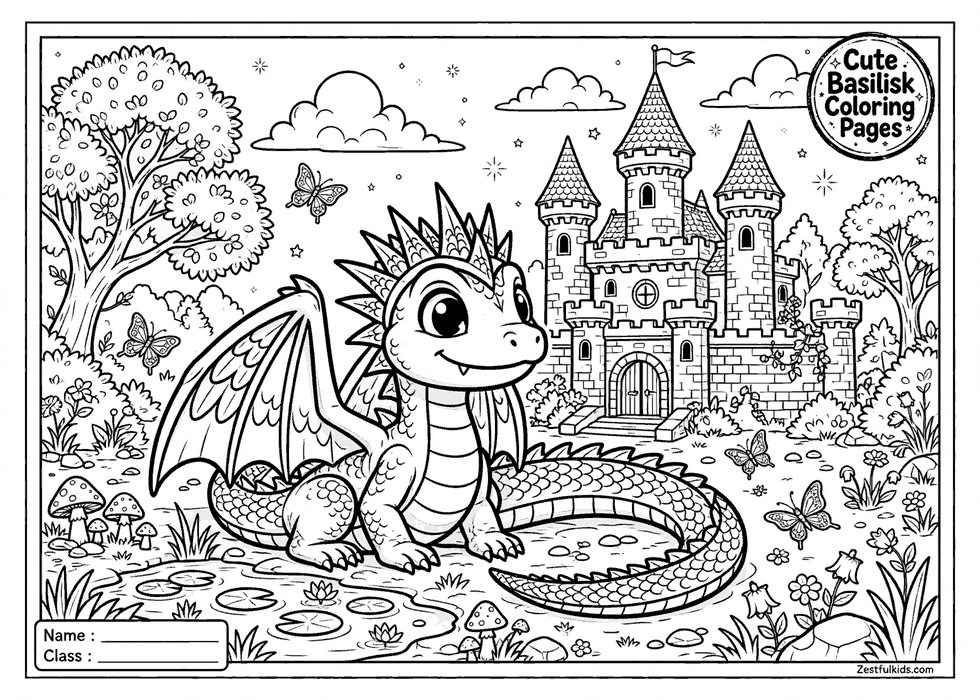
Another interesting setting is an ancient fantasy castle. Stone towers, arched doorways, and distant mountains can make the basilisk look like a guardian of a magical kingdom. For a lighter atmosphere, children can draw flowers, butterflies, clouds, and colorful plants around the creature.
Parents and teachers can turn this idea into a short storytelling activity. After coloring, invite children to describe where their basilisk lives, what it likes to eat, and whether it has any special abilities. These details do not need to follow traditional mythology. Children can invent an entirely new character and build a story around their artwork.
Learning About Mythical Creatures Without Making Them Scary
The basilisk provides a useful starting point for introducing children to the difference between real animals and creatures from mythology. Its reptilian appearance may remind children of lizards and snakes, but the legendary basilisk is not a scientifically recognized animal.
Adults can explain that people in earlier times created stories about unusual creatures to express their imagination, explain mysterious events, or entertain others. Different cultures have their own legendary beings, and their appearances often change depending on the storyteller.
For a simple comparison, children can look at pictures of real lizards and notice features such as scales, tails, toes, and body shapes. They can then compare those details with the imaginative features of a basilisk illustration. This creates a natural connection between fantasy artwork and learning about the animal world without suggesting that the mythical creature actually exists.
Families who enjoy combining creative activities with other imaginative subjects may also appreciate Dinosaurs Having a Beach Picnic. The theme offers a different way to explore prehistoric-inspired creatures through a cheerful setting.
Choosing Coloring Tools for Reptile Details
Basilisk illustrations may include several small areas that deserve careful attention, particularly when the design features scales, facial details, claws, or textured body sections. Choosing suitable coloring tools can make these parts easier to complete.
Colored pencils are a practical option for adding different shades to individual scales. Children can use light pressure for the first layer and gradually add darker tones where they want more contrast. Crayons are useful for covering larger areas, such as the main body or background, while washable markers can produce strong colors on clearly defined sections.
For younger children, larger crayons may be easier to manage when coloring broad spaces. Older children who enjoy more detailed artwork can experiment with blending two shades or creating repeating patterns along the creature’s back.
It is also helpful to remind children to work from larger sections toward smaller details. They can begin with the body, continue with the tail and legs, and finish with the eyes, claws, and other smaller features. However, there is no single correct order, so children can choose whichever approach feels comfortable.
Making the Coloring Activity Enjoyable at Home or School
A cute basilisk coloring activity can fit into several creative situations. At home, parents can introduce it during a quiet afternoon when children want something imaginative to work on. Teachers can also include mythical creatures in an art session about fantasy, storytelling, or the difference between fictional and real animals.
One enjoyable idea is to create a character profile after the coloring is complete. Children can give their basilisk a name, describe its favorite place, and invent one unusual characteristic. They might decide that it protects a magical forest, collects colorful stones, or enjoys exploring hidden caves.
Another activity is to invite children to design a companion for their basilisk. The new character could be a tiny dragon, a friendly bird, or another imaginary reptile. Children can draw the companion on a separate sheet and choose colors that complement their original artwork.
For families who enjoy animal-themed creative activities, Panda offers a contrasting subject inspired by a real animal. Exploring both themes can give children a chance to move between familiar wildlife and imaginative fantasy creatures.
Preparing and Printing the Artwork
Before beginning, prepare a comfortable workspace with enough room for the coloring sheet and selected art supplies. If the illustration is downloaded for printing, check the available file format and review the print preview to make sure the important parts of the design are visible. Adjust the printer settings if necessary to avoid cutting off the edges.
The choice of paper can depend on the coloring tools. Ordinary printer paper may work well for crayons and colored pencils, while slightly heavier paper can be useful when children prefer markers. It is also worth placing a spare sheet underneath the artwork when using markers to help protect the table from ink marks.
Once completed, the basilisk artwork can become part of a collection of fantasy creatures or a homemade mythical animal gallery. Children can display their pictures, share the stories behind their characters, or keep them together in an art folder.
With its unusual appearance and endless possibilities for imaginative details, a cute basilisk provides an engaging subject for creative coloring time. Children can experiment with reptile-inspired patterns, invent magical surroundings, and develop a character that reflects their own ideas, turning a mythical creature into a colorful piece of personal artwork.
