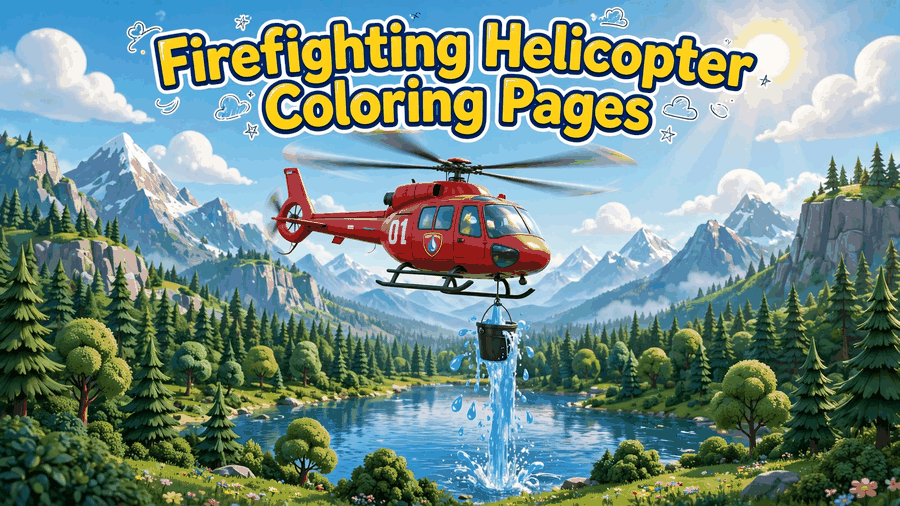
Firefighting Helicopter Coloring Pages introduce children to the exciting world of aerial rescue through creative coloring. With its powerful rotor blades, water-carrying equipment, and ability to reach difficult locations, a firefighting helicopter offers an interesting subject for children who enjoy vehicles, aviation, and heroic rescue missions.
How Firefighting Helicopters Help Protect People and Nature
A firefighting helicopter is a specialized aircraft used to support emergency crews during wildfires and other fire-related operations. Unlike ordinary helicopters, some firefighting models are equipped with water tanks or buckets that can carry and release water over areas affected by fire. They can fly above forests, hills, and other locations that may be difficult for ground vehicles to reach.
These aircraft play an important supporting role in firefighting operations. Pilots must carefully follow instructions from emergency coordinators and work with firefighters on the ground. Their ability to travel through the air allows them to assist in different parts of an emergency response, although helicopters are only one part of a much larger firefighting effort.
This real-world purpose makes the subject particularly interesting for a children’s coloring activity. Instead of coloring an ordinary passenger aircraft, children can explore a vehicle associated with helping communities and protecting natural environments. The helicopter can become the center of an imaginative rescue scene while introducing a practical example of how aircraft serve important purposes.
Recognizing the Features of a Rescue Helicopter
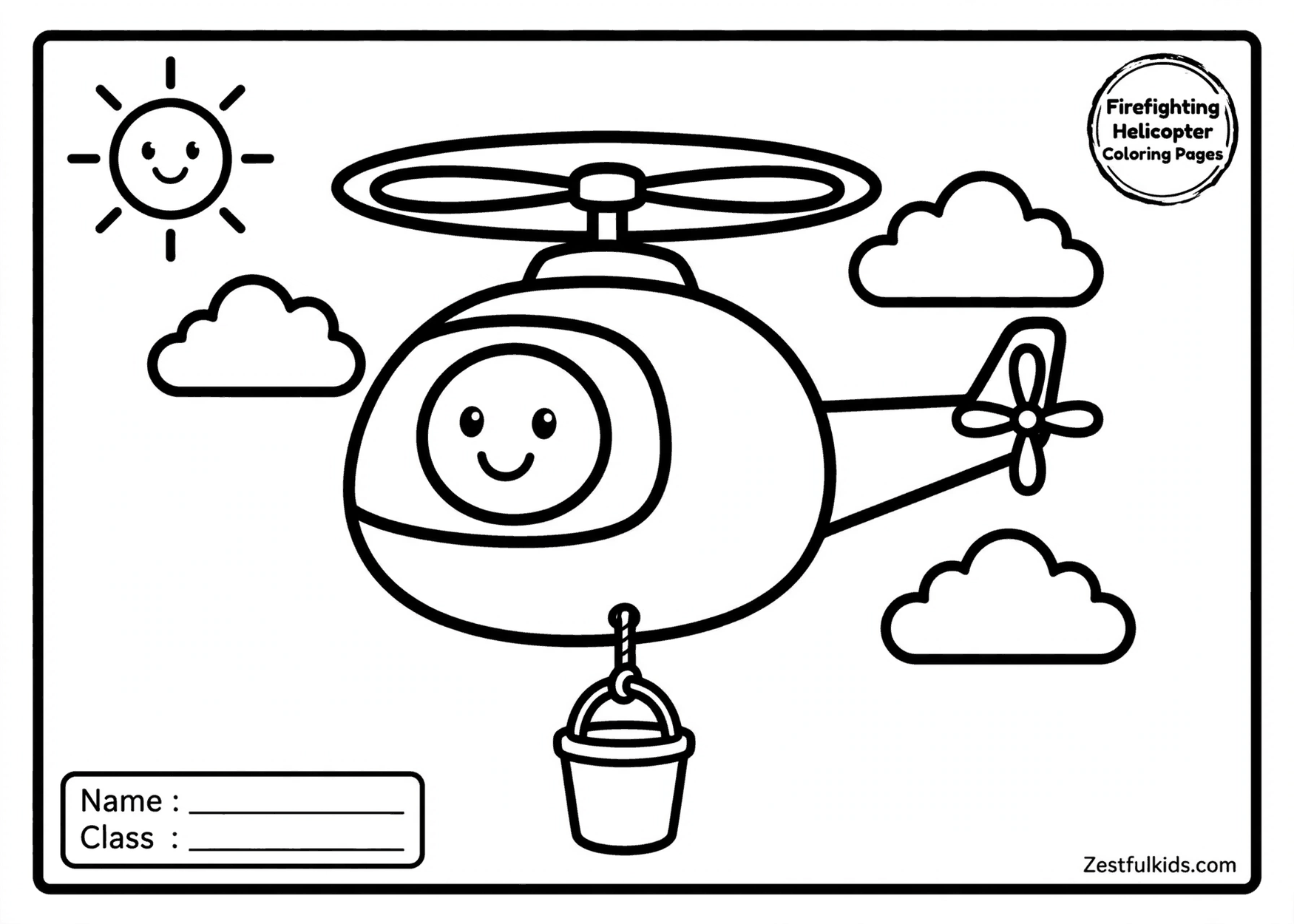
A firefighting helicopter has several recognizable parts that make it visually interesting to color. The large main rotor sits above the cabin and provides the lift needed for flight. At the rear, a smaller tail rotor helps control the aircraft’s direction and stability.
The helicopter’s cabin is another important feature. It is where the pilot sits and operates the aircraft. Depending on the illustration, children may see windows, doors, landing skids, or other exterior details. Some firefighting helicopters also carry a water bucket underneath the aircraft or have a specialized water tank fitted to the body.
Each feature offers a different coloring opportunity. The rotor blades can be colored gray, black, or dark blue, while the main body can use bright red, yellow, orange, or white. Emergency aircraft often use highly visible color combinations, but children can choose their own designs when creating an imaginary rescue helicopter.
If the illustration includes a water bucket, children can color it gray or silver and use blue for the water. The windows might be light blue, while the landing skids can receive a darker shade to distinguish them from the cabin.
Designing an Eye-Catching Firefighting Helicopter
Choosing a color scheme can be one of the most enjoyable parts of this activity. Children can start by deciding whether their helicopter should resemble a real emergency aircraft or belong to an imaginary rescue team. Both approaches offer plenty of room for creativity.
Here are some color ideas to explore:
- Classic rescue helicopter: Combine bright red, white, and dark gray to create a recognizable emergency appearance.
- Forest protection aircraft: Use green, yellow, and black to suggest a helicopter designed for operations near wooded areas.
- High-visibility design: Choose orange, yellow, and white so the aircraft stands out against the sky.
- Modern rescue style: Combine navy blue, white, and silver for a clean, contemporary appearance.
- Fantasy firefighting helicopter: Experiment with purple, turquoise, or rainbow details to invent a completely original aircraft.
Children can also add simple markings if the illustration has enough open space. A number on the side, a small emergency symbol, or a fictional rescue-team name can make the helicopter feel like a unique vehicle. Adults can remind children that real emergency aircraft follow specific identification and safety requirements, while their coloring designs can remain imaginative.
Build a Rescue Scene Around the Helicopter
The aircraft does not have to be the only interesting part of the finished picture. Children can imagine the environment where a firefighting helicopter might operate and add suitable background details if the illustration provides enough room.
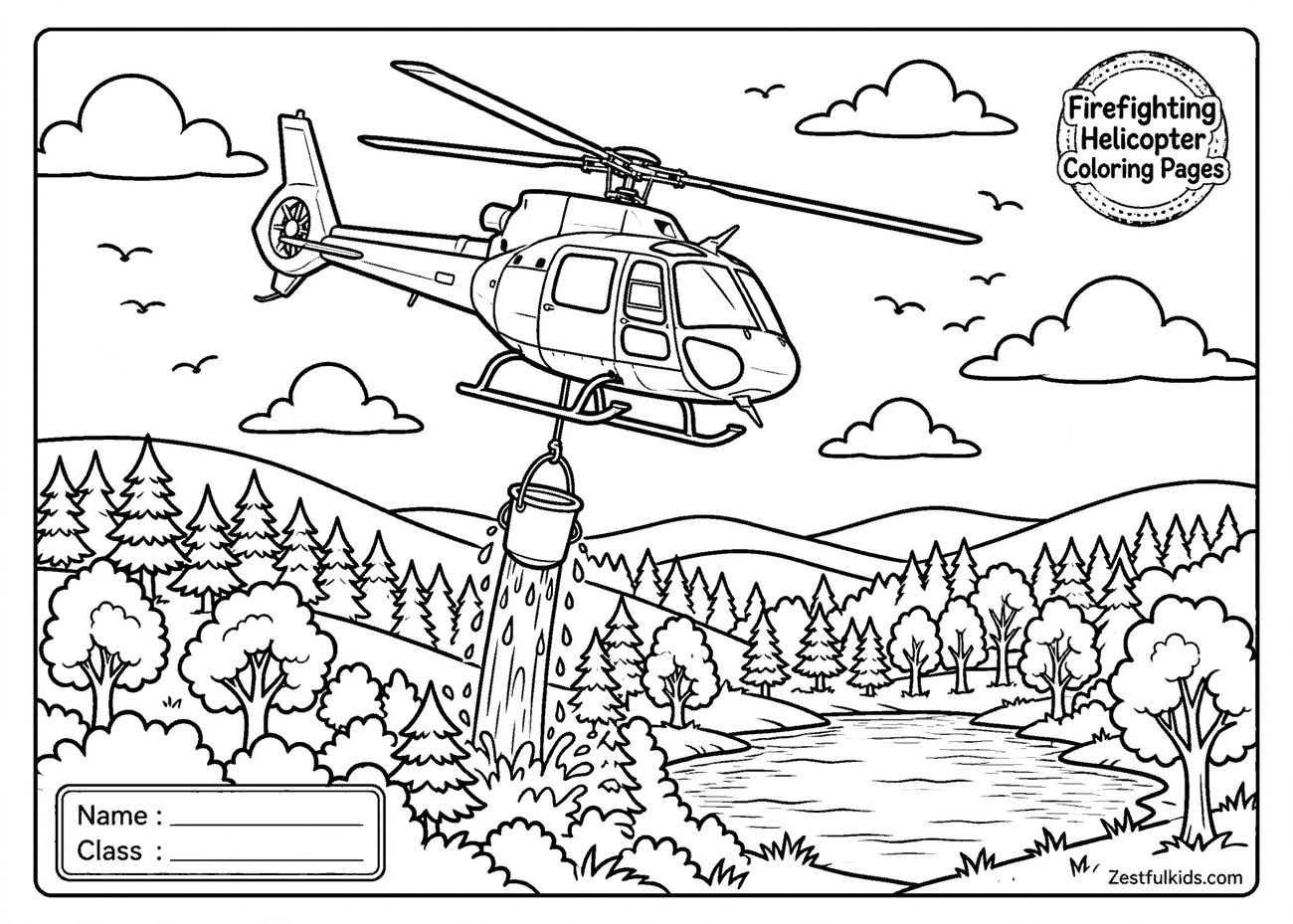
A forest landscape is a natural setting for this theme. Tall trees, distant hills, and a winding river can suggest a wilderness area where firefighters may need aerial support. Children might use several shades of green for the trees and brown for the ground, creating contrast with the bright helicopter above them.
A water scene offers another possibility. If the imagined aircraft is collecting water from a lake, children can add blue waves, distant mountains, and a few clouds. They can also draw a water bucket beneath the helicopter and imagine it preparing for another flight.
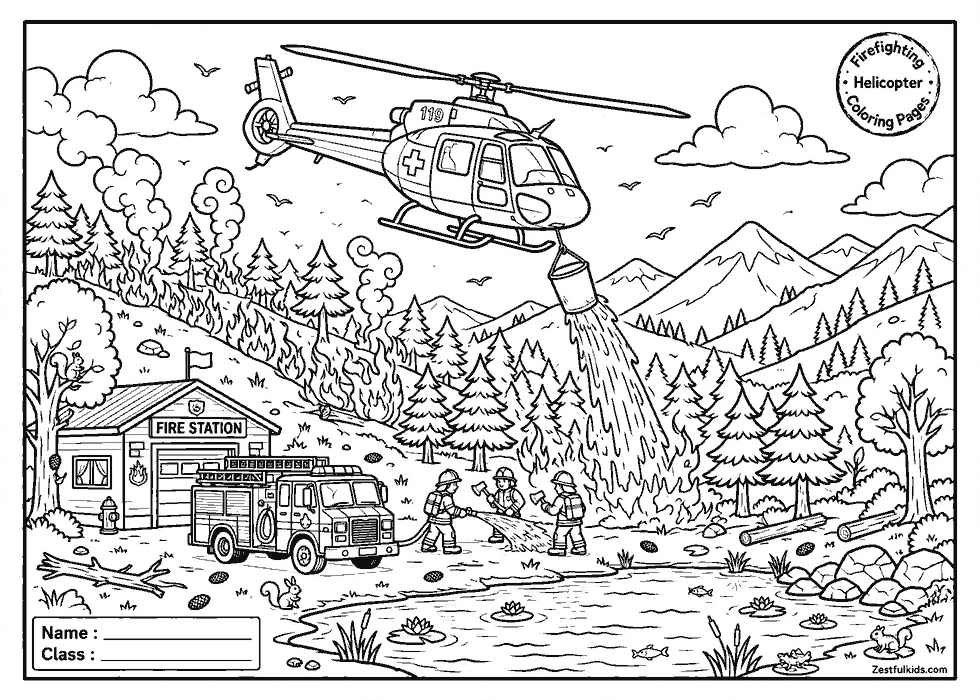
For a more detailed creative challenge, invite children to draw a small fire station or a group of emergency vehicles on a separate sheet. A fire engine, rescue truck, or support vehicle can become part of the larger scene. These additions should be presented as optional ideas rather than details that must already appear in the original design.
A Creative Way to Introduce Aviation and Emergency Services
Firefighting helicopter artwork can lead to interesting conversations about aviation and the people who work in emergency services. Parents and teachers can explain that pilots receive specialized training before operating helicopters, particularly during difficult conditions. Firefighters also work as a team, with different people responsible for ground operations, communication, equipment, and safety.
Children may enjoy comparing a firefighting helicopter with an ordinary passenger helicopter. Both aircraft have rotor blades and a cabin, but their equipment and purposes can be different. A firefighting helicopter may carry water or support emergency crews, while a passenger helicopter is generally designed to transport people.
Another useful topic is wildfire prevention. Adults can explain that dry vegetation, unattended campfires, and other sources of ignition can contribute to dangerous fires. Children can learn simple safety habits, such as never playing with matches or lighters and telling a trusted adult if they notice smoke or fire.
Families who enjoy adding cheerful subjects to their creative sessions can also explore Happy Flowers. Its nature-inspired theme provides a pleasant contrast to the action and emergency focus of firefighting aircraft.
Choosing the Right Tools for Aircraft Details
A helicopter illustration may contain several sections with different shapes and sizes. Large areas such as the cabin and body are suitable for crayons, while smaller features such as rotor connections, windows, and equipment may be easier to color with sharpened colored pencils.
Washable markers can create bold colors on larger sections, particularly when children want their rescue helicopter to stand out. However, it is helpful to test markers on a spare piece of paper first, especially if the printed sheet is relatively thin.
A simple coloring approach is to begin with the helicopter’s main body before moving to the rotor blades, tail, windows, and additional equipment. Children can then add background colors if they wish. There is no need to rush, and they can work on the smaller details whenever they feel ready.
For classroom activities, teachers can encourage children to choose different rescue aircraft designs. Each child can give their helicopter a name and describe the type of emergency it is designed to support. This turns the artwork into a short presentation or imaginative storytelling exercise.
Preparing a Printable for an Art Session
Before printing, check the available file format and open the print preview to see how the illustration fits on the selected paper. Make sure the helicopter and its important details are not cut off by the printer margins. Paper choice can depend on the coloring materials, with slightly heavier paper often being useful for children who prefer markers.
Prepare a flat workspace and place the coloring tools within easy reach. If children want to add a landscape or extra rescue vehicles, provide blank paper for their additional drawings. Keeping these materials together makes it easier to move between coloring and creating new details.
After the activity, the finished helicopter can be displayed alongside other vehicle-themed artwork. Children might also enjoy comparing their designs and explaining the colors, equipment, and rescue missions they imagined.
For another seasonal creative project, families can explore a Christmas House, which offers a different setting for experimenting with architectural details and festive decorations.
A firefighting helicopter is an engaging subject because it combines aviation, specialized equipment, and an important community service. Through coloring and optional storytelling, children can explore the appearance of a rescue aircraft while imagining how pilots and firefighters work together to help protect people and natural environments.
